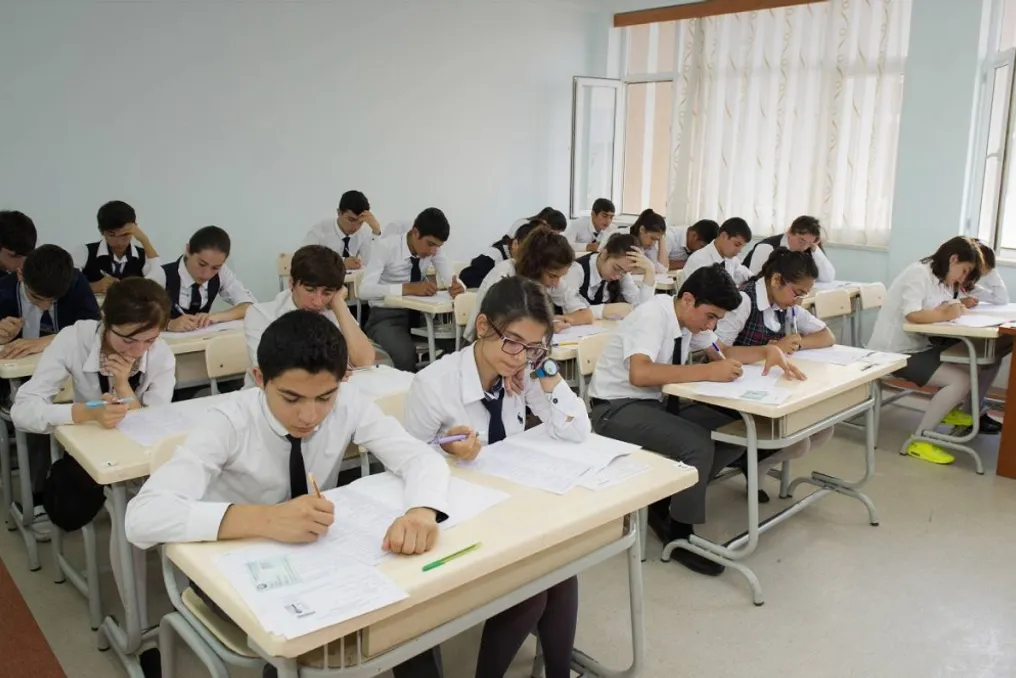
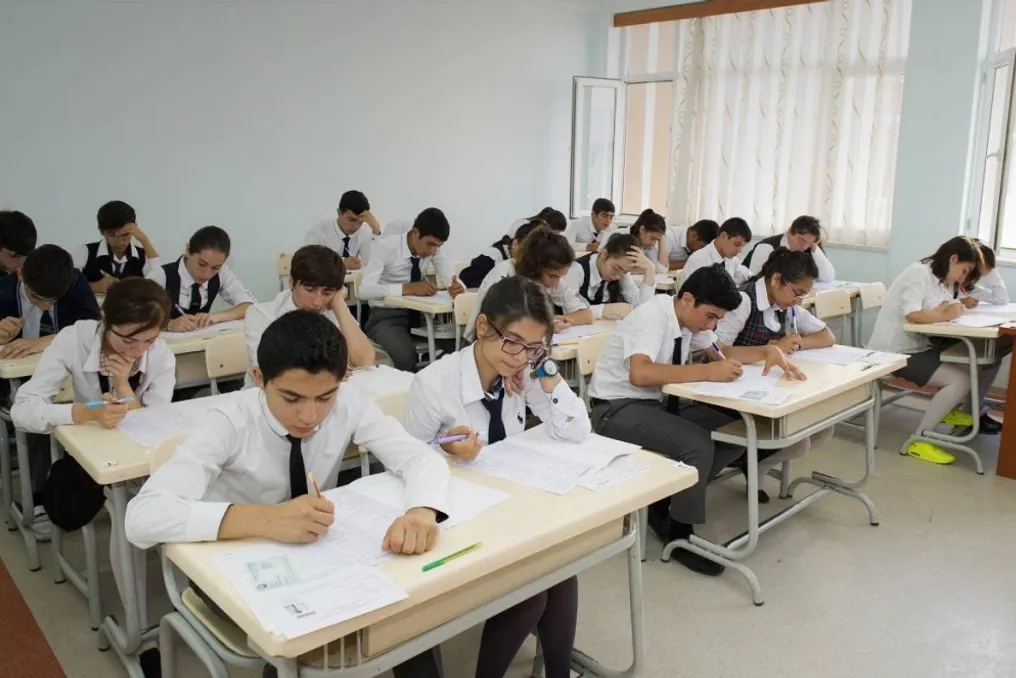
Testing rules for academic lyceums in Uzbekistan announced for the 2027/2028 academic year
Read more
Podrobno.uz [uz]
podrobno.uz

Testing rules for academic lyceums in Uzbekistan announced for the 2027/2028 academic year

The Ministry of Higher Education, Science and Innovation has informed applicants to academic lyceums in Uzbekistan about the testing rules for the 2027/2028 academic year.

To enter these lyceums, applicants will need to take a test consisting of 60 test questions. The maximum possible score is 146 points.

The test structure includes two blocks. Twenty questions are designed to assess intellectual abilities (IQ), and the remaining 40 questions check knowledge in two subjects corresponding to the chosen field of study.

The evaluation for both profile subjects will be conducted according to a unified scheme: 3.1 points are awarded for each correct answer, allowing up to 62 points per subject. In the IQ block, 1.1 points are awarded for a correct answer, with a total maximum of 22 points for this section.

It was previously noted that the final certification for students of academic lyceums in Uzbekistan was simplified, resulting in holders of profile certificates being exempted from relevant exams with an automatic assignment of the maximum score.

Similar stories

38 Universities of Uzbekistan Included in QS Asia 2027 Ranking
Read more
gazeta.uz

38 Universities of Uzbekistan Included in QS Asia 2027 Ranking

QS Quacquarelli Symonds, a company specializing in higher education analytics, has released the QS World University Rankings: Asia 2027. This ranking includes 1722 educational institutions from 26 Asian countries and territories.

Uzbekistan is represented by 38 universities in this list, including 15 new participants. As a result, the country's indicators showed a growth of 17%.

The Tashkent Institute of Irrigation and Agricultural Mechanization (TIIAM) continues to hold the highest position among Uzbek educational institutions, securing 113th place. Nevertheless, compared to last year, this university dropped 10 positions.

The Mirzo Ulugbek National University of Uzbekistan ranked 196th, whereas in 2026 it was at 180th place. Samarkand State University managed to improve its position by 92 places, reaching 215th place.

Namangan State Technical University showed the most significant jump in the rankings among Uzbek universities, increasing its rating by 245 positions to reach 469th place.

The QS Asia Rankings are compiled based on an evaluation of educational institutions across 11 different criteria. These metrics have been adjusted to account for regional specifics, which distinguishes this ranking from the global QS World University Rankings.

The QS study indicated that Uzbek universities demonstrate strong results in areas such as 'Employer Reputation,' 'Percentage of Foreign Faculty,' and 'Student Exchange.' However, scientific research remains a major challenge for Uzbek universities, as the lowest scores were received in the criteria of 'Number of Citations per Publication' and 'Number of Publications per Faculty Member.'

QS Senior Vice President Ben Sauter noted that Uzbekistan is one of the fastest-developing higher education systems in the current ranking. He emphasized that the rapid expansion and increase in international partnerships, along with the outstanding achievements of universities like Samarkand State University, point to active sector growth. He added that further development will depend on strengthening the research potential, which must align with the country's international aspirations.

In the overall Asian ranking, the University of Hong Kong holds the first place, followed by Peking University in second place. Tsinghua University took third place, rising nine positions. Universities from Hong Kong, mainland China, Singapore, South Korea, and Malaysia are in the top 20. Central Asia as a whole is represented by 99 universities from Uzbekistan, Kazakhstan, Kyrgyzstan, and Tajikistan.
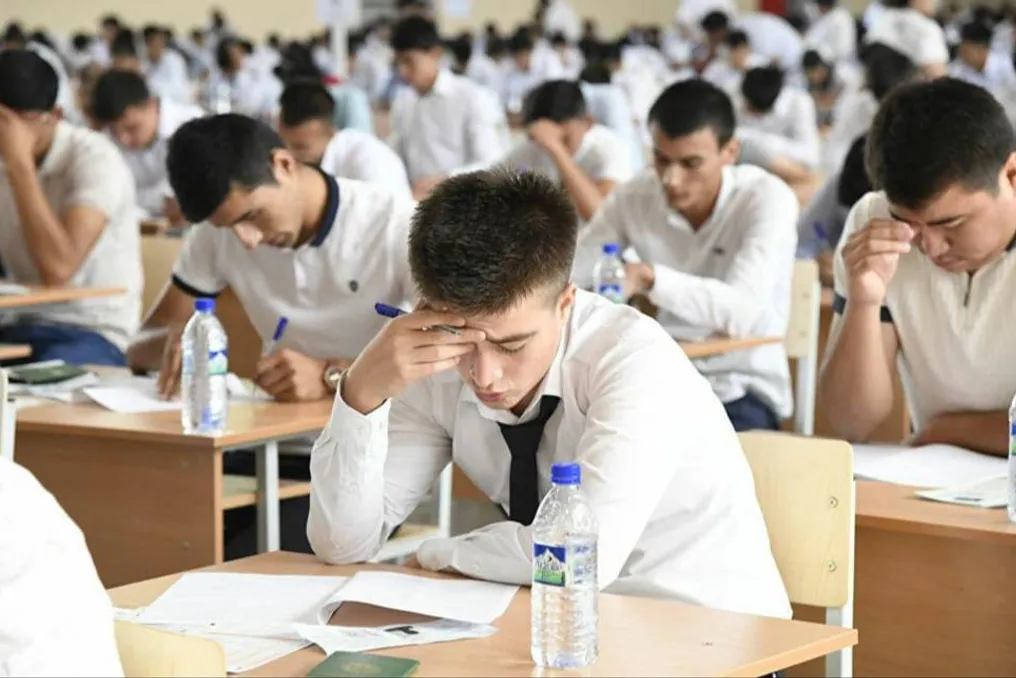
Ministry of Education and Science Announces Dates and Rules for State Grant Exams for Universities
Read more
podrobno.uz

Ministry of Education and Science Announces Dates and Rules for State Grant Exams for Universities

The Ministry of Education and Science has published information regarding the issuance of passes for upcoming exams intended for the allocation of 1,452 state grants. These grants are available for foreign and non-state higher education institutions and their branches, and 200 targeted quotas are also provided for youth from Karakalpakstan.

Details of the Examinations

According to the established regulations, the test assessments are scheduled for Wednesday, October 28, 2026. Candidates wishing to participate in the selection process can obtain their pass through their personal account on the portal my.uzbmb.uz. This document will specify the exact date, location, and time of the testing, and applicants are instructed to arrive at the venue without any delays.

Applications for participation in the competition to receive state grants for students of foreign and non-state universities were accepted from October 10 to October 17. The department also drew participants' attention to the admission requirements: entry into the buildings where the exams are held is permitted only upon presentation of an identification document, such as a passport or ID card.

Furthermore, participants are strictly prohibited from bringing any personal belongings onto the testing grounds, including bags, books, stationery, and electronic devices.

National native language exams in Uzbekistan will be held using the old alphabet
Read more
podrobno.uz

National native language exams in Uzbekistan will be held using the old alphabet

In Uzbekistan, national certification exams in the discipline 'Native Language and Literature' will take place in all regions from October 24 to 26. These tests will be conducted using the current Latin version of the Uzbek alphabet.

This information was provided by the Knowledge Assessment Agency. According to the agency, all test materials were developed based on the current alphabet, which should be used when completing open-ended tasks and essays.

Context of Alphabet Changes

This clarification was made because President Shavkat Mirziyoyev approved changes to the Uzbek alphabet on October 21. However, according to the adopted law, the new alphabet will only come into effect after six months.

The planned changes include replacing the symbols O‘ and G‘ with Ö ö and Ğ ğ, as well as replacing the combinations Sh and Ch with Ş ş and Ç ç. The transition to the new alphabet system will be gradual. School textbooks will begin translation into the updated alphabet in 2027, and the full transition in all grades is scheduled for 2031.

Popular