Cost of land in Delhi during British rule: price per acre
Read more
Aaj Tak
www.aajtak.in

Cost of land in Delhi during British rule: price per acre

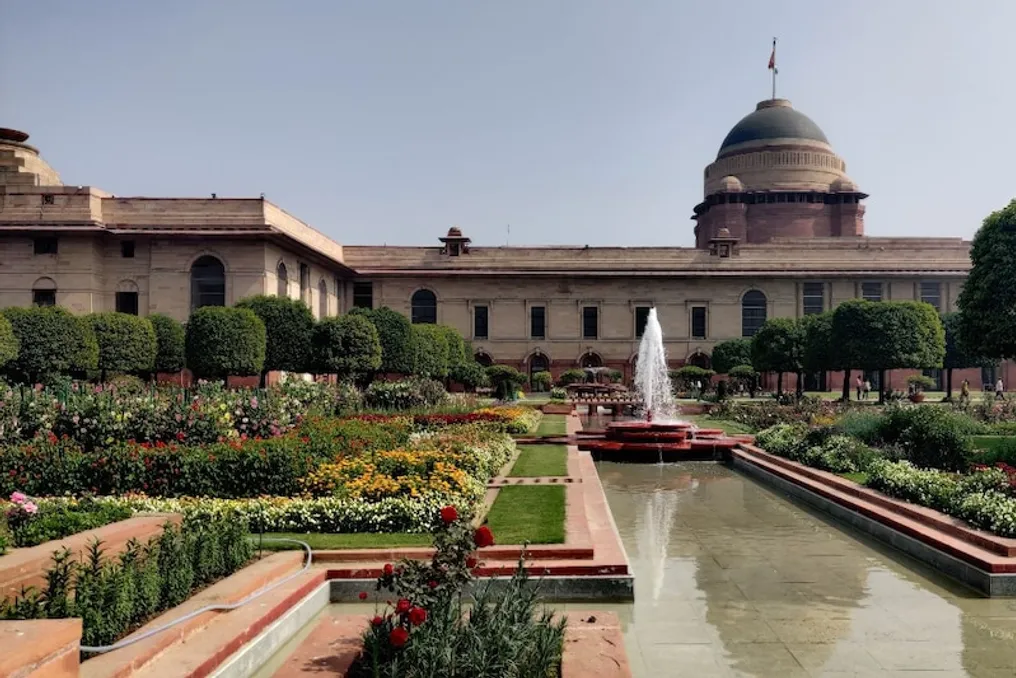
Today, buying land in the Lutyens' Delhi area seems like an unattainable dream, as even a small plot here is valued in millions. However, there was a time when land in this area cost only a few rupees. This is why the British acquired land from local residents at very low prices and transformed Delhi into a new capital.

When the new capital was being built on Raisina Hill and in the Lutyens' zone, British officials bought land from local residents for extremely low fees or forced them to leave their homes. Now, where important buildings such as the Presidential House, Parliament, and PMO stand, what price did the British pay for this land?

In 1911, the government of Great Britain decided to shift the capital of India from Calcutta to Delhi. On December 12, 1911, it was announced that a new residence for the Viceroy would be built in Delhi, and from that moment, Delhi would become the new administrative center.

Following this announcement, there was a need to select a location for setting up the new capital in Delhi. Which area would suit the offices of the new administration, the Viceroy's residence, and high-ranking officials, as well as other facilities and amenities, and how could land be obtained in this location? A special commission was formed to address these tasks.

The commission inspected several locations. Ultimately, Raisina Hill was chosen for the creation of the new capital of India. It was a hill where the village of Raisina was located, hence the area received the name Raisina Hill. Furthermore, the land of the residents of Malcha village was noted. Today, the entire area of Chanakyapuri is situated on the land of this Malcha village.

The British government acquired land from the villages of Raisina and Malcha for the construction of the new capital. During this process, local families were relocated to other places. The hill where the village of Raisina was located was named Raisina Hill. Later, the Viceroy's house was built on this hill, which is known today as the Presidential House. The North Block, South Block, and other important government buildings were also constructed around it. Thus, the name of the old village lent its identity to the most important center of power in India.

Responsibility for the development of these two cleared villages was entrusted to British urban planners, such as Edwin Lutyens and Herbert Baker. It was these English urban planners who created modern Delhi. Their plans included the Viceroy's palace, now called the Presidential House, the Circular Column Palace, known as the Parliament Secretariat building, green zones, parks, and gardens. This is why the entire area received the name Lutyens' Zone in honor of their planners.

The British authorities acquired about 3800 acres of land. According to the Indian Express, in 1911, the British government acquired 1792 acres in Malcha village and about 2000 acres around Raisina village to create the new capital in Delhi, seizing land from 150 families. Only 35 families in Malcha accepted compensation, while the rest refused it or were absent at the time of payment distribution.

The residents of these villages were relocated elsewhere. Even now, people claiming ownership of land in Raisina and Malcha are engaged in legal battles over this issue. Some families claiming land belonging to the Presidential House state that they received no compensation.

Some families residing in Hansana Malcha in Sonipat, Haryana, and Bhatta Hajipur in Ghaziabad, are engaged in similar lawsuits. These people filed petitions in civil courts for many years. They demand fair compensation for the valuable land belonging to their ancestors.

These people carefully preserve very old documents, including a document dated December 16, 1912, titled 'Lands Acquired for New Capital Delhi'. It contains information about 70 landowners who transferred their land, as well as details on the compensation they received.

These people have also preserved records of appeals they filed against these acquisitions in 1914, 1915, and 1916. The appeals stated that their ancestors demanded 2400 rupees per acre of fertile land and 1920 rupees per acre of barren land. However, the British paid compensation of only 85 rupees and 15 rupees per acre, respectively. Moreover, only 35 families accepted this compensation.

According to these people, 189 families living in Malcha village at that time were evicted without any financial assistance, even if they did not own land themselves. Today, buying land in this area is like an unattainable dream, as land in Raisina Hill and the Lutyens' Zone is inaccessible to ordinary people. Even for the wealthy, purchasing land in this area is impossible.

Similar stories

Real estate demand is growing in Delhi-NCR and other cities, with $4.5 billion in investments expected
Read more
www.aajtak.in

Real estate demand is growing in Delhi-NCR and other cities, with $4.5 billion in investments expected

The Indian real estate market is showing positive momentum towards the end of 2026. The market is strengthening due to sustained demand for residential properties, growing leasing of commercial office spaces, and increased institutional investments. Residential sales and new project launches are expected to gain momentum during the festive season.

Nevertheless, the real estate sector faces certain challenges related to rising housing prices, the purchasing power of ordinary citizens, and increasing construction costs.

According to a Savills India report, in the first nine months of 2026, the total leased office space in six major cities in the country reached 60.7 million square feet, which is 6% more compared to the same period last year. Demand for office space is supported by the growth of Global Capability Centers (GCCs), technology companies, and financial institutions.

Arvind Nandan, Managing Director (Research and Consulting) at Savills India, notes that the Indian real estate market is confidently developing towards the end of 2026, driven by stable residential demand, consistent demand for office space, and growth in institutional investments.

The report also indicates that the share of GCCs in the total office lease volume in 2026 was 30%. This positions India as a major business and technology hub for global corporations. Demand for office space remains high in Bangalore, Hyderabad, and Delhi-NCR due to strong business infrastructure and improving connectivity in these regions.

Regarding investment activity, the picture is also encouraging. According to Savills India, private investments in Indian real estate from January to September 2026 amounted to $4.5 billion, a 16% increase over the same period last year. Investor interest is growing not only in residential and office properties but also in sectors such as industry, logistics, hospitality, and data centers.

Demand for warehouse and industrial properties is also increasing amid the growth of manufacturing, e-commerce, and supply chain activities.

In the residential real estate market, there remains high demand for elite and luxury housing in the regions of Mumbai, Bangalore, Hyderabad, and Delhi-NCR. Ahead of the festive season, developers are offering special promotions, flexible payment plans, and new projects to attract customers.

Yashank Vasan, Managing Director of Royal Green Realty, emphasizes that the festive season plays a key role in building trust and driving housing purchase decisions. He also points to the growing potential in second-tier emerging markets such as Sonipat, Bahadurgarh, and Rohtak, noting increased interest in land-based projects.

Rupam Dey, Head of Marketing Communications and Branding at Hubtown Limited, concludes that thanks to buyer demand, commercial space leasing, and institutional investments, the prospects for the real estate market remain positive.

Retro car race held in London to mark the 140th anniversary of the invention of the automobile
Read more
uza.uz

Retro car race held in London to mark the 140th anniversary of the invention of the automobile

A traditional retro car race, the 'London – Brighton' run, took place in Great Britain to commemorate the 140th anniversary of the invention of the automobile.

As part of this event, unique vehicles manufactured before 1905 covered a distance of nearly 97 kilometers.

Record prices for luxury real estate recorded in Mumbai: one house valued at 152 crore rupees
Read more
www.aajtak.in

Record prices for luxury real estate recorded in Mumbai: one house valued at 152 crore rupees

The luxury real estate market in Mumbai is witnessing a new record for the sale of expensive houses. In one residential complex, the average cost of a house reached 152 crore rupees. This project is called Naman Xana and is located in the Versova area of Mumbai.

In the first half of the 2026-27 financial year, specifically from April to September 2026, three houses were sold in this project for a total of 456 crore rupees. Thanks to this, Naman Xana ranked first among the ten best luxury residential projects in Mumbai by the average price per house.

According to the Lighthouse Luxury report, this analysis is based on property registration data, specifically statistics from the Chief Inspector of Registration of Maharashtra (IGR). The report indicates that demand for luxury homes in prestigious areas of Mumbai remains strong, with prices in some selected projects reaching very high levels.

Although Naman Xana led in the average price per house, Godrej Trilogy Seafront won the category of total sales volume. In this project, also located in Versova, 54 houses were sold from April to September 2026, totaling 1,199 crore rupees. The average price per house here was approximately 22.2 crore rupees.

Oberoi Elysian ranked second in this list. Over the six-month period, 67 houses were registered for a total of 899 crore rupees, while Rustomjee Crown saw 51 houses sold for a total of 622 crore rupees.

Prestige Nautilus also entered the list of luxury residential projects in Mumbai. From April to September 2026, 18 houses were sold there for a total of 571 crore rupees, corresponding to an average price of about 31.7 crore rupees, and ranked second in the rating by average cost.

Lodha The Park registered the highest number of sales—76 houses, totaling 563 crore rupees, with an average house price of about 7.4 crore rupees. In Runwal Raaya, 36 houses were sold during the same period for a total of 550 crore rupees.

According to the report, a total of 496 houses were sold across the top 10 luxury residential projects in Mumbai over six months. The total value of these transactions reached 6,116 crore rupees. The project ranking was based on the total value of registered transactions, not the number of houses.

The statistics clearly demonstrate significant differences in prices between various projects in the Mumbai luxury real estate market. While the average price per house in Naman Xana was 152 crore rupees, in Godrej Reserve, this figure was significantly lower—around 5.7 crore rupees.

Popular