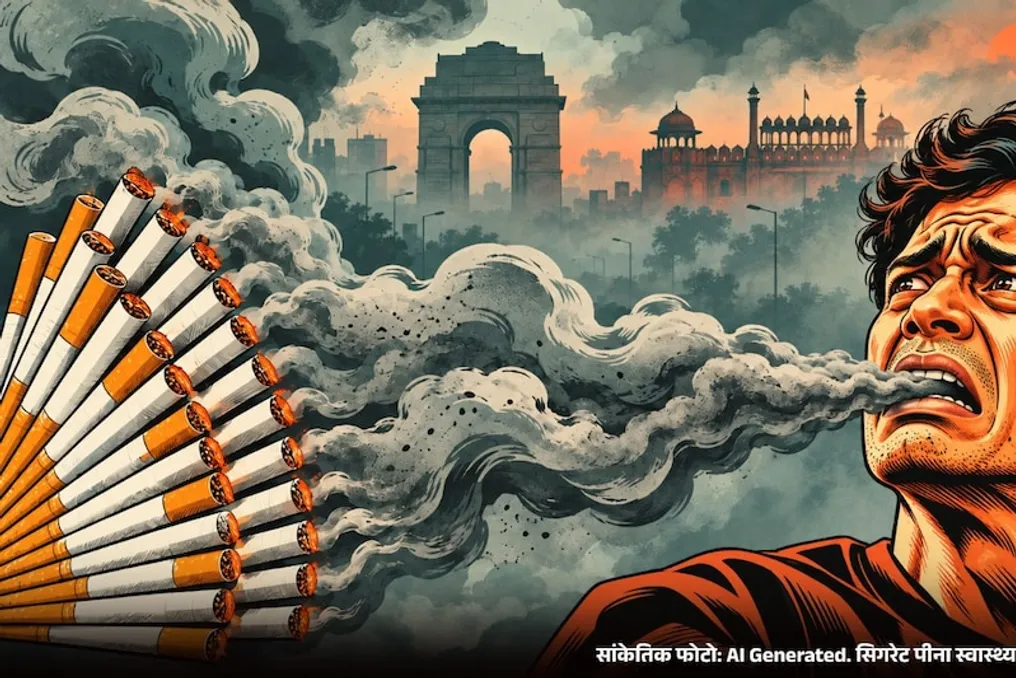
Delhi air pollution compared to smoking 30 cigarettes due to harmful PM2.5 particles
Read more
Aaj Tak
www.aajtak.in

Delhi air pollution compared to smoking 30 cigarettes due to harmful PM2.5 particles

Air pollution in Delhi and other parts of North India is once again posing a serious health threat. Due to toxic particles in the air, people experience difficulty breathing, persistent coughing, throat irritation, and hoarseness.

To illustrate the seriousness of the problem, a comparison is often used: inhaling toxic air is equivalent to smoking 30 cigarettes a day. Although this comparison is alarming, it has a scientific basis, even though the chemical impact of polluted air and tobacco smoke is not identical.

On November 5th, the average Air Quality Index (AQI) in Delhi for 24 hours was 369, which falls into the 'Very Poor' category. At some monitoring stations, the AQI exceeded 400, and at night, the air in 22 centers was classified as 'Severe.'

The basis for this comparison is the pollutant PM2.5. These are extremely fine particles measuring 2.5 micrometers or less. They are so small that they can bypass the natural protective barriers of the nose and throat and penetrate deep into the lungs. Some of these particles can reach the pulmonary blood vessels, causing inflammation and other biological reactions in the body.

Scientists from Berkeley Earth conducted a comparison of health risks from exposure to PM2.5 and smoking. According to their calculations, exposure to PM2.5 at a level of 22 micrograms per cubic meter over 24 hours is equivalent to about one cigarette per day. At a PM2.5 level of 660 micrograms per cubic meter, this comparison increases to approximately 30 cigarettes per day.

It is important to note that an AQI level between 401–500 in India does not necessarily mean that a person is inhaling pollution equivalent to 30 cigarettes. The 'Severe' category in India can occur at a PM2.5 level of 250 micrograms per cubic meter or higher. AQI is determined by eight pollutants, and the worst indicator determines the final AQI. Therefore, for an accurate comparison with cigarettes, the actual PM2.5 level and duration of exposure must be known.

The key point is that there is no direct or official conversion between AQI and cigarettes. The aforementioned comparison is a rough scientific estimate based solely on the amount of PM2.5 and 24-hour exposure. Since India's AQI is calculated based on multiple pollutants, one cannot conclude the number of equivalent cigarettes inhaled based only on the AQI.

PM2.5 in polluted air is not just dust; it includes smoke from transport and industry, particles formed during the burning of coal and diesel fuel, as well as pollutants from the burning of straw and waste, and chemically formed microparticles.

When a person inhales air, these particles reach the lungs through the respiratory tract. The body's immune system recognizes them as an external threat and reacts. This can lead to inflammation in the lungs and airways, causing symptoms such as coughing, chest tightness, shortness of breath, and wheezing.

According to data from the U.S. Environmental Protection Agency (EPA), these particles can reduce lung function, increase airway inflammation, and exacerbate asthma and other respiratory diseases. With prolonged exposure, the risk of irreversible lung damage increases.

The medical condition of hoarseness or voice loss is called Hoarseness or Dysphonia. It occurs due to the vibration of the two vocal cords in the larynx. When we speak, air from the lungs helps these cords vibrate. Pollutants and gases, such as nitrogen dioxide, ozone, and sulfur dioxide, can irritate the sensitive surfaces of the throat and larynx. This causes irritation, dryness, and inflammation. Laryngeal inflammation disrupts the normal vibration of the vocal cords, resulting in a low, raspy, or weak voice. Sometimes a person feels pain when speaking and the need to constantly cough.

Thus, hoarseness on polluted days is not always a sign of a common cold. One cannot state that pollution is always the cause; other possible causes may include viral infections, allergies, acid reflux, and smoking.

Both cigarettes and polluted air can contain PM2.5 microparticles. Both substances are capable of enhancing oxidative stress and inflammation in the body. Oxidative stress is a condition where the balance between harmful free radicals and antioxidants that control them is disrupted.

However, there are differences between them. Tobacco smoke contains nicotine, carbon monoxide, and numerous carcinogenic substances. Whereas polluted air includes dust, industrial emissions, transport smoke, and particles formed during combustion.

Similar stories

Air Quality Crisis Declared in Delhi and NCR: AQI Exceeds 400 in 9 Areas
Read more
www.aajtak.in

Air Quality Crisis Declared in Delhi and NCR: AQI Exceeds 400 in 9 Areas

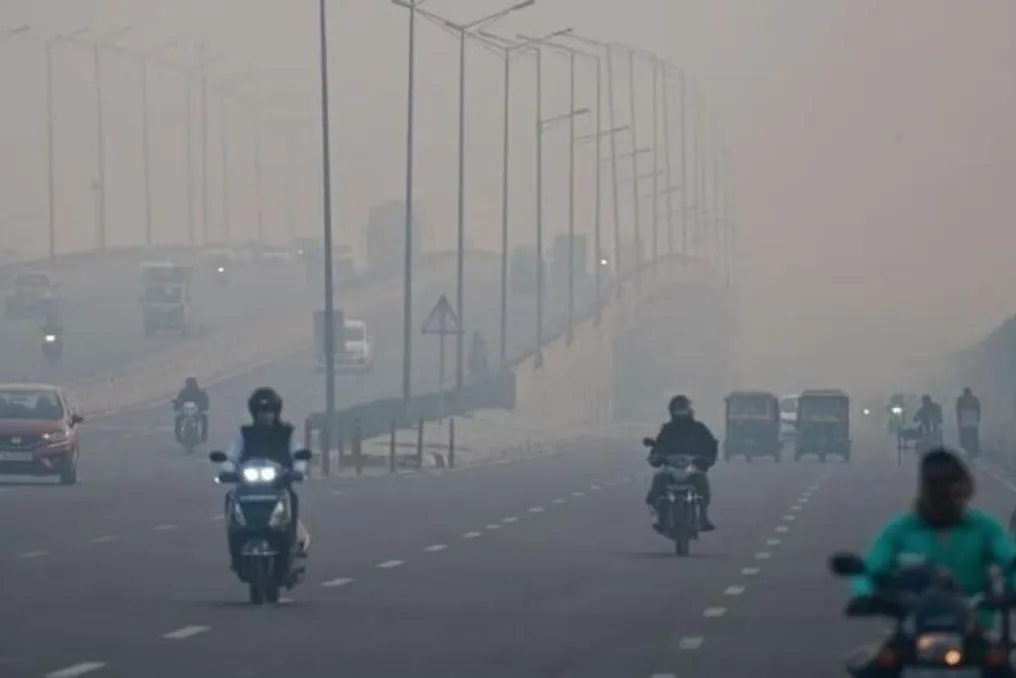
Air quality in the Delhi-NCR region remains at dangerously high levels. According to data from the Central Pollution Control Board (CPCB), the average Air Quality Index (AQI) in Delhi on the morning of November 6, 2026, was 389, which falls into the 'very poor' category.

In cities such as Noida and Gurugram, the AQI was also in the 'very poor' category (313 and 'very poor' respectively) according to CPCB data collected at 7 am. In many areas of Delhi, pollution levels exceeded the mark of 400.

The AQI readings in key areas of Delhi at 6:00 am are listed below:

  • Rohini: 473 (Severe)
  • Punjabi Bagh: 464 (Severe)
  • RK Puram: 441 (Severe)
  • Alipur: 435 (Severe)
  • Sonia Vihar: 435 (Severe)
  • Okhla Phase-2: 426 (Severe)
  • North Campus, DU: 424 (Severe)
  • ITO: 420 (Severe)
  • Najafgarh: 412 (Severe)
  • Pusa: 393 (Very Poor)
  • Chandni Chowk: 386 (Very Poor)
  • Anand Vihar: 350 (Very Poor)
  • Lodi Road: 306 (Very Poor)

Besides Delhi, air quality in Noida and Gurugram is also in the very poor category. These morning figures indicate that residents of the national capital region have not yet found relief from the pollution.

CPCB explains the AQI scale: values from 0 to 50 are considered 'good'; 51 to 100 are 'satisfactory'; 101 to 200 are 'moderate'; 201 to 300 are 'poor', while 301 to 400 are 'very poor', and 401–500 fall into the 'severe' category.

When the AQI exceeds 400, the air becomes extremely toxic. This is dangerous not only for people suffering from lung diseases or asthma but also for completely healthy individuals, as health conditions deteriorate rapidly. Various problems can arise in the body at such a severe level of pollution.

Some people experience a persistent dry cough, while others complain of dryness or irritation in the throat. Even light physical activity, such as climbing stairs, can cause shortness of breath.

Residents are advised to avoid walks in the morning and evening. If it is not absolutely necessary, they should stay indoors. If going outside is necessary, it is recommended to use an N95 mask with a good fit. It is necessary to keep windows and doors closed. If persistent coughing, chest tightness, or shortness of breath is observed, a doctor should be consulted.

Air pollution levels leading to worsening public health, say AIIMS doctors
Read more
www.aajtak.in

Air pollution levels leading to worsening public health, say AIIMS doctors

The Delhi-NCR region is experiencing a rise in pollution levels, which is negatively affecting people's health. Problems for those suffering from respiratory diseases are worsening. Furthermore, people who previously did not have breathing difficulties are seeking medical attention after the increased pollution began causing symptoms such as coughing, throat irritation, and shortness of breath. Such patients are being admitted for treatment at AIIMS Delhi.

In some cases, doctors have to increase medication dosages for patients. Dr. Saurabh Mittal, Assistant Professor in the Department of Pulmonology, Critical Care, and Sleep Medicine at AIIMS Delhi, reported that the symptoms in patients with respiratory problems are becoming more severe due to rising pollution. An increase in drug dosage is required, up to increasing the dose of inhalers, and some patients are prescribed new medications because standard drugs cease to be effective amid elevated pollution.

According to Dr. Saurabh Mittal, the condition of patients who were already battling respiratory diseases is deteriorating due to pollution. Treatment adjustment is necessary to alleviate cough and breathing issues. In addition to increasing the dose of inhalers, some patients are prescribed oral steroids. This is because the problems of these patients are so serious that they cannot be controlled with standard medications.

It is concerning that people who previously had no breathing problems are now seeking medical help. Among these patients, symptoms include coughing, burning in the throat, nasal irritation, and shortness of breath. These patients also require medications that provide relief and treatment according to their symptoms.

In Dr. Mittal's opinion, there are many reasons for the rise in pollution in Delhi, and it is not a problem arising from a single day or one cause. During the winter period, changes in weather and increased air humidity can contribute to the accumulation of pollutants near the ground. Additionally, emissions from vehicles, dust from construction work, and smoke from stubble burning also contribute to the increase in pollution levels.

Impact of AQI above 400 on the body: Symptoms from coughing to shortness of breath
Read more
www.aajtak.in

Impact of AQI above 400 on the body: Symptoms from coughing to shortness of breath

In many areas of Delhi-NCR, the Air Quality Index (AQI) has exceeded the 400 mark. Under such conditions, the risk of health deterioration exists not only for people with asthma or respiratory problems but also for completely healthy citizens. Some people begin to experience a persistent cough, others feel a dryness in their throat, and a third complain of shortness of breath even when climbing stairs. The question arises about how the body reacts to an AQI exceeding 400, which a doctor explained.

Dr. Ankit Bhatia from the Respiratory Medicine department at Yashoda Medicity Hospital explained that an AQI level above 400 indicates extremely poor air quality. During this period, fine pollutants, especially PM2.5, can enter the body along with inhaled air. These particles reach deep parts of the lungs, causing inflammation and irritation. This manifests as various symptoms.

People suffering from diseases such as asthma and COPD may face chest tightness, wheezing, and shortness of breath; this problem can be more serious for asthma patients. However, symptoms can appear even in healthy individuals.

According to Dr. Ankit, even healthy people can develop a cough and throat irritation. Furthermore, exposure to polluted air is not limited to the lungs. Redness and tearing of the eyes, nasal irritation, sneezing, and headaches may occur. Some people also feel fatigue and anxiety. These signs can start just a few hours after contact with polluted air.

Residents are advised to avoid walks in the morning and evening. If it is not an absolute necessity, they should stay indoors. When going outside, it is necessary to use an N95 mask with a good fit. It is also important to keep windows and doors closed at home. If a persistent cough, chest tightness, or shortness of breath persists, a doctor should be consulted.

Popular