Dipinder Goyal refutes fraud allegations against TEMPLE device in response to doctors
Read more
Aaj Tak
www.aajtak.in

Dipinder Goyal refutes fraud allegations against TEMPLE device in response to doctors

Co-founder of Zomato, Dipinder Goyal, is preparing for the launch of the TEMPLE device, for which pre-registration has already begun, with delivery expected soon. Recently, the TEMPLE device has become a subject of controversy, and Goyal issued a statement asserting that it is not a scam.

Some doctors have classified TEMPLE as major medical fraud and health deception. However, Dipinder Goyal rejected these claims, emphasizing that the device was developed at a cost of 188 million rupees.

Goyal stated that he spent 20 million US dollars (equivalent to approximately 188 million rupees) on creating this product. He responded to Indian doctors via the X platform, stating that about 30 million dollars were spent on the device's development, of which 20 million were his personal funds.

He added that if TEMPLE were a scam or if people were making big claims about it, those conducting tests would have noticed within a few days.

Furthermore, Goyal assured that the company offers a 14-day money-back guarantee without questions asked; if TEMPLE does not work, it will be returned from the start. He also stressed that his project is not aimed at quick profit, referencing his CEO's post.

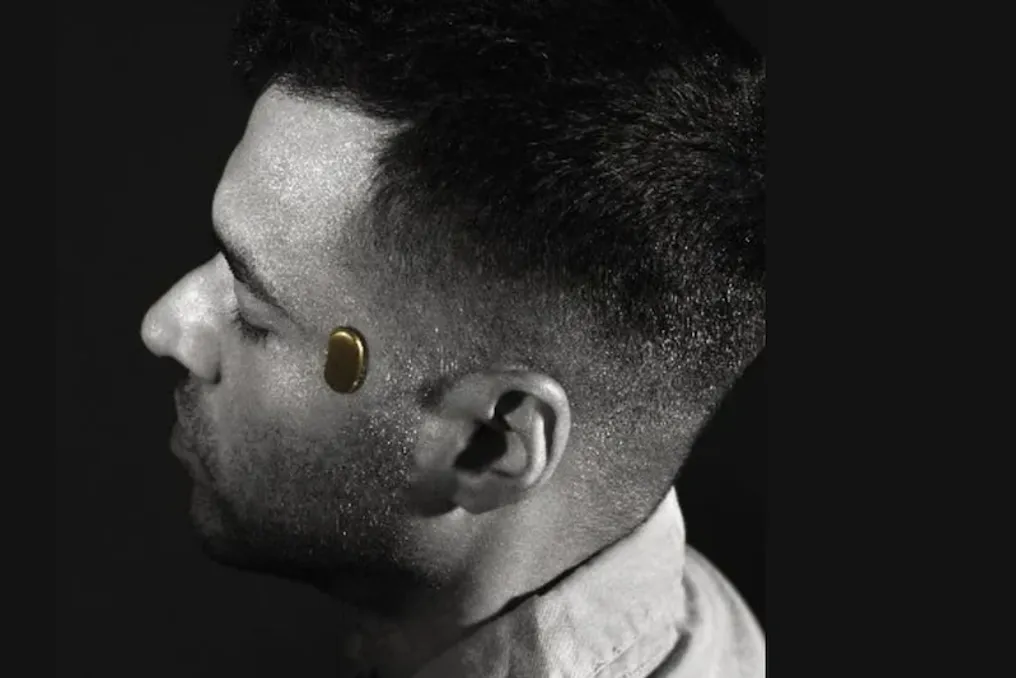
TEMPLE is a device resembling a pea that is attached near the head, specifically on the temple. The company claims that TEMPLE tracks changes in blood flow in the brain and entropy. According to the TEMPLE portal, entropy refers to how much effort the body exerts to cool down and dissipate heat.

Many doctors have questioned TEMPLE's ability to actually track blood flow in the brain. One of the most vocal critics is hepatologist Dr. Sayrik AB Phillips, also known as 'The Liver Doc,' who labeled TEMPLE as serious medical fraud and health deception.

In response to the criticism, Goyal mentioned the WHOOP fitness tracker, noting that the company released its fitness tracker in 2015 and faced similar questions, but it is now popular worldwide.


Similar stories

Australian research indicates that one-third of babies diagnosed with peanut allergy may not have the condition
Read more
super.abril.com.br

Australian research indicates that one-third of babies diagnosed with peanut allergy may not have the condition

Peanuts are one of the foods most frequently triggering allergic reactions, which can cause symptoms such as itching, swelling, redness, and shortness of breath immediately after consumption or contact, potentially becoming life-threatening.

In countries like the United States, the United Kingdom, and Australia, food allergies are relatively common in children, with estimates suggesting that about 2% of children in these regions have the condition. Specifically in Australia, this proportion reaches approximately one in every 30 children.

A recent investigation conducted in Australia sought to verify the accuracy of these diagnoses. The findings, published in November in the scientific journal The Journal of Allergy and Clinical Immunology: In Practice, suggest that about one-third of babies diagnosed with peanut allergy may, in fact, not have this allergy.

The study analyzed data from 1,275 babies under 18 months old who participated in a national peanut allergy treatment program offered by ten public Australian pediatric hospitals, covering the period between 2024 and 2025. The initial diagnosis is usually based on the history of peanut reaction combined with skin tests, where a small sample of peanut extract is applied to the skin to observe responses.

In the 778 babies, researchers administered the oral challenge test to confirm the diagnosis. This procedure involved the children ingesting increasing doses of peanut protein under medical supervision in a suitable location. The administered doses ranged from 15 mg to 1,300 mg of protein, equivalent to approximately one teaspoon, distributed in up to seven applications.

At the end of the experiment, 271 babies, corresponding to about 35% of those who underwent the test, showed no signs of allergic reaction, meaning that in more than one-third of cases, the initial diagnosis was not confirmed.

The authors argue that traditional allergy tests do not always accurately reflect the allergic status in babies, given that their immune system is still developing. They observe that many tests only identify sensitization to the food, and not necessarily confirm an allergy. Furthermore, it is possible that some of these children overcame the allergy between the time of diagnosis and the test, which was conducted about six months after the first reaction.

Practically all babies who showed reactions during the experiment were subsequently included in oral immunotherapy with peanuts, part of the program. This therapy consisted of consuming small daily amounts of the food to try to increase tolerance, with the initial dose determined by the results of the oral challenge test.

The results of this immunotherapy were positive, as 97.5% of participants managed to start treatment at the dose established by the test. The researchers advocate that the oral challenge test should precede immunotherapy, even though the latter can normally begin without such a test. They state that prior testing can prevent unnecessary treatments.

It is crucial that the procedure takes place in a controlled environment; during the study, 61 babies suffered anaphylaxis and required adrenaline administration. Despite this, the authors maintain that the oral challenge test should be routinely incorporated into the assessment of peanut allergy in babies, regardless of the therapeutic approach chosen.

UAE Launches Dental Health Screening for Kindergarten Students in Public Schools
Read more
www.khaleejtimes.com

UAE Launches Dental Health Screening for Kindergarten Students in Public Schools

The UAE Ministry of Health and Prevention (Mohap) has begun implementing a project to check the oral health and teeth condition of kindergarten first-graders (KG1) in public educational institutions across the country.

This project is being carried out in collaboration with the Ministry of Education and the Emirates Health Services (EHS) and aims to identify dental and oral health problems before children enter primary school.

Families can have their children examined at public medical centers managed by EHS or at private medical facilities. The check will include an examination for caries, gum diseases, and other conditions that could negatively affect the child's health, development, and ability to learn.

Officials noted that this initiative is designed to make regular dental check-ups an integral part of caring for children's health from an early age, preventing the need to seek help only after pain or symptoms appear.

Dr. Hussain Al Rand, Assistant to the Deputy Minister of Public Health Sector in Mohap, emphasized that the project reflects a national priority in prevention. He stated that 'promoting oral and dental health from preschool age helps form healthy habits that will stay with children throughout their lives.'

Al Rand also noted that families play a key role in monitoring children's health and encouraging daily habits that support oral health, alongside the efforts of the education and health sectors.

This initiative aligns with the UAE's plans for preventive medicine and the World Health Organization's oral health strategy for 2023–2030, which calls for greater attention to early detection and prevention.

Tarek Al Hashimi, Assistant to the Deputy Minister of School Operations in Dubai and Northern Emirates of the Ministry of Education, stated that health status is closely linked to children's readiness to learn. He added that the ministry will continue to collaborate with partners on projects that promote prevention among students and families from the earliest stages of education.

Al Hashimi stressed: 'Health supports children's readiness to learn, improving their ability to participate and engage, and allowing them to maximize their educational experience.'

Dr. Essam Al Zarouni, Executive Director of the Medical Services Sector in EHS, reported that conducting screenings through EHS centers will help detect problems in a timely manner and refer children in need to the appropriate services. He also specified that EHS will link this screening to health awareness and subsequent follow-up to ensure continuity of care during the early stages of children's growth and development.

Mozambique needs 50 thousand heart operations annually, but assistance capabilities are limited
Read more
noticiasaominuto.com

Mozambique needs 50 thousand heart operations annually, but assistance capabilities are limited

Portuguese surgeon Manuel Antunes, who leads the mission to perform free surgeries at the Heart Institute (Icor) in Maputo, stated that Mozambique requires about 50 thousand annual heart operations, but the capacity to perform them remains limited.

Manuel Antunes, a retired professor from the University of Coimbra and an invited specialist, addressed journalists during the 24th consecutive mission of the Portuguese team at Icor. This mission began in 2001 and was only paused for two years during the COVID-19 pandemic. The team also includes one other surgeon and two specialized nurses.

According to the doctor, 16 patients were evaluated, pre-selected by the institute's cardiologists to determine the need for surgical intervention. These cases include children and adults with damaged heart valves, primarily related to rheumatic disease, as well as a patient with severe coronary artery disease following an acute myocardial infarction.

Antunes explained that rheumatic disease is widespread in Mozambique, often affecting the heart valves of children under 12, causing their complete destruction. His specialization includes mitral valve repair and replacement of valves that can no longer be repaired.

In the first days of the mission, which will last until November 11, the team performed four surgical procedures: two operations on women, one on a man, and one on a 13-year-old child, with at least one additional operation planned.

Among the other examined patients are two adults—aged 51 and 75. The mission lasts seven days, six of which are dedicated to free surgical activities under the Icor humanitarian program.

Cooperation between the Portuguese and Mozambican teams began in 2001 and has allowed for the development of local capacity for cardiac surgery over the years. Manuel Antunes noted that in 2010, three Mozambican surgeons began performing such procedures independently, and international missions gradually transformed into a model focused on supporting and improving the technical skills of local specialists.

He emphasized that local surgeons currently perform about 200 operations per year, and all missions combined can perform 50. Nevertheless, he added that they work year-round, which is an important factor.

Despite the progress made, the specialist believes that current activity significantly lags behind the country's needs. He stated that the country, with a population of 35 million people, needs 50 thousand operations per year, and what is being done now is 'just a drop in the ocean.'

Manuel Antunes pointed to the size of medical facilities and the availability of specialized teams as the main obstacles to expanding cardiac surgery in Mozambique, as Icor, being a private institution, cannot meet the existing demand on its own. He called for the participation of other teams and hospital departments, mentioning that the Central Hospital of Maputo (HCM), the largest in the country, also performs some interventions, albeit infrequently.

The doctor noted that Icor's equipment is comparable to that used in Coimbra, and the main task is to scale up the number of operations. He also compared the costs: in Coimbra, an operation can cost between 12,000 and 15,000 euros, whereas at Icor, including materials provided by the Portuguese team, the cost can range from five to six thousand euros.

Of the 16 patients examined during this mission, 12 were referred to Icor by the Central Hospital of Maputo, and the doctor added that about half of the patients are under 20 years old. Rheumatic disease, common in many African countries, can cause heart valve damage in childhood, the consequences of which often persist into adulthood and require surgical treatment.

Popular