According to the Eurasian Development Bank (EDB) report, Uzbekistan has become a key hub for demand, generation, transit, and integration of renewable energy sources within the interconnected energy system of Central Asia. However, the rapid growth in solar and wind generation capacity exceeds the grid's ability to absorb new output.
In its study, 'Energy Without Borders: The Architecture of Energy Connectivity in Central Asia,' the bank points to serious issues in Uzbekistan's power sector, including winter gas shortages, overloaded transmission lines, and a growing reduction in renewable energy generation.
Key Indicators of the Energy Sector
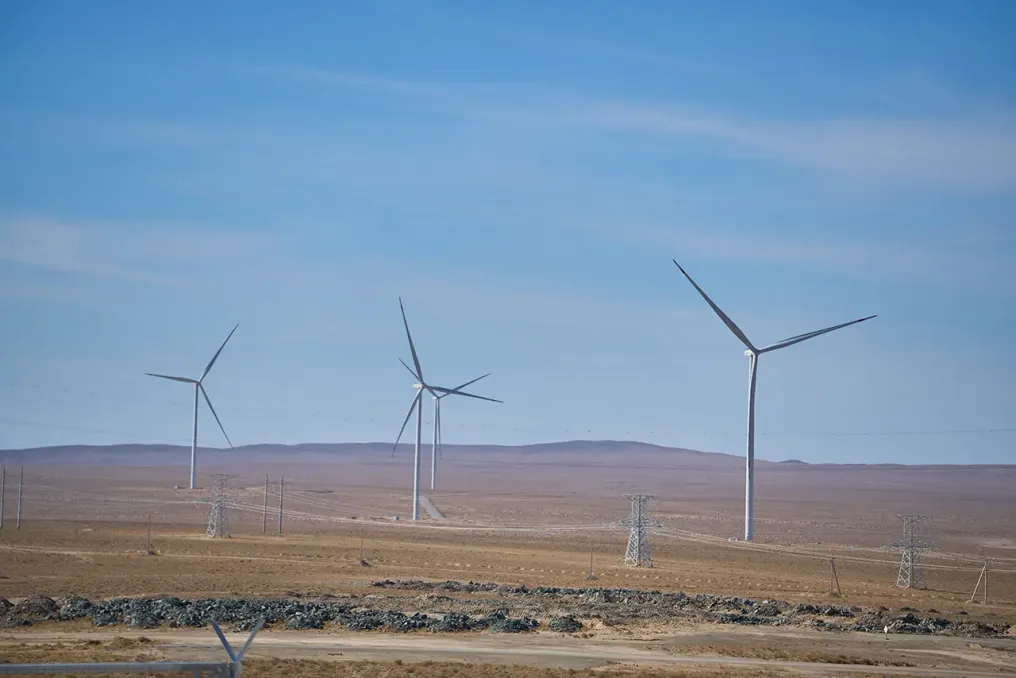
Uzbekistan supplies 23.1 GW out of the total installed capacity of 38.5 GW in the interconnected Central Asian system, making it the largest generating country in this regional union. As of January 1, 2025, Uzbekistan's installed capacity consisted of 17.5 GW of thermal generation, 2.25 GW of hydropower, 0.9 GW of wind, and 2.4 GW of solar.
Other participants in the system have significantly smaller generation capacities: Tajikistan has 6.5 GW, Southern Kazakhstan has 4.77 GW, and Kyrgyzstan has 4.13 GW. Uzbekistan's main energy resources are thermal generation, which includes gas turbine units, gas turbines, and gas engine sets, as well as RES facilities and Battery Energy Storage Systems (BESS).
Generation and Consumption Challenges
EDB Senior Analyst Demir Kabylbayev noted that Uzbekistan is a major demand center and currently a center for RES implementation. Despite significant installed capacity, Uzbekistan faces limitations in electricity production during autumn and winter due to natural gas shortages and internal transmission bottlenecks.
The report estimates the gas-related generation deficit to be between 100–400 MW. Kabylbayev explained that winter demand for natural gas is rising across all consumer groups, leading to insufficient fuel at power plants when electricity demand sharply increases. Consequently, generation capacity is limited by the available gas pressure in pipelines.
During the peak annual load in 2024, the interconnected Central Asian system had an installed capacity of 36.4 GW, but only 28.8 GW was available for generation. Fuel-related constraints across the region reduced the available capacity by 1,081 MW. Kabylbayev warned that building additional power plants may not solve the deficit problem if the new facilities are located outside overloaded transmission points or do not receive sufficient gas during peak hours.
RES Challenges
The expansion of renewable energy presents another challenge. According to Uzbekistan's strategic plans, RES capacity could reach 25 GW by 2030. Of the 62.8 GW of new generation capacity announced by Central Asian countries by 2035, Uzbekistan is responsible for 25 GW. Conservative forecasts suggest that by 2028, Uzbekistan's RES capacity will reach 11.4 GW, and energy storage capacity will be 4.3 GW.
However, this expansion is expected to increase the volume of renewable electricity that the system cannot absorb. According to calculations by the Energy Coordination and Dispatch Center, in 2026, Uzbekistan will need to use 13.1 billion kWh of renewable energy, with a reduction of 2.1 billion kWh. In 2027, usage is projected at 18.5 billion kWh, with a reduction of 2.9 billion kWh. By 2028, these figures are expected to rise to 22.1 billion kWh and 3.5 billion kWh, respectively. The reduction is predicted to be particularly significant during transitional months, potentially reaching 45.7% in September and 37.5% in May.
Kabylbayev noted that the calculations were made in 2024, whereas Uzbekistan has since increased RES generation faster than expected, likely leading to exceeding initial targets. One fundamental challenge is the variability of solar and wind generation, which cannot be controlled like traditional power plants. Kabylbayev explained: 'We do not know when the sun or the wind will be there.'
Regional Coordination and Infrastructure
The EDB report warns that the curtailment of RES generation reduces the actually utilized amount of electricity, worsens project economics, and increases requirements for reserve generation capacity. Payment obligations under long-term power purchase agreements may remain in force even with reduced generation, potentially shifting additional costs onto electricity buyers, system operators, or consumers.
The bank identifies regional coordination as a potential way to mitigate these risks. Stronger cross-border connections, access to flexible hydropower, energy storage, and more accurate market price signals could allow surplus renewable electricity to be absorbed into a wider regional market.
Transmission line overload is already affecting several critical parts of Uzbekistan's network. Flows between Uzbekistan and Kyrgyzstan through the Fergana energy hub reached 2,940 MW against allowable levels of 1,800 MW or 2,600 MW, representing 113% of the applicable limit. The internal segment of the Sagniana–Guzar–Talimarjan transmission line operated at 105% of its permitted capacity, transmitting 1,570 MW against a limit of 1,500 MW.
Network overload also limits Uzbekistan's ability to import hydropower from neighboring countries. According to Kabylbayev, Tajikistan has already become a balancing resource for Uzbekistan's solar generation, with summer electricity imports exceeding winter imports two to three times. Nevertheless, constraints on 220 kV networks prevent some of this electricity from reaching its intended destination. Kabylbayev mentioned the Fergana hub in Surkhandarya, where overload required redirecting approximately 40% of planned summer hydropower imports from Tajikistan to other regions of Tajikistan.
Integration Improvement Proposals
To improve RES integration, the EDB proposes combining battery energy storage systems for fast balancing, conventional hydropower for operational regulation and seasonal flexibility, and pumped-storage hydroelectric power plants for transferring surplus daytime renewable electricity to periods of high demand. Estimates suggest that Uzbekistan's pumped-storage potential is 5,030 MW across 16 facilities in seven regions. The Tashkent region accounts for 46% of this potential, equivalent to 2.3 GW.
Among the proposed projects are the Verkhniy Pskem pumped-storage plant with a capacity of 600 MW, estimated at $1.02 billion, and the Khojikent project with a capacity of 200 MW, estimated at $320 million. The Karateren project will provide 500 MW at a cost of $477 million, and the Aidarkul project will have a capacity of 300 MW at a cost of $350 million. Together, these four projects represent a planned capacity of 1,600 MW and estimated investments of $2.167 billion, with a potential annual output of up to 2.8 billion kWh. The report cautions that the value of these projects must be confirmed by detailed power system operation calculations.
Kabylbayev explained that pumped-storage plants use surplus electricity to pump water to a higher elevation, allowing it to be released for power generation when needed. He stated: 'These 5 GW will work more efficiently if we have regional coordination.'
Priority Infrastructure Projects
EDB also highlighted several priority transport infrastructure projects directly affecting Uzbekistan. The first group of priorities, expected to yield relatively quick benefits and linked to the World Bank's REMIT program, includes the reconstruction of the Kristall–Yulduz connection with a second 220 kV loop between Uzbekistan and Kyrgyzstan via the Fergana hub. This also includes the second 500 kV transmission line between Shymkent and the Tashkent Thermal Power Plant, connecting Uzbekistan and Kazakhstan. An alternative route between Shymkent and the Khalka substation is being considered.
Second priority projects include the Datka–Sugd transit connection with connection to the Lochin substations, the Syrdarya/ACWA–Sugd project, financed by the Asian Development Bank, and the Muruntau–Shymkent connection. The Muruntau–Shymkent project was proposed by the National Dispatch Center and the National Electric Grids of Uzbekistan to reduce overloading in the southwestern transmission sectors.
Third strategic options include the Atamirat–Guzar and Dashoguz–Muruntau–Kyzylorda connections, designed to facilitate the transfer of generating capacity from Turkmenistan. EDB estimates that broader integration of Central Asian energy systems could generate gross regional income of up to $640 million annually. Net benefits from partial and deeper integration are estimated at approximately $120 million. The authors emphasize that the benefits of regional integration will not be distributed evenly among participating countries.