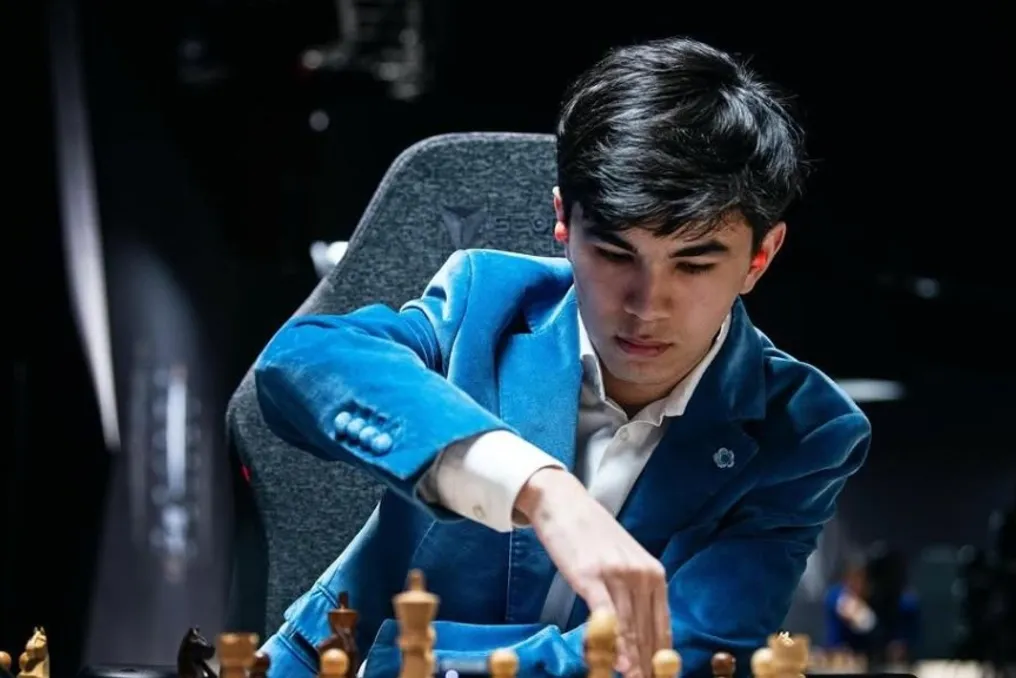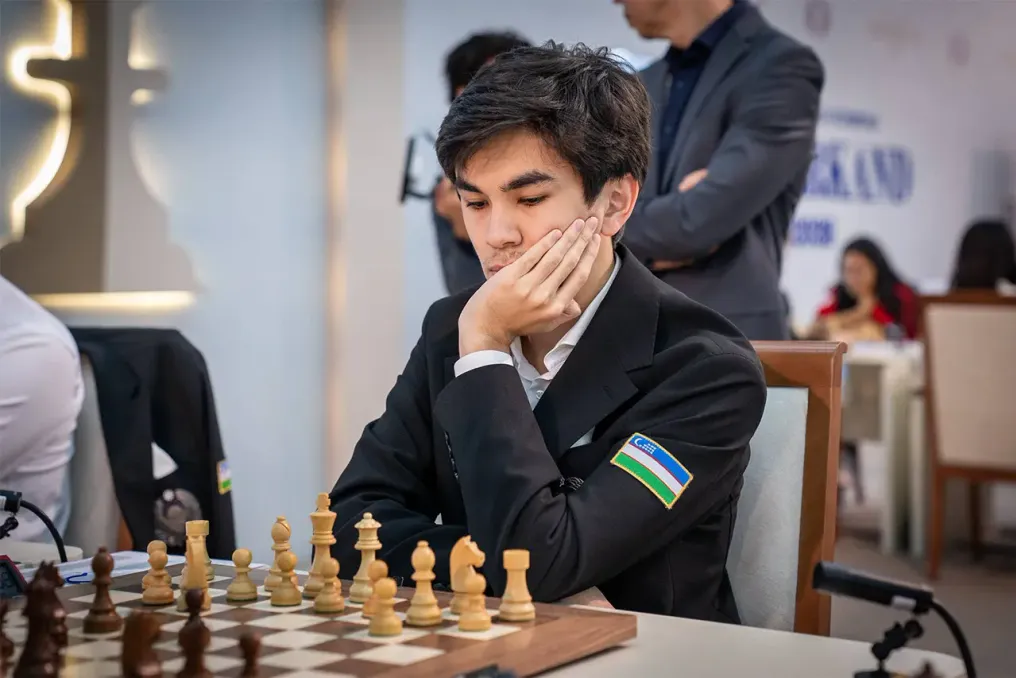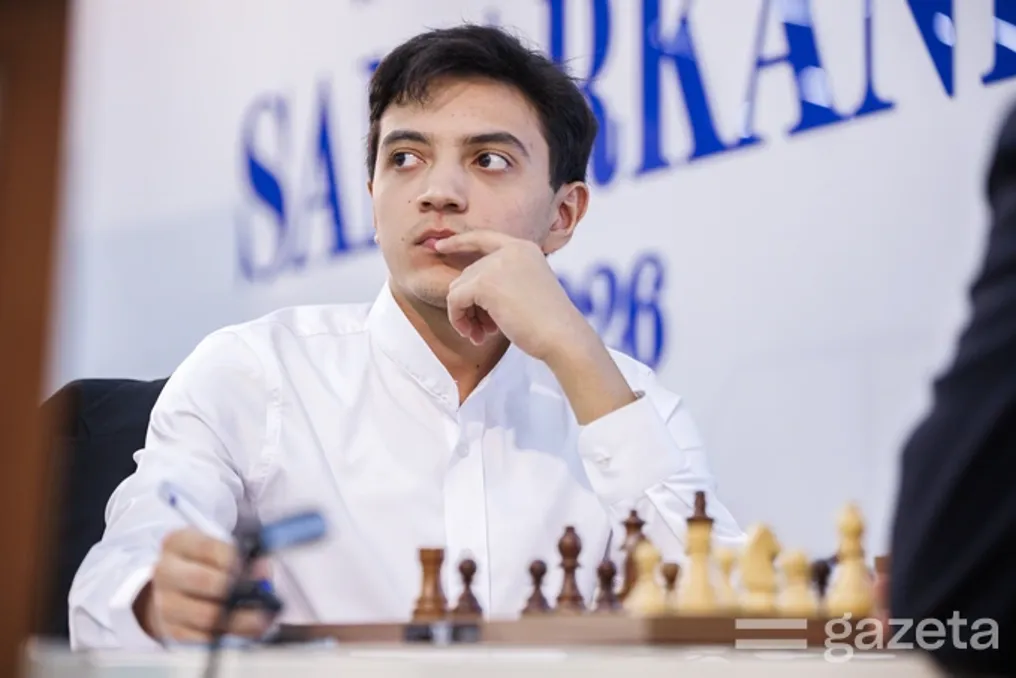
Rustam Kasymdzhanov shared his impressions of how the men's national team of Uzbekistan won the World Chess Olympiad title for the second time in history. The tournament was held in his home country in Samarkand, where the team achieved 10 wins out of 11 rounds, losing only to Germany.
In an exclusive interview with 'Gazeta,' Kasymdzhanov detailed the course of the fight for the gold medal in Samarkand. He explained why Nodirbek Abdusattorov played on the first board, what strategic changes had to be made after the loss to Germany, and what to expect from the upcoming match between Javohir Sindarov and Gukesh Dommaraju for the championship title.
The 2004 world champion also highlighted his plans for the future coaching career stage.
Kasymdzhanov noted that Uzbekistan's victory at the Chess Olympiad, especially at the home tournament in Samarkand, is a grand event requiring enormous effort from the team, the federation, and the state. Although he does not know about the full public resonance, he believes the event had a significant impact on the people of Uzbekistan, comparable to the excitement during the World Cup.
Emphasizing that the victory was achieved through collective efforts, Kasymdzhanov singled out individual players. He particularly noted that Nodirbek Abdusattorov's performance on the first board was not accidental, given the higher rating and result of Javohir Sindarov this year. However, according to Kasymdzhanov, the traditional strong position of the team with Nodirbek on the first board remained a key factor, as he is an outstanding leader who provides calm to the entire team.
He highly praised Nodirbek's play, who won against Ding Liren and Fabiano Caruana. Kasymdzhanov believed that the overall play of the team reflected the level of the first board. Javohir Sindarov was also recognized as an outstanding chess player who brought many important victories, including rapid matches. Furthermore, Nodirbek Yakubboev demonstrated one of the best results of his career, and Mukhidden Madaminov finished the tournament with two wins, while Shamsiddin Vohidov brought important points despite some weakness in the final match against Germany.
When asked about the selection of Nodirbek Abdusattorov for the first board, Kasymdzhanov clarified that it was related not only to his style but also to the fact that he feels comfortable in the role of a leader. He added that Nodirbek himself was happy with such a sign of trust, which helped him even though his results in recent months lagged behind Javohir's. Kasymdzhanov also noted that Javohir Sindarov initially considered Nodirbek the natural leader, which helped avoid internal competition within the team.
Discussing the decisive match against India, Kasymdzhanov analyzed the sharp intensification of play by Nodirbek Yakubboev. He suggested that at the moment Yakubboev started playing the f4 move, the situation developed rapidly. He believes that Nihal Sarin made a mistake by not using the available time and should not have continued the game in blitz tempo. Kasymdzhanov also noted that Nodirbek's feeling of a bad position might have been caused not by the objective position, but by fatigue or lack of a clear plan, leading to a desperate decision.
He compared this situation to his own experience when a desperate, unforced decision in a classical game against Topalov led to success, emphasizing that sometimes victory is achieved through error.
Regarding the losses to Germany, Kasymdzhanov stated that it was not because they had previously trained the German team. He stressed that Germany is an extremely dangerous team with a professional and young squad, possessing a top player on the first board. He warned his players about the seriousness of the opponent. The salvation was that the Uzbek team ultimately won the Olympiad, regardless of intermediate setbacks.
Despite the tough match against Germany, which began with Shamsiddin's mistake, Kasymdzhanov noticed a psychological slump in the team after seven wins. However, after this defeat, the team managed to recover and return to its previous high level. He reported that after the crisis, he had to make adjustments to the roster, making the difficult decision to exclude Shamsiddin, which, in his opinion, justified itself by the results of subsequent rounds.
Kasymdzhanov identified one of the main problems after the triumphant victory—a shortage of candidates for the first team. Currently, there are only five people in the national team, and there are no other contenders for a spot in this quintet. He called for a focus on nurturing young chess players to strengthen the squad and warned that complacency of the first team would negatively affect motivation and progress.