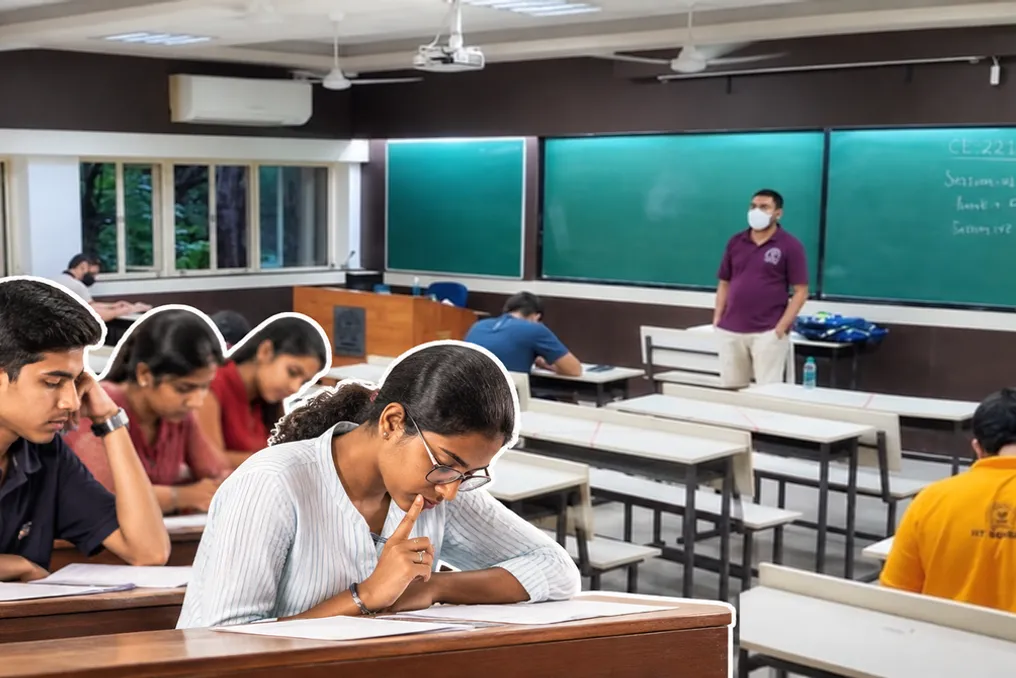
IIT Delhi focuses on mental health: empathy seminars to be held for faculty and staff
Read more
Aaj Tak
www.aajtak.in

IIT Delhi focuses on mental health: empathy seminars to be held for faculty and staff

The Indian Institute of Technology (IIT Delhi), one of the country's prestigious institutions, has taken a significant and sensitive step in the area of student well-being and mental health. The institute announced several important improvements aimed at creating a safe, stress-free, and transparent atmosphere on campus for students.

A phased action plan was developed during a meeting of the Student Affairs Council (SAC), which takes into account suggestions from the students themselves. This new plan includes several substantial changes to the operations of IIT Delhi.

This entire situation and subsequent policy changes became relevant following the tragic death of a student on campus. After this incident, the institute formed an external investigative committee to examine deficiencies in student support and mental health systems.

This committee was headed by Mukta Gupta, a retired judge from the Delhi High Court, and included senior experts from AIIMS, as well as student representatives. Based on the report and recommendations of this committee, IIT Delhi developed the scheme of these improvements.

An independent 'Ombudsman for Student Grievances' will be appointed to ensure impartial resolution of student problems and complaints. Furthermore, additional clinical psychologists and counselors are planned to be hired to increase the accessibility of psychological help on campus.

Mandatory seminars on empathy, soft skills, and mental health will be introduced for administrative staff, hostel employees, and faculty. This is intended so that they can better understand the mental state of the students. A formalized and simplified Re-entry Protocol will also be implemented for students returning to studies after a long break, which will help them adapt academically and psychologically.

Additionally, a new external committee, composed of mental health specialists and student representatives, will conduct a comprehensive analysis of the institute's current well-being policies, as well as emergency response mechanisms and support channels.

In addition, the institute plans to conduct large-scale awareness campaigns about mental health issues and laws concerning the abuse of psychoactive substances on campus.

These steps by IIT Delhi are viewed as a highly positive initiative towards prioritizing student well-being in educational institutions, which should contribute to reducing psychological pressure on students in the future.

Similar stories

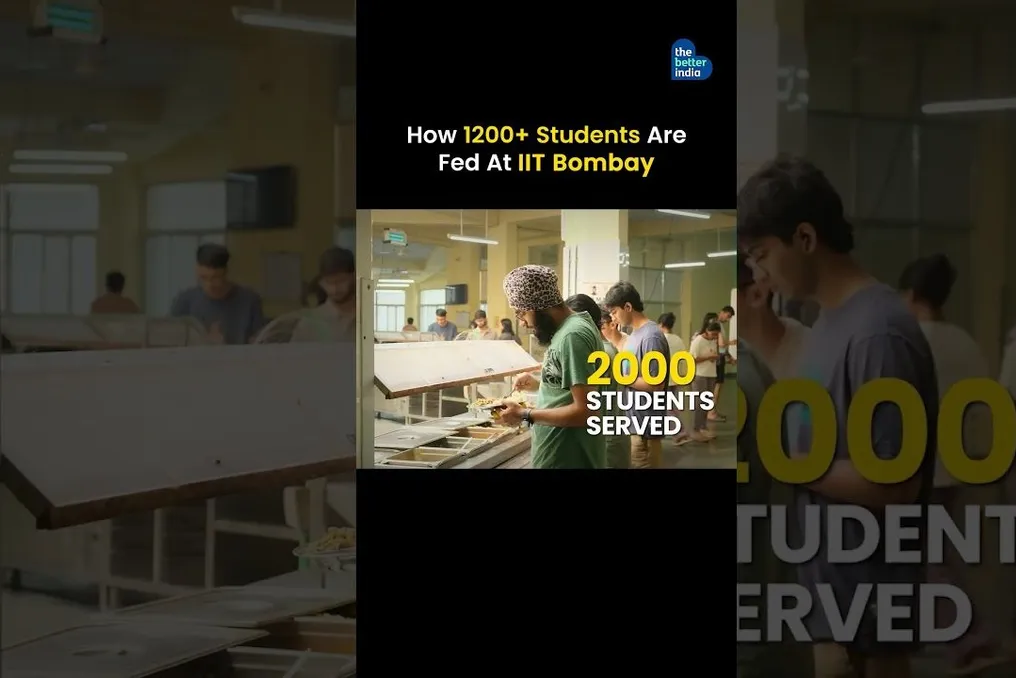
IIT Bombay prepares food for 1200 students using waste
Read more
thebetterindia.com

IIT Bombay prepares food for 1200 students using waste

The Indian Institute of Technology Bombay (IIT Bombay) provides meals for over 1200 students using organic waste.

With support from the startup Infixen, funded by IIT Bombay, nearly two tons of garden waste are converted daily into fuel pellets for cooking.

Thanks to this innovation in Hostel 16, meals are prepared for 1200 students, while the consumption of liquefied petroleum gas (LPG) is reduced by 60%. Previously, the campus spent about 50 lakh rupees annually solely on transporting garden waste.

Now, the same leaves are used to power the kitchens, demonstrating that sustainable solutions can be implemented directly on the IIT Bombay campus.

IIT Bombay uses garden waste to cook meals for over 1200 students
Read more
thebetterindia.com

IIT Bombay uses garden waste to cook meals for over 1200 students

The Indian Institute of Technology (IIT Bombay) is transforming garden leaves into fuel for cooking, providing breakfast, lunch, and dinner for 2000 people and reducing liquefied petroleum gas (LPG) consumption by 60%.

India imports about 60% of its LPG, much of which passes through the Strait of Hormuz—one of the world's most unstable choke points. If supplies are disrupted, millions of kitchens could be left without gas. This raises the question of how Hostel 16 cafeteria at IIT Bombay prepares lunches for 1200 students using leaf granules instead of gas cylinders.

The company Infixen, funded by IIT Bombay, converts two tons of garden waste collected on campus daily into clean cooking fuel. Previously, the institute spent 50 lakh rupees annually just on the removal of this waste; now, this waste is used to feed students and staff.

The process of the plant and the cafeteria is detailed in the 'Solved in India' program from The Better India, demonstrating how this transformation occurs.

New IIT Bombay Exam Protocol Provides Fair Hearing and Counselor Support for Students
Read more
thebetterindia.com

New IIT Bombay Exam Protocol Provides Fair Hearing and Counselor Support for Students

In the Indian Institute of Technology Bombay (IIT Bombay), the approach to handling a student found with a phone in an examination hall during an incomplete exam was revised starting in July. In October, the institute's Senate suspended the harshest sanctions and approved a procedure allowing the student to finish the test, later present their side, and receive counselor support outside the classroom.

Reasons for Rule Revision

The revision was initiated following a tragic incident: Sahil Ravindra Wakode, a second-year student in the Department of Energy Science and Engineering, committed suicide on September 18. This occurred several hours after he was allegedly caught using a mobile phone and ChatGPT during a midterm exam, according to Business Standard. The student's parents alleged that he faced caste-based discrimination.

Protests followed on campus, leading the institute to form an eight-member committee comprising four faculty members and four students to examine the academic misconduct handling system. According to India Today, this committee presented an interim report at a special Senate meeting on October 7. Protesting students demanded changes to disciplinary measures and student support systems, so the review covered the process of lodging accusations, determining outcomes, and the types of support available to the student after the incident.

How is a Student Caught Cheating Now Treated?

Under the temporary procedure, the invigilator confiscates the prohibited material and records the incident in the prescribed form. The student then continues taking the exam using a new answer sheet. The invigilator's role is limited to documentation, and the decision regarding the incident's severity is referred to the Departmental Disciplinary Committee (DDAC), rather than being made directly in the classroom.

After completing the test, students can record their version of events, which they submit separately in the presence of additional staff. Business Standard notes that filling out this form is not mandatory, allowing the student to either explain the situation or decline. Furthermore, the guidelines mandate notifying the institute's Quick Response Team (QRT), composed of counselors, when a student leaves the classroom, ensuring no one leaves immediately after such an occurrence alone.

This step aims to reduce the stress a student might experience after being accused. The Times of India reports that faculty members who suspect cheating or notice signs of stress during an exam are obligated to notify the QRT.

Why Were Stricter Rules Postponed?

The Senate temporarily postponed the rules introduced in July 2026 and reverted to its 2015 framework for midterms held on October 10 and 11, after being rescheduled from September 19 and 20. The July framework covered mobile phones, tablets, and smartwatches, stipulating that students caught engaging in dishonest behavior would receive a specific failing grade of FR2. The difference between these two approaches is significant. Under the July rules, possessing a phone during an exam could lead to an FR grade (failure and re-sit) and a semester suspension. However, under the 2015 rules, having a phone resulted in a deduction of one grade, while use could lead to an FR grade. The 2015 rules reserved suspension mainly for mass cheating, repeated violations, and impersonation, giving preference to the student in cases of unclear evidence. A faculty member present at the Senate meeting told Hindustan Times: 'The emotional tone has shifted towards student sensitivity. We are largely reverting to the 2015 rules.'

What Next for Student Well-being?

These recommendations are temporary. Senate members generally agreed with the report but proposed amendments, and the final set of guidelines will be published later, as reported by India Today. The report also suggests implementing video surveillance in examination halls, with the possibility of monitoring one student at a time during bio-breaks, closing entry 30 minutes after the exam starts, and abolishing manual searches. A joint committee with equal representation from faculty and students is being formed to develop standard operating procedures allowing accused students to consult mentors and well-being specialists before official disciplinary action begins.

Other campuses are already implementing softer forms of support, including peer counseling at IIT Madras and informal hearings. The notification to the QRT places IIT Bombay in this context. Students needing help at any time can call the government's free helpline Tele-MANAS at 14416, which is available in English and 20 regional languages. This service, launched in October 2022, received over a million calls by May 29, 2024, according to the Ministry of Health and Social Welfare data, and its counselors can refer callers to specialists if necessary.

Popular