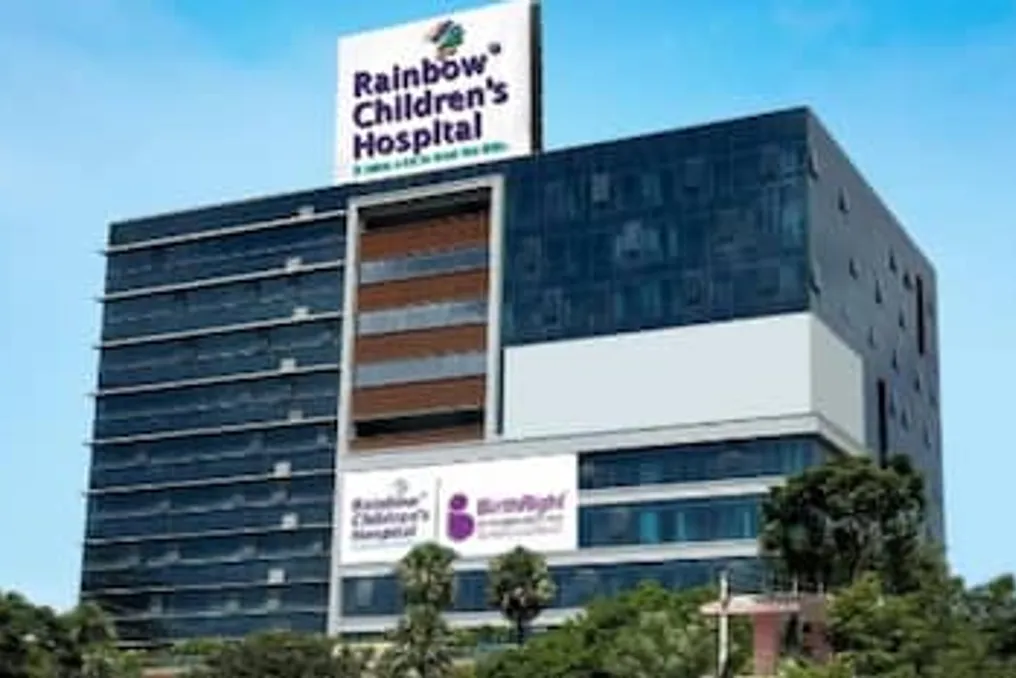
Rainbow Children's Medicare plans ₹220 billion hospital network expansion by 2032
Read more
Business Standard
business-standard.com

Rainbow Children's Medicare plans ₹220 billion hospital network expansion by 2032

The Rainbow Children’s Medicare hospital network intends to invest approximately ₹220 billion to expand its hospital infrastructure to over 5,000 beds by the financial year 2032. All funds for this expansion will come exclusively from the company's internal reserves, without attracting new debt or private equity capital.

Currently, the network, based in Hyderabad, has 2,685 beds and forecasts an increase to 3,875 beds by the financial year 2030. Furthermore, the company is negotiating to add another 1,125 beds, which could potentially push the total capacity beyond 5,000 beds by FY32.

Abharali Dalal, CEO of Rainbow Children’s Medicare, told Business Standard that the expansion will be financed using the company's own resources. He emphasized that the required amount of ₹2,000 or ₹2,200 crore will be secured through internal accruals, and the company does not plan to raise external loans or investors.

According to Dalal, as of September 2026, Rainbow had about ₹540 crore in cash and bank balances. The company estimates the average investment at ₹70-80 lakh per bed, depending on the type of hospital and its infrastructure requirements.

Priority on Mumbai and NCR

In a presentation to investors for Q2 FY27, Rainbow outlined a plan to add 1,190 beds by FY30. This plan includes 25 beds in FY27, 385 in FY28, 630 in FY29, and 150 in FY30. The projects cover the cities of Mumbai, Gurugram, Coimbatore, Pune, Indore, Bengaluru, and Amaravati in Andhra Pradesh state.

The company plans to commence operations of a 100-bed hospital in Mumbai in Q1 FY28 and is already exploring possibilities for further expansion in the city. Dalal noted that there will certainly be more hospitals in Mumbai, and the company will continue to evaluate new opportunities after the commissioning of the next facility.

In Gurugram, Rainbow is developing two medical facilities with a total capacity of 450 beds: one facility with 325 beds in Sector 44 and a hospital with 125 beds in Sector 56. Opportunities in Noida are also being explored. Dalal clarified that the expansion will primarily occur through 'greenfield' and 'brownfield' projects, rather than acquisitions, as there were relatively few operators with a comparable combination of pediatric, obstetric, and fertility services.

New Hospitals Put Pressure on Margins

This expansion comes as Rainbow's revenue growth continues to outpace profit growth. In Q2 FY27, revenue increased by 23.2% year-on-year to ₹548 crore, while Earnings Before Interest, Taxes, Depreciation, and Amortization (EBITDA) grew by 14.2% to ₹170 crore. The EBITDA margin decreased to 31% from 33.5% the previous year.

Overall occupancy dropped to 49.2% from 52%, despite a 15% increase in patient discharges from the hospital and a 19% rise in outpatient consultations. Dalal attributed part of the margin pressure to the fact that new hospitals require time to reach optimal occupancy. He stated that a new hospital will take about 18–24 months to break even, with the payback period varying depending on the market.

In Hyderabad, where Rainbow has an established presence, patient intake is typically faster than in Bengaluru, where competition is higher. He expects the impact of new hospitals on margins to remain within 0.5–1 percentage point. The company aims for an aggregate occupancy of over 55% in the long term, with mature hospitals operating at 55–60% or higher.

According to the company's annual report for FY26, occupancy fell to 46.3% compared to 50.5% in FY25, even with a 6.2% increase in inpatient admissions and a 12.1% increase in outpatient visits. Average revenue per occupied bed grew by 11.5% over the year.

Dalal reported that Rainbow aims for revenue growth of 25% or more in FY27 and slightly over 20% in FY28. The company is also considering expanding advanced pediatric treatments, including organ transplantation, bone marrow transplants, cardiac surgery, and oncology. Pediatrics accounts for about 60–65% of its business, and the company is strengthening its focus on high-end services in this segment.

“We are promoting quaternary care. We are looking at multiple transplants,” Dalal said, referring to liver, kidney, and bone marrow transplants. The proposed 325-bed hospital in Gurugram will place a greater emphasis on pediatric oncology, including advanced diagnostics and treatment. Fertility is another area of growth. Rainbow currently manages IVF centers in its hospitals and two standalone fertility clinics in Bengaluru. Dalal noted that over 90% of fertility patients currently come via internal referrals from the company's obstetrics departments. The company is now exploring ways to attract patients directly to its standalone clinics and expand this business.

International patients represent another potential growth driver. The company is increasing its presence in West Asia, Africa, and Commonwealth of Independent States countries, especially for advanced pediatric procedures. Dalal reported that the volume of international patients has nearly doubled in the last six months, although this business still constitutes a relatively small share of revenue. The company has no immediate plans to build hospitals abroad; instead, it will focus on attracting international patients to its facilities in India.
Similar stories

Reconstruction planned for 675 slum settlements in Delhi, providing permanent homes for 400 thousand families
Read more
www.aajtak.in

Reconstruction planned for 675 slum settlements in Delhi, providing permanent homes for 400 thousand families

Residents of Delhi's slum settlements will receive relief through the implementation of a new policy to revitalize 675 such settlements. According to this program, the goal is to provide permanent housing for approximately 400 thousand families, allowing people living in slums to obtain more decent accommodation.

Under the new policy, eligible families will be provided with permanent housing of at least 25 square meters, equipped with all necessary amenities, including a room, kitchen, bathroom, toilet, and balcony.

When implementing the project, attention will be paid to ensuring that the new houses are located in close proximity to the people's current place of residence. This is because the income and children's education of slum residents depend on their current area. Moving too far away could negatively affect the daily lives of these families, so priority is given to providing nearby housing during resettlement.

According to the new policy, the cost of housing for eligible families is set at 1.50 lakh rupees, plus an additional fee of 50 thousand rupees for maintenance (maintenance corpus). Thus, families receiving a house will have to pay a total of 2 lakh rupees, provided they meet the established program conditions.

Not all families living in slums will be able to benefit from this program, as there are specific conditions. The first condition states that the relevant slum must have been built before January 1, 2025. The second condition requires that the family does not own any permanent housing anywhere in the country. Furthermore, the family must meet other eligibility criteria of the program.

The first phase of the program includes the areas of Silampuri, Sultanpuri, and Lajpat Nagar. The revitalization of 17 slum settlements in these three areas is planned, which involves the construction of three high-rise residential complexes. In the future, other slum settlements in Delhi are planned to be included in this policy.

The impact of this program will not be limited to slum settlements only. The large-scale construction will require numerous resources from the construction sector, which may create opportunities for companies related to real estate, cement, steel, and infrastructure. The main goal of the program is to provide permanent housing to families living in slums and improve their living conditions.

Healthwealth Summit Discusses Healthcare Progress in India and Aid to the Poor Through Ayushman Scheme
Read more
www.aajtak.in

Healthwealth Summit Discusses Healthcare Progress in India and Aid to the Poor Through Ayushman Scheme

It was noted at the Healthwealth summit that in India, treatment for many serious diseases, including aortic surgeries, is available at a lower cost compared to Western countries. There has also been an expansion of medical colleges, hospitals, and health insurance programs.

During the discussion on the healthcare system at the India Today Healthwealth event, Dr. Mahesh Sharma, a Member of Parliament from the Gautam Buddha Nagar constituency, emphasized the importance of expanding medical institutions and the Ayushman Bharat program for the general population.

He added that the development of medical education in the country has contributed to an increase in the number of doctors. Furthermore, quality training for doctors and adherence to established hospital treatment standards are ensured.

Dr. Mahesh Sharma stated that the Ayushman Bharat Pradhan Mantri Jan Arogya Yojana program has brought about fundamental changes in people's lives. Patients can now receive free treatment in hospitals. Every registered family is provided with coverage up to five million rupees per year for treatment.

This provides substantial support to economically vulnerable families when treating expensive diseases.

According to Dr. Mahesh Sharma, the nature of diseases in India is changing over time. Previously, the main challenges for the healthcare system were infectious diseases such as malaria, food poisoning, and jaundice. However, the burden from lifestyle-related problems, including diabetes, obesity, and heart disease, is now increasing.

The main reasons for this rise are considered to be changes in lifestyle, excessive food consumption, insufficient physical activity, and dietary habits.

The modern daily routine has become more comfortable compared to the past. The time allocated for walking and physical labor has decreased, while the habit of sitting for long periods at work has increased. Additionally, frequent consumption of high-calorie and ultra-processed foods increases the risk of weight gain and metabolic disorders.

Center Approves Increase of 320 Residency Seats in Six Himachal Pradesh Medical Colleges with Allocation of ₹415 Crore
Read more
www.aajtak.in

Center Approves Increase of 320 Residency Seats in Six Himachal Pradesh Medical Colleges with Allocation of ₹415 Crore

After obtaining a medical degree, it is necessary to acquire specialization in a specific area of diseases besides treating patients. However, due to the shortage of seats in residency programs, many doctors cannot enroll in their desired courses. In this regard, there is good news for students of medical universities in Himachal Pradesh: the central government has approved a proposal to increase by 320 additional residency seats in six colleges of the state.

A grant of approximately ₹415 crore has been allocated to implement this project. This information was shared by the Minister of Health and Family Welfare of the Central Government, J.P. Nadda. This decision will provide doctors who have completed medical education with more opportunities to obtain specialized training, and it will also help improve the availability of specialists in the state's government hospitals.

According to J.P. Nadda's statement, the distribution of these seats among the six medical colleges is as follows: Hamirpur will see an increase of 57 seats, Chamba by 28 seats, Mandi by 55 seats, Nahan by 32 seats, Shimla by 91 seats, and Tanda by 57 seats. In total, 320 additional residency seats will be available across all these colleges, with the largest increase—91 seats—allocated to Indira Gandhi Medical College in Shimla.

In his statement, J.P. Nadda also appealed to the Himachal Pradesh government to expedite the necessary procedures to launch these seats. He clarified that the proposal from the state government was received on June 23. Furthermore, the issue was discussed with Chief Minister Sukhvinder Singh Sukhu during the convocation ceremony at AIIMS Bilaspur on October 6.

The increase in residency seats is significant as it expands opportunities for pursuing MD and MS specializations after completing MBBS. This contributes to the growth of medical education potential in the state's colleges. In the long term, improving the availability of specialists will benefit the patients themselves. According to media reports, the total number of residency seats in the six government medical colleges of Himachal Pradesh was initially 277, and it has now been increased to 597.

Popular