Nicolas Sauvage of TDK Ventures: How India's Deep Tech Sector Can Become Global
Read more
YourStory [india, en]
yourstory.com

Nicolas Sauvage of TDK Ventures: How India's Deep Tech Sector Can Become Global

For many years, India's top scientists have moved to the United States. However, they are now staying in the country, with an increasing number preferring startups over corporate labs. For Nicolas Sauvage, founder and president of TDK Ventures, these two shifts represent the most significant changes in India's deep tech sector over the last five to ten years.

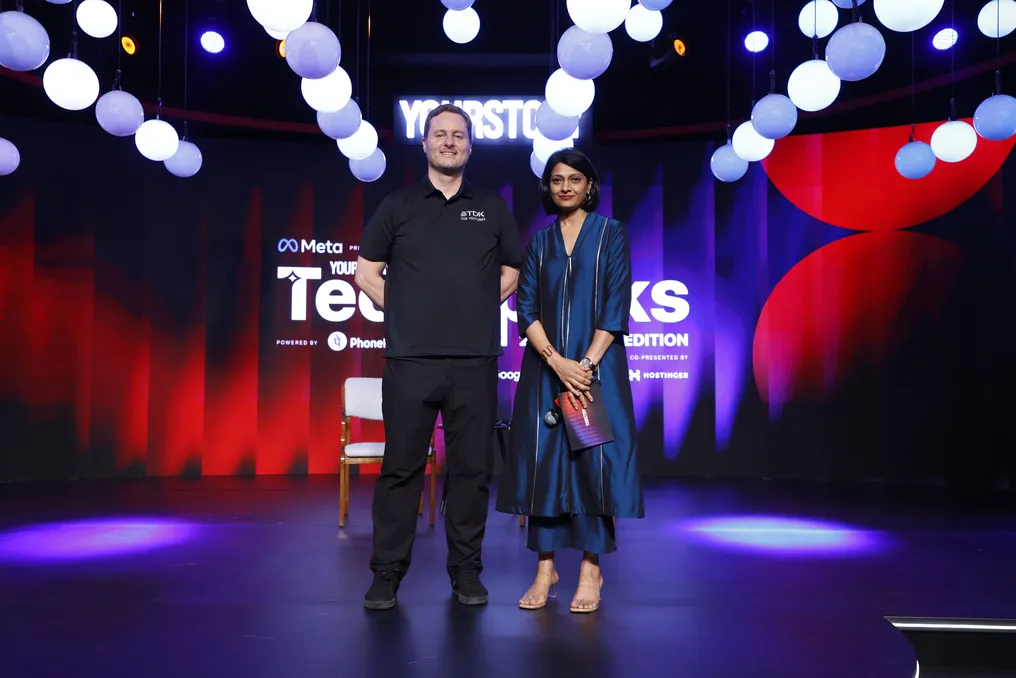
During a conversation with Shivani Mutanna, Senior Director of Strategic Content and Video at YourStory, at the TechSparks 2026 event, Sauvage noted that top talent is beginning to move into deep tech startups, where they are experimenting with things they wouldn't have dared to do ten or even five years ago.

TDK Ventures is a venture capital division of the Japanese electronics company TDK Corporation. Established in Silicon Valley in 2019, it opened its innovation center in Bengaluru in 2023, becoming its first office outside the US. According to Sauvage, India is the second-largest market for TDK Ventures in terms of investment volume.

The ecosystem Sauvage is betting on continues to grow. According to a Nasscom–Zinnov report, there are over 4,200 deep tech startups in India that attracted $2.3 billion in 2025, a 37% increase from the previous year.

In a session titled 'Globally by Design: What India's Deep Tech Sector Needs to Become a World Leader,' he outlined what Indian founders need to do correctly to build companies capable of competing on the global stage. This includes selecting the first customer, finding suitable investors, and planning for scaling before it becomes too expensive.

Speaking about investing in SpaceTech, Sauvage named the US, China, and India as the three countries where he would consider investing as a venture capitalist. He believes India has a distinct advantage in space, shaped by decades of institutional investment through the Indian Space Research Organisation. The government space promotion agency, IN-SPACe, projects that India's space economy will grow from $8.4 billion to $44 billion by 2033, increasing its global market share from 2% to 8%.

TDK Ventures co-led a $20.5 million Series A round in the Bengaluru-based space technology startup Ethereal Exploration Guild (The Guild), which develops a fully reusable medium-lift rocket.

Sauvage also pointed to a shift in artificial intelligence. He noted that the focus of the conversation has moved from tokens and computing power to electrons and gigawatts, meaning every element related to power delivery to chips is now important. TDK Ventures invested in C2i Semiconductors, a Bengaluru-based startup founded in 2024 by former Texas Instruments engineers, which creates power management technologies for AI data centers. German company Infineon Technologies announced the acquisition of C2i in August 2026 and completed it in October, about two years after the startup's founding.

Beyond individual sectors, Sauvage highlighted a cultural trait—'jugaad,' or ingenuity under constraints. He explained that the entrepreneurial journey involves moving from an idea with huge limitations to creating something valuable and useful, which is an example of 'jugaad.'

This ingenuity is reflected in the numbers: the capital efficiency among Indian portfolio companies is world-class. He emphasized that, being from Europe, he would not compare capital efficiency to Europe.

When asked what founders working for the global market out of India should focus on first, Sauvage pointed to Exponent Energy. Founded in 2020 by former Ather Energy executives Arun Vinayak and Sanjay Bhyalal, this company offers 15-minute fast charging. In June 2026, TDK Ventures co-led a ₹200 crore ($21.1 million) round in Exponent, bringing the company's total funding since 2020 to $65.7 million.

Exponent's long-term goal was megawatt fast charging for intercity buses, but starting there was impossible. Instead, the company began supplying battery management systems (BMS) to three-wheeler manufacturers—a fragmented market with over 70 manufacturers at the time.

Sauvage noted that a German startup could not convince BMW to adopt their solution, nor could an American startup convince General Motors to adopt their BMS. India's fragmented market allowed Exponent to expand among numerous manufacturers in and outside Bengaluru, providing a foundation for growth.

Sauvage compared founders to superheroes, each needing their own superpower—what they know or do better than anyone else. This is what attracts investors. However, like any superhero movie, there are many battles before the finale, and founders need allies.

He advised ensuring that the investors chosen for entrepreneurship bring the necessary superpower at the right time. Corporate venture funds can provide a market entry channel, an early anchor client, a hard-to-reach supplier, or help mitigate scientific risks, depending on their profile.

He strongly urged founders to choose investors based on what they add that is missing from the capital structure. For TDK Ventures, this means leveraging TDK's experience in energy, sensing, passive components, and power sources. Sauvage mentioned that electric motorcycle manufacturer Ultraviolette is now receiving components typically intended for TDK's largest clients, and TDK is working with The Guild on future component requirements and roadmaps.

Beyond seeking financial returns from venture capital, TDK Ventures seeks ways in which TDK's capabilities or its 'superpowers' can accelerate and de-risk the founder's path to building a globally significant company.

Sauvage linked several portfolio company successes to first-principles thinking. TDK Ventures invested in AI chip maker Groq in 2020. During an interview with founder Jonathan Ross before the investment, Sauvage observed that every answer, from defining company values to hiring and firing, boiled down to first principles. This approach led to a chip architecture designed around a compiler, ensuring fully predictable, low-latency output. Sauvage claimed he was confident in the future of inference even before ChatGPT, valuing the market at over $60 billion. In December 2025, NVIDIA signed a non-exclusive licensing agreement for Groq's technology, reportedly worth around $20 billion, and hired Ross and several members of his team.

He applied the same lens to engineering solutions that appear to be compromises. Ultraviolette, he said, uses first-principles engineering to simultaneously improve performance, weight, and cost. The company now sells its motorcycles in Germany, France, Switzerland, the UK, and other European markets, bringing its products to markets served by established players like BMW. Ultraviolette recently raised $85 million in a round led by Yali Capital and TDK Ventures.

Sauvage concluded that deep tech founders need both aspects. He noted that instant success takes 10 years, citing examples of Groq (10 years) and SpaceX (17 years). At the same time, founders need urgency and a sense of societal contribution.

Before investing, he looks for four things: a founder with a superpower, a category-defining product, a large enough market, and proof that the company can win one customer, then the next, while maintaining capital efficiency. Markets valued between $1 and $2 billion might be too small for the venture returns TDK Ventures seeks, as the firm aims for each investment to have the potential to return the entire fund.

He mentioned SPAN, a Silicon Valley company led by Indian-origin founder Arham Rao. SPAN started by redesigning the home electrical panel—a product that had barely changed in a century. As demand for AI infrastructure grew, SPAN expanded its power management technology into distributed computing through partnerships, which, according to Sauvage, changed the company's trajectory.

Longer cycles also explain why India needs more corporate investors now. Using an approximate four-year path to success in SaaS and fintech, Sauvage described an ecosystem that can recycle entrepreneurial experience about 2.5 times per decade, as founders and employees carry acquired knowledge into new companies. A decade in deep tech allows only one such cycle in the same period. Therefore, networks of serial founders and alumni-founded companies, such as those connected to PayPal and SpaceX, develop more slowly. Corporate investors can help bridge this gap with technical expertise, suppliers, and client relationships.
Similar stories

Europe seeks technological partnership with India, focusing on opportunities rather than just scale
Read more
yourstory.com

Europe seeks technological partnership with India, focusing on opportunities rather than just scale

In a world where countries are actively investing in their own semiconductor production, artificial intelligence model development, and critical infrastructure, creating everything necessary independently is not always practical or mandatory. The main task is to find a balance between maintaining strategic sovereignty and the need for international cooperation.

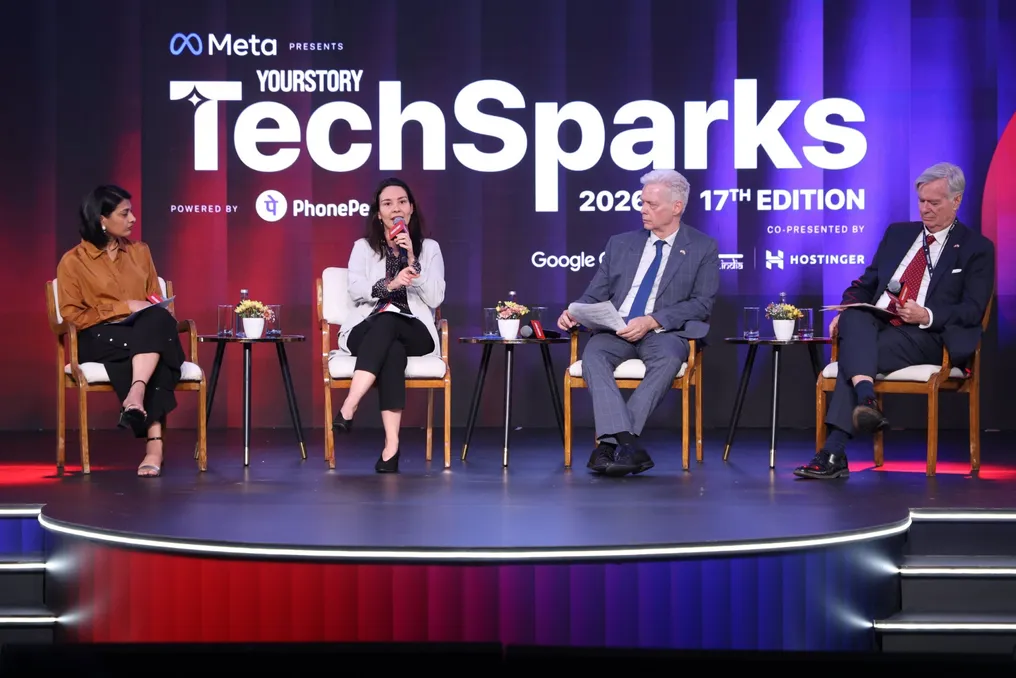
These issues were discussed at a panel titled 'New Technological Alliances: Why Startups Around the World Need India, and Why India Needs the World' during the TechSparks 2026 event, held on October 15 in Bangalore. The discussion focused on how Indian startups can integrate into international technological ecosystems, as well as how global partners can strengthen ties with India.

The panel discussion featured Dr. Angela Honegger, CEO and Consul General of Swissnex India (Switzerland); Jakobus Johannes 'Jaap' Vermeulen, Consul General of the Kingdom of the Netherlands in Bangalore; and Peter Winter-Schmidt from the Consulate General of Denmark in Bangalore. These three representatives spoke about programs that help startups gain access to research, funding, markets, and partnerships both in India and Europe.

Winter-Schmidt emphasized that strategic sovereignty should not be equated with technological independence. He noted that while defense and security require a certain degree of sovereignty, areas such as talent, research, and technical compatibility benefit from international interaction. He cited the European Union's digital wallet as an example, which, he said, is being developed based on the Indian technology stack with support from India.

Vermeulen agreed that states must define critical elements for their own ecosystems while remaining open to partnership, stating: 'I do not believe in isolation' and stressing the importance of finding suitable partners.

Honegger also insisted on the necessity of collaboration, asserting: 'If we want a chance to win, we must cooperate.' She described Swissnex as a science consulate with six global branches, including Bangalore. Swissnex programs cover student and researcher exchange, joint research funding for Swiss-Indian teams, bilateral startup exchanges, and market validation camps. Under the program, companies from each country visit each other to explore opportunities.

As an example of cross-border cooperation, Honegger mentioned the company Suind, which operates in the fields of AI, drones, and agriculture. Founded by a Swiss and Indian entrepreneur, Suind initially opened a subsidiary in Bangalore before relocating its headquarters and subsidiary. Honegger clarified: 'Technically, it is an Indian startup with a Swiss division.'

She called on deep-tech founders in India to consider transferring part of their R&D operations to Switzerland while keeping headquarters and manufacturing in India. She added that Swiss Innovation Parks provide access to research facilities, specialized technology platforms, and government funding for joint R&D with Swiss institutions. The robotics startup CynLr from Bangalore has already opened a subsidiary in one of these parks.

Honegger also highlighted Apertus, an open-source model from Switzerland, as an example of efforts to develop publicly available AI infrastructure and prevent the concentration of control over this technology 'in the hands of a few corporations.'

Vermeulen spoke about the Netherlands' partnership with India in semiconductors, signed several months ago. This agreement covers semiconductor design, photonics, and advanced packaging, alongside manufacturing. He also reported that the Dutch semiconductor equipment manufacturer ASML is expanding its presence in India. Recently, the Dutch consulate brought 17 startups to Semicon India as part of efforts to strengthen technological ties between the two countries.

Vermeulen also mentioned the Brain Bridge program, which connects Dutch and Indian universities with Dutch companies already operating in India. Five Indian medical technology startups were selected for grants to explore opportunities in the Netherlands, and a cybersecurity mission is also planned.

Vermeulen stated: 'We see Bangalore as the Silicon Valley of Asia.' Winter-Schmidt, describing Denmark's approach to working with Indian startups, used the phrase: 'The key word for us is co-development.' He highlighted Denmark's 'Water Challenge,' which invites 10 selected Indian startups to Danish universities to work on AI-based water purification solutions. Afterward, the startups present their ideas to investors, having access to seed funding.

The Green Strategic Partnership Agreement between Denmark and India is also being extended and expanded to include space technologies, deep tech, and defense technologies. Winter-Schmidt mentioned a recent Memorandum of Understanding between DTU and IIT Madras, as well as efforts to unite venture and private investors from both countries through a 'financial bridge.' He also mentioned the Danish Impact Fund, which primarily provides loans for solutions that have a positive impact on the environment.

The three representatives gave practical advice to Indian founders aiming to enter European markets. Winter-Schmidt strongly advised startups to identify a specific market instead of viewing Europe as a monolith. He recommended that founders validate their value proposition before entering the market, dedicate time to building relationships, and be prepared to share their solutions with local partners rather than excessively protecting them.

Honegger called for greater willingness among Indian companies to take risks when working with international startups. She wanted to see a 'greater propensity for risk... to become a co-creator, not just a recipient of innovation.' She explained that Swiss startups often find that discussions with potential Indian partners end after a free pilot project. She argued that companies must be more willing to share the financial and operational risks of developing new technologies. In her view, the solution is to 'share the risk associated with innovation across several shoulders.'

During the Q&A session, an eleven-year-old founder asked how small companies navigate European regulations such as the General Data Protection Regulation (GDPR). The panel advised startups to prepare in advance, carefully select target markets, and seek advice from local partners, consultants, and consulates.

Winter-Schmidt noted that Danish companies traditionally viewed India primarily as a market offering scale. However, in his opinion, this is only part of the possibilities. He concluded: 'You come to India not for scale, you come to India for opportunities.' He also stressed that international partnership should involve learning on both sides, adding: 'We don't have that much to teach India... We can learn as much from them.'

Conditions for the globalization of India's fintech infrastructure discussed at TechSparks 2026 conference
Read more
yourstory.com

Conditions for the globalization of India's fintech infrastructure discussed at TechSparks 2026 conference

The Indian payment ecosystem has demonstrated its ability to function on a massive scale. However, as fintech companies expand into cross-border business payments and implement artificial intelligence, they face a different set of challenges.

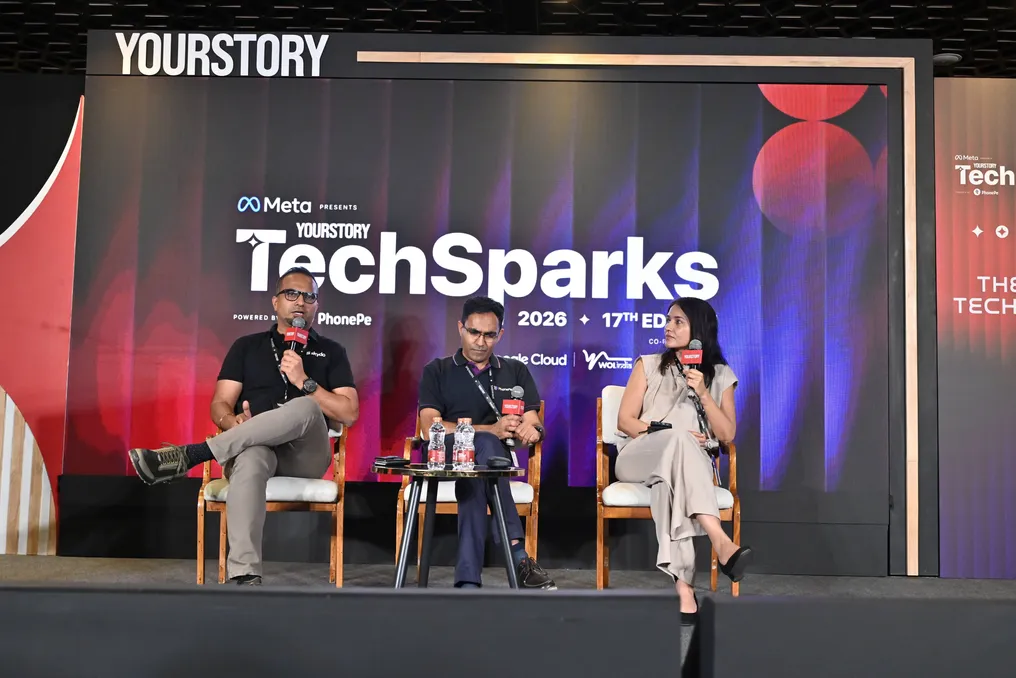
At the TechSparks 2026 event, Mevin Jane, founder of Skydo, and Srijon Biswas, CTO of PhonePe, discussed large-scale payment technologies, the need for transparency in international transactions, and the opportunities opened up by AI.

The panel discussion, moderated by Priya Patankar, Head of Corporate Communications at PhonePe, focused on the topic 'From domestic scale to global channels: The evolution of India's fintech infrastructure.' Jane believes that cross-border payments present significant prospects because the adoption rate of fintech solutions remains relatively low.

India exports goods and services worth about $850 billion annually and imports approximately $1 trillion, with both figures growing. Nevertheless, according to Jane, less than 10% of these transactions are processed by fintech companies; most payments are still handled by banks.

Skydo specializes in B2B payments, where the adoption of fintech solutions is even lower than in consumer payments. Many businesses still do not understand how fintech companies can help them manage international transactions. Jane believes that the immediate opportunity lies in raising awareness of this category, rather than competing on price.

He noted: 'Wasting time worrying about other fintech players and how to compete with them is not a good use of time. That time may come, perhaps in 5–10 years, when all of us have much greater market penetration.' Currently, the priority is demonstrating to businesses how fintech companies can solve payment problems traditionally solved by banks.

Despite venture capital activity and regulatory changes contributing to the sector's progress, Jane sees significant growth potential. PhonePe's experience highlights the importance of making the right architectural decisions early on. Biswas stated that the company planned for scaling from the beginning. Its early architects created systems and engineering practices that continued to support the platform as it grew 100–1000 times.

'We used the same template, the same set of libraries, the same set of constructs that we used. So, it was built in from the start. We effectively did not conduct a major refactoring of our architecture in the longest time I can remember,' he said. Instead of a major architectural overhaul, PhonePe focused on understanding its technology stack and making informed decisions about the systems used.

The company formed its own SRE (Site Reliability Engineering) team, implemented a sharded database architecture from the start, and chose technologies that its engineers understood well. Biswas also emphasized the importance of engineering hygiene, instrumentation, testing, quality assurance, and load testing. According to him, at PhonePe's scale, even unlikely failures can become operational problems.

Biswas recalled bugs that appeared in another organization many years ago. He explained that building a scalable system requires not only increased capacity but also robust architecture, careful technology selection, and the ability to understand and manage systems in complex conditions. Biswas added that regulation is not necessarily a constraint for fintech companies; it can prompt businesses to establish proper practices from the outset.

A more serious engineering challenge, he explained, relates to the combination of scale and diversity in India. He compared India's scale to China, noting that differences between geographical regions, use cases, and merchant environments create additional complexity. PhonePe encountered this during its early expansion into offline payments. When integrating with merchants, including pharmacy chains like Apollo Pharmacy, the company found that different systems were already in use across various states and cities. Supporting these merchants required creating integrations for multiple systems, rather than relying on a single standardized setup.

These differences generate numerous exceptions and edge cases that must be managed alongside high transaction volumes. Patankar also noted that PhonePe received a license in the UAE, opening new opportunities and challenges. Biswas stated that the company will need to adapt its infrastructure for international markets, rather than simply replicating its Indian operations. Most of PhonePe's existing payment architecture was designed specifically for India. The company is currently exploring additional layers of abstraction that could simplify international expansion without needing to deploy the entire existing stack and build large teams in each new region.

For businesses receiving payments from foreign clients, speed and cost are not the only factors. Jane believes that transparency is equally important. Small businesses, freelancers, and service providers should know how many dollars the client transferred and how many rupees will ultimately arrive in their accounts, but they may not understand the exchange rate used, foreign currency fees, or how the final amount is calculated. Without this information, businesses may find it difficult to dispute charges or compare payment service providers.

Jane reported that Skydo is working on educating clients about these costs and helping them understand where savings are possible. He cited an example of a business receiving a $5,000 payment from an international client. In a transparent system, the business immediately knows after the client makes the payment how many rupees it can expect to receive and when the money is likely to arrive. They can also see the applicable exchange rate, understand how the final amount was calculated, and learn the applicable GST.

The discussion also touched upon the growing role of AI in fintech and its potential impact on business. Jane noted that Skydo collaborates with service companies, ranging from law and consulting firms to IT companies and freelancers. He believes that AI agents and automation can enable small firms to provide services that previously required the resources of much larger organizations. This can create opportunities for smaller, specialized businesses and freelancers to earn more than previously possible, especially in India.

At PhonePe, Biswas described the implementation of AI in three areas: user experience, developer productivity, and operational efficiency. In the PhonePe app, users can search and ask questions about their transactions using an on-device model. AI is also used in workflows to interpret regulatory and compliance documents. This helps teams understand what regulatory changes mean for the business without manually processing every document. Developer productivity is another area where PhonePe has achieved improvements. Biswas said that AI assistance in coding reduced some processes that previously took three to five days to about 15 minutes. Generating test cases became 5–6 times faster in some cases, and some customer service and support workflows also showed a 5–6 times saving.

However, Biswas stressed that automation does not eliminate the need for human oversight. In regulated business, workflows that can affect users, systems, or processes will still require human involvement. India already possesses several foundational elements, including payment infrastructure and identity and consent systems. Biswas believes this provides an advantage as the fintech sector develops. Nevertheless, cross-border payments remain structurally complex. There is no single central counterparty linking all central banks and currencies through a unified accounting system. Consequently, businesses must navigate a fragmented payment infrastructure, solving the problems that fintech companies are trying to address.

The next task for India's fintech sector is to leverage the strengths of its domestic infrastructure while adapting to international markets. This will require increasing the transparency of cross-border payments, managing the complexity of diverse markets, and utilizing AI to boost business productivity.

TechSparks Experts Emphasize Need for Global Ambitions for Deep Tech Startups in India
Read more
yourstory.com

TechSparks Experts Emphasize Need for Global Ambitions for Deep Tech Startups in India

Participants of the panel discussion at the TechSparks summit by YourStory concluded that deep technology startups in India should target global markets despite existing challenges.

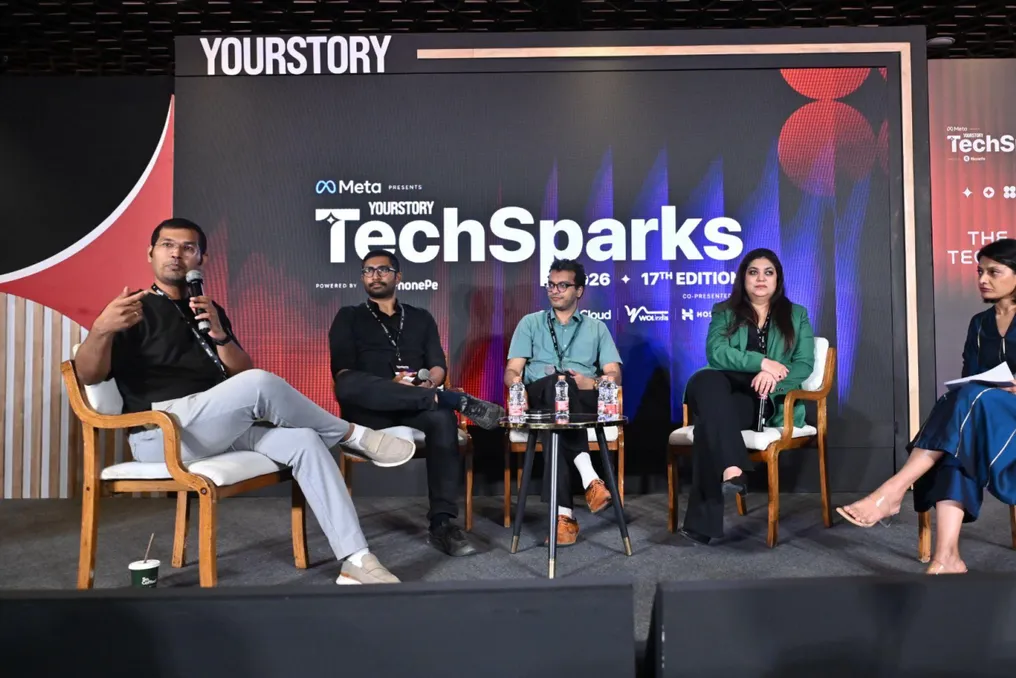
The deep tech sector within the Indian startup ecosystem has emerged from the shadows and secured its niche. Although various problems exist, experts agreed that the overall situation in the sector is improving. The panel included founders from robotics, precision manufacturing, and semiconductor fields, as well as a representative from an analytical policy center. Shivani Mutanna, Senior Director of Strategic Content and Video at YourStory, moderated the discussion.

Kaushik Mudda, founder and CEO of Ethereal Machines, a precision manufacturing company, stated that his company possesses most of the necessary conditions for international competition. Shweta Rajpal Kohli, President and CEO of Startup Policy Forum, noted that thanks to significant government contributions in terms of capital and policy, the deep tech ecosystem has found its rightful place. She emphasized: 'I think the government has done many right things in creating a conducive environment. Now is the time for India to advance deep technologies.'

Today, deep technologies aim to create or possess technologies critical to the country's sovereignty. Harish Chandrasekar, co-founder of Agnit Semiconductors, noted that all ecosystems need to develop, but this will only happen over time. Agnit Semiconductors is the first vertically integrated startup in India producing gallium nitride-based semiconductors.

Gokul N A, founder of the robotics startup CynLr, highlighted the challenges faced by deep tech startups in the country, especially in their field, pointing out the lack of a complete ecosystem. He also pointed to the shortage of skilled manpower, particularly at the middle management level, adding that the country produces insufficiently high-quality engineers because its focus remains predominantly service-oriented.

The panelists agreed that the country needs clearly defined directions in the deep technology segment, which is a very broad topic. Mudda stated that it is necessary to begin forming the basic elements for becoming a manufacturing superpower. Chandrasekar stressed the importance of developing sovereign capabilities for the country in the current climate where semiconductors are used as weapons.

Access to capital is also a hurdle, although the situation has significantly improved compared to the past. Gokul noted that while seed funding has improved, more effort is required to attract long-term capital to this segment. Kohli reported that the capital problem is being addressed, particularly through the Government's Research, Development, and Innovation fund of 1 lakh crore.

Mudda suggested that raising funds up to $5 million is not a major issue for deep tech startups, but there is a deficit when attracting larger sums—from $10 to $15 million.

Regarding the role of the state as a customer for deep tech startups in the country, the panelists believe the government can act as an assistant, but startups must look towards global markets. Kohli stated that demand generation and the government's role as the first buyer are a big stimulus for any sector, but she added that the government procurement process is somewhat complex.

Chandrasekar noted that although startups would like the government to be their first client, it cannot be the only one. Gokul emphasized that deep tech requires a global market and cannot focus solely on India. In conclusion, Kohli noted that increasing the self-confidence of ecosystem participants is necessary to ensure the growth of deep technologies, stating: 'India has the talent, the scale, and everything needed. We just need to accelerate this at a feverish pace now.'

Popular