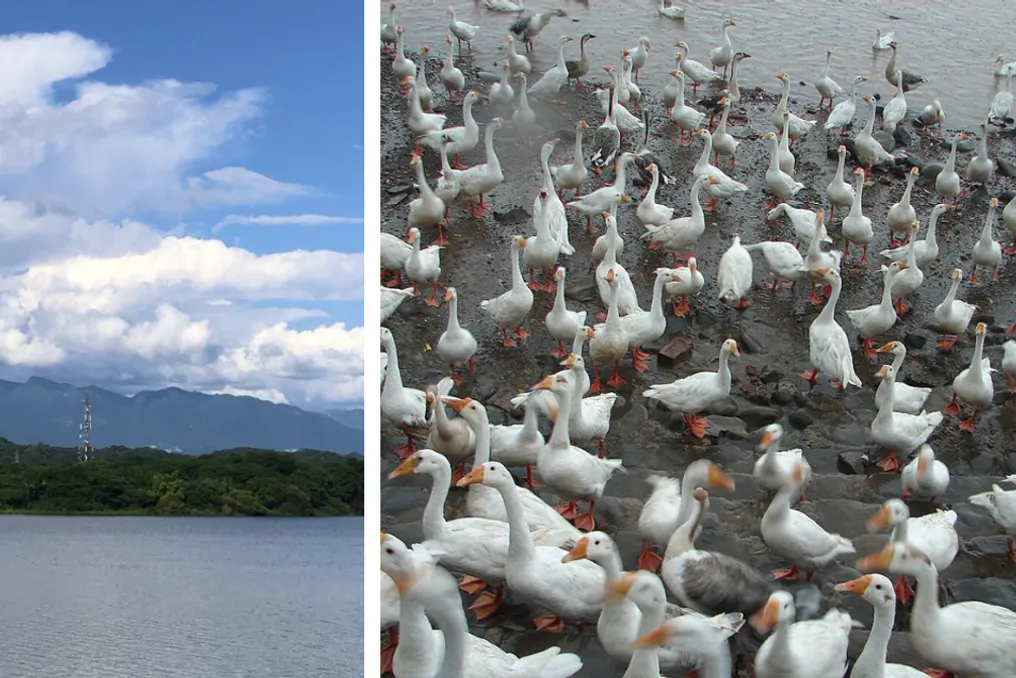
Sukun Wetland Complex in Chandigarh Recognized as India's 103rd Ramsar Site
Read more
The Better India
thebetterindia.com

Sukun Wetland Complex in Chandigarh Recognized as India's 103rd Ramsar Site

The famous Sukna wetland complex in Chandigarh has officially been designated as India's 103rd Ramsar site, receiving the number 2602. This inclusion places Chandigarh on the global map of internationally recognized wetlands.

Located on the outskirts of Chandigarh, where the Shivalik Hills rise towards the Himalayas, Lake Sukna offers residents more than just an open body of water. Its shores, surrounding vegetation, and adjacent forests form a habitat that supports wildlife, including birds that travel thousands of kilometers between continents.

Sukna functions as a peri-urban water body, meaning it is a water feature located within or near an urban area while maintaining critically important ecological functions. This ecological significance has now received international recognition.

Four Habitats, One Interconnected Ecosystem

A wetland is not merely an extensive surface of water. Its ecological character is defined by the various habitats existing within and around it, and it is these habitats that allow different species of wildlife to utilize the area in diverse ways. Some species depend on open water, while others use the vegetation along the banks or the surrounding forest.

This diversity is particularly important for birds that use Sukna as a seasonal stopover. For migratory waterfowl, wetlands are not isolated points; they are part of larger geographical routes connecting breeding grounds, feeding zones, and wintering areas.

Stopover on the Central Asian Flyway

Sukna is situated along the Central Asian Flyway, which is a primary route for birds migrating between breeding and wintering grounds. During these journeys, birds require suitable places to rest, feed, and recover before continuing their migration. Wetlands like Sukna provide these vital habitats.

The lake serves as a feeding, breeding, roosting, and wintering ground for migratory waterfowl. Each of these functions is significant at different stages of the bird's life cycle. Furthermore, Sukna supports species with varying conservation statuses, highlighting the importance of protecting its habitat.

India's network of Ramsar sites has expanded to 103! With the addition of Lake Sukna in Chandigarh and Sauj Gill in Uttar Pradesh to the list, India's commitment to wetland conservation continues to grow. These wetlands preserve biodiversity, strengthen water and climate security, and support local livelihoods. Their recognition also reinforces the importance of protecting these vital ecosystems for future generations.

Among three notable species associated with this wetland are: the Common Moorhen, classified as a vulnerable species that depends on suitable freshwater habitats; the Pallid Harrier, classified as endangered, a large predator associated with wetland and riverine ecosystems; and the Black Swamp Turtle, classified as endangered, a freshwater turtle that requires suitable aquatic conditions to survive.

What Does Ramsar Status Mean?

The Ramsar Convention is an international agreement for the conservation and wise use of wetlands. It is named after the Iranian city where it was adopted in 1971 and establishes the framework for recognizing wetlands of international importance.

Inclusion in the Ramsar List grants the wetland international recognition of its ecological significance and draws attention to the need for its preservation. With the inclusion of Sukna, India's Ramsar network now comprises 103 sites. For Chandigarh, this designation places one of its important urban wetlands into this international system of nature conservation.

Thus, Sukna's new status is more than just an international listing. It is a recognition that even in a planned city, a wetland can remain part of a much larger ecological network connecting local landscapes with wildlife and migratory routes stretching far beyond national borders.
Similar stories

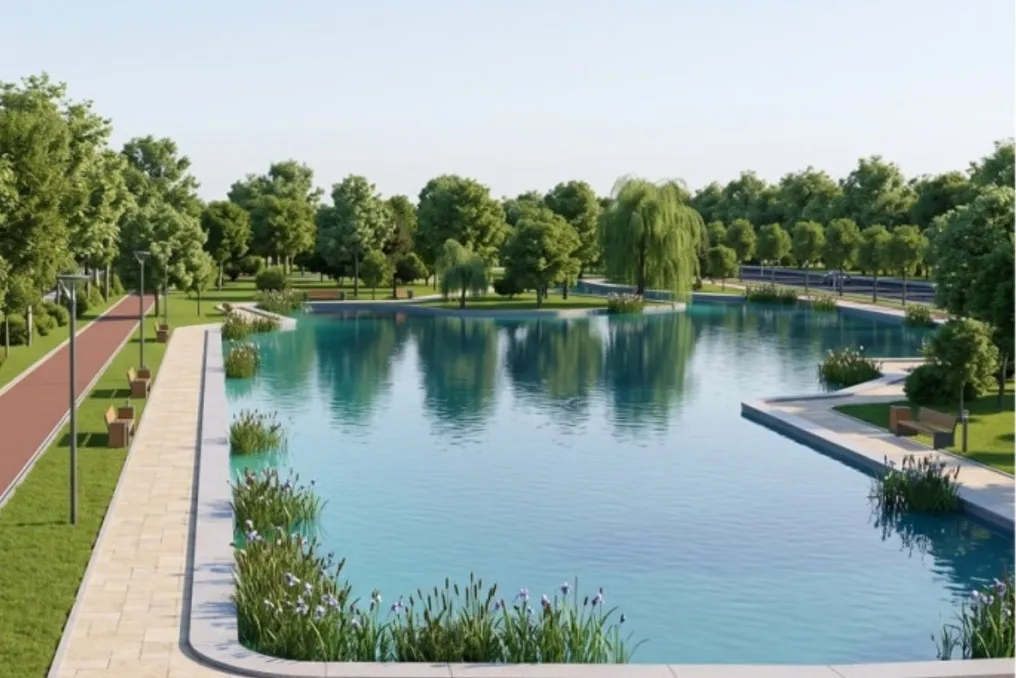
A park with an artificial lake and green areas is planned for the Almazar district of the capital
Read more
podrobno.uz

A park with an artificial lake and green areas is planned for the Almazar district of the capital

Construction has begun on a new recreation area in the capital's Almazar district, which will include an artificial lake. This modern park is planned to be developed on Keles Yuli street, and there is a promise to preserve all existing mature trees in this area.

The creation of the park is aimed at improving the ecological condition of the district and enhancing the living conditions of its residents. A comfortable place for citizens to walk and relax will be formed on the planned territory.

According to information provided by the Almazar district hokimiyat, all old mature trees will remain in their original places. If necessary, some small trees will be transplanted to other suitable sites under the supervision of specialized experts to ensure their preservation.

After the completion of all construction work, this area is intended to become one of the leisure venues for local residents, equipped with modern infrastructure and a landscaped green zone. Furthermore, it is reported that another artificial lake will be created in the Uchtepinsky district of Tashkent.

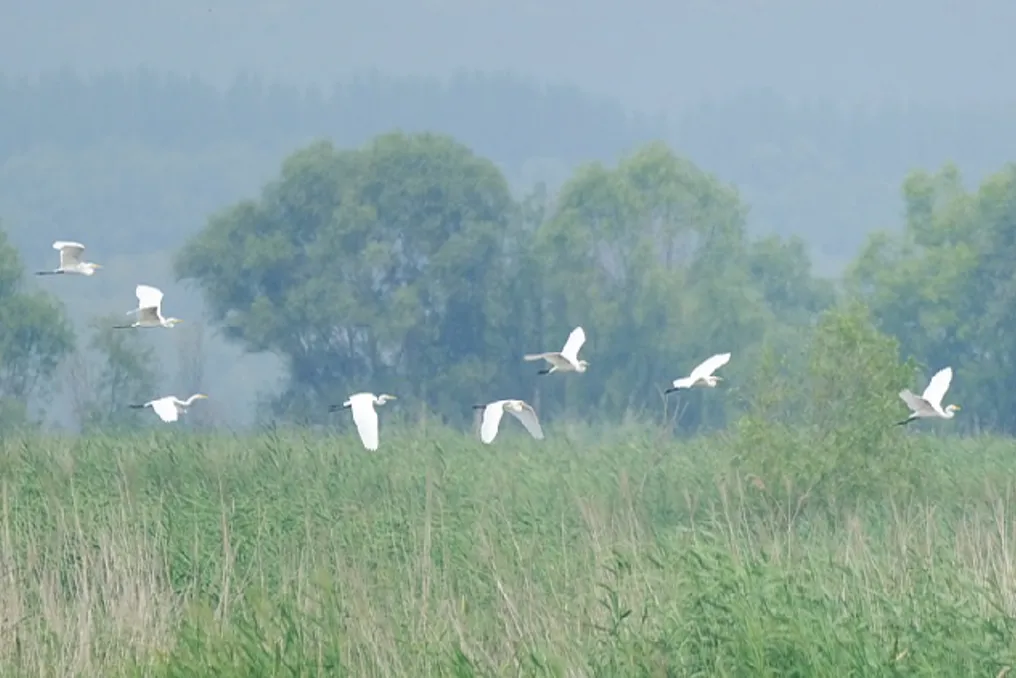
Yejihu Wetland Designated on IUCN Green List as Model Protected Area
Read more
cgtn.com

Yejihu Wetland Designated on IUCN Green List as Model Protected Area

The Yejihu Nature Reserve, located in the Yancun district of Beijing, has been included in the International Union for Conservation of Nature's (IUCN) Green List as one of the world's premier protected areas.

This achievement is the first for the Beijing-Tianjin-Hebei region and the first for Beijing itself, gaining international recognition for the capital's ecological buffer zone.

Currently, the IUCN Green List registers over 120 protected sites worldwide, with 34 sites represented from China.

Yejihu, situated in the northwest of Yancun, is Beijing's largest and most diverse inland wetland, possessing a semi-natural character. It represents a complex ecosystem consisting of ponds and water bodies around the Guanting Reservoir.

When the reserve was established in 1997, the wetlands faced severe degradation, including drying up and frequent human interference such as scattered horse farms and enclosures along the shoreline.

After more than two decades of continuous restoration work, local authorities implemented coordinated measures that included restoring land from agricultural use, improving watercourse connectivity, building habitat islands, and revegetating.

According to officials, over 13 square kilometers of degraded wetlands have been restored, helping to revive the previously weakened ecosystem. This wetland is located on the East Asian-Australasian Flyway and serves as a crucial stopover point for migratory birds.

More than 100,000 migratory birds rest and refuel here every year. The number of registered bird species has increased from 189 at the time of the reserve's establishment to 374, accounting for 72 percent of all documented bird species in Beijing. Rare and endangered species, such as the Baer's sandpiper and the Siberian crane, are regularly observed.

The site was recognized as a wetland of international importance in 2023, and the new IUCN Green List designation is another major international acknowledgment of its conservation progress.

Zhang Bin, Secretary of the Party and Director of the Yancun District Protected Areas Administration, stated: 'Using the IUCN Green List accreditation as a new starting point, Yejihu will leverage this global platform, which covers protected areas in over 60 countries, to share stories of biodiversity conservation in Beijing.'

Zhang added: 'We will continue to develop our nature conservation and public awareness programs, deepen co-management with the community, and turn this international certification into an impetus for ecological protection and green development. The wetlands will continue to support the development of Yancun as an ecological demonstration zone and a protected area of Beijing, keeping its waters clean and its skies filled with birdsong.'

Popular