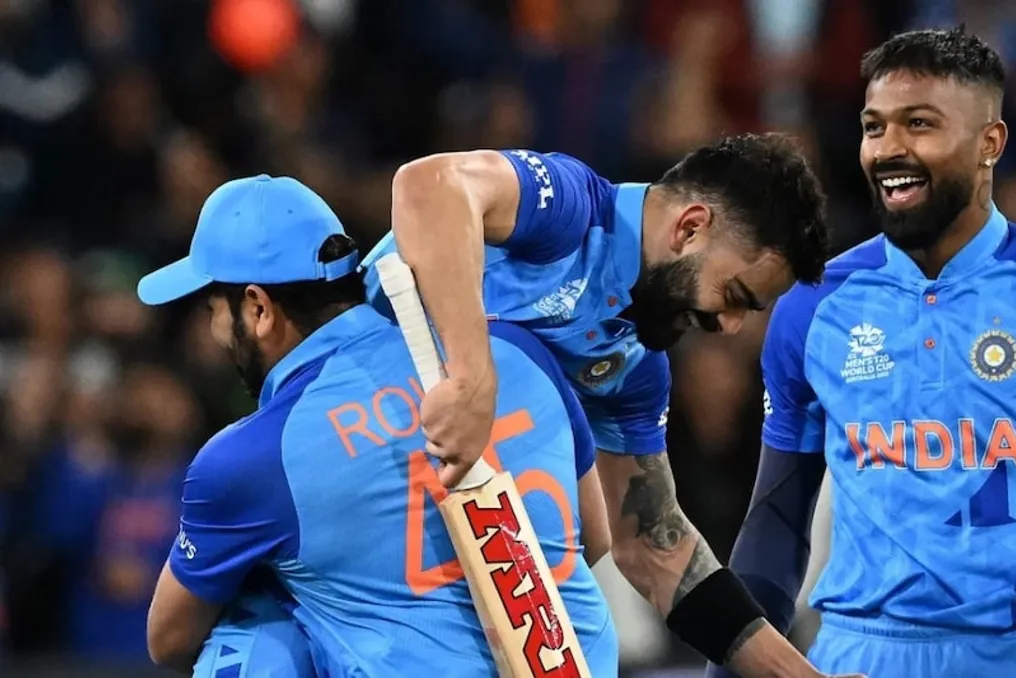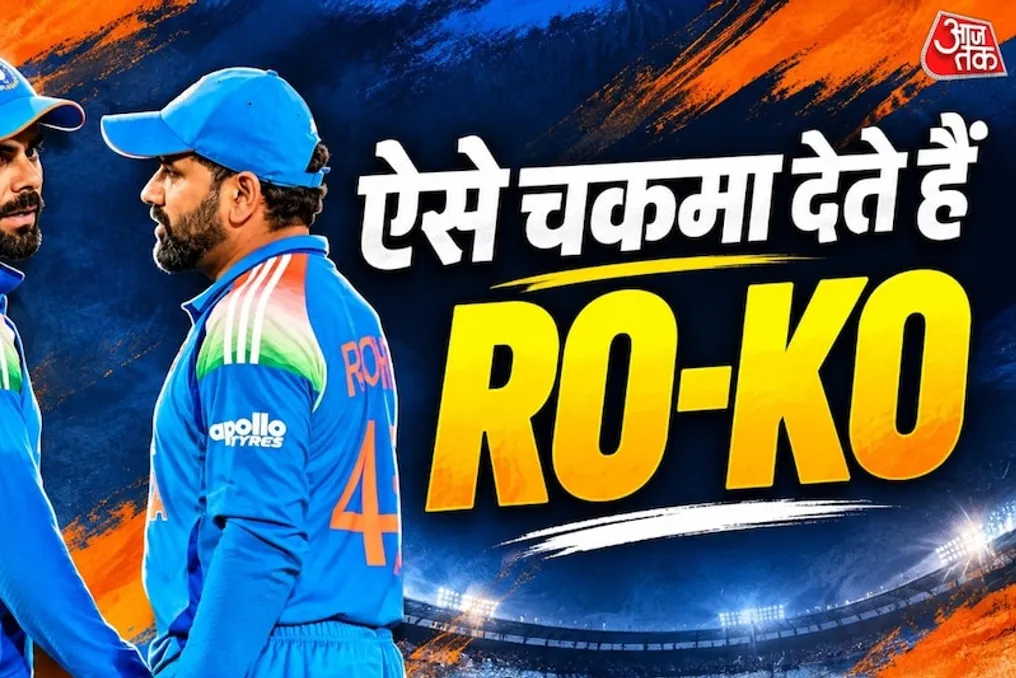
According to the coaching staff, experience and skills allow Kohli and Rohit to succeed in the small boundaries of New Zealand
Read more
Aaj Tak
www.aajtak.in

According to the coaching staff, experience and skills allow Kohli and Rohit to succeed in the small boundaries of New Zealand

Although the small boundaries at New Zealand stadiums can be advantageous for batsmen, they present a serious challenge for fielders. The ball quickly crosses the boundary line, leaving fielders very little time to react. Nevertheless, experienced athletes such as Virat Kohli and Rohit Sharma demonstrate outstanding results due to their agility and precise decision-making. Subhish Ghosh, the fielding coach for the Indian team, explained the secret behind these two veterans' brilliant play.

Before the second ODI between India and New Zealand, held in Wellington, Subhish Ghosh elaborated on the game of Kohli and Rohit. He noted that both players have years of experience playing in the same position. This long experience has strengthened their muscle memory, allowing them to anticipate the direction and trajectory of the ball faster than others.

Ghosh emphasized: 'One of the most important aspects in fielding is predicting the ball. Virat has played at cover and point millions of times. He is able to anticipate the direction, path, and movement of the ball after contact with the ground earlier than other players.'

Commenting on Rohit Sharma's play, he mentioned an impressive catch in the first ODI. According to Ghosh, Rohit was able to recognize the situation even before the ball reached him. To become a great fielder, natural talent, experience, and regular repetition of the same action are necessary.

The small boundaries on New Zealand fields create a unique challenge for Indian fielders. Ghosh explained that when the field is compact, the need for fielders on the boundary decreases, and most players are placed in the infield. Under these conditions, the time between the batsman's shot and the fielder's reaction becomes extremely short.

He added: 'If you play on fields with small boundaries, there is no outfielder; everyone is an infielder. Reaction time is reduced because the boundary is very close.'

To increase speed and the ability to correctly judge the ball in fielding, the Indian team uses light balls during training. Ghosh reported that a light ball requires greater stability and better reaction from players. Furthermore, emphasis is placed on understanding the ball's movement and making decisions at the right moment.

He noted that judging the ball in New Zealand is critically important, and the team is constantly working on the stability of its fielders and their ability to judge the ball during training sessions.

Subhish Ghosh expressed satisfaction with the performance of the Indian players in the first ODI. He noted that the team made good catches and demonstrated excellent fielding. The energy and enthusiasm of the players on the field were also positively assessed.

Ghosh admitted that dropping a caught ball is part of the game of cricket, but the team takes this matter seriously, and the players are aware of their responsibility. Ghosh, who took over as fielding coach after T. Dilap, who held the position in August, is now working on improving the team's stability in the field and its ability to judge the ball correctly.

India won the five-match T20 series against New Zealand by a score of 3-2. Following this victory in the first ODI of the ODI series, the Indian team took a 1-0 lead. After this tour, the Indian team is scheduled to play another series of two Test matches. When asked about the physical pressure on the players due to continuous matches, Ghosh replied that it is more of a mental than a physical challenge.

He stated that although continuous matches are physically demanding, the Indian players are so experienced that they know how to cope with such circumstances. Regarding whether Mohammed Siraj will get a spot in the starting eleven for the second ODI, Ghosh declined to make any statements, noting that the decision will be made by the team management.
Similar stories

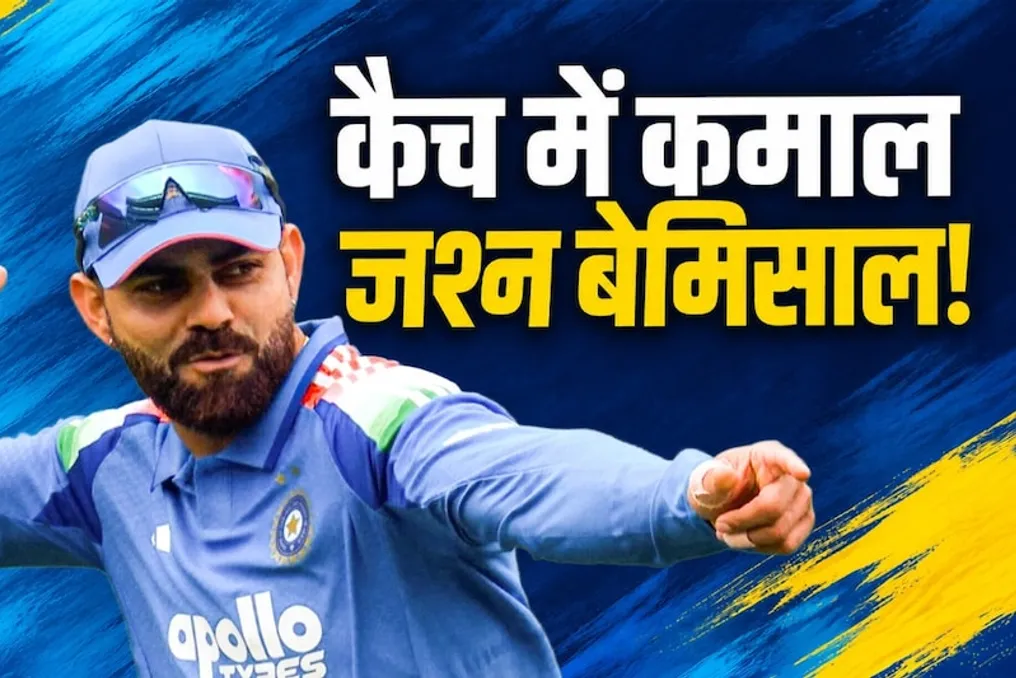
Virat Kohli and Rohit Sharma demonstrated outstanding fielding in the India versus New Zealand match
Read more
www.aajtak.in

Virat Kohli and Rohit Sharma demonstrated outstanding fielding in the India versus New Zealand match

During the match between India and New Zealand at Eden Park in Auckland on Wednesday, the starting team players impressed with their fielding. First, Rohit Sharma took out Daryl Mitchell with a brilliant throw, followed by Virat Kohli drawing widespread attention with his magnificent catch.

This decisive moment occurred in the 29th over of New Zealand's innings, on the third ball. Anshul Kamboj was bowling, and Nathan Smith was at the crease. Kamboj delivered a full toss, which Smith attempted to drive. The ball grazed the outside edge of the bat and quickly flew towards the second slip.

Virat Kohli, who was present, made a throw to the right, jumping to catch the ball just inches above the ground. Kohli was completely confident in this catch, and the television umpire confirmed it as a clean catch after reviewing the replay. Nathan Smith was dismissed, having scored only 1 run off 9 balls.

Prior to this, Rohit Sharma also attracted the attention of spectators with his fielding, playing a key role in the dismissal of Daryl Mitchell. Rohit quickly ran to the ball from mid-wicket and executed a superb angled throw. KL Rahul, demonstrating agility behind the wicket, dismissed Mitchell.

After catching the ball, Virat Kohli displayed his characteristic celebration gesture. He ran a short distance, then tossed the ball towards the umpire, followed by his famous 'Bow and Arrow' ceremony. He also celebrated by smiling at his teammate and sticking out his tongue. It is noted that Virat Kohli turned 38 that day.

Virat Kohli did not stop there. In the 32nd over of New Zealand's innings, on the first ball, he also caught Kyle Jamieson. On a short ball, Arshdeep Singh blocked the shot with the bat, but the ball went directly into the hands of Kohli, who was standing at point. Jamieson was dismissed, having scored 1 run off 6 balls. With this dismissal, New Zealand lost its eighth player.

Thus, two experienced players from the Indian team, Rohit Sharma and Virat Kohli, left a bright impression with their fielding in Auckland.

The New Zealand squad for the Auckland match included: Tim Seifert, Will Young, Henry Nicholls, Daryl Mitchell, Tom Latham (wicketkeeper), Glenn Phillips, Mitchell Santner (captain), Nathan Smith, Kyle Jamieson, Jacob Df, and Blair Tickner.

The India squad for the Auckland match consisted of: Shubman Gill (captain), Rohit Sharma, Virat Kohli, Shreyas Iyer, Axar Patel, KL Rahul (wicketkeeper), Naman Dheer, Anshul Kamboj, Akib Nabi, Guruon Barar, and Arshdeep Singh.

Ajinkya Rahane presents his Indian squad for Test matches, excluding Kohli and Bumrah
Read more
www.aajtak.in

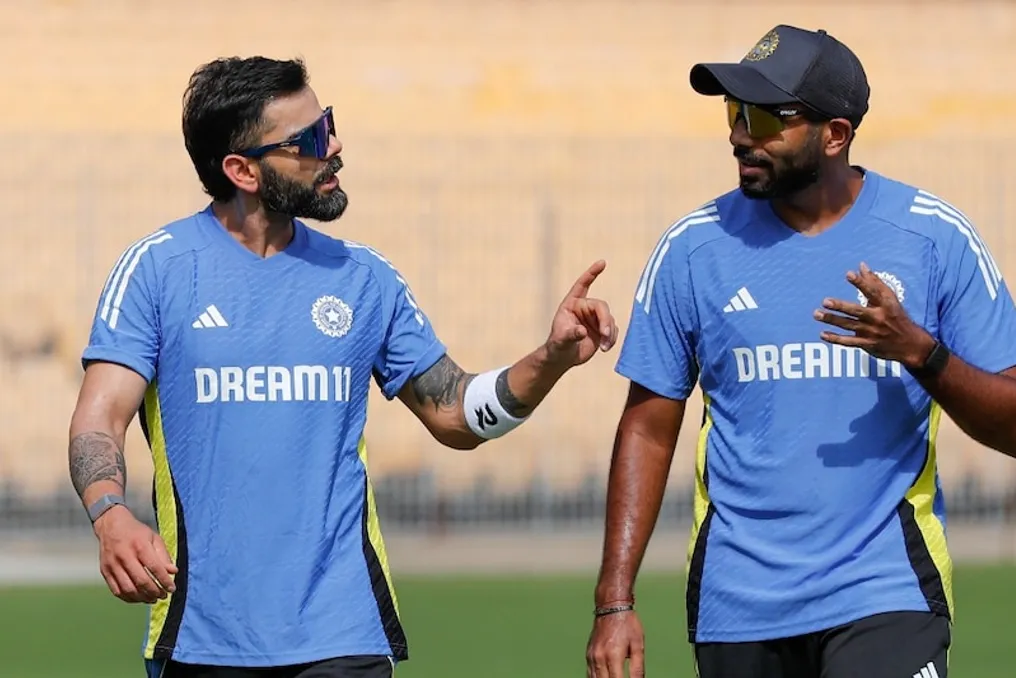
Ajinkya Rahane presents his Indian squad for Test matches, excluding Kohli and Bumrah

Former Indian cricketer Ajinkya Rahane has formed his Indian squad for Test matches, but the absence of two big names surprised cricket fans. It was noted that Rahane included players with whom he shared a dressing room.

Ajinkya Rahane has played for the Indian team in Tests multiple times, playing alongside legends such as Sachin Tendulkar, and also strengthening India's attack in Tests with Cheteshwar Pujara. Nevertheless, the exclusion of Kohli and Bumrah from his chosen team became a subject of wide discussion.

In Rahane's squad, Murali Vijay and Shikhar Dhawan are responsible for opening the match. Rahul Dravid is placed third, and Sachin Tendulkar is fourth. Rahane himself chose the fifth position. Mahendra Singh Dhoni was appointed captain and wicketkeeper. Ravichandran Ashwin and Ravindra Jadeja participate in the spin department, while Bhuvneshwar Kumar, Mohammed Shami, and Ishant Sharma are responsible for fast bowling.

One possible reason for Virat Kohli's absence from the team may be related to the batting order. Ajinkya Rahane placed the master blaster Sachin Tendulkar at the fourth position, although King Kohli also played at this position in Tests. Rahane did not explain the reasons for this choice.

The decision to exclude Bum-Boom Bumrah is also considered shocking. Despite him bringing several memorable victories to India due to his high speed and accuracy in Test bowling, Ajinkya Rahane chose Bhuvneshwar Kumar, Mohammed Shami, and Ishant Sharma for fast bowling.

Ajinkya Rahane's Alltime India Test XI lineup is as follows: Murali Vijay, Shikhar Dhawan, Rahul Dravid, Sachin Tendulkar, Ajinkya Rahane, Mahendra Singh Dhoni (captain/wicketkeeper), Ravindra Jadeja, Ravichandran Ashwin, Bhuvneshwar Kumar, Mohammed Shami, and Ishant Sharma.

Virat Kohli against Pakistan: Kohli hit decisive sixes, helping India win the T20 World Cup
Read more
www.aajtak.in

Virat Kohli against Pakistan: Kohli hit decisive sixes, helping India win the T20 World Cup

At the historic Melbourne Cricket Ground in Melbourne on October 23, 2022, the Indian team faced the Pakistani team in a T20 World Cup match. Despite India losing four batsmen with a score of 31 runs, Virat Kohli refused to give up.

Kohli, along with Hardik Pandya, formed a fifth-wicket partnership, scoring 113 runs. During this impressive partnership, the match was in a critical situation as 28 runs were needed in the last eight balls. At that time, Virat Kohli hit two sixes, which completely changed the course of the game.

The second-to-last over was bowled by fast bowler Haris Rauf. In this over, Virat Kohli hit a six by stepping back, which surprised the spectators. On the next ball, he hit another six over the fine leg. 12 runs were scored in two balls, and India's hopes were revived.

In the final over, India needed 16 runs to win. On the first ball of the over, Hardik Pandya was dismissed by Mohammad Nawaz. Then, three runs were scored in the next two balls. The following ball was a no-ball due to height, which Virat Kohli sent for a six. Kohli was dismissed by a bowl on the free hit, but the ball hit the stump and went towards the third position, and the Indian batsmen ran three runs.

After this, Dinesh Karthik was dismissed stumped while trying to hit a big shot on the fifth ball of the 20th over. India now needed only two runs to win, and Ravichandran Ashwin came onto the field. Mohammad Nawaz's next ball landed outside the legal stump, and the umpire called it a wide. This leveled the score for India.

Only one run remained to win. Ravichandran Ashwin remained calm under pressure and won the match for India by 4 runs, hitting the ball over the fielders on the last ball.

Virat Kohli scored 82 runs off 53 balls without getting out, including six fours and four sixes. For this outstanding performance, he was awarded the 'Player of the Match' award.

Popular