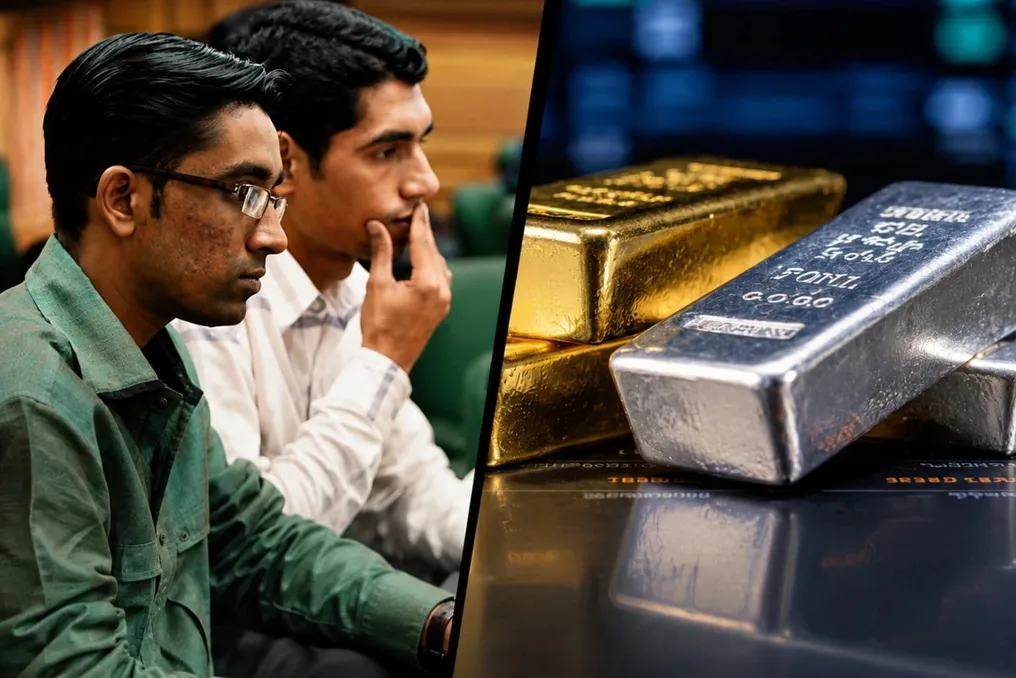
Experts advise investors to determine the optimal share of gold and silver in their portfolio for the Dhanteras festival
Read more
Business Standard
business-standard.com

Experts advise investors to determine the optimal share of gold and silver in their portfolio for the Dhanteras festival

As households across India celebrate the Dhanteras festival on Friday, November 6th, by purchasing gold and silver, financial specialists recommend that investors look beyond this auspicious occasion and consider the role of precious metals in their overall investment portfolio.

After an unusual rally followed by sharp corrections in 2026, the question is no longer whether to buy gold or silver, but how much to hold, when to enter the market, and whether both metals deserve equal footing in an investment portfolio.

The general advice is to view gold as a portfolio hedge rather than a short-term bet, to avoid buying large amounts solely because of Dhanteras, and to exercise greater caution regarding silver, which is more volatile and dependent on industrial demand.

Differences in Demand for Precious Metals

Vikas Gupta, CEO and Strategist at OmniScience Capital, distinguishes between two types of demand for precious metals in India: purchases driven by cultural events and weddings, and investment demand, which depends on price movements.

He noted that there are two types of demand for gold and silver in India. The first is inelastic demand, which arises during Dhanteras and other festivals, as well as wedding season. A certain minimum volume of gold is required for a wedding, depending on socio-economic and cultural groups. The second is elastic demand, related to price changes and speculation about the price direction.

Gupta predicts that purchase volumes during Dhanteras will remain stable or increase, while demand during the wedding season may be slightly stronger. He added that the sharp rise in gold prices, followed by a correction, might make buyers feel they can afford more gold when comparing current prices to the previous peak. 'Gold as an investment continues to be preferred by Indians,' he stated.

Asset Allocation Recommendations

However, festive purchases should not automatically lead to an increase in the proportion of precious metals in a portfolio for investors. Ashish Rajodia, Head of Commodities at PL Capital, believes that allocating around 5-10% of the total portfolio to gold and 2-3% to silver suits most investors. Since silver is more volatile and also depends on industrial demand, it should constitute a smaller portion. Both metals have risen significantly over the past year, so the question is not whether to buy, but how. Instead of making a lump-sum purchase during Dhanteras, investors can spread purchases over several weeks through gold ETFs or coins, and top up during dips to average the entry price. Those who have already reached their target allocation do not necessarily need to buy more, while those below it can build their position in tranches.

Investors whose allocation is below the desired level can consider increasing exposure in tranches instead of a large purchase during Dhanteras. Gold Exchange Traded Funds (ETFs) offer one path to financial participation, while coins and bars provide physical ownership. Those who already have the desired allocation do not need to buy more just because it is an auspicious day.

Caution Regarding Silver Volatility

The sharp volatility of silver requires special caution. Prasanjit Paul, Fund Manager at 129 Wealth and Research Analyst at Paul Asset, noted that the recent recovery in silver prices should not be taken as the start of a new bull market. He emphasized that silver is still in a broader downtrend, and the recent recovery looks more like a technical rebound after prices entered oversold territory. Such rebounds are normal after a sharp fall and do not signify the start of a new bull cycle.

Paul pointed to the global drop of the metal by 18.6 percent in October as evidence of how quickly sentiment can change after a sharp rise. 'We maintain a bearish outlook on silver in the short term and do not recommend chasing the current rebound,' he said. Those with real future needs for jewelry or gifts can gradually buy during larger dips, but investors putting in new funds may wait for greater price stability.

Silver prospects are also linked to expectations for global interest rates, the US dollar, and industrial needs. A stronger dollar and higher US Treasury yields usually negatively affect silver, as the metal does not generate income. Although demand from solar panels, electric vehicles, electronics, and data centers provides long-term support, Paul mentioned expectations of slowing industrial production in 2026, partly due to reduced use of silver in solar panels.

Long-Term View on Precious Metals

Meanwhile, Motilal Oswal Financial Services maintains a constructive long-term view on precious metals despite short-term volatility. In its latest quarterly report on precious metals titled 'Gold Rally: Deferred, Not Missed,' it states that corrections can provide opportunities for disciplined accumulation. The report notes that gold reached nearly $5600 per ounce in January 2026 before falling below $4000 and then recovering. Silver rose above $100 per ounce before undergoing a sharper correction.

Navneet Damani, Head of Commodity Research at Motilal Oswal Financial Services, noted that gold continues to serve as a defensive asset amid global economic and geopolitical uncertainty. However, its short-term direction will remain sensitive to US Federal Reserve policy, inflation, the dollar, and real bond yields. 'In India, higher prices have moderated discretionary jewelry demand, although wedding-related purchases and investment demand remained relatively resilient,' he said.

The brokerage firm recommends a 'buy the dip' approach for gold, setting an international accumulation zone of $3800-$3900 per ounce, a short-term target of $4200, and a medium-term target of $4500-$4700. In the domestic market, based on the USD to INR exchange rate of 96, they see ₹135,000 for 10 grams as a favorable accumulation zone, with a short-term target of ₹148,000 and a medium-term target of ₹160,000-₹168,000.

These broker estimates are market assumptions, not guaranteed price levels or returns. Investors should also consider currency fluctuations, taxes, manufacturing charges, and the difference between physical gold prices and financial product prices when assessing their returns.

Manav Modi, Commodity Analyst at Motilal Oswal Financial Services, stated that silver may offer greater growth potential than gold but comes with significantly higher volatility. The firm's overall view is that investors should accumulate during corrections, not chase price momentum. 'The next inflection point for gold may occur when real yields stop rising, especially if persistent inflation, fiscal issues, or economic slowdown begin to alter the monetary policy forecast. We continue to maintain a 'buy the dip' approach to gold, with an accumulation zone of $3800–$3900 per ounce, a short-term target of $4200, and a medium-term target of $4500–$4700. In the domestic market, assuming USD/INR at 96, we see ₹135,000 as a favorable accumulation zone, with a short-term target of ₹148,000 and a medium-term target of ₹160,000–₹168,000. Silver offers greater growth potential, but investors must remember its significantly higher volatility. Overall, instead of chasing price momentum, we believe investors should focus on disciplined accumulation during corrections, taking into account the role of precious metals in capital preservation and portfolio diversification,' Modi said.

Motilal Oswal reported that global gold ETF volumes grew by approximately 187 tonnes in August and September 2026 to a record 4256 tonnes. Inflows in the third quarter reached a record high of $31 billion. In India, inflows into gold ETFs grew by 71 percent month-on-month to ₹44.5 billion in September, while silver ETFs attracted inflows of ₹19.7 billion.

'Against this backdrop, gold continues to retain its appeal as a relatively defensive asset, while silver offers greater growth potential but carries a higher degree of volatility. As global macroeconomic conditions, monetary policy expectations, and geopolitical events continue to shape the precious metals market, investors may consider a disciplined accumulation strategy during price corrections rather than chasing short-term momentum,' the brokerage agency noted in its note.
Similar stories

Tips for Buying Gold on Dhanteras: How to Avoid Losses and Gain Double Benefit
Read more
www.aajtak.in

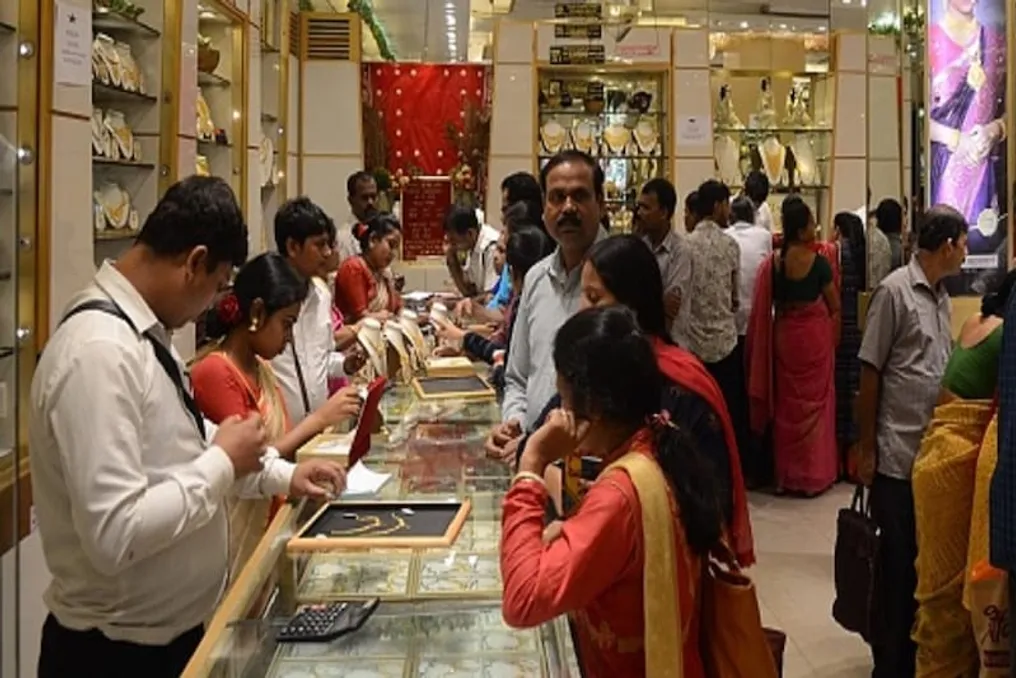
Tips for Buying Gold on Dhanteras: How to Avoid Losses and Gain Double Benefit

In recent days, gold prices have significantly decreased. On the MCX exchange, the price for 10 grams of 24-carat gold is about 1.41 lakh rupees. Today is the festival of Dhanteras, and those planning to purchase gold should pay attention to the advantageous aspects of this purchase.

Most people still prefer to buy physical jewelry, avoiding digital gold. In our country, gold is considered an investment tool. However, many make a mistake when buying gold jewelry for investment, which can subsequently result in a loss.

Although women most often insist on buying jewelry, they are often unaware of potential losses, and jewelers do not always provide them with this information. Jewelers, striving for their own profit, usually advise clients to purchase jewelry specifically.

When purchasing jewelry, buyers must pay three components: the cost of the item itself (depending on weight), the making charge, and VAT (3%). Regardless of whether the payment is made online or offline, the VAT is only 3%.

However, if you are considering buying gold from an investment perspective, it is worth changing your decision. A more profitable option would be to purchase gold coins or gold bars. Coins are available even at a weight of 1 gram, and coins will bring greater returns in the future compared to jewelry.

When you buy jewelry, you have to pay for the making charge, which jewelers usually add at a rate of 15 to 20 percent. For designer jewelry, this fee can reach 25–30 percent. Imagine if you purchase an item worth one lakh rupees, and the making charge alone amounts to 15 to 20 thousand rupees.

Furthermore, if the jewelry has stones set in it, their weight is included in the total weight along with the gold. This means that when selling such jewelry, you will not get back the value of the stones. Only the value of the gold will be considered upon sale or exchange, and the money spent on the making charge will be lost. Thus, by purchasing jewelry, the client is guaranteed to lose 15 to 20 percent.

So what is the solution? If you want to keep gold at home, it is better to buy gold coins, as no making charge is levied when purchasing them; you only need to pay 3% VAT. When selling gold coins or bars, you will receive the full value, unlike jewelry. Why incur losses by buying jewelry then?

If you still decide to buy jewelry, be sure to consider the following points. Jewelers often mislead customers by adding various fees to the bill, and due to lack of information, customers cannot object. They may charge additional amounts under the pretext of polishing or labor costs, which is a violation of the rules. You have every right to refuse such payment and file a complaint against the jeweler.

It is important to know that jewelry is not made from 24-carat gold. Most items available on the market have a purity of 22 or 18 carats. Therefore, when purchasing, you must clarify the current price of gold on the foreign exchange market to acquire the item at a fair price.

The most important thing is to always negotiate the making charge. Many jewelers are willing to reduce this fee after bargaining, as the main profit for jewelers comes precisely from the making charge, which can reach 30 percent.

Always demand an original receipt (Original Price) so that there are no problems in the future regarding the purity and weight of the item upon sale. Regarding purity, you should only buy items with a hallmark.

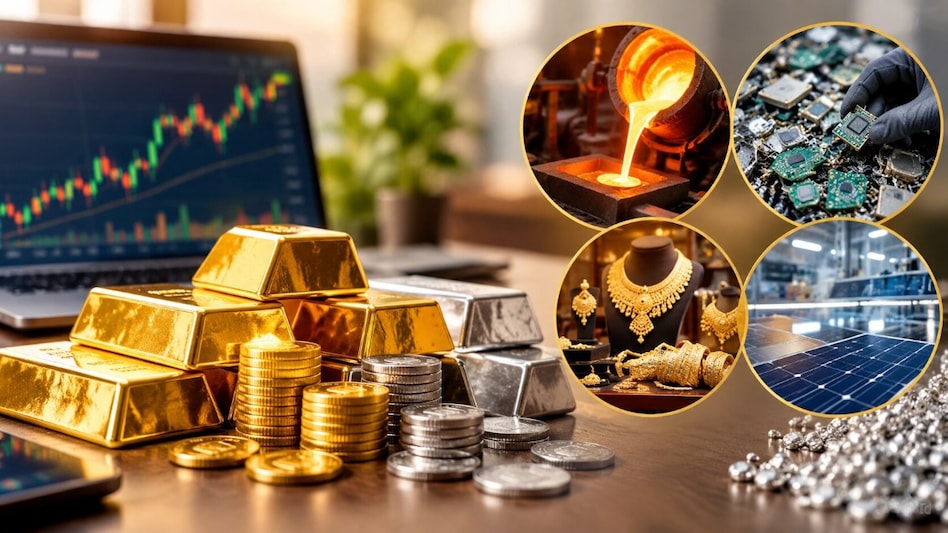
Motilal Oswal Report: Gold and Silver Forecast — Positive Long-Term Outlook Despite Decline
Read more
www.aajtak.in

Motilal Oswal Report: Gold and Silver Forecast — Positive Long-Term Outlook Despite Decline

According to the new report from Motilal Oswal, the long-term forecast for gold and silver is assessed as positive, and the price decline may present a buying opportunity. The document also presents target levels for the global and domestic gold markets.

In 2026, gold and silver prices showed significant volatility. After a period of record growth, both precious metals experienced a substantial decrease, but signs of recovery are now emerging. In this situation, investors are questioning the potential return of gold's luster or further price drops.

The new Precious Metals report from Motilal Oswal Financial Services (MOFSL) indicates that while price fluctuations may continue in the near future, the long-term outlook for gold and silver remains favorable. The report's headline states: «Gold’s Rally: Deferred, Not Derailed».

According to the report, in January 2026, the international market price of gold reached a record high of about $5,600 per ounce. This was followed by a sharp drop, and the gold price fell below $4,000 per ounce. Nevertheless, a subsequent recovery was observed. Silver also experienced similar fluctuations; after exceeding the $100 per ounce mark, it faced a serious decline.

Changes in the dollar and rupee exchange rates also influenced gold and silver prices in the Indian market. MOFSL notes that in 2026, the dynamics of gold and silver were more volatile compared to the previous year, driven by factors such as US interest rates, inflation, bond yields, and geopolitical events.

The tradition of buying gold in India during Diwali and Dhanteras has existed for a long time. According to the report, over the last decade, gold prices in the domestic market have risen significantly during Diwali. In 2016, the gold price during Diwali was around 30,000 rupees, whereas in 2026, it reached approximately 1.50 lakh rupees.

Historical data from the report shows that 30 days before Diwali, gold traditionally showed better returns compared to the subsequent 30 days. For instance, in 2025, the gold price increased by about 20% in the month before Diwali, and the silver price by almost 38%. However, the report also emphasizes that buying gold during festivals depends not only on international prices but also on the domestic premium, imports, and actual purchase volume.

Despite high gold prices, investor interest remains strong. According to the MOFSL report, the volume of assets in the global gold ETF increased by approximately 187 tonnes in August and September 2026. The total asset volume of the global gold ETF reached a record 4,256 tonnes. In the third quarter, a record investment of $31 billion flowed into the global gold ETF.

In India, investments in the gold ETF grew by 71% in September 2026 compared to the previous month, reaching ₹4,450 crore. During the same period, ₹1,970 crore was invested in the silver ETF. Meanwhile, against the backdrop of high prices and import control measures for gold, gold imports into India also decreased: $2.3 billion worth of gold was imported in August, and this amount reduced to $1.8 billion in September.

According to Navneet Damani, Head of Commodity Research at MOFSL, gold remains a safe-haven asset amid global economic and geopolitical uncertainty. However, in the near term, prices will be influenced by the policy of the US Federal Reserve, inflation, the dollar exchange rate, and bond yields. The report mentions that the US Federal Reserve raised interest rates by 25 basis points in September, bringing US interest rates to the range of 3.75–4%. High interest rates and a strong dollar may put pressure on gold prices.

On the other hand, persistent inflation, concerns over national debt, geopolitical tensions, and central bank gold purchases could support prices in the long run.

MOFSL commodity analysts, Manav Modi and Navneet Damani, have identified potential levels for gold. It is considered favorable for buying when the international market price of gold is in the range of $3,800–$3,900 per ounce. The short-term target for gold is set at $4,200 per ounce, and the medium-term target is $4,500–$4,700 per ounce. The report states that investors can gradually increase purchases when gold prices fall. However, these broker forecasts may change depending on market conditions.

For the domestic market, MOFSL provided estimates assuming an exchange rate of ₹96 per dollar. According to the report, the level of ₹1,35,000 per 10 grams is a favorable zone for buying. The short-term target for gold is set at ₹1,48,000, and the medium-term target is ₹1,60,000–₹1,68,000 per 10 grams. It is noted that investors should focus on gradual buying during price declines rather than chasing gains.

Silver price dropped by 2000 rubles; latest exchange quotes presented
Read more
www.aajtak.in

Silver price dropped by 2000 rubles; latest exchange quotes presented

There is a constant change in the prices of gold and silver. On Wednesday, fluctuations in the value of precious metals occurred again on the Multi Commodity Exchange (MCX), with the price of silver falling significantly and becoming cheaper than its previous high level. This presents a favorable opportunity for those planning to purchase silver during the holiday season.

According to MCX data, when it opened on Wednesday, December 4th, silver began trading at 177,600 rubles per kilogram. On the previous trading day, this metal commodity closed at 179,698 rubles. Thus, the cost of one kilogram of silver decreased by 2,098 rubles.

Analyzing the dynamics over the last month, from October 4th to November 4th, shows a significant drop in the price of silver. On October 4th, when trading on MCX ended, the price was 237,658 rubles per kilogram. By the start of trading on Wednesday, November 4th, silver had fallen to 177,600 rubles, which means a decrease of 60,058 rubles over this period.

If we look at the drop in the silver price relative to the historical maximum, the MCX Silver Price exceeded the 400 thousand rubles mark per kilogram for the first time at the end of January this year, reaching a peak of 420,048 rubles per kilogram. Compared to current prices, 1 kg of silver is now available 242,448 rubles cheaper than its maximum.

Additionally, updates were provided on the gold exchange rate on MCX. The price of 10 grams of 24-carat gold with an expiration date of December 4th closed at 139,452 rubles the previous day. On Wednesday, immediately after the futures trading began, this yellow metal slightly decreased to 139,177 rubles, but then showed an increase of approximately 150 rubles.

Similarly to silver, there was a change in the price of gold over the last month. On October 5th, the futures price for gold was 149,316 rubles for 10 grams, and on November 4th, it fell to 139,177 rubles, corresponding to a decrease in gold by 10,139 rubles over the month.

Popular