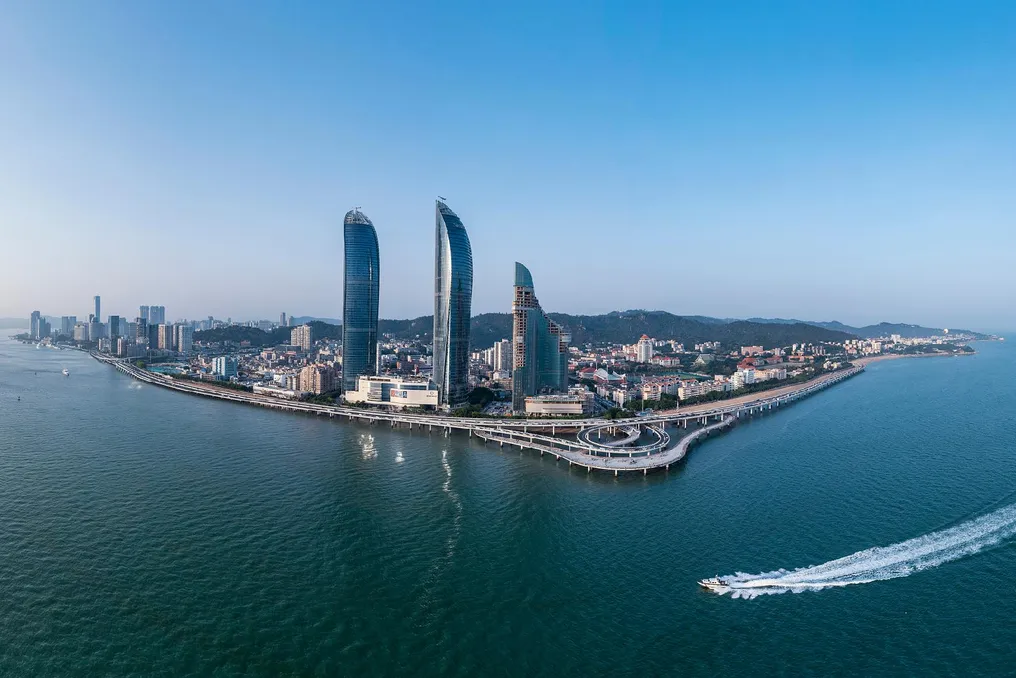
China's Role in Ocean Governance Highlighted During World Ocean Week 2026
Read more
CGTN
cgtn.com

China's Role in Ocean Governance Highlighted During World Ocean Week 2026

World Ocean Week 2026 commenced on November 5th in Xiamen, Fujian Province, southeastern China. The event featured five outcomes, including a publication on underwater mountains and specialized environmental and conservation data products.

Thirty-three events are scheduled for this week, encompassing marine science and ecology seminars, as well as business meetings to foster connections between industry and commerce. These activities aim to promote global ocean governance and support the high-quality development of the blue economy.

On the same day, a bilingual report was released concerning the status, role, and prospects of the Agreement under the United Nations Convention on the Law of the Sea on the Conservation and Sustainable Use of Marine Biological Diversity of Areas Beyond National Jurisdiction (BBNJ Agreement), as well as China's role in this process.

This report, prepared by the Chinese Institute of Marine Development Strategy under the Ministry of Natural Resources, details the importance of the agreement entering into force and China's contribution to its negotiation and implementation.

The BBNJ Agreement entered into force on January 17, 2026, becoming the third treaty implementing provisions of the UN Convention on the Law of the Sea, thereby filling a legal gap in the conservation and management of marine biodiversity in areas beyond national control.

China participated in negotiations for this agreement for nearly 20 years, putting forward proposals on four key areas. Its contributions included supporting the benefit-sharing mechanism for marine genetic resources, developing area-based management tools, enhancing transparency in environmental impact assessments, and assisting developing countries in building capacity to implement the agreement.

China has designated red lines for marine ecological conservation covering approximately 150,000 square kilometers, established 353 marine protected areas, and implemented 194 marine ecological conservation projects. Furthermore, it is one of the few countries globally to record a net increase in mangrove area.

China has provided manned submersibles such as 'Jiaolong' and 'Fengduozhe', along with research vessels like 'Deepsea No. 1', for international scientific expeditions. It houses nearly 60,000 marine microbial resources and grants access to samples and data to international users.

As part of the UN Decade of Ocean Science for Sustainable Development, China has led 10 major international scientific programs, including one focused on the digital discovery of typical deep-sea habitats.

China has improved its legal framework for assessing the environmental impact of activities in areas of the international seabed, with contractors involved in mineral exploration there actively fulfilling their assessment obligations.

China's experience, environmental data, expertise, and trained personnel can assist developing countries in assessing deep-sea activities and promoting a greener, low-carbon approach to ocean activities.

China has signed maritime cooperation agreements with over 50 countries and international organizations, established more than 40 marine research centers and joint laboratories, and invested about 200 million yuan (approximately 30 million US dollars) in over 100 small-scale marine cooperation projects. Moreover, it has conducted over 300 courses in marine science, technology, and management, benefiting more than 6,000 young researchers and officials from developing countries.

China became one of the first countries to sign and ratify the BBNJ Agreement. It has applied to host the agreement's secretariat in Xiamen and declared its readiness and capability to provide continuous support for the full and effective implementation of this agreement.
Similar stories

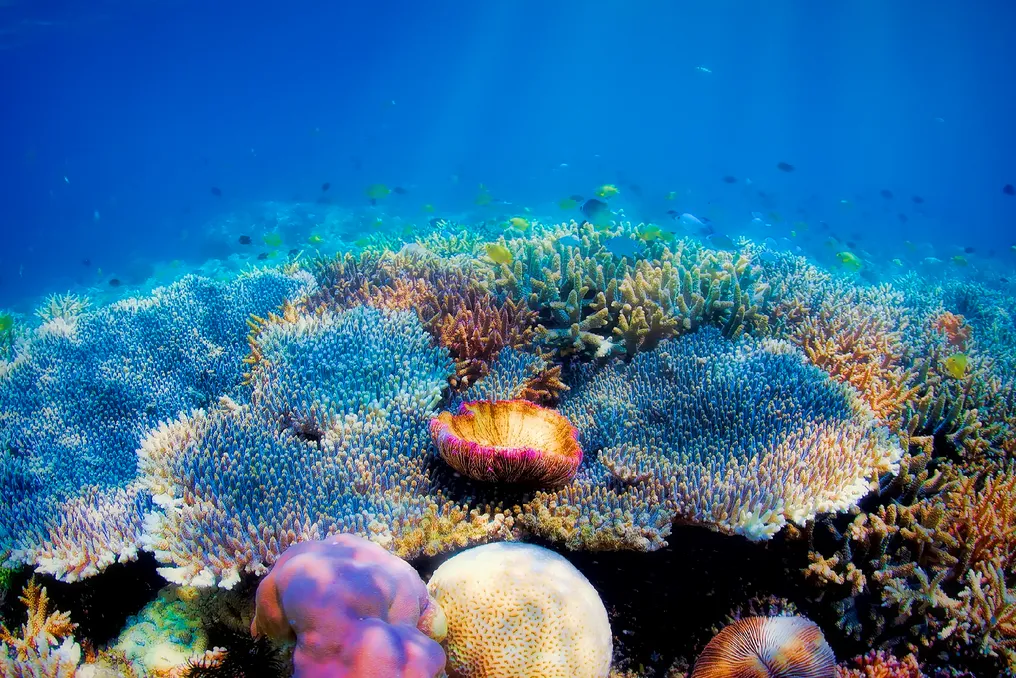
New global ocean conservation treaty enters into force in 2026
Read more
cgtn.com

New global ocean conservation treaty enters into force in 2026

Vast marine areas beyond national jurisdiction, which constitute about two-thirds of the world's oceans, face serious threats, including overfishing, intensive shipping traffic, and plastic pollution. Furthermore, new dangers are emerging, such as deep-sea mining and proposals for carbon dioxide removal from seawater. Although these waters are already regulated by international law, a unified global protection system was previously lacking.

With the entry into force of the UN Convention on Marine Areas (formally known as the Biodiversity Beyond National Jurisdiction, or BBNJ Agreement) on January 17, 2026, a new legal framework has been established for the sustainable use and conservation of marine biodiversity in these common waters.

At the UN Biodiversity Summit (COP17) in Yerevan, Armenia, experts gathered to determine how various global rules can work together to save the ocean.

The Convention on Biological Diversity (CBD) provides a broad framework for biodiversity conservation. Its Kunming-Montreal Global Biodiversity Framework aims to ensure the effective conservation and management of at least 30% of the world's terrestrial and inland water areas, as well as coastal and marine areas by 2030.

The BBNJ Agreement supplements this framework by introducing rules for the conservation and sustainable use of marine biodiversity in areas beyond national control. It covers a wide range of issues: from marine genetic resources and the fair sharing of benefits derived from them to area-based management tools such as marine protected areas, environmental impact assessments, capacity building, and the transfer of marine technologies. These measures are intended to strengthen international cooperation and support developing countries in implementing the agreement.

China played a key role in the negotiations and ratified the treaty on December 15, 2025, becoming one of the first Parties. Beijing has now supported Xi'an in Fujian province to host the treaty secretariat. Brussels and Valparaíso are also contenders, with a final decision expected in January 2027. To help developing countries participate in the process, China has pledged to allocate $3 million to a voluntary dedicated fund.

Meanwhile, seven West African countries, led by Nigeria, are working to advance a proposal for establishing a highly protected marine protected area in the convergence zone of the Guinea-Canary currents. At COP17 on October 26, Nigeria presented this initiative, which is being developed through the West Africa BBNJ Coordinating Committee. This initiative emphasizes the need for scientific cooperation, data exchange, monitoring, compliance assurance, sustainable financing, and support for coastal livelihoods.

Turning such proposals into effective protection will require robust scientific data. Deep-sea research, biodiversity monitoring, satellite observations, and vessel tracking data can help identify ecologically important habitats, establish baselines, and inform the planning of open-ocean marine protected areas. Environmental impact assessments can also help assess the potential risks of human activities to vulnerable ecosystems.

Although the CBD and the BBNJ Agreement operate within separate systems, closer coordination between them is vital. Achieving the 2030 goals will require that international rules are underpinned by solid science, technical competence, and continuous cooperation.

Popular