US Stock Market Plunge: Investors Lose 270 Lakh Crore Rupees Amid AI Regulation Fears
Read more
Aaj Tak
www.aajtak.in

US Stock Market Plunge: Investors Lose 270 Lakh Crore Rupees Amid AI Regulation Fears

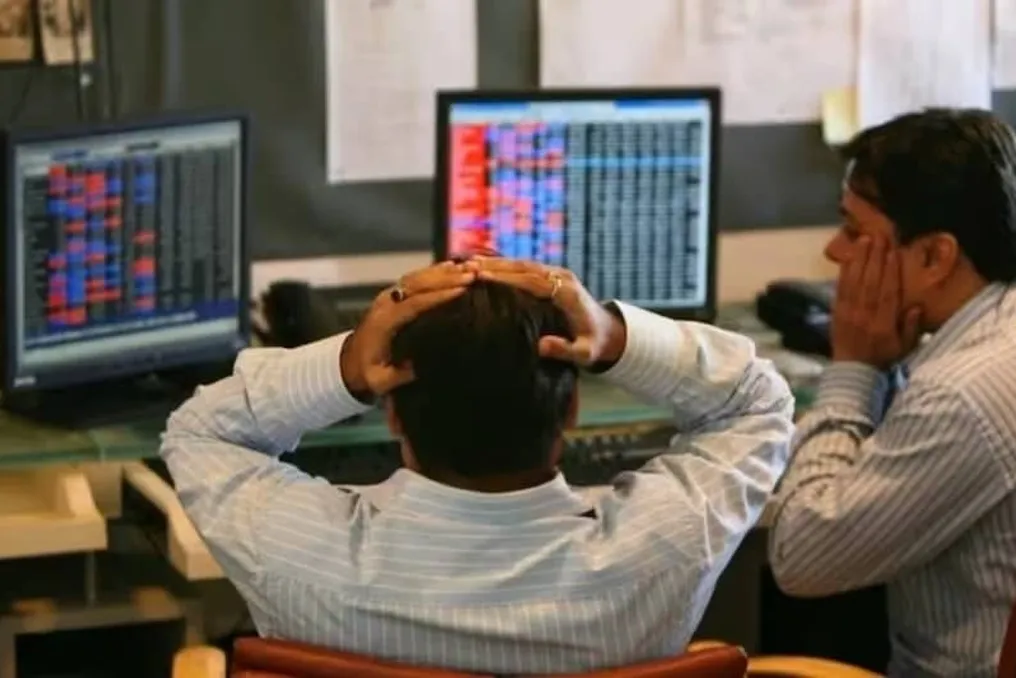
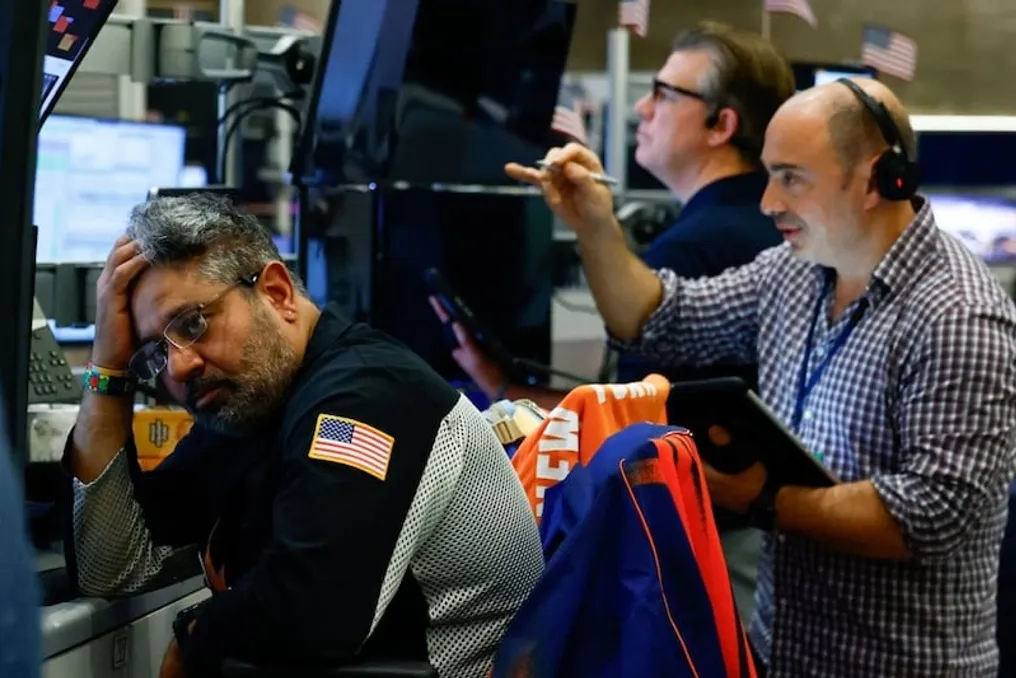
Last night, the American market experienced its toughest day in 19 months, driven by concerns over artificial intelligence (AI) regulation. The S&P 500 index plummeted by 3.77 percent or 290 points, while the Dow Jones fell by more than 3 percent or 1,600 points. Nasdaq dropped by 5.52%, reaching 24,315.00 points.

As a result of this significant decline, investors incurred losses amounting to $2.9 trillion, equivalent to approximately 270 lakh crore rupees. Among those affected were Nvidia shares, which fell by 9 percent, and Micron Tech shares, which declined by 17 percent. The semiconductor ETF segment showed a drop of over 70 percent.

The Nasdaq Composite closed more than 10 percent below its record closing level on October 6, confirming a technical correction. The largest decrease was recorded among chip manufacturers supplying components for AI data centers. Furthermore, after rising on Wednesday, other major tech companies also experienced declines: Meta Platforms fell by 4 percent, while Amazon.com and Alphabet (GOOGL.O) dropped by 2.2 percent. According to Reuters, this marked the largest single-day drop in 19 months.

The primary reason for such a massive decline was investor anxiety following the Democratic Party's victory in the US midterm elections. Concerns arose that new restrictions might be imposed on expanding AI infrastructure and data centers. This called into question future revenues and large investments in AI companies, triggering an active sell-off of chip company stocks and intensifying the crash.

Regarding the Indian market, the Gift Nifty indicator is currently in negative territory, signaling a fall of 127 points, which could lead to the Indian market opening lower. However, experts suggest that due to India's lesser dependence on AI, the decline will not be as sharp as in the American market. It is worth noting that the Indian market had shown continuous growth over the past six days, causing its market capitalization to exceed 5 trillion. However, signs of decline are visible today.


Similar stories

US Stock Market Plummets: AI-Related Company Stocks Lose Billions After Elections
Read more
www.aajtak.in

US Stock Market Plummets: AI-Related Company Stocks Lose Billions After Elections

The American stock market experienced a significant decline on Thursday, causing the value of major technology companies to drop by hundreds of billions of dollars. Companies related to artificial intelligence (AI) were the hardest hit. The market capitalization of large Nasdaq-100 index companies decreased by $2.5 trillion in a single day, equivalent to approximately 236 trillion Indian rupees.

The main reason cited for this downturn is the fear of increased regulatory pressure on AI companies following the Democrats' victory in the elections. Investors are concerned that oversight of AI company activities may become stricter, especially regarding data center construction, or that the pace of their construction might slow down.

This concern manifested immediately after trading opened on Thursday. According to the news agency Reuters, the Nasdaq Composite index, which includes technology companies, fell by 5.5%. This was the largest single-day drop since the 'Liberation Day' in April 2025. The total market value of the largest Nasdaq-100 companies shrank by $2.5 trillion.

The decline continued into the second day for AI company stocks, which also affected chip manufacturers. The index for these companies plummeted by approximately 12%, reaching its lowest level in over six months. Shares of AI-related CoreWeave also showed a decline of 10%.

The Nasdaq Composite is currently about 12% below its record high from October 6th. When any index falls by 10% or more from a recent peak, it is called a 'correction.' Thus, Nasdaq has reached this stage. Since mid-October until now, there have been five instances of a drop of more than 500 points in Nasdaq. Market experts express anxiety about the slowdown in data center construction. High interest rates are already making it difficult for small AI companies to raise funds, and fears of stricter regulations could exacerbate their difficulties.

Donald Trump also reacted to the stock market decline. He wrote on social media that the market experienced one of the worst days in its history due to the election results, placing the blame on the Democrats. Trump noted that the market drop led to a reduction in people's 401(k) retirement account funds. However, he expressed confidence in America's quick recovery, calling the Democrats 'Dumocrats' in his post.

Currently, the market's primary concern is how strict future rules for AI companies will be and how this will affect data center construction plans. However, it is precisely this fear that triggered the rapid sell-off of AI stocks.

US Stock Market Plunge: $1.8 Trillion Drop Raises Concerns Over AI 'Bubble'
Read more
www.aajtak.in

US Stock Market Plunge: $1.8 Trillion Drop Raises Concerns Over AI 'Bubble'

A significant decline was observed in the American market late in the evening. The main US index, S&P, fell by 2.06 percent. Intel shares dropped by 28 percent, and the quotes for NVIDIA, AMD, DELL, and HP also decreased significantly. Because of this, the composite Nasdaq index closed down by 2.86 percent.

This sharp drop has caused alarm among global investors, as there is a suspicion that the artificial intelligence (AI) bubble in the US is beginning to burst. A similar trend was also observed in the Chinese market over the past few months, where shares of companies related to AI investments showed a strong decline.

The Shanghai Stock Exchange's technology index (STAR 50) lost about 40 percent in less than four months, equivalent to a loss of approximately $3.5 trillion. In China, there has also been a substantial fall in the shares of the AI and semiconductor sectors, and this decline continues. A similar scenario is unfolding in the US market, where up to $1.8 trillion was lost in just one day.

The largest single-day drop in the Nasdaq composite index since June 5th occurred on Friday. This was attributed to poor quarterly reports from Intel and Amazon. After these results were published, it became clear that the returns from massive AI investments did not meet expectations, which triggered active profit-taking in these stocks. Questions have previously been raised about when AI investments will start yielding profits, whether this approach is correct, and if AI will provide future benefits; answers to these questions have not yet been found.

Since the financial performance does not meet expectations, investors are disappointed, and there is a view that the AI bubble may burst soon. This sentiment led to the serious decline in the American market on Friday.

The Nasdaq composite index closed on October 30 at 25,437 points, down 747 points. The S&P 500 also fell by 2.06 percent, ending trading at 7,581. The Dow Jones Industrial Average decreased by 572 points, representing 1.09 percent, reaching 51,770. This decline may affect global stock markets on Monday, November 3rd. A particularly sharp decline is possible in the South Korean and Taiwanese markets, as growth in these markets largely depended on technology stocks.

Stock Market Decline: Three Main Reasons, Losses of 700 Billion Rupees, and Popular Stocks Dropped by Up to 17%
Read more
www.aajtak.in

Stock Market Decline: Three Main Reasons, Losses of 700 Billion Rupees, and Popular Stocks Dropped by Up to 17%

A decline was observed in the stock market on the last trading day and throughout the fourth consecutive session. The Sensex index fell by 1250 points from its daily high, but after the market closed, it showed a significant recovery. Nevertheless, investors in the Indian market incurred losses amounting to about 700 billion rupees.

The market capitalization of the BSE reached 458 billion rupees on Thursday, and by Friday, it decreased by approximately 700 billion rupees to 451 billion rupees. The main reason for this sharp drop was the massive sell-off of stocks in the small and mid-cap segments.

After the sharp fall on Friday, the BSE Sensex recovered, declining by only 125 points and settling at 73,123.83. The Nifty index dropped by 87 points, reaching the level of 22,600. Previously, Nifty had touched the lower level of 22,372, and Sensex had touched 72,452.37.

On Friday, stocks of mid-cap and small-cap companies experienced a serious decline. At the close of trading, the BSE 150 Midcap index fell by 2.10%, closing at 15,143.47, while the BSE 250 Smallcap declined by 2.68%, ending trading at 6,440.65. Shares of Jammu & Kashmir Bank lost more than 16 percent, while Swiggy shares fell by approximately 17%. These two companies became the stocks of the day in the mid-cap and small-cap sectors.

Most stocks in the small and mid-cap segments were in a decline zone of more than 3 percent on Friday, leading to a significant reduction in investor portfolios. Among the top 30 BSE stocks, the largest drop was recorded by Tata Steel, which fell by 3.21 percent. Twenty stocks closed in the red, and the remaining ten closed in the green. Eternal's shares, conversely, closed with a gain of about 4 percent.

The primary reason cited for the decline is the crude oil situation, whose price reached $115 per barrel. Brent Crude Oil rose by 1.33% on Friday, reaching $114.67 per barrel. This rise is attributed to the Houthi attack on Saudi Arabia. Furthermore, foreign investors continue to increase their selling. On October 22, foreign investors sold Indian stocks worth 16,113.89 crore rupees, while DII supported the market by buying stocks worth 14,519.12 crore rupees.

Large-scale selling was observed among both retail investors and foreign participants in the small and mid-cap segments. The results of some companies' reports also influenced the market.

Popular