NetEase Youdao introduces interactive agent for math learning with step explanations and diagram construction
Read more
Pandaily
pandaily.com

NetEase Youdao introduces interactive agent for math learning with step explanations and diagram construction

NetEase Youdao has released an interactive assistant for studying mathematics, named after the mathematician Leonhard Euler. The application is now available in app stores, according to an article published by QbitAI on November 5th.

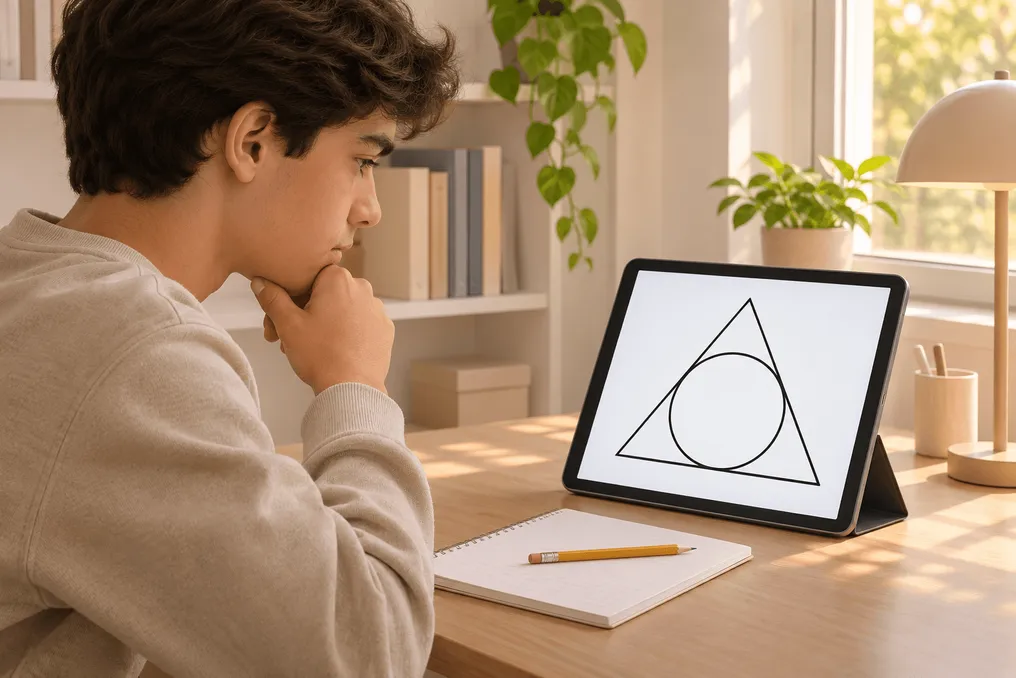
Unlike typical homework apps that solve problems via photo search and simply provide a final answer with a text explanation, the new agent combines step-by-step learning, the ability to ask follow-up questions, and animated diagrams on an interactive whiteboard.

Youdao developed this product to address a common problem: students can read a solved solution but still don't understand why a specific auxiliary line was drawn in geometry or how to work with a function when conditions change. The company states that the agent's goal is to help students move from understanding a ready-made answer to being able to solve similar problems independently.

The learning process is divided into three stages. First, the agent hints at the direction of the solution and then proceeds through key deductions and calculations step-by-step, concluding by stating the method used and the core concept the problem tests. Second, students can pause the process at any step and ask clarifying questions, allowing the explanation to adapt to where difficulties arise, rather than following a fixed script.

The third stage is visualization. The agent uses a dynamic board, graphical demonstrations, and formula derivations to make abstract connections visible. In geometry, it can show step-by-step how an auxiliary line relates to the given conditions. When working with functions, it links formulas and parameters to changes on the graph, and for derivations, it reveals the board line by line.

Youdao claims that this product is based on nearly two decades of developing educational products and the company's proprietary operating model. Its first AI pencil, which was sold, sold out after its launch in February 2025; about 60% of requests were for middle school natural science questions, and later the pencils were supplemented with whiteboard-style video answers and multi-turn dialogue capabilities.

Regarding models, Youdao launched its Confucian educational model in 2023, made the Confucius-o1 reasoning model public in 2025, and updated it to the fourth-generation multimodal Confucian model this year, which, according to the company, handles complex visual tasks in mathematics and natural sciences better.

The company has not yet disclosed which specific model powers the new agent, what educational levels it covers, or what its cost will be.


Similar stories

NetEase Yidun introduces Agent Guard in Wuzhen to control AI agent actions
Read more
pandaily.com

NetEase Yidun introduces Agent Guard in Wuzhen to control AI agent actions

NetEase Yidun, the content safety and risk management division for NetEase's enterprise services, unveiled its native AI product suite at the World Internet Conference Light of Internet Expo in Wuzhen on November 3, 2026, according to Sina Tech and IT Home.

The company asserts that security must shift from controlling what AI says to controlling what it does, as agents gain access to corporate systems, tools, and knowledge bases.

Zhu Haoci, Deputy General Manager of NetEase Enterprise Services and head of Yidun, presented a dual model: using AI to enhance security operations and applying security tools to constrain AI functionality within defined boundaries. He noted that current risks include AI content generation, deepfakes, automated fraud, model jailbreaks, confidential data leaks, and agents performing actions outside their permissions.

The product suite consists of three levels. The first level covers AI content and data security, including AI content analysis and moderation, as well as the CMA moderation agent. The second level focuses on interaction and identity security, encompassing business risk control, device fingerprints, behavioral CAPTCHA, and DeepGuard anti-spoofing protection. The third level is responsible for model and agent security, providing mechanisms for large model protection, an agent security platform, and agent supply chain verification.

The system received first-version certification at the exhibition. At the agent level, protection mechanisms filter model inputs and outputs, while Agent Guard verifies agent actions against user intentions, ensures permission compliance, flags risky tool calls, and blocks behavior.

The agent security platform detects utilized AI assets, scans Skill and MCP supply chains, and protects against confidential data leakage. It targets shadow AI—tools used by employees without IT department awareness—by offering blocking, auditing, alerting, and data masking options.

Yidun provided examples of other product effectiveness. CMA integrates an internal content safety model with specialized smaller models and operates 24/7. The company reported that when analyzing complaints for one client processing over 2.5 million tickets monthly, CMA's initial review combined with human checks reduced the average review time from 35.7 minutes to 12.3 minutes with 99.2% accuracy. DeepGuard, which searches for improbable content rather than just known forgery traces, received top marks in the Chinese Academy of Information and Communications Technology's anti-face spoofing assessment and demonstrated 99% completeness and 96% accuracy against screen replay attacks in phased testing.

At a separate forum, Rao Xiaoyan, Head of Yidun's Content Security Department, stated that malicious instructions can be hidden in web pages, files, APIs, tools, or MCP responses, so systems must differentiate between task data and behavioral commands. She described implementing injection defenses both before model calls and before context assembly, as well as output checking during streaming: questionable content is flagged for review, and high-risk content is rejected.

Tencent Map provides developers with agent capabilities via MCP, agent skills, and connectors
Read more
pandaily.com

Tencent Map provides developers with agent capabilities via MCP, agent skills, and connectors

At an industry event, Tencent Map presented a comprehensive overview of agent capabilities within its system during the Tencent Global Digital Ecosystem Summit in Shenzhen on October 30, 2026. The company announced its intention to open these mapping agent capabilities to industrial clients, smart hardware manufacturers, and developers.

Some products are already utilizing these features. These include the Yuanbao assistant, Xiaowei in WeChat, OPPO's Breeno assistant, Rokid AI glasses, and Guangfan's AI wearables. In Yuanbao, a single phrase allows for route planning, and the one-phrase taxi calling function will soon be launched. Through Xiaowei, a user who sees a store recommendation in a WeChat Channels video can ask about the physical store's location and receive an immediate answer.

For automobiles, Tencent has developed a mapping agent consisting of five agents. These agents are responsible for trip planning, map rendering, ecosystem content, intelligent navigation, and parking guidance. Tencent claims that the system is capable of planning a multi-day family trip between cities with just one request, suggesting nearby restaurants according to user preferences, and using vehicle sensor data and lane level data to make calls in complex traffic conditions in real time.

On wearables, Tencent Map launched, according to their description, the industry's first native taxi calling service on AI glasses in collaboration with Rokid. This feature allows users to book, select, and pay for a vehicle using voice without taking out their phone. A similar taxi calling capability is available on Guangfan's AI headphones. Furthermore, Tencent Map is collaborating with HarmonyOS to transfer mapping functions across devices in the OpenHarmony ecosystem, and with Niu for predictive navigation for electric two-wheeled vehicles based on HarmonyOS.

In September, Tencent Map and OPPO's ColorOS released a travel system agent with memory functionality. Tencent reported that the trip planning process was reduced from nine steps to a single phrase, click-through rates in related scenarios doubled, and user retention for the next day increased by almost 1.5 times.

For developers, Tencent provides access to these capabilities through agent-friendly interfaces, including the MCP server, agent skills, and connectors, as well as through agents like WorkBuddy. Developers no longer need to build integrations from scratch to give their applications the ability to understand the physical world, plan routes, recommend places, and call mobility services.

Tencent Map also introduced LBSwork—an AI map desktop workstation built on the same Harness foundation as WorkBuddy. It provides retail, mobility, and cultural tourism clients with a unified platform to integrate artificial intelligence with mapping data.

Durban Robotics Champion Teen Launches Free Coding Lab for Children
Read more
iol.co.za

Durban Robotics Champion Teen Launches Free Coding Lab for Children

At the young age of 14, Sinead Samputh demonstrates that technology and community engagement can go hand in hand. As a 9th-grade student at Reddam House Umhlanga, Sinead has merged the fields of robotics and grassroots education, directing her award-winning technical talent toward supporting the next generation of young innovators.

Her interest in technology arose early, and she has completed over 200 hours of programming training while continuously refining her skills in robotics. Sinead founded BAYMIN LABS—a youth-led, free coding initiative designed for children aged nine to thirteen.

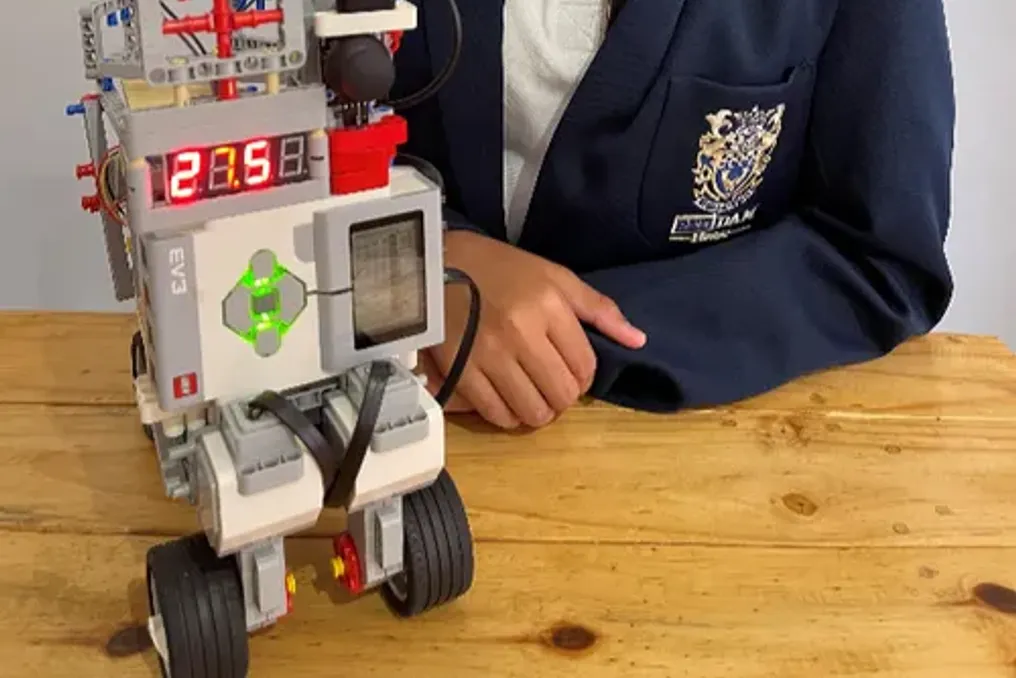
Working with The Seed Fund, a non-profit organization that supports families in the informal settlement of Malakka Road in Durban, she introduces children to the basics of coding. This project emerged after Sinead won first place in her age group at the global inter-school robotics competition Inspired Builds by Inspired Education Group, using a BAYMIN robot that assisted in basic medical screening.

Sinead stated: 'The solution can change a moment. The ability to solve can change a life. I truly wanted not just to solve other people's problems, but to give young people the opportunity and skills to create their own solutions.'

Building on her previous success, Sinead won in her age category at the global Inspired robotics competition with the BAYMIN AIR prototype. This prototype, inspired by influenza, uses sensors and LED indicators to monitor air quality and display environmental risk levels in places such as schools and hospitals.

After developing a six-week coding curriculum, she raised 13,650 rand from corporate donors to purchase three Samsung tablets and protective cases. Through her volunteer work at The Seed Fund's homework club, she collaborated with the organization, teaching local children the visual programming language Scratch, which is used to create animations, stories, and interactive projects.

She initially started working with nine students in the 3rd and 4th grades, many of whom had no prior knowledge of coding. She is now teaching older children, helping them gain confidence in experimentation, making mistakes, and finding their own solutions. Sinead plans to continue moving younger children into advanced classes and eventually into high school, which will be located within the same community, with The Seed Fund.

She noted that 'this will continue in higher grades, and I think they will have a greater impact because, obviously, when they get older, they will have more opportunities.'

Sinead runs BAYMIN LABS on Saturdays and hopes to expand the program to other underserved communities, ultimately creating BAYMIN Academy—a paid coding course that will help fund the free community initiative. She emphasized: 'I don't want to win if winning means leaving others behind. The greatest journey is where we rise, learn, and change the world together.'

In the future, Sinead aims to combine medicine and coding to become a neurosurgeon and biomedical engineer. Her mother, Joanna Samputh, expressed immense pride in Sinead's achievements and plans, noting that what began as a simple requirement for school community service has turned into a deep passion for teaching coding to children. Joanna Samputh said: 'It was amazing to see how she moved from the initial plan to the point where she made the decision herself.'

Shelly Perringe, head of Reddam House Umhlanga College, also expressed pride in Sinead, noting that she utilizes every opportunity to support the less fortunate and always seeks ways for her passion for robotics and coding to serve a higher purpose.

Popular