China introduces AI agent identification registry in Uzhgen; 20 organizations sign self-discipline pact
Read more
Pandaily
pandaily.com

China introduces AI agent identification registry in Uzhgen; 20 organizations sign self-discipline pact

At the forum in Uzhgen dedicated to trust, interconnectivity, and agent compatibility, a platform for registering and resolving AI agent identification data was presented on November 4th. This was reported by IT Home and the Chinese website China Daily. As part of the same event, 20 companies, including Huawei, Alibaba, Tencent, Xiaomi, and Baidu, adopted a convention on self-discipline in the development of AI agents.

The platform is currently under development. According to available data, it is being created jointly by state structures to ensure identifier coding, cross-domain resolution, and reliable compatibility. Additionally, operational environments will be placed on top of the platform to host access and publish agent capabilities. A pilot program has already been launched, connecting several service providers and operating platforms.

Ant Group was one of the first participants. The company integrated its agent collaboration infrastructure into the operating platform. Early services, such as the Alipay and Sesame Credit government service agents, established and completed trusted connections with agents on other platforms. Chen Liang, Vice President of Ant Group and CTO of its Alipay and Security business group, emphasized that the age of agents requires a trust infrastructure that embeds identification, authorization, and accountability into every interaction. He also mentioned Ant's unified identification account APASS and the ASL protocol, which the company is developing with over 20 partners.

The convention was developed by the Chinese Academy of Information and Communications Technology (CAICT) together with companies such as Huawei, Alibaba, Tencent, Xiaomi, Baidu, Volcano Engine, Ant Group, and Douyin. It includes eight commitments concerning agent trust systems, interconnectivity infrastructure, compatibility, security protection, management mechanisms, user rights, industry implementation, and open technology exchange. Signatories pledged to develop compliance verification and rule embedding technologies, as well as jointly combat the use of agents for fraud and algorithmic exploitation.

The infrastructure section requires establishing common standards for agent registration and resolution, capability discovery, intent translation, routing, and protocol compatibility. The forum was hosted by the Cyberspace Administration of China and GSMA. Wang Jintao, Deputy Director of the Cyberspace Administration of China, called for establishing basic rules for agent identification, trusted interconnectivity, authorization management, and appropriate operation, expanding online governance from content and model security to verifiable subjects, controlled behavior, and traceable accountability. Parties that signed the convention stated their readiness to accept supervision from industry bodies and the public.


Similar stories

Chinese film entirely made with AI earns little, but generates investor interest
Read more
olhardigital.com.br

Chinese film entirely made with AI earns little, but generates investor interest

Artificial intelligence (AI) still needs to prove its ability to attract cinematic audiences. In the Chinese context, the first major attempt to create a complete film using this technology did not achieve the expected success. The title Sanxingdui: Future Past earned only 1.7 million yuan (equivalent to about R$ 1.3 million) at the box office, despite having a cost of tens of millions of yuan.

The production was screened in Beijing, China, and gained attention for incorporating AI into almost all its visual aspects. The technology was also used in sound effects, although the editing was done by human professionals. However, its commercial performance fell considerably short of projections.

The Guardian reported watching the feature in an almost empty cinema hall in the Chinese capital. Furthermore, critical reception was not enthusiastic. The plot is set in a futuristic society where all decisions have been delegated to algorithms and AI systems, resulting in a global catastrophe. To reverse the disaster, the characters must decipher a secret code linked to the Sanxingdui bronze sculptures, which are connected to the ancient Shu kingdom.

The narrative blends elements of astronauts, Ancient Egypt, and travel through space-time vortices. The dialogues also demonstrate the use of an internal scriptwriting tool called Bowen, developed by the producer itself.

However, the failure of this film does not imply that the Chinese audience completely rejects AI-generated content. The country already has a robust industry of AI-created microdramas. These are short productions, typically lasting one to three minutes, made to be consumed on mobile devices.

According to The Guardian, tens of thousands of these contents are distributed monthly on streaming platforms. This industry, which was almost non-existent a few years ago, currently moves approximately US$ 3 billion (about R$ 16.5 billion).

One possible reason for the poor performance of Sanxingdui: Future Past lies in the competition with this microdrama format. While the ticket for the feature cost 50 yuan (approximately R$ 37), similar content could be accessed for free on mobile phones. A cinema specialist blogger synthesized the distinction: AI microdramas serve as entertainment, whereas cinema films need to offer an experience that justifies the viewer's investment.

For critic Yu Yaqin, the audience shows a greater willingness to pay for productions that provide a genuinely distinct experience.

NetEase Yidun introduces Agent Guard in Wuzhen to control AI agent actions
Read more
pandaily.com

NetEase Yidun introduces Agent Guard in Wuzhen to control AI agent actions

NetEase Yidun, the content safety and risk management division for NetEase's enterprise services, unveiled its native AI product suite at the World Internet Conference Light of Internet Expo in Wuzhen on November 3, 2026, according to Sina Tech and IT Home.

The company asserts that security must shift from controlling what AI says to controlling what it does, as agents gain access to corporate systems, tools, and knowledge bases.

Zhu Haoci, Deputy General Manager of NetEase Enterprise Services and head of Yidun, presented a dual model: using AI to enhance security operations and applying security tools to constrain AI functionality within defined boundaries. He noted that current risks include AI content generation, deepfakes, automated fraud, model jailbreaks, confidential data leaks, and agents performing actions outside their permissions.

The product suite consists of three levels. The first level covers AI content and data security, including AI content analysis and moderation, as well as the CMA moderation agent. The second level focuses on interaction and identity security, encompassing business risk control, device fingerprints, behavioral CAPTCHA, and DeepGuard anti-spoofing protection. The third level is responsible for model and agent security, providing mechanisms for large model protection, an agent security platform, and agent supply chain verification.

The system received first-version certification at the exhibition. At the agent level, protection mechanisms filter model inputs and outputs, while Agent Guard verifies agent actions against user intentions, ensures permission compliance, flags risky tool calls, and blocks behavior.

The agent security platform detects utilized AI assets, scans Skill and MCP supply chains, and protects against confidential data leakage. It targets shadow AI—tools used by employees without IT department awareness—by offering blocking, auditing, alerting, and data masking options.

Yidun provided examples of other product effectiveness. CMA integrates an internal content safety model with specialized smaller models and operates 24/7. The company reported that when analyzing complaints for one client processing over 2.5 million tickets monthly, CMA's initial review combined with human checks reduced the average review time from 35.7 minutes to 12.3 minutes with 99.2% accuracy. DeepGuard, which searches for improbable content rather than just known forgery traces, received top marks in the Chinese Academy of Information and Communications Technology's anti-face spoofing assessment and demonstrated 99% completeness and 96% accuracy against screen replay attacks in phased testing.

At a separate forum, Rao Xiaoyan, Head of Yidun's Content Security Department, stated that malicious instructions can be hidden in web pages, files, APIs, tools, or MCP responses, so systems must differentiate between task data and behavioral commands. She described implementing injection defenses both before model calls and before context assembly, as well as output checking during streaming: questionable content is flagged for review, and high-risk content is rejected.

China Mobile launches AI platform for automotive industry with 112.7 EFLOPS capacity and six agents
Read more
pandaily.com

China Mobile launches AI platform for automotive industry with 112.7 EFLOPS capacity and six agents

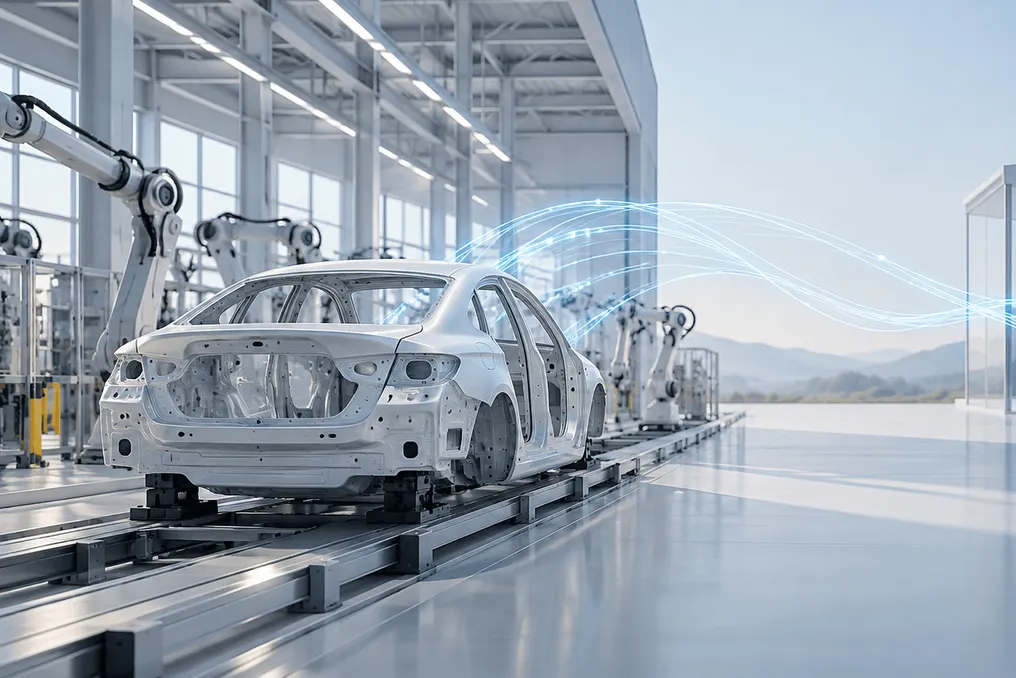
China Mobile has introduced the first industry-wide general AI platform for the automotive industry. This platform is a suite of services that includes computing power, data, and models that car manufacturers can utilize without needing to build their own artificial intelligence infrastructure.

The platform was unveiled at the Intelligent Connected Vehicles Conference 2026 in Beijing. It was developed by the National Basic Platform for Pilot Application of AI in the Automotive Sector, which operates under China Mobile's guidance. According to reports from Science and Technology Daily and Sina Tech, this base positions itself as neutral because it does not manufacture cars, and its capabilities are open to the entire industry.

Executives from companies such as FAW, Dongfeng, Changan, BAIC, Li Auto, as well as representatives from Tsinghua University and the Beijing Economic-Technological Development Area, attended the event. The creation of the platform took one year, and it is now available for shared use since its launch.

In terms of computational resources, the platform supports 112.7 EFLOPS, which manufacturers can request elastically instead of building their own data centers. Regarding data, the base ensures that manufacturers retain full control over their core data; this data is only transferred between partners within an established compliance system. Concerning models, a set of tools is offered covering the stages of development, validation, and deployment.

The platform covers four key areas: research and development, manufacturing, intelligent driving, and testing. It incorporates six specialized agents: vehicle body design, process planning, visual quality inspection, intelligent maintenance, driving data generation, and driving model training. It is reported that these agents are already being used by more than ten state-owned automakers.

The base presented several examples based on its own metrics. In Shanghai, a design agent that generates blueprints from sketches was able to create one design set three times faster. A process planning agent reduced the time to produce vehicle technical maps from five days to four hours. In Jilin, an inspection agent increased defect detection above 99.5% and reduced line adaptation time from four weeks to one, while the data generation agent lowered R&D costs in driving by 10%. In Chongqing, a maintenance agent can recognize over 20 types of malfunctions and reduce downtime by 30%. In Beijing, a training agent doubled the speed of driving policy learning.

A representative from China Mobile stated that the next phase involves opening up additional key capabilities, linking them to specific manufacturer use cases, and creating a set of reference implementations that other companies can copy. This launch marks an expansion of China Mobile's efforts from providing raw computing power to offering comprehensively packaged, industry-specific agents, giving smaller automakers the ability to test AI tools without the initial cost of building their own stack.

Popular