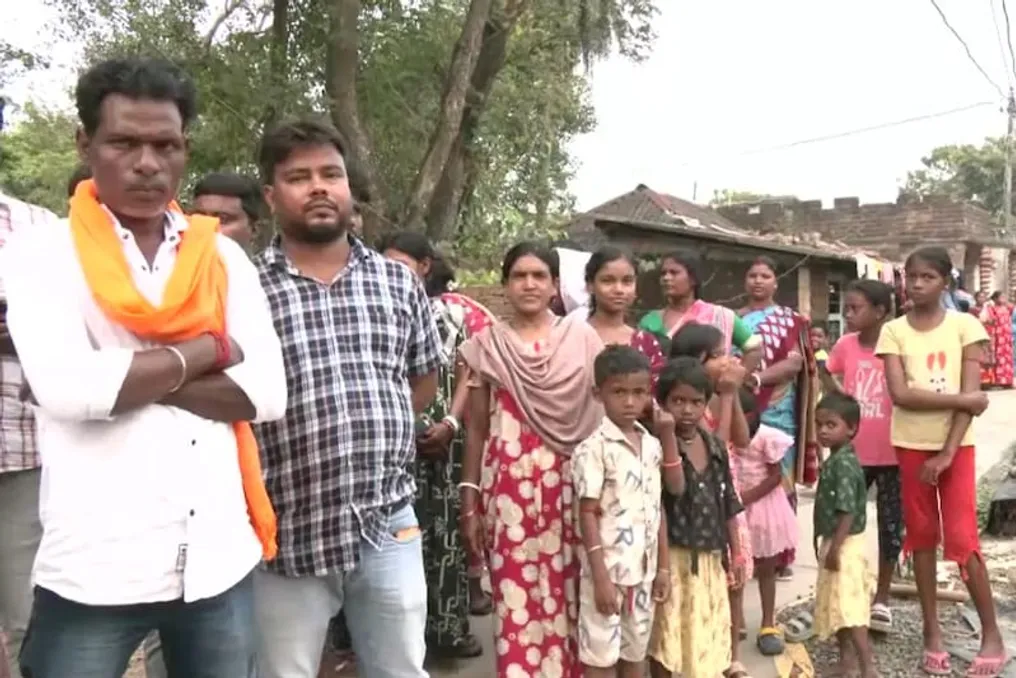
Electricity supplied to the village for the first time since independence; 400 Adivasi families rejoice
Read more
Aaj Tak
www.aajtak.in

Electricity supplied to the village for the first time since independence; 400 Adivasi families rejoice

Festivities in the village in West Bengal are different this year as local residents have lived in darkness for a long time. Electricity has now been supplied to this village for the first time since gaining independence. About 400 Adivasi families reside in Chakdaha village, which is part of the Hooghly district, and they are overjoyed by the arrival of electricity, meaning their homes can finally be lit after a long wait.

This village is located in the Ashtarraddattapur grampada, Tarkeश्वर constituency. Local residents note that electricity poles were installed many years ago, but the wires were never strung on them, preventing electricity from reaching the houses. Now, the path to obtaining electrical connections in the village has opened up.

According to news agency ANI, Rui Bari, a resident of the village, stated that there had been no electricity since independence, and about 400 families lived without it. This created the greatest difficulties for children, as studying at night was challenging. Residents hope that the availability of electricity will ease children's education.

Local resident Mahadev also expressed his joy about this matter. For the villagers, this is not just receiving electricity, but the beginning of relief from long-standing problems.

Santu Pan, a Member of Parliament from the Bharatiya Janata Party (BJP), reported that the poles were installed several years ago, but the wires were not laid. He blamed the then-ruling TMC party for failing to provide electricity to the village, despite the residents voting for the BJP since 1997-98. Santu Pan stated that he promised to bring electricity during the election campaign and named it his first priority after winning.

According to Santu Pan, about a month ago, the district's Electricity Department began work on installing meters in the village. According to the report, Santu Pan mentioned that electrical connections are being provided to more than 100 houses, with new meters already installed in 50 of those homes. He also emphasized that families belonging to the Below Poverty Line (BPL) category will receive electricity free of charge.

Chakdaha is an Adivasi village, and all its families belong to the Scheduled Tribe (ST) category. The residents are engaged in agriculture. The arrival of electricity for the first time since independence has significantly amplified the joy of the residents ahead of Diwali, and they now hope their homes will soon be filled with light.
Similar stories

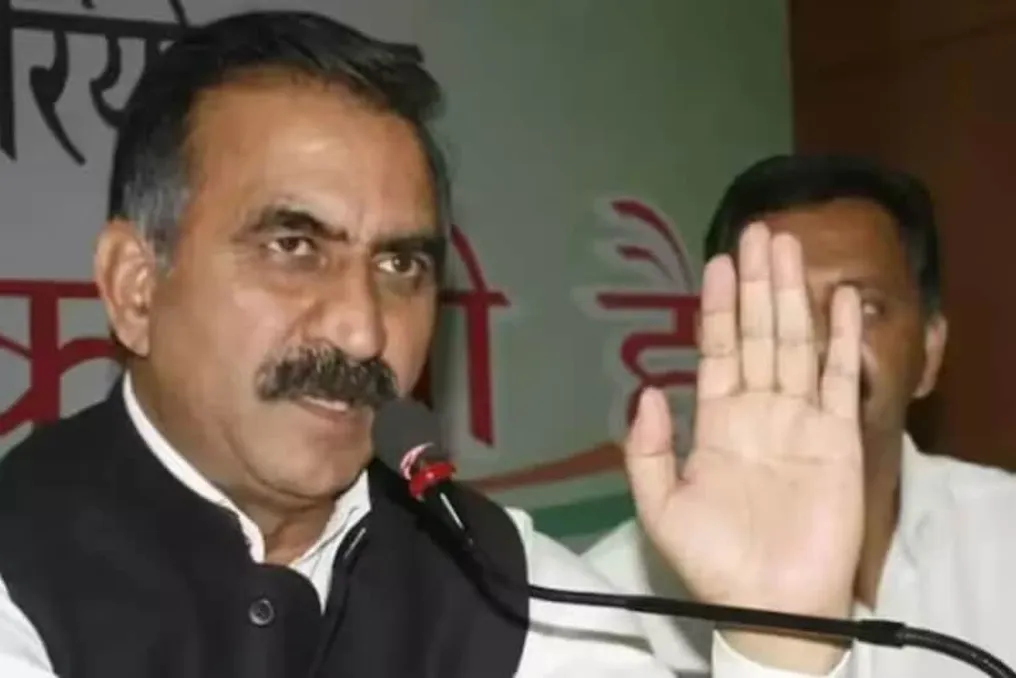
CM Sukhu announces women's support program: ₹1500 monthly and 300 units of free electricity
Read more
www.aajtak.in

CM Sukhu announces women's support program: ₹1500 monthly and 300 units of free electricity

Chief Minister Thakur Sukhvinder Singh Sukhu announced the launch of the 'Happy Family' program in the state, which will take effect next month. Under this initiative, financial assistance of ₹1500 per month will be provided to women from needy families. Additionally, such families will be provided with free medical care through health insurance cards, as well as 300 units of free electricity.

The announcement was made by the minister during a large public gathering in Chuvari Chogan, which falls under the Bhatiyat constituency in Chamba, on Wednesday. He stated that the official start of this program will take place in Solan in the presence of National Secretary and Congress MP Priyanka Gandhi. The minister emphasized that the state government aims to ensure the economic empowerment of women and provide financial support to ordinary families.

Sukhu specified that about 20 thousand qualified women in the Bhatiyat constituency will receive monthly financial assistance of ₹1500, and 10 thousand families will receive the benefit of 300 units of free electricity. He also noted that the government has launched various programs to strengthen the rural economy and continues to implement Congress promises.

To identify needy families under this program, a survey was conducted at the panchayat level. Approximately 1.80 lakh families in the state were identified as eligible for 300 units of free electricity, and about 2.50 lakh women are set to receive monthly financial support. The minister explained that the monetary aid to women will be transferred directly to their bank accounts, and families will receive support on electricity bills.

Criticizing the Bharatiya Janata Party, Sukhu stated that the Congress government is seriously working to fulfill its promises, while the Bharatiya Janata Party spreads false information on social media. He reminded that the Congress promised to provide ₹1500 to women from families with an annual income of less than ₹75 thousand, and the government is working to implement this promise.

Responding to the demands of residents of Bhatiyat in Chamba, the minister also announced the opening of a civil court in Chuvari. This will allow residents of the region to resolve legal issues without the need to travel elsewhere. Furthermore, he announced the allocation of ₹4.50 crore for preparing the Detailed Project Report (DPR) for the Chuvari-Chamba tunnel. Further procedures will commence after the DPR preparation is complete.

The minister concluded that the state government is constantly making efforts to develop rural areas, expand basic infrastructure, and improve the standard of living of the population, affirming its commitment to regional development.

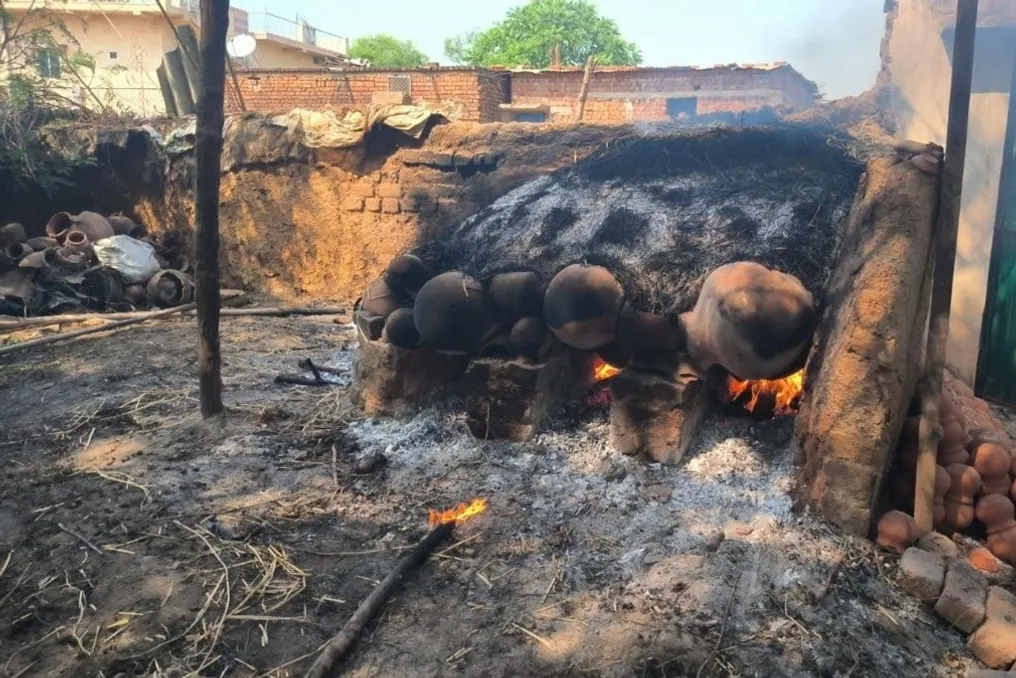
Clay lamps are delivered from Sirsa (Chittagong) to Ayodhya, providing employment for 200 pottery families
Read more
www.aajtak.in

Clay lamps are delivered from Sirsa (Chittagong) to Ayodhya, providing employment for 200 pottery families

During the Diwali festival, homes across the country are illuminated with clay lamps; however, in the village of Sirsa Kurd, located in the Durg district of Chittagong state, the light of joy extends to the lives of hundreds of families thanks to these lamps. Here, about 200 pottery families use their ancestral skills to produce millions of lamps. Demand for them comes from Durg, Bhailai, Raipur, and also from Ayodhya.

The hard work of local artisans has turned this village into an example of the 'Vocal for Local' concept and self-sufficiency.

The village of Sirsa Kurd in the Durg district of Chittagong is currently fully engaged in making clay lamps. As the Diwali festival approaches, the volume of work for the pottery families in the village has significantly increased. Potter wheels are operating in the homes, and family members are involved in the process of making, drying, and firing the lamps.

Approximately 200 pottery families in the village participate in this work. It is noteworthy that the lamps produced here are sent not only to local markets but also to Ayodhya, Uttar Pradesh state. The traditional skills of local craftsmen form a significant basis for their livelihoods.

Demand for the clay lamps made in Sirsa village exists in cities such as Durg, Bhailai, and Raipur. Furthermore, they are supplied to Ayodhya for Dipotsava during Diwali. External traders themselves come to the village to purchase lamps from potters and then distribute them to various cities. This allows local artisans to access the market and increases sales of their products.

Potters in the village note that lamp production ramps up about 15 days before Diwali. During this period, all family members are involved in the production process.

Potter Panchram reported that they start preparing lamps for Diwali about 15 days in advance. The lamps made here are sent to Bhailai, Durg, Raipur, and Ayodhya. He specified that the livelihood of two to three hundred families depends on this work. According to him, seven to eight lamps are produced at one level. Wood is used for firing the lamps. Since wood prices are rising, costs are increasing, and profits sometimes decrease.

For the potters of Sirsa Kurd, making clay lamps is not just a traditional activity but a source of employment and self-sufficiency. Local production and direct procurement provide rural artisans with market access. This also reflects the idea of campaigns like 'Vocal for Local' and 'Self-Reliant India'—promoting local goods and providing artisans with employment opportunities through their skills.

The story of Sirsa village shows that by supporting traditional art and stimulating the local market, the village economy can be strengthened. This Diwali, alongside the homes lit with clay lamps, the light of hope and happiness spreads into the homes of those pottery families whose labor creates these lamps.

Popular