India launches three proprietary artificial intelligence models capable of operating offline
Read more
Aaj Tak
www.aajtak.in

India launches three proprietary artificial intelligence models capable of operating offline

The Indian government has announced a significant step in the technology sector by introducing three new domestic artificial intelligence models. These models are named EKA-1, Dhir 2B, and Dhir 5B. The Ministry of Information Technology presented these tools as part of the IndiaAI mission, developing them with an emphasis on Indian languages and business processes to reduce dependence on foreign AI models.

These three models were demonstrated during an event held in New Delhi. According to S. Krishna's Secretary of the Ministry of Information Technology and other government officials, these tools can be used in government institutions, research centers, and schools.

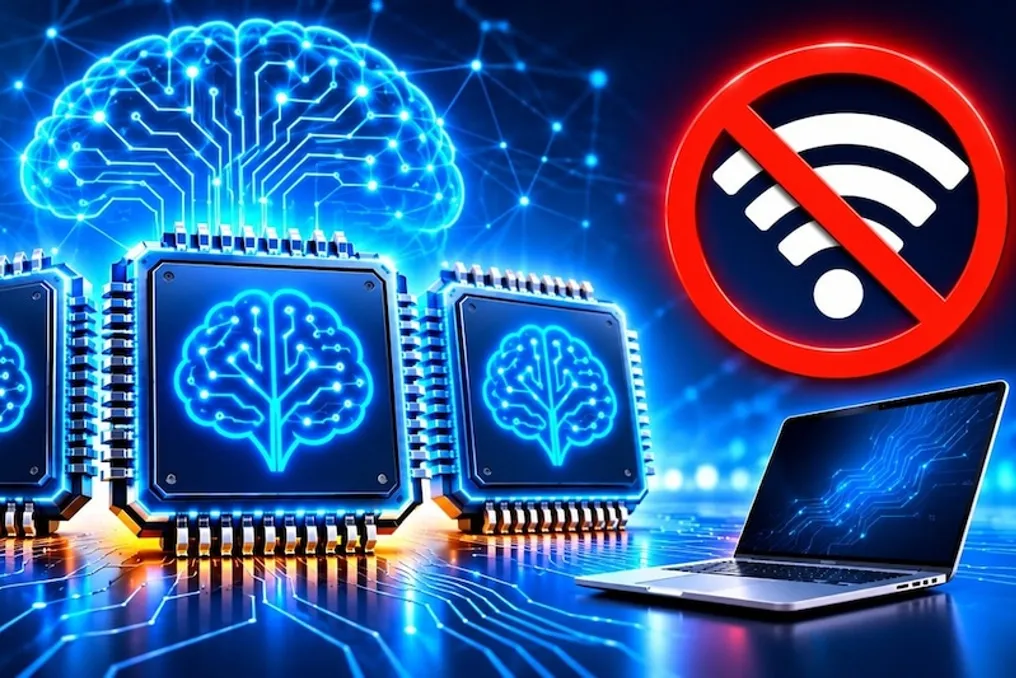
A key advantage of two of the three models is their ability to function without an internet connection, allowing them to be used directly on devices.

EKA-1 is the largest of the presented AI tools and was created by the Bangalore-based startup Soket Labs. It is a powerful, open, and hybrid language model designed to solve complex problems. The model is capable of answering difficult questions related to advanced mathematics, software, and logical reasoning, and it can also function as an AI agent to perform multiple operations.

EKA-1 is based on 26.3 billion parameters and was trained on a massive dataset of 7.5 trillion text tokens. This model understands all official Indian languages in addition to English. Thanks to its capabilities, Soket Labs specifically prepared EKA-1 for sectors such as banking financial services and cybersecurity.

The Dhir 2B and Dhir 5B models differ from EKA-1 and were developed to meet various needs. They were created by the company ZenteiQ AiTech Innovation.

The main feature of Dhir 2B and Dhir 5B is that they can operate without internet access. This does not require a large cloud server; they can be downloaded and run directly on a phone or laptop.

Similar stories

Bihar-based startup uses AI and IoT to improve efficiency of Indian Railways
Read more
yourstory.com

Bihar-based startup uses AI and IoT to improve efficiency of Indian Railways

The Indian railway network is one of the largest and most complex public infrastructure systems in the world, with thousands of trains, millions of passengers, freight transport, stations, tracks, and field crews operating daily. In such a complex system, even a small delay can cause cascading consequences at various levels.

Sometimes reports from the field are not received in a timely manner, and data may be scattered across different systems, preventing officials from getting up-to-date information about what is happening. Under these conditions, technology ceases to be just a tool for speeding up work, becoming an integral part of effective management and decision-making.

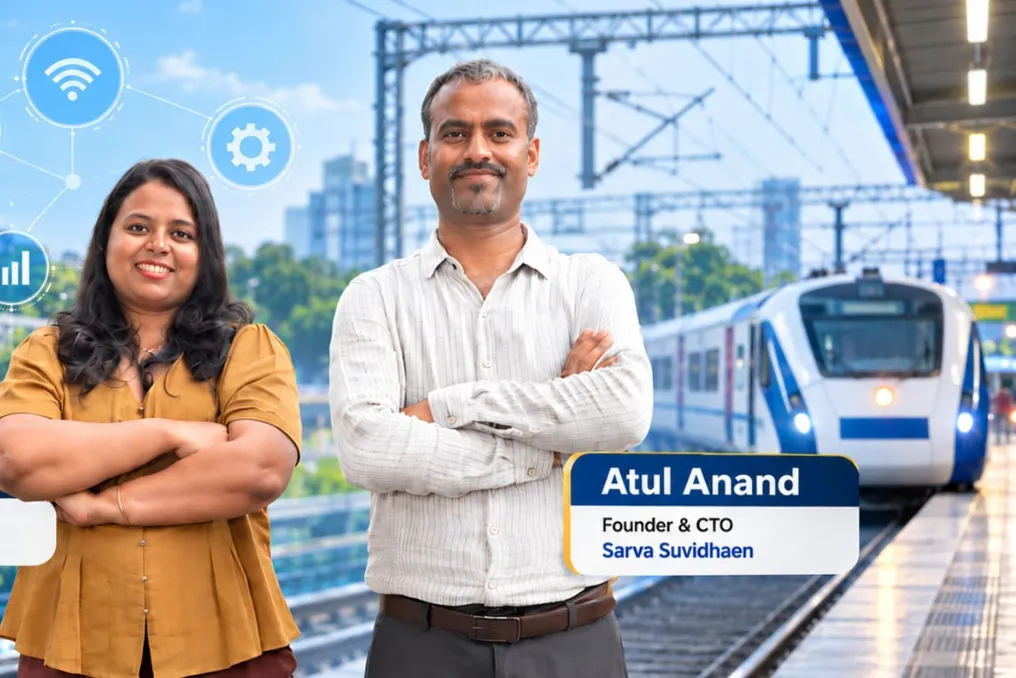
The startup Sarva Suvidhaen, based in Bihar, operates precisely in this area. The company develops solutions for railway transport and other large infrastructure systems using artificial intelligence (AI), Internet of Things (IoT), computer vision, and software.

The company was founded by Atul Anand and Srishti. Despite their different professional backgrounds, they noticed a common problem during quarantine. Working from home in Patna, they realized the need to improve data, automation, and real-time monitoring for certain processes of Indian Railways. This gave rise to the idea of a startup that could apply technology to solve on-ground problems in public infrastructure, rather than being limited to private companies.

Recently, the publication YourStory interviewed Atul Anand, CTO of Sarva Suvidhaen. He elaborated on the company's inception, his entrepreneurial experience in Bihar, the AI and IoT-based solutions developed for railways, as well as the challenges encountered and future plans.

Atul Anand's journey began in a government middle school in Bihar, where he graduated in 2005 through the Bihar Board. He then continued his studies at Patna Science College from 2005 to 2007. After that, he earned a Bachelor's degree in Computer Science and Engineering from NIT Trichy. Subsequently, he worked in software development at companies such as Oracle, BEL, CLS, KPI Partners, IQuanti, and SpotOn.

Srishti began her education at School of Creative Learning. She obtained a secondary school diploma through BSEB. She later earned a BBM from Magadh University and an MBA from Uttarakhand Technical University. She worked at SPVR and Co, Randstad, and Cognizant.

The differences in their experience proved to be a strength for the company: Atul possessed expertise in technology and software development, while Srishti had experience in business, management, and operations. Atul explains that after more than twelve years in the software development sector, he felt that the application of technology should not be limited to the needs of only companies. He added that the country's large public systems also needed this, and Srishti prompted him to think in this direction. They decided to use their technical knowledge to solve problems affecting public services and ordinary citizens.

During quarantine, working from home in Patna, they began closely examining the daily processes of Indian Railways. They concluded that data collection, field reporting, and monitoring in such an extensive network could be made more organized, which is particularly relevant for processes requiring information gathering from various points and subsequent decision-making.

Srishti encouraged Atul to leverage his technical background in this direction. Together, they started exploring ways to integrate machine learning (ML), IoT, and software with public infrastructure tasks. Sarva Suvidhaen focuses on organizations whose operations are distributed across multiple locations. In such systems, manual reporting and limited data visibility slow down the decision-making process.

The company operates on B2B and B2G models, offering the development and implementation of software and IoT solutions, as well as consulting and maintenance. Atul notes that they did not start with extensive market research but based their approach on observing real problems while staying in Patna during quarantine. They believed that technologies like ML and IoT could help understand and solve these issues. He took responsibility for the technology, while Srishti handled the business and operations, thus their roles gradually defined, and Sarva Suvidhaen's work progressed.

The startup has developed a range of solutions for digitizing field operations of Indian Railways. One of these is WagonEye—an AI and computer vision-based platform used to detect potential defects on the chassis and running gear of freight and passenger train wagons. In a large network like the railways, timely identification of issues is critical for both safety and operational efficiency.

Furthermore, there is RailOps—a digital operational platform that allows railway teams to log and monitor field activities. SwachhDNR is a web and mobile platform implemented in the Danapur division, which includes Patna Junction, as well as in the Sealdah and Jhansi divisions. It is used for tracking and evaluating employee performance.

Through these solutions, the company aims to make field data digitally accessible and link it to the decision-making process. Atul emphasizes that their focus goes beyond software development; they strive for technology to work where a real problem exists. Since the conditions in railway field operations are constantly changing, it is crucial that AI models and IoT systems function reliably in real-world settings. Solutions like WagonEye, RailOps, and SwachhDNR were designed with this approach in mind. Their goal is to transform data into actionable information that aids better decision-making at both the field worker and management levels.

Sarva Suvidhaen initially bootstrapped, meaning the founders did not seek external investors, relying on personal savings and income from early projects. Later, they received funding of 10 lakh rupees from Startup Bihar. The company also received incubation support from IIT Patna and STPI, and additionally secured 1 crore rupees in credits from Google Cloud. These resources were directed towards building and scaling the AI and IoT infrastructure.

According to the company, it has received a total of 32 lakh rupees in government aid and attracted 60 lakh rupees in external equity capital from two investors. Experience working with government agencies allowed Sarva Suvidhaen to understand important aspects of business: large government organizations follow established procurement rules, making trust-building and establishing a strong reputation critical when implementing new technologies. Meanwhile, pilot projects and real field conditions are very useful for refining deep technological solutions. This experience helped the company make its solutions more practical and reliable.

The company has demonstrated business growth. In the financial year 2024–25, the company's turnover was approximately 48 lakh rupees, and profit reached about 9 lakh rupees. In the financial year 2025–26, turnover increased to approximately 1.16 crore rupees, and profit amounted to about 20 lakh rupees. The company's revenue model is based on one-time fees for development and integration, as well as monthly or annual subscriptions and maintenance contracts.

Currently, the company plans to expand its presence across all zones of Indian Railways and to bring its solutions into sectors such as logistics, healthcare, and smart cities. On the technological front, the company is preparing to increase investments in edge AI, computer vision, and predictive maintenance.

The IIT Patna incubation center played a vital role in this journey. According to the company, funding, technical support, mentorship, and industry connections helped transform prototypes into field-ready solutions. Atul believes that Sarva Suvidhaen is not just a company working for railways; their goal is to become a partner in AI, IoT, and automation for critical infrastructure. To achieve this goal, technology must be capable of functioning in diverse environments. Going forward, they intend to explore opportunities in sectors like logistics, healthcare, and smart cities, alongside railways. They believe that while the journey may begin in Bihar, the solutions must cover all of India, and ultimately, the entire world.

The story of Sarva Suvidhaen is still in its early stages. The company will continue to face challenges such as government procurement procedures, long sales cycles, and large-scale deployment of deep technological solutions. However, it also demonstrates how new opportunities for entrepreneurship and technological talent are emerging in Bihar. A startup originating in a city like Patna can develop solutions for one of the country's largest public infrastructure systems. The ecosystem of startups, incubation centers, government aid, and institutional support helps such enterprises move beyond the initial phase. Sarva Suvidhaen's path exemplifies this evolving landscape. For Atul and Srishti, the direction is clear: they want to work on problems whose impact can be seen on the ground and whose solutions can be scaled. Their message reflects this approach: 'Start your journey in Bihar, find solutions for India's real problems, and create solutions that the whole world can adopt.' Sarva Suvidhaen began its journey in Bihar, but its ambitions are not limited to the state; the company is now developing solutions applicable to other major infrastructure sectors besides railways, presenting an interesting picture of Bihar's developing startup ecosystem.
Indian Telecom Regulator Trai Proposes AI Governance Framework and Accountability Rules for Telecom Operators
Read more
business-standard.com

Indian Telecom Regulator Trai Proposes AI Governance Framework and Accountability Rules for Telecom Operators

India's telecommunications regulator, Trai, released a draft framework for the responsible use of artificial intelligence (AI) on Friday. According to this draft, licensed entities operating under the Telegraph Act or the Telecom Act must be accountable for the outcomes of the AI systems they implement, regardless of where those systems were developed.

This broad draft, presented for consultation, mandates that companies adopt board-approved AI policies, establish dedicated governance and safety committees, and report serious AI-related incidents to the regulator. Stakeholders have until November 27th to submit comments.

The consultation comes amid the growing integration of AI into networks to enhance efficiency and improve consumer services. Trai warns that implementing AI can introduce new risks if due diligence is not performed before system deployment or if there is insufficient oversight of autonomous learning and system interactions.

The regulator noted that risks such as unintentional bias, which can arise in AI systems during training and use, undesirable model behavior like model drift, and adversarial attacks, could negatively impact the resilience of telecommunication infrastructure, especially its critical components. These risks can be mitigated by adhering to appropriate AI governance practices.

Indian telecom service providers, including Reliance Jio and Bharti Airtel, are already using AI extensively in their systems, primarily for customer identification and fraud prevention. Global network equipment manufacturers, such as Nokia and Ericsson, are also integrating AI into networks, a trend adopted by Indian operators.

Trai's proposals include a requirement for every organization to develop an internal AI policy approved by its board of directors or equivalent governing body. This policy must cover risk classification, deployment permissions, incident management, human oversight, data governance, and consumer complaint resolution. Furthermore, the regulator suggested that all AI systems should be subject to appropriate human control to mitigate risks according to a predefined mechanism.

Telecom companies and authorized organizations using AI must classify their systems into high, medium, and low-risk categories based on their impact on network operations, financial and operational results, and potential consequences for consumers.

A key aspect is that the proposals aim to hold organizations accountable for the outcomes of implemented AI systems, 'regardless of whether the AI systems were developed in-house, procured/outsourced from a third party, or represent a combination of these options.'

AI-related incidents must be classified into critical, high, moderate, and low severity levels, with mandatory reporting required for critical and high-severity incidents. The regulator stated that 'critical and high-severity AI incidents must be reported to TRAI in the prescribed format, order, and timeline.' Although the regulator did not specify what constitutes critical, high, or low severity, or the deadline for mandatory reporting, telecom companies must also maintain centralized databases of AI incidents and consumer complaints related to AI-induced harm, complete with mechanisms for investigation, mitigation, and resolution.

Murf AI Co-founder Claims Indian Voice AI Challenges Could Influence Global Technology
Read more
yourstory.com

Murf AI Co-founder Claims Indian Voice AI Challenges Could Influence Global Technology

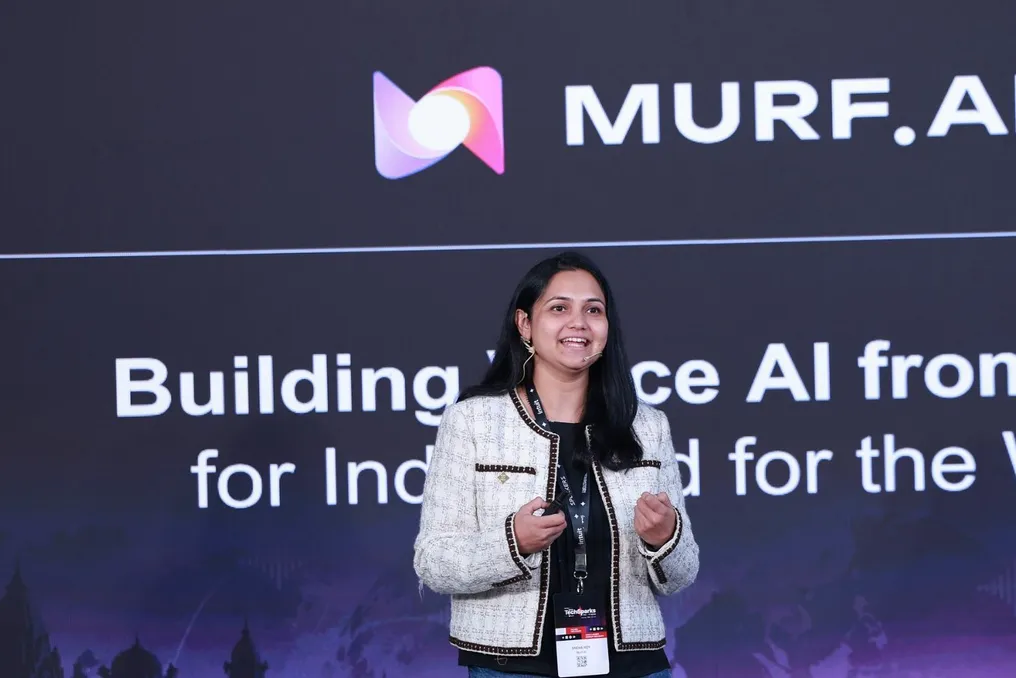
The co-founder of Murf AI believes that the complexities associated with voice artificial intelligence in India have the potential to shape global technological trends. What Indian users consider ordinary conversation could become the most difficult test for voice AI, and solving this challenge will open up new possibilities worldwide.

Voice AI is capable of answering questions, confirming orders, or assisting with bookings. However, the question arises: can it correctly pronounce an Indian name, understand an address spoken in a mix of Hindi and English, and respond quickly enough to sound natural?

For Sneha Roy, co-founder and COO of Murf AI, such scenarios are not exceptional; they represent the baseline for creating voice AI that will function in India, and ultimately, globally.

During a masterclass at the TechSparks 2026 event titled 'Building Voice AI from India, for India and for the World,' Roy explained how India's linguistic complexity, infrastructure limitations, and economic considerations affect speech technology development.

She cited examples of products that were first adapted for Indian users before finding broader application. Google Maps implemented offline functionality for areas with limited internet access, and Netflix introduced a mobile-only plan that has since been adopted in 78 countries. Uber tested cash payments in Hyderabad before expanding this option to other markets.

Roy posits that voice AI can follow a similar path. For instance, when calling to check a delivery status in Bengaluru, a customer might mix English with a regional language, use a local pronunciation of an address, and expect the postal code to be spoken numerically.

A model built on standardized English may struggle with such nuances. Roy emphasized: 'If a customer has to change their manner of speaking so that the agent can cope, or constantly repeat their address or name, then we have not finished developing it.'

In her view, the task is to create systems that accommodate people's natural way of speaking, rather than requiring customers to adapt to the technology.

Natural speech is only one part of the problem. Voice agents must also react quickly and operate efficiently at scale when companies process millions of calls monthly. Roy reported that a complete voice agent pipeline, including speech recognition, language modeling, and speech generation, typically has a response budget of 500 to 800 milliseconds. She added that Murf has managed to reduce the latency of its text-to-speech model below 100 milliseconds, including network delays.

To achieve this, the company developed Falcon 2—a smaller speech model designed to run on a wider range of GPUs instead of depending on specific, high-performance hardware. Roy noted that this approach helped maintain low latency across different geographical regions while improving cost-effectiveness.

Similar engineering solutions could be beneficial for markets outside India, especially where computational infrastructure is limited or deploying voice agents at scale remains expensive.

Roy also highlighted the importance of a responsible approach to voice data. She mentioned that Murf collaborates with over 400 voice actors globally through long-term, royalty-based partnerships and does not clone voices without consent.

For clients with strict privacy requirements, the company offers APIs that can process data without storing it, as well as on-premise deployments for sensitive applications. Roy's central thesis is that India's linguistic diversity and infrastructural constraints should not be viewed as secondary requirements; they can help define what voice AI must do before it is ready for widespread adoption. As she put it: 'India is the capital of world specifications.'

Popular