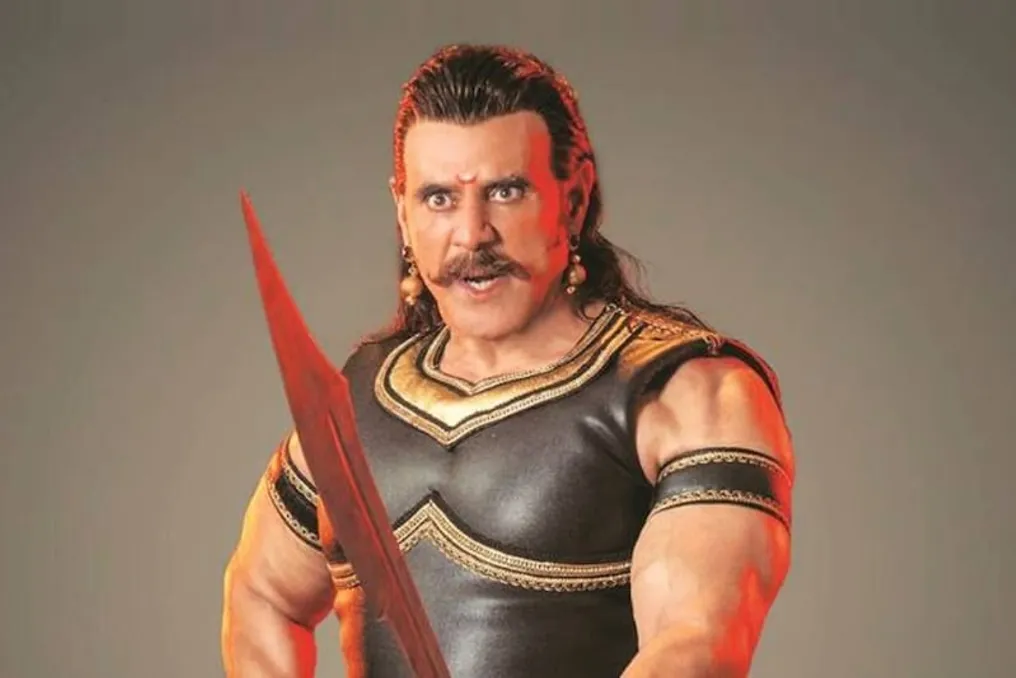
Film 'Ramayana' showed first-day box office collection, trailing 'Dhurandhar 2' and 'Adipurush'
Read more
Aaj Tak
www.aajtak.in

Film 'Ramayana' showed first-day box office collection, trailing 'Dhurandhar 2' and 'Adipurush'

The massive and grand Indian film 'Ramayana' was released in theaters on Thursday, November 5th, shortly before the Diwali holidays, worldwide. This first episode, with a budget of 1600 crore rupees, is currently the most expensive Indian film. The film demonstrated a strong start thanks to advance ticket sales and positive reviews.

Advance sales for 'Ramayana' began 15 days before the premiere, during the Dasara festival. After resolving a dispute between cinemas and distributors, pre-sales gained momentum. By the time the film was released, 200 crore rupees worth of tickets had been sold globally, indicating an expected large opening day.

In several regions of India, screenings on Thursday morning were fully booked. Although advance sales did not reach the level of 'Dhurandhar 2' earlier this year, the film still started confidently. According to Saklink, on the release day, 'Ramayana' earned 64.85 crore rupees (net) in India, largely driven by the good performance of its Hindi version.

Despite Yash's participation as Ravana, the Kannada version started slowly, earning only 7.25 crore rupees. Meanwhile, the Hindi version earned 47.50 crore rupees, while the Telugu, Tamil, and Malayalam versions brought in 6.00 crore, 2.60 crore, and 1.50 crore, respectively. Thus, the total gross collection in India amounted to 77.50 crore rupees, with a net collection of 64.85 crore rupees. Official global figures have not yet been provided by the creators.

With this revenue, 'Ramayana' surpassed the total collection of 'Dhurandhar' on the first day by noon. Ranveer Singh's film was released last year with box office collections of 28 crore rupees. By the end of the day, 'Ramayana' also overtook the first-day box office figures of blockbusters such as 'Patan' (57 crore rupees), 'Animal' (63 crore rupees), and 'Drishyam 2' (62 crore rupees).

However, the film could not surpass 'Jaan' Shah Rukh Khan (75 crore rupees) or 'Dhurandhar 2' Ranveer Singh, which collected 102 crore rupees on its opening day earlier this year. Perhaps the biggest disappointment for fans was that the film failed to beat the debut of 'Adipurush'. This film, based on 'Ramayana' and subject to criticism, collected 86.75 crore rupees in 2023.

The film 'Ramayana', created with the participation of Namit Malhotra's Prime Focus Studios, DNEG, and Yash's Monster Mind Creations, is planned to be released in two parts. Ranbir Kapoor plays Lord Rama, Sai Pallavi plays Sita, Yash plays Ravana, Ravi Dubey plays Lakshmana, and Sani Deol plays Lord Hanuman. The first part was released worldwide on November 5, 2026, and the second part is scheduled for Diwali 2028.

Similar stories

Film 'Ramayana' starring Ranbir Kapoor expected to gross 160 crore rupees on opening day, breaking records
Read more
www.aajtak.in

Film 'Ramayana' starring Ranbir Kapoor expected to gross 160 crore rupees on opening day, breaking records

Projections indicate that the box office collection for the film 'Ramayana' (Part 1) will reach 160 crore rupees on its first day of release. This epic film, based on the 'Ramayana' and directed by Nitish Tiwari, features lead roles by Ranbir Kapoor, Yash, and Sai Pallavi. The movie is poised to become one of the highest-grossing premieres in India during the Diwali festival.

Typically, the period immediately preceding Diwali is not considered the most lucrative for cinema releases, and even major films do not always achieve high figures in the domestic market. However, if current forecasts prove accurate, 'Ramayana' will be a historic exception.

One day before the global release, scheduled for Thursday, November 5th, 'Ramayana' earned approximately 96.75 crore rupees from advance bookings. Excluding block reservations, this amount stands at 77.44 crore rupees. To date, a total of 2.573 million tickets have been sold across 83,172 shows. Of these, 1.014 million tickets were sold for the Opening Day across 23,699 shows, generating 39.40 crore rupees (33.36 crore rupees excluding block seats) in advance sales.

According to Sacnilk data, the opening day accounts for the largest share of advance sales. This is followed by Saturday, November 7th, where 4.98 lakh tickets were sold across 17,773 shows, bringing in 19.69 crore rupees (15.56 crore rupees excluding block reservations). Then, on Friday, November 6th, 4.89 lakh tickets were sold across 18,496 shows, amounting to 18.63 crore rupees (14.60 crore rupees excluding block reservations).

As expected, advance sales on Sunday, November 8th, were the lowest. This was due to the Diwali festival. On Sunday, 3.81 lakh tickets were sold across 15,174 shows, generating 13.23 crore rupees (9.75 crore rupees excluding block reservations). It is anticipated that 'Ramayana' will successfully navigate Monday as well, as 1.91 lakh tickets have been sold so far across 7,489 shows, yielding 5.79 crore rupees (4.17 crore rupees excluding block reservations).

The Hindi version leads in advance sales, accounting for 82% (79 crore rupees). This is followed by Telugu dubbed versions (8%, 8.10 crore rupees), Kannada (8%, 7.29 crore rupees), Tamil (2%, 1.87 crore rupees), and Malayalam (1%, 49.29 lakh rupees).

Only at the national chain PVR INOX, with revenue exceeding 25 crore rupees, is 'Ramayana' set to set a record for pre-Diwali advance sales. According to CEO Kamal Gianchandani, the film has broken the 'Diwali myth' (the myth of poor film performance during Diwali) and achieved the highest level of advance sales in over three decades of PVR INOX history.

This indicates that the contribution of multiplex cinemas to the overall advance sales of 'Ramayana' in India is significantly higher than that of single-screen theaters. Premium formats such as IMAX 3D, 4DX, and Dolby Cinema constitute over 19% of the total advance sales, although their share in the total number of shows is currently only 2%.

This also suggests that audiences are not facing significant difficulties due to the high ticket prices for the extended weekend of 'Ramayana'. For instance, at PVR ICON: Phoenix Palladium in Lower Parel, Mumbai, tickets for evening/night IMAX 3D shows during the first four days cost over 3,000 rupees.

Globally, 'Ramayana' has already surpassed 100 crore rupees in advance sales, ensuring it a long weekend with high demand. In international markets, advance sales have reached over 40 crore rupees, bringing the total global advance sales to approximately 140 crore rupees. North America leads in this regard, where over $3 million (28.42 crore rupees) was earned after the paid preview on November 4th.

In the US alone, 'Ramayana' sold over 51,000 tickets for its opening weekend. Thus, it surpassed Indian blockbusters such as Ranbir Kapoor's 'Animal' (24,000), Shah Rukh Khan's 'Jawan' (28,000), Allu Arjun's 'Pushpa 2: The Rule' (35,000), Jr NTR and Ram Charan's 'RRR' (35,000), Prabhas' 'Baahubali 2: The Conclusion' (39,000), and 'Kalki 2898 AD' (40,000).

'Ramayana' now only trails 'Dhurandhar 2: The Revenge' by Ranveer Singh, which sold over 52,000 tickets in the US during its opening weekend earlier this year. At current trends, its box office collection in the US is projected to be between 13 million and 14 million dollars (123 to 133 crore rupees), allowing it to challenge 'Dhurandhar 2's' collection ($14 million) for the opening weekend.

It is forecasted that 'Ramayana' will collect 160 crore rupees worldwide on November 5th, surpassing the global collections of Shah Rukh Khan's blockbusters 'Pathaan' and 'Jawan'. Nevertheless, it still lags behind 'Dhurandhar 2', which collected more globally.

Film 'Ramayana' may break 'Jangala's' record after ten years thanks to global strategy
Read more
www.aajtak.in

Film 'Ramayana' may break 'Jangala's' record after ten years thanks to global strategy

A period capable of radically changing much is approaching in the history of Indian cinema. Ten years have passed since the release of Amir Khan's hit 'Jangala,' which still holds the title of the largest Indian film globally. Thanks to its success in international markets, 'Jangala' generated over 200 billion rupees in revenue worldwide.

Currently, all attention is focused on the film 'Ramayana: Rise of Legend,' directed by Nitish Tiwari, which is set to release in theaters worldwide during Diwali. Will this epic mythological picture be able to surpass the historical record of 'Jangala,' which has remained unattainable for many Hindi films?

When 'Jangala' was released in December 2016, it showed impressive results domestically, collecting about 53.8 billion rupees in the domestic market. However, its true power was demonstrated at the global level, especially in the Chinese market. According to 'Box Office India,' this emotional story of a father and his daughters fighting in boxing matches was received with great enthusiasm by Chinese audiences, bringing the film nearly 122.6 billion rupees just in China.

Initially, the film earned around 75 billion rupees internationally, but thanks to its unexpected success in China, it entered the club of films with revenues of 200 billion rupees. Achieving this milestone was a task for 'Jangala' comparable to climbing a mountain for any other film.

Recently, Ranveer Singh's film 'Dhurandar: The Revenge' demonstrated how close any Hindi film can come to 'Jangala's' figures. According to 'Sankalpik,' even when released without major markets like China or the Middle East, this film collected an impressive 185 billion rupees worldwide. Now, 'Ramayana,' featuring major actors such as Ranbir Kapoor, Yash, and Sai Pallavi, has a great opportunity ahead. The film releases on November 5th directly as an international theatrical release, not relying on a single market, with the creators releasing it in premium formats. If it gains early audience support, the situation could completely change.

'Ramayana,' which is being created with a massive budget of about 200 billion rupees, is among the most expensive films in Indian cinema. Such a large investment volume means that the film needs not only to get a strong start but also to reach a target of approximately 500 billion rupees, which is about two and a half times the cost of the film, according to industry rules. Furthermore, actual profit will depend on rights unrelated to cinema exhibition and distribution.

Industry experts believe that even if the film gets an impressive start of 20 billion rupees worldwide, the real test will begin after that, as the picture needs to remain in theaters for a long time.

Large-budget films are tied to equally large risks, exemplified by Yash's recent film 'Toxic.' Despite great hype and expectations, the audience reaction to the film was not as expected. The total collection of this film, whose budget was over 450–500 billion rupees, amounted to only about 340 billion rupees. This serves as a clear warning that marketing and discussions alone cannot save a film; the most important thing is the quality of the content on screen.

The success of 'Jangala' was due to the universality of its story, containing feelings of family, struggle, and dreams that did not require a specific cultural context. On the other hand, many people, not only in India but worldwide, are familiar with the story of 'Ramayana.' It is based on eternal values such as truth, self-sacrifice, duty, and justice. The creators of 'Ramayana' have prepared a complete strategy for rapid earnings, promoting from India to foreign countries, including premieres in Hollywood.

However, familiarity with the story itself does not guarantee that audiences will come to the theaters. The real success of the film will depend on whether it can transform this grandeur and cultural significance into a magical and emotional cinematic experience that touches people's hearts. Moreover, director Nitish Tiwari has a chance to break 'Jangala's' record through his film 'Ramayana.'

Actor Puneet Issuer expresses concern over the trend of portraying Ravana as a hero in Ramayana films
Read more
www.aajtak.in

Actor Puneet Issuer expresses concern over the trend of portraying Ravana as a hero in Ramayana films

As the premiere of the film 'Ramayana' featuring Ranbir Kapoor approaches, questions are arising regarding the plot, presentation, graphics, and acting. Amid these discussions, Puneet Issuer, known from the series 'Mahabharata' as Duryodhana, supported the filmmakers' vision.

Puneet Issuer expressed concern about how 'Ramayana' and 'Mahabharata' are depicted in cinema, television, and theater productions. He noted that in some theatrical performances, Ravana is portrayed as a hero, while Lord Rama is reduced to a secondary character. However, Puneet Issuer stated that he eagerly awaits Ranbir Kapoor's 'Ramayana' and is fully confident in its brilliant execution.

Puneet Issuer raised the issue of the trend of elevating negative characters to heroic status on Amit Bhatia's YouTube channel. He mentioned that after observing this phenomenon, he wrote several plays about 'Ramayana' and 'Mahabharata.' In his opinion, the situation has reached a point where viewers begin to perceive villains, such as Ravana, as heroes.

He emphasized that if Rama is made the hero, then who is Lord Rama? Despite Ravana's numerous flaws, in some productions, the greatness of Lord Rama was not adequately demonstrated. Therefore, he aimed to show who Rama truly is, as in most plays, he was depicted as a minor character with few actions.

Puneet Issuer also reacted to the criticism receiving Ranbir's film. He believes that if the content is not high quality, the film will not succeed. However, if a good picture is created, it will surely become popular, citing the success of 'Kantara' and 'Hanuman Ansha,' while 'Adipurush' failed due to low quality.

The actor highly praised Ranbir's performance, expressing complete confidence that he handled the role of Lord Rama brilliantly. Furthermore, Puneet Issuer expressed trust in director Nitesh Tiwari, believing him to be a thoughtful director and hoping he will create a good film. He urged people to watch the film first before forming an opinion.

Popular