
Bihar team struggles without Vaibhav Suryavanshi; defeats continue despite captain changes in Ranji Trophy
Read more
Aaj Tak
www.aajtak.in

Bihar team struggles without Vaibhav Suryavanshi; defeats continue despite captain changes in Ranji Trophy

The performance of the Bihar team in the 2026-27 Ranji Trophy looks extremely shameful. Out of four matches played, Bihar lost three, and in one match, they lost by a margin of 10 wickets. In the elite Group A, the Bihar team occupies the last eighth position in the tournament table.

Both the batsmen and bowlers of Bihar are not showing the required level. In the first three games, Sakibul Ghani led the team. When his captaincy led to three consecutive losses, the management handed over the reins to Mangal Marau before the match against Goa. However, the change of captain did not lead to an improvement in the team's play. After four consecutive defeats, the team was eliminated from the race for a playoff spot.

The team is missing 15-year-old Vaibhav Suryavanshi, who could not participate in the matches due to international commitments. Recently, Vaibhav participated in two T20 matches during a visit to New Zealand. Previously, he was also part of the Indian team in a T20 series against West Indies, where he remained on the bench in all five matches. Vaibhav's presence in the Bihar team could have given the players extra enthusiasm and provided the team with a strong start thanks to his powerful batting.

Without Vaibhav, the Bihar team appears completely disjointed. In batting, Mangal Marau demonstrated a good contribution, scoring 285 runs in 4 matches with an average of 35.68. His best score was 138 runs, which he scored against Baroda. In bowling, Amod Yadav was the only stable player, taking 12 wickets in 4 matches. The question is how the team can win if only one or two players perform well. Now, the remaining three matches require the Bihar players to act cohesively and show a worthy performance to save the team's honor.

In the current season of the Ranji Trophy, Bihar started its first match against Uttar Pradesh in Rajgir. In this game, the team lost by an innings and 267 runs. Uttar Pradesh scored 540 runs, while Bihar scored 141 runs in the first innings and was forced to follow-on. Then the Bihar team scored only 132 runs in the second innings.

Next was the second match of Bihar against Baroda at the Reliance home ground in Baroda. In the first innings, Bihar scored 166 runs, to which Baroda responded with 416 runs. There was hope for good bowling from Bihar in the second innings, but this did not happen. Bihar managed to score only 251 runs in the second innings, allowing Baroda to achieve victory by a narrow margin of 2 runs, without losing a single wicket.

In the match against Madhya Pradesh, Bihar's situation became even more difficult. In Indore, where the match was held, Bihar scored 99 runs in the first innings, to which Madhya Pradesh declared the end of the first innings with a score of 407/8. After this, Bihar scored only 134 runs in the second innings, leading to a loss by an innings and 174 runs.

In the match against Goa, held in Panaji, Bihar's performance was disgraceful. Goa scored 397 runs in the first innings. In response, the Bihar team scored only 107 runs in the first innings, forcing them to follow-on. Bihar's players failed again in the second innings, and the entire team scored 113 runs. Goa won by an innings and 177 runs.

Similar stories

Questions about the team's bowling weakness arise after India's T20 series victory against New Zealand
Read more
www.aajtak.in

Questions about the team's bowling weakness arise after India's T20 series victory against New Zealand

Despite India's 3-2 victory in the T20 series against New Zealand, many questions remain that cannot be ignored. Although India dominated at the start of the series, winning the first three matches, two subsequent defeats exposed the team's weaknesses.

In the fifth T20 match, held in Hamilton on Sunday, New Zealand defeated India by seven wickets. The Indian batsmen scored 191 runs, but the bowlers failed to defend this total. The question arises whether India can remain world champions solely on the strength of its batsmen, especially when the team's tactical decisions, including the constant exclusion of Vaibhav Suryavanshi, are being questioned.

The attacking power of the Indian team was its main advantage in this series. Abhishek Sharma's aggressive play, in particular, put pressure on the opponents. However, in the last two matches, another side of the game emerged: when Abhishek couldn't score runs, the team struggled.

Nevertheless, in the fifth match, Ishan Kishan and captain Shreyas Iyer showed brilliant half-centuries. Ishan scored 61 runs off 32 balls, and Shreyas scored 50 runs off just 23 balls. Together they added 93 runs off 43 balls for the third wicket, taking India to a comfortable score of 112/2 in 10.1 overs.

It seemed from there that the Indian team was heading towards a large score, but the New Zealand bowlers managed to turn the game around. Edam Milne took four wickets for only 19 runs. Nathan Smith and Blair Tickner also succeeded at critical moments. In the end, the Indian team managed to reach 191/8.

India's main problem is its bowling. After scoring 191 runs in Hamilton, the Indian team created a difficult total to defend in T20 cricket, but New Zealand achieved it in only 18 overs. The hosts won the match by seven wickets, and the Indian bowlers looked as if they were craving wickets.

Tim Seifert was the main hero of New Zealand's victory, showing explosive play by scoring 93 runs off 50 balls. Glenn Phillips also helped create problems for the Indian bowling attack by scoring a half-century. Together they made the achievement very easy.

Another issue for the Indian team is fielding. Naman Dir dropped an easy catch by Seifert in the fourth over when he was scoring 13 runs. If this chance had been utilized, the picture of the New Zealand innings could have been different. Interestingly, New Zealand's fielding was not perfect either, and they missed several catches, but India's error proved decisive.

India's ability to score big in T20 cricket is undoubtedly a strength. However, to remain world champions, offense alone will not be enough. India needs bowlers capable of defending large totals and taking wickets at crucial moments.

The last two matches of this series showed that when opponents attack openly, the Indian bowling comes under pressure. Bowlers must have a clear plan not only to contain the run-scorers but also to take wickets. Furthermore, it is crucial to utilize the opportunities provided in fielding.

In the fifth match against New Zealand, the Indian team lacked ideal bowling resources, and the pitch became more favorable to batsmen at night. Nevertheless, one cannot ignore how easily New Zealand reached its target despite these conditions.

One reason for the questions regarding the Indian team's strategy is the constant exclusion of Vaibhav Suryavanshi from the starting lineup. The question of why a young explosive batsman like Vaibhav is not given a chance remains a subject of discussion.

The team management has several options in the upper order: Abhishek Sharma, Sanju Samson, Ishan Kishan, and other batsmen. The question arises as to who will give way to Vaibhav. However, naturally, questions arise about the strategy of constant experimentation and player exclusion.

It is not necessary for the decision to be to play Vaibhav at all costs, but if he is considered part of future plans, he should also be given opportunities to demonstrate his talent. Simply being in the squad does not allow a young player to prepare at the international level. The team management needs to clarify its plans regarding Vaibhav.

The T20 series against New Zealand is over, and now both teams will meet in ODI format matches. In this regard, the Indian team management has the opportunity to review its strategy and squad.

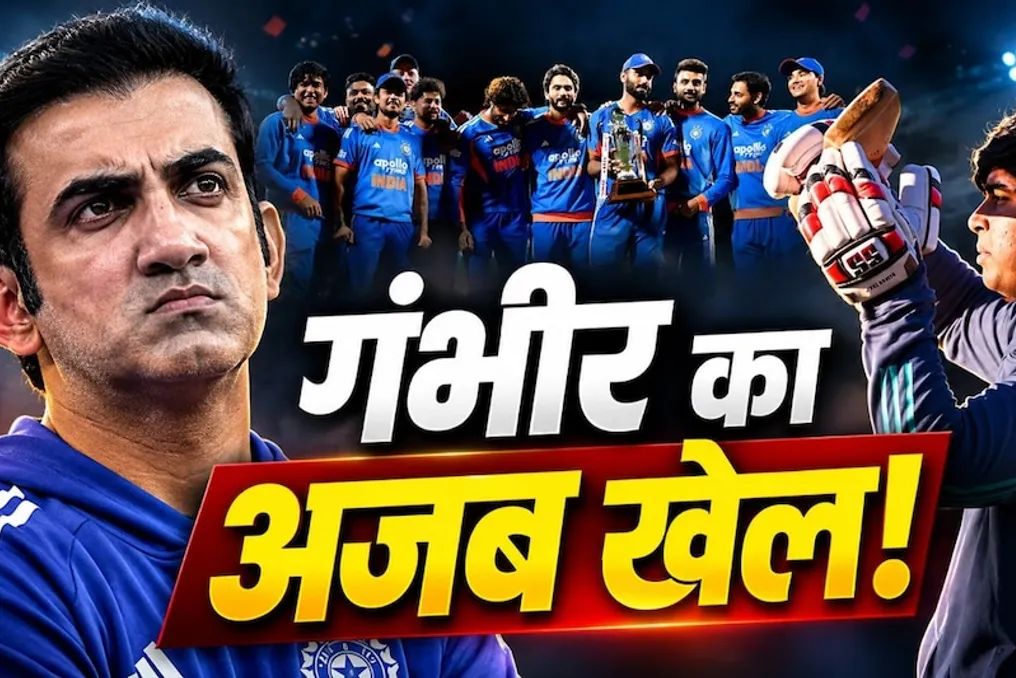
Gautam Gambhir and the team management must find a balance between attack and bowling. In addition to the ability to score big runs, they need to develop the ability to defend them. Player selection should also be based on the team's needs and current form.

How India will cope with the crisis: problems in attack and inefficiency in defense
Read more
www.aajtak.in

How India will cope with the crisis: problems in attack and inefficiency in defense

The Indian team, which had previously won a series by winning three consecutive T20 matches against New Zealand, suffered a crushing defeat in the fourth match. On home soil, at Eden Park in Auckland, the hosts posted a substantial score of 259/7, while the Indian squad managed only 172/9 in 20 overs. Consequently, New Zealand won this match by a margin of 87 runs, taking the series lead to 3-1.

This loss once again highlighted two significant weaknesses of the Indian team: firstly, the loss of batsmen due to excessive aggression in attack, and secondly, the inability to stop opponents in bowling. India's aggressive playing style has always been its strength, but the question arises as to how appropriate it is to play in such a style under all circumstances. Furthermore, what should the captain and coach do when their players cannot stop the runners or take wickets?

Gautam Gambhir and captain Shreyas Iyer now face the task of finding a way out of this difficult situation while maintaining their aggressive approach to the game.

India's new style of play is based on aggressive cricket. The strategy of hitting powerful shots from the start of the over-rock and putting pressure on the opposition bowlers has brought India many brilliant victories. Players like Abhishek Sharma, Sanju Samson, Ishan Kishan, and Vaibhav Suryavanshi play according to this philosophy. Vaibhav demonstrated this idea already in the third T20, scoring 45 runs in just 19 balls.

However, in the fourth match, this same aggression became a problem. Aiming for a target of 260 runs, the team needed a quick start, but Sanju Samson and Ishan Kishan departed in the very first over. Abhishek Sharma scored 27 runs off 15 balls but was also dismissed during the powerplay. Captain Shreyas Iyer managed 22 runs off 11 balls. India lost four batsmen in the powerplay and six before the tenth over concluded.

Under such conditions, the batsmen should have stayed on the field for some time to stabilize the innings. Nevertheless, the Indian batsmen continued to lose wickets while trying to increase the tempo. Tilak Verma fought, scoring 35 runs, and Naman Dir scored 28, but by then the match was far from being under India's control. In the end, the entire team managed to score only 172/9.

Abhishek Sharma's role in India's attack has become extremely important. He starts the innings by attacking the bowlers and has the potential to change the course of the match in the powerplay. But the question remains: what is the team's plan if Abhishek gets out quickly? This is exactly what happened in the fourth T20: Abhishek was dismissed with 27 runs, and after him, no one could play a big innings. Sanju and Ishan were gone in the first over, and Shreyas Iyer was also dismissed in the powerplay. This increased the pressure on the middle order, but they failed to stabilize the innings.

India needs to determine that aggressive cricket does not just mean hitting powerful shots off every ball. Managing the innings after early setbacks, building partnerships, and then increasing the pace in the final overs are also part of T20 cricket. The team must develop a strategy for its batsmen that allows them to return to the game even after early difficulties.

India's problems are not limited to aggressive batting. Constant changes and experiments in the batting order also raise questions. Akshar Patel was sent to the fifth position, while Tilak Verma came in at seventh. What was the reason for sending a batsman like Tilak to the lower order? Does the team management see him as a finisher, or is it simply a change in batting order that disrupts his natural role? Although the team might have had a certain strategy by batting Akshar higher, such experiments in batting order are ineffective when early batsmen get out quickly. Akshar is a useful batsman, but was he the best option in such a situation compared to Tilak? The team should also pay attention to whether constant changes affect the role and responsibility of the batsmen.

Among the aggressive options, such as Vaibhav Suryavanshi, Abhishek Sharma, Sanju Samson, and Ishan Kishan, there is an issue of securing a spot in the top order. At the same time, the middle order also looks unstable. Gambhir and Shreyas must decide who will bat at which position and under what circumstances each batsman will be sent in. Experiments are necessary, but their goal should be to strengthen the team, not to create confusion among the batsmen regarding their roles.

India's concerns are not limited to batting. Bowling is also under constant scrutiny. In Auckland, New Zealand scored 259/7 in 20 overs. This was the highest score any team had ever posted against India in T20 International. Indian bowlers took some wickets early on, but they completely failed to stop the New Zealand batsmen in the middle overs. New Zealand's start was also not very good.

Indian team achieves victory thanks to batsmen's attack, but bowling efficiency raises questions
Read more
www.aajtak.in

Indian team achieves victory thanks to batsmen's attack, but bowling efficiency raises questions

Gautam Gambhir's strategy demonstrates potential, as Indian batsmen are capable of chasing very large targets. The team's strength, evident in the performance of players down to number eight, helps them navigate crisis situations; however, it remains an open question how long the bowlers' inefficiency will persist.

In T20 cricket format, it was previously believed that reaching 200 runs guaranteed victory, but now even after scoring 225 runs, victory is not guaranteed. The Indian team demonstrated this against New Zealand in Christchurch, reaching a target of 226 runs and winning the first match of the series. Nevertheless, this victory concealed a serious issue that cannot be ignored.

Although the Indian batsmen secured the win, it was the bowlers who brought the match to a stage where the slightest mistake could prove fatal. Criticism of Gautam Gambhir's strategy continues, especially regarding his aggressive approach. However, analyzing the batsmen's performances shows that the Indian team plays in this format like world champions: they maintain the ability to attack even when chasing big targets, without panicking or feeling pressure from the pace, and sustain attacking potential even after losing batsmen.

The problem is that against the backdrop of such a powerful batting display, the bowlers cannot constantly escape questions about their responsibility. In Christchurch, India's task was to score 226 runs, which should instill confidence in their own bowling in T20. But the Indian batsmen did not allow New Zealand to capitalize on this advantage.

Sanjay Samson started the game aggressively, scoring 67 runs off 33 balls. Abhishek Sharma accelerated the scoring, making 29 runs off 12 balls. Shreyas Iyer contributed 42 runs to the innings, and Naman Dihr sealed the victory with 42 runs, remaining unbeaten. India reached the target, losing 6 batsmen in 19.4 overs.

The most important aspect of this victory was that India did not rely on a single player. One started the game, another maintained the tempo, and then the other batsmen took responsibility. This depth gives the Indian team confidence in chasing large targets. The advantage of having options down to number eight is not just about having more batsmen; it also means that the run-scoring strategy does not require a complete change if the top order falls. This reduces the time for relief for the opposition.

Proponents of Gambhir's strategy argue that in T20, the course of the match can be changed through aggression and batting depth, and India's current play confirms this argument. When a team has batsmen capable of continuous attacking, a target of 220 runs seems unattainable. The team can also try to score a big total while batting first, as they have options for quick scoring in the final overs.

However, this does not mean that bowling weaknesses can be overlooked. Aggressive batting is the team's strength, but it cannot be a permanent substitute for poor bowling. Gambhir's strategy will only become more effective when the bowlers can control the match alongside the batsmen.

The performance of the Indian bowlers against New Zealand once again drew attention. In T20, scoring runs is a natural phenomenon. Not every bowler can be economical every day. The question arises when opponents consistently dominate the bowling, forcing batsmen to perform exceptionally to save the team.

Key requirements for any strong T20 team include: dismissing batsmen in the powerplay, breaking partnerships in the middle overs, and containing runs in the death overs. Indian bowlers need to improve their performance in all three of these areas. The ability to chase large scores alone does not guarantee victory under any circumstances.

Suppose in some match the top order falls early or the pitch proves difficult for batting. In such a situation, a target of 225 runs can become insurmountable. Then the team will require additional support from the bowlers, not hope for a miracle from the batsmen.

Currently, India's batting has mitigated the impact of bowling shortcomings. However, not every victory will be achieved this way. Opposing teams also understand the strength of Indian batting and will build their strategy accordingly. India's success in chasing large targets will undoubtedly put pressure on opponents, as well as on the Indian bowlers, requiring them not to put the team in a position where it has to score over 220 runs every time.

This is where Gambhir's strategy faces its real test. Aggressive batting must continue, but without improvement in bowling, the entire team structure could become one-sided. Ensuring that batsmen do not have to deliver exceptional performances in every match is the responsibility of the coach and team management.

Critics may continue to find flaws in Gambhir's strategy, but the performance of Indian batting cannot be denied. The audacity with which the team chases large targets is its greatest strength. Now, the bowlers must match this strength.

Popular