Humble Robotics raises $51 million to develop autonomous freight transport technologies
Read more
Ventureburn
ventureburn.com

Humble Robotics raises $51 million to develop autonomous freight transport technologies

Humble Robotics has successfully raised $51 million in a Series A funding round to advance its autonomous freight transport technologies. The funding was led by Obvious Ventures, with participation from existing investors Eclipse and Energy Impact Partners.

This round brings the startup's total funding to $75 million. The company secured investment less than a year after its founding. Six months ago, Humble emerged from stealth mode, unveiling its autonomous vehicle, the Humble Hauler. The company's ultimate goal is to create a wider range of autonomous vehicles.

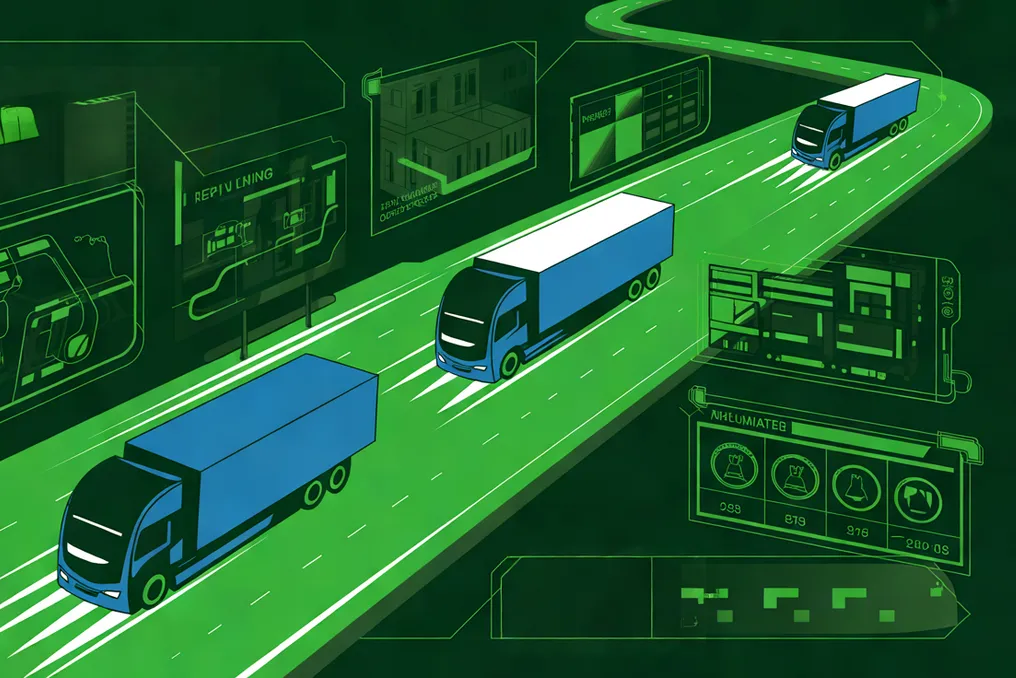
Humble, founded by Eyal Cohen, develops fully autonomous electric trucks. Its technology integrates the vehicle's hardware with intelligent autonomous driving systems. The company aims to modernize commercial cargo transportation through an integrated platform.

Humble's approach differs from traditional autonomous freight transport models. Instead of modifying existing vehicles, the company designs trucks specifically for autonomous operation. Its Class 8 platforms are built to operate in challenging cargo transport conditions.

Initially, the company focuses on regional routes up to 250 miles. These routes account for about 87% of total freight tonnage in the US and connect vital logistics hubs across the country. Humble's autonomous electric platform is designed for dock-to-dock transport.

The vehicles will operate between ports, rail terminals, warehouses, and distribution centers. The system is designed to handle complex maneuvers in industrial zones. The Humble Hauler combines vision-oriented artificial intelligence with specialized equipment.

The modular design allows for various vehicle configurations, potentially enabling the company to develop additional models for different transport needs. Cohen believes that integrating vehicle design with autonomous software provides operational advantages.

The company aims to increase reliability and safety. Furthermore, its technology is expected to reduce cargo transportation costs. The founder previously worked on autonomous driving initiatives at Apple and Uber and gained experience at the freight tech startup Waabi.

The capital raised will be used by Humble to conduct pilot projects with customers and validate the vehicles, as well as to begin production. Additional investments will allow the expansion of the modular platform into new configurations. The company plans to collaborate with customers, partners, and regulators.

These joint efforts will help prepare the technology for commercial deployment. Humble also seeks to simplify integration into current logistics processes. Pilot projects using conventional trucks are expected to begin in the first quarter of 2027. These vehicles will collect data from selected routes, and Humble will use simulations to test operating conditions before launching its own vehicles. Commercial operations are projected to start in the third quarter of 2027, though they will require additional regulatory approvals.

Obvious Ventures partner, Mo Islam, stated that Humble is challenging outdated notions of freight transport, believing its approach can strengthen American supply chains and improve movement between critical infrastructure sites.

Eclipse partner, Jiten Behl, emphasized the need to modernize freight operations, noting that the industry requires improvements in both vehicles and autonomous intelligence. Eclipse believes that Humble is capable of making freight transport safer and more efficient.
Similar stories

Rendezvous Robotics raises $20 million to create self-assembling spacecraft
Read more
ventureburn.com

Rendezvous Robotics raises $20 million to create self-assembling spacecraft

Rendezvous Robotics has successfully raised $20 million in a re-priced seed funding round. The leaders of this round were MaC Venture Capital and Toyota Ventures. The company officially announced the funding, and this round was its first priced round.

Participants in the round also included University of Michigan Endowment, Astera, and Industrious Ventures. Existing investors, including Aurelia Foundry, ATX Venture Partners, and Mana Ventures, also participated in the financing. Rendezvous Robotics, based in Golden, Colorado, develops spacecraft capable of self-assembly.

The capital raised will be used for developing next-generation spacecraft, conducting demonstration flights, and hiring additional staff. Instead, the company plans to send elements as small autonomous 'modules.' These modules will be able to reach the rendezvous point independently, assume the required position, and dock in orbit.

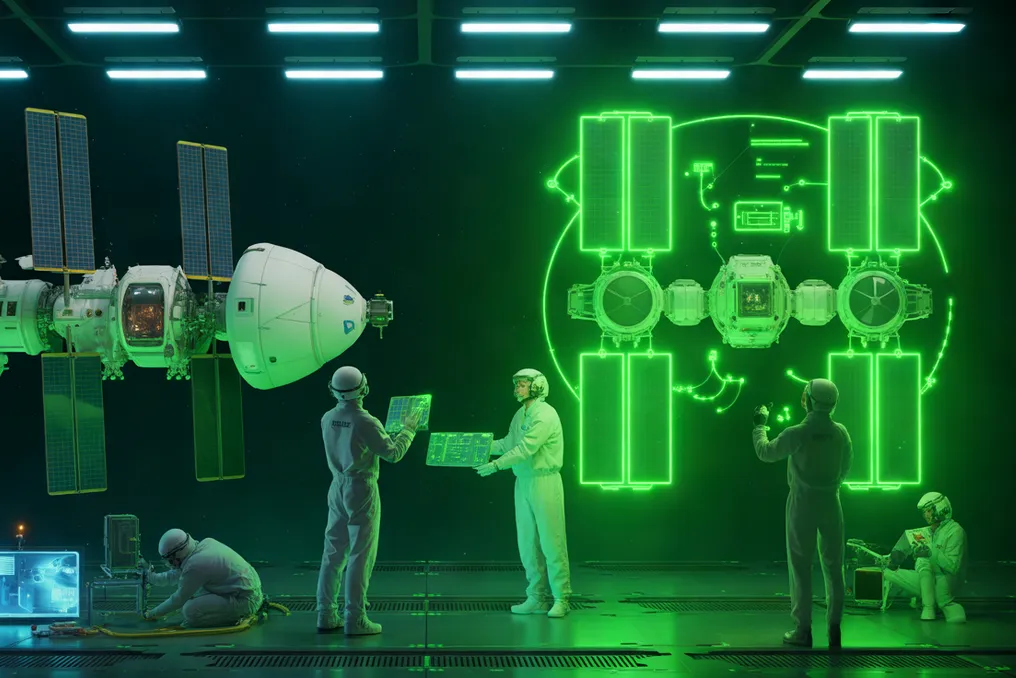
Rendezvous aims to create hexagonal tiles about one meter in size, equipped with sensors and onboard processing. The modules will use electromagnetic actuation to ensure movement and self-assembly. After connection, each tile can perform various functions.

Mission operators can add tiles for computing needs, solar energy collection, propulsion systems, communication, and thermal regulation, while having the ability to add or move them as needed. This design can also support future servicing operations. Operators can replace damaged modules or change the satellite's configuration after launch. This could potentially reduce the need to build and launch an entirely new spacecraft if components fail.

This technology is based on nearly ten years of research conducted under the TESSERAE project. The original self-assembly technology was developed by Dr. Ariel Ekblau at the Massachusetts Institute of Technology. The research was subsequently advanced through the Aurelia Institute, which Ekblau founded. Earlier versions of TESSERAE have already flown on a Blue Origin New Shepard rocket and participated in two missions to the International Space Station.

The company has scheduled a campaign of parabolic flights for November 2026. These tests will verify electromagnetic actuation and mobility in microgravity conditions. A separate TESSERAE demonstration is planned for the International Space Station in December 2026. It will involve assembling 32 tiles into a three-dimensional structure in a controlled environment. Rendezvous is also preparing a special low Earth orbit demonstration, scheduled no earlier than April 2028.

During this mission, seven independently deployed space tiles will autonomously connect to form one spacecraft. These modules will then separate and assemble into a different configuration. The goal of the demonstration is to prove that spacecraft can change their physical structure without the aid of external robotic equipment.

Co-founder and CEO Joe Landon believes that this technology can enable spacecraft with more powerful energy generation and larger communication systems. The architecture will ultimately allow for missions that are difficult due to the limitations of traditional launches. MaC Venture Capital and Toyota Ventures believe that robots, modular design, and autonomous control can be a successful combination. This strategy goes against conventional ideas about how to build and launch spacecraft.

The demonstrations have helped solidify the foundations of the technology in microgravity conditions. Toyota Ventures partner Chris Absher emphasized autonomy as a fundamental part of Rendezvous's design. Michael Palank, Managing Partner at MaC Venture Capital, also supported the company's efforts to rethink spacecraft construction. However, a free demonstration is still far off, although its realization should prove the system's ability to successfully and autonomously assemble and reconfigure in real orbit, which could open up new possibilities for building and servicing massive spacecraft.

Machenta raises $40 million in seed funding to train robots without real-world data
Read more
ventureburn.com

Machenta raises $40 million in seed funding to train robots without real-world data

Most robotics companies focus on collecting vast amounts of real-world data, but Machenta is taking the opposite approach. The company successfully raised $40 million in a seed round to train robots without needing any data from the real environment.

The round was led by Creandum and Union Square Ventures. This amount represents a significant seed check for the London-based startup, which has only 11 employees, and poses a bold challenge to the conventional approach in the robotics industry.

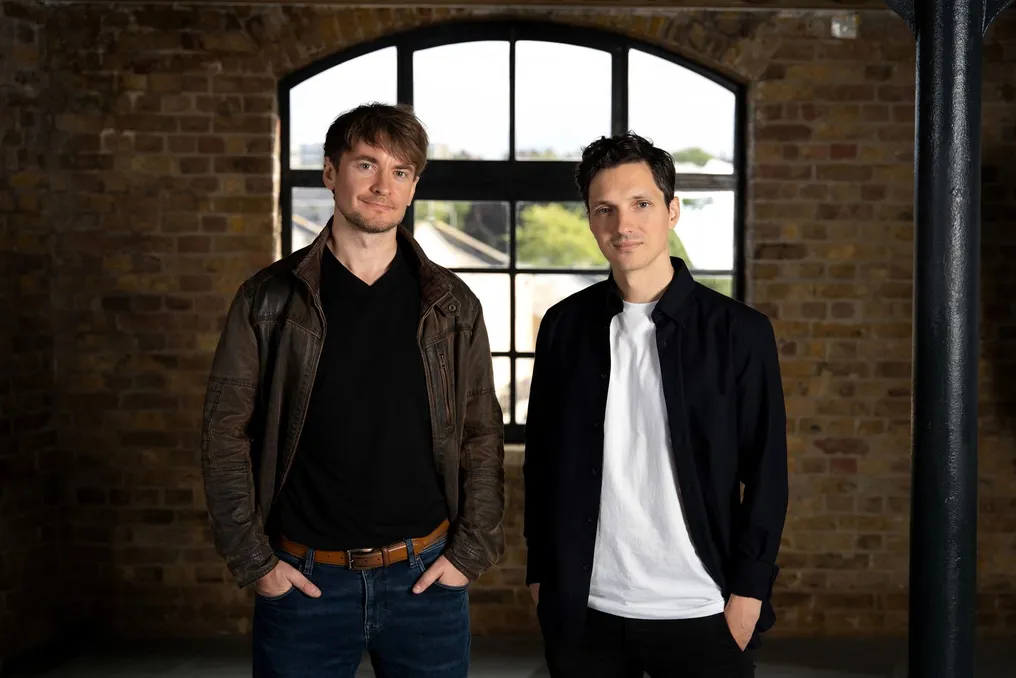
Machenta was founded in 2025 by Edward Jones, a professor at Imperial College London, and his former graduate student Vitalis Vosylyus. Edward Jones serves as CEO. The company's idea originated about six years ago when Jones began questioning whether robots could perform physical tasks as quickly as humans.

This question spurred years of laboratory work at Imperial College, which ultimately led to the creation of Machenta. Early investors included Hoxton Ventures, and British documents point to an earlier, smaller round of around £4.3 million in 2025. Now, the company has much greater financial resources thanks to the $40 million raised.

Machenta's model trains exclusively within computer-generated environments. These simulations mimic how objects move, slide, and collide with each other. Jones told Business Insider that the model was trained without a single pixel of real-world data.

The result of this approach is the robot's ability to master a new task after just one demonstration, without further training. In demonstration examples, the robots performed table cleaning and placed items into bins on an assembly line.

Despite the successes, the system is not yet perfect; precise and complex movements remain a challenge. Early lab versions also required about 30 minutes of additional data collection for each task, which Machenta aims to eliminate entirely.

Machenta's competitors are major players in the market. The physical intelligence market is valued at approximately $11 billion. Reports indicate that FieldAI is raising funds at a $10 billion valuation, and Skild AI exceeds $14 billion and already sells similar technologies, generating $100 million in annual recurring revenue from over 60 clients.

Many of these competitors heavily rely on real-world data, but Jones believes this is a trap. He argues that simply accumulating more data will not solve the problem on its own, as no one knows exactly how much data generalized robots will require. If simulation can bridge this gap, the robotics economy could change rapidly.

Collecting real-world robot data is a slow and expensive process, requiring equipment, personnel, and endless hours of recording. Simulation, however, scales through computational power, which is becoming increasingly cheaper, potentially allowing small teams to train capable robots.

This is why this funding round stands out. The funds will be used to hire staff, acquire more computational power, and generate more simulated training data to tackle more complex and precise tasks.

However, the team is focused on research, and there are no immediate plans for product commercialization. Although early access to the model is not yet open, robot developers can already register their interest. The prospects for manufacturing workshops and warehouses are huge: imagine retraining a robot manipulator in seconds instead of weeks. For investors, this signals that Europe can still compete in the field of physical AI.

Bedrock Robotics raises $600 million amid growing demand for autonomous heavy equipment
Read more
ventureburn.com

Bedrock Robotics raises $600 million amid growing demand for autonomous heavy equipment

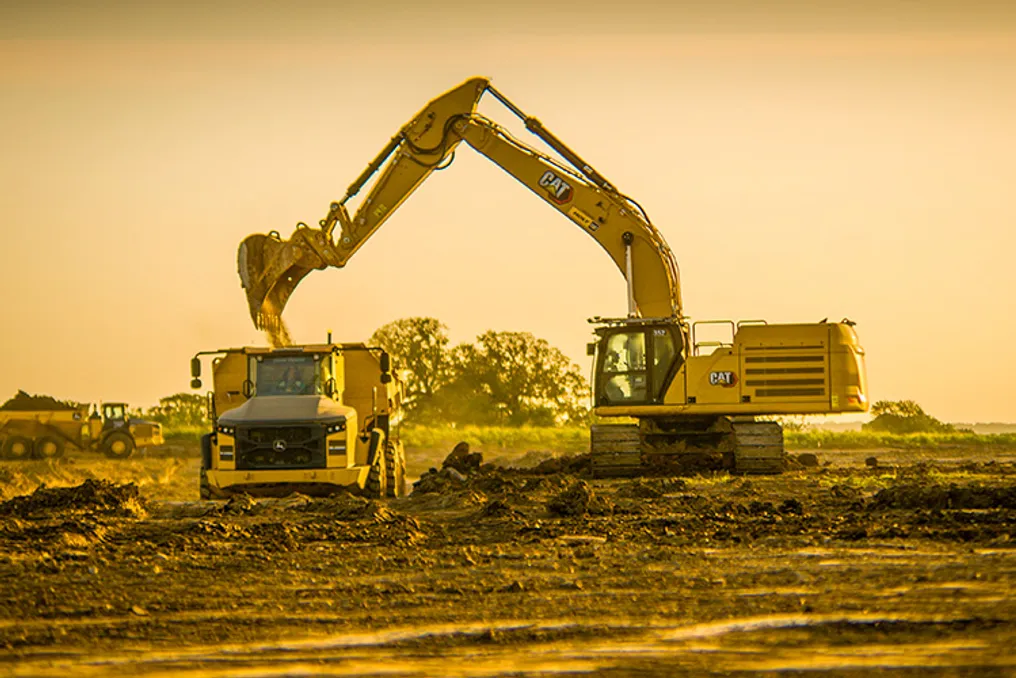
Bedrock Robotics has raised $600 million in a Series C round, valuing the San Francisco-based company at $4.1 billion. The investment round was co-led by CapitalG and Emergence Capital.

This growth is significant because just eight months ago, the startup was valued at $1.75 billion after raising $270 million. The reason for this jump is that Bedrock's machines have stopped being mere demonstrations and have started generating revenue.

Bedrock does not manufacture fully automated excavators; instead, the company creates an autonomous driving kit that is installed on existing contractor equipment. Since mid-August 2026, excavators equipped with Bedrock hardware have been performing paid work at real commercial sites.

Examples of such projects include a water treatment plant site in Nevada, earthworks conducted by Champion Site Prep in Texas, and a civil project of 1.2 million cubic yards involving Zachry Construction. A new partner, Arizona contractor Haydon, has joined. The company plans to use Bedrock-equipped machinery at data center, medical facility, and water supply sites. Additionally, regional partners in Minnesota, Florida, Georgia, Missouri, and Virginia have also joined the collaboration.

CEO Boris Sofman told The Robot Report that demand from new clients is 'very high.' Sofman previously led the self-driving truck program at Waymo and co-founded Anki, the company behind the Cozmo robot. According to Bedrock, mastering excavator operation takes five years or more, but Associated Builders and Contractors predicts that over 40% of construction workers will retire within five years.

Furthermore, 87% of firms report having open vacancies for skilled workers. Sofman provided a simple example demonstrating the financial benefit: if a project is completed two months earlier due to 24/7 machine operation, a developer paying 9% interest on a $400 million loan will save about $6 million. Applying this logic to thousands of projects explains the interest of players like Bessemer, Temasek, and Nvidia.

The initial use of the raised capital will allow for an increase in the number of machines across various sites. Bedrock aims to reach a three-digit number of autonomous machines across the US by 2027. The second priority is strengthening technical support. Since a breakdown of a robotic excavator costs contractors money every hour, the startup is focused on scaling its operations, equipment, and supply chains. Amy Jones Satrom, formerly of Amazon, Nuro, and Uber, was hired as Vice President of Operations, and Lando Huarez, former head of the legal department of Uber's autonomous division, took the position of General Counsel.

The third point is developing new equipment. Haydon will conduct autonomous trenching tests, after which bulldozers, articulated dump trucks, and wheel loaders will be the focus. In the long term, Bedrock is looking at mining and agriculture sectors. This funding round demonstrates that investors are now interested in artificial intelligence that moves dirt, not just generates text. For contractors, autonomy is becoming a practical tool, not science fiction.

Popular