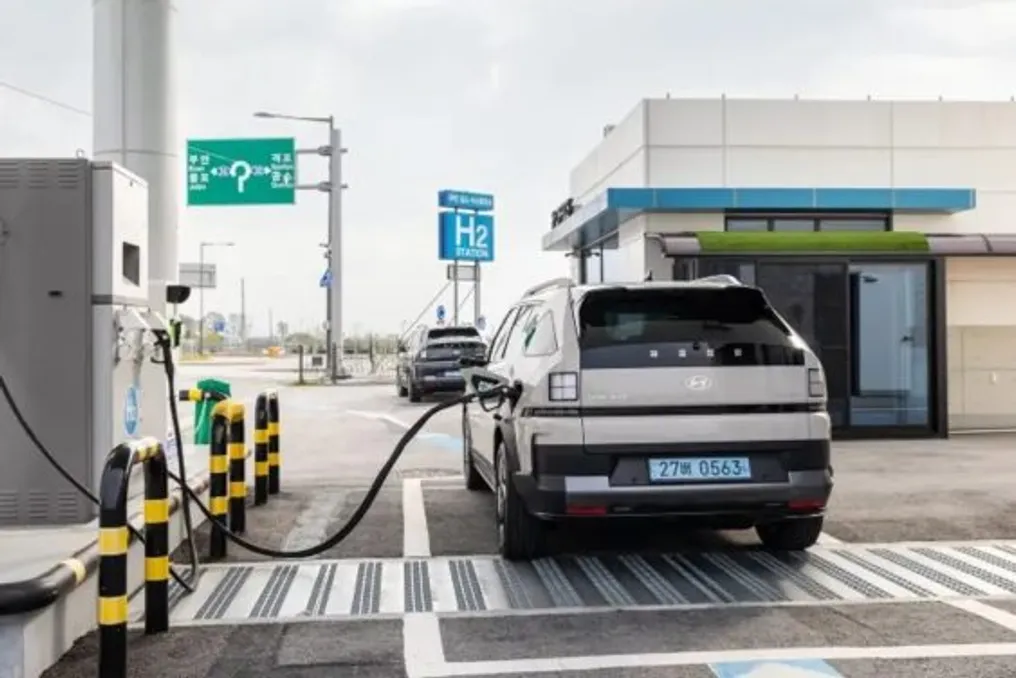
Hyundai affirms hydrogen vehicles have not failed, but faces market and demand challenges
Read more
AutoPapo
autopapo.com.br

Hyundai affirms hydrogen vehicles have not failed, but faces market and demand challenges

Hyundai assures that hydrogen car technology has not been discarded, yet it acknowledges that the main obstacle lies in the difficulty of finding consumers willing to purchase them.

This assessment was made by Scott Nargar, Senior Manager of Future Mobility and Government Relations for Hyundai in Australia, during an interview given to the Australian portal CarExpert. He mentioned that the automaker's next hydrogen vehicle intended for the Australian market is still under review.

In addition to low public acceptance, factors such as high cost and scarcity of refueling stations also represent significant barriers.

Technically, a hydrogen-powered automobile operates similarly to an electric one, but with a crucial distinction: instead of storing energy in a bulky battery, it generates it during travel. A fuel cell system uses the hydrogen in the tank combined with atmospheric oxygen to produce electricity, resulting only in water as a byproduct.

The refueling process is fast, comparable to that of a combustion engine vehicle. However, while battery electric models have become more affordable in the last decade, hydrogen cars maintain high prices both in purchase and maintenance.

Hyundai is not alone in this scenario, although it has few direct competitors. Toyota continues to invest in this technology with its Mirai model, and BMW has announced plans to launch a series hydrogen model in 2028. In contrast, Mercedes-Benz opted to end the development of passenger hydrogen cars after years of research.

Hyundai has had experience with hydrogen since 1998. The company introduced the ix35 Fuel Cell in 2013 and the Nexo SUV in 2018, which accumulated approximately 38 thousand global sales. The second version of the Nexo, developed from the 2024 Initium concept, was launched in 2025.

In Brazil, a Nexo unit has been tested at USP, located in São Paulo, since 2025. This vehicle is fueled with hydrogen generated from ethanol at the world's first station of this type. The strategy aims to capitalize on the existing ethanol distribution infrastructure in the country to produce hydrogen near points of use.
Similar stories

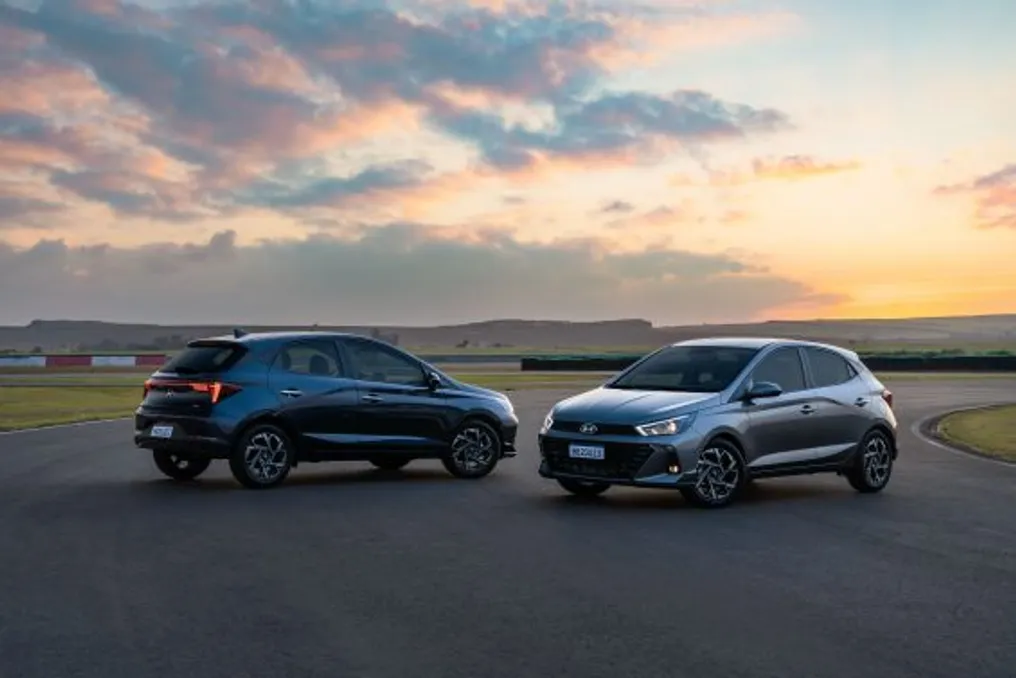
Hyundai HB20 leads sales in October, surpassing VW Polo, according to consultancy data
Read more
autopapo.com.br

Hyundai HB20 leads sales in October, surpassing VW Polo, according to consultancy data

The month of October registered a 5.3% reduction in new vehicle sales in Brazil compared to September. Despite this general downturn, the Fiat Strada maintained its position as the best-selling model, according to data provided by K.Lume Automotive Consultancy. However, the second place saw a notable change.

In September, the Hyundai HB20 had taken the top spot in passenger car sales, replacing the Volkswagen Polo. The Korean compact achieved sales of 9,037 units, representing an increase of 2,723 units from the previous month.

Analysis of Model Performance

This growth of the HB20 was boosted by the decrease in sales of the VW Polo, which dropped from 11,095 units to 8,125. The Tera and T-Cross models also recorded lower sales during the analyzed period.

The third position in the ranking of best-selling cars in Brazil remained unchanged, occupied by the BYD Dolphin Mini. This model was followed by the Fiat Argo, which shows it maintains a robust sales volume, even with the imminent arrival of its new generation.

Among the vehicles that entered the top 10 in October, the Toyota Yaris Cross stood out, continuing to show an upward trend in sales. On the other hand, the GWM Haval H6 suffered a drop in positions, moving from 8th to 11th place.

Geely's performance was considered weak in October, as both the EX2 and EX5 EM-i dropped out of the top 50. The Chinese brand is preparing to begin domestic production of these automobiles, which should help meet consumer demand.

Among recent launches, the Jaecoo 5 completed its first full month of sales, registering 748 units and ranking 68th. Meanwhile, the BYD Atto 2, launched a few months ago, began deliveries to customers in October, selling 2,274 units and positioning itself close to its sibling, the Song Plus.

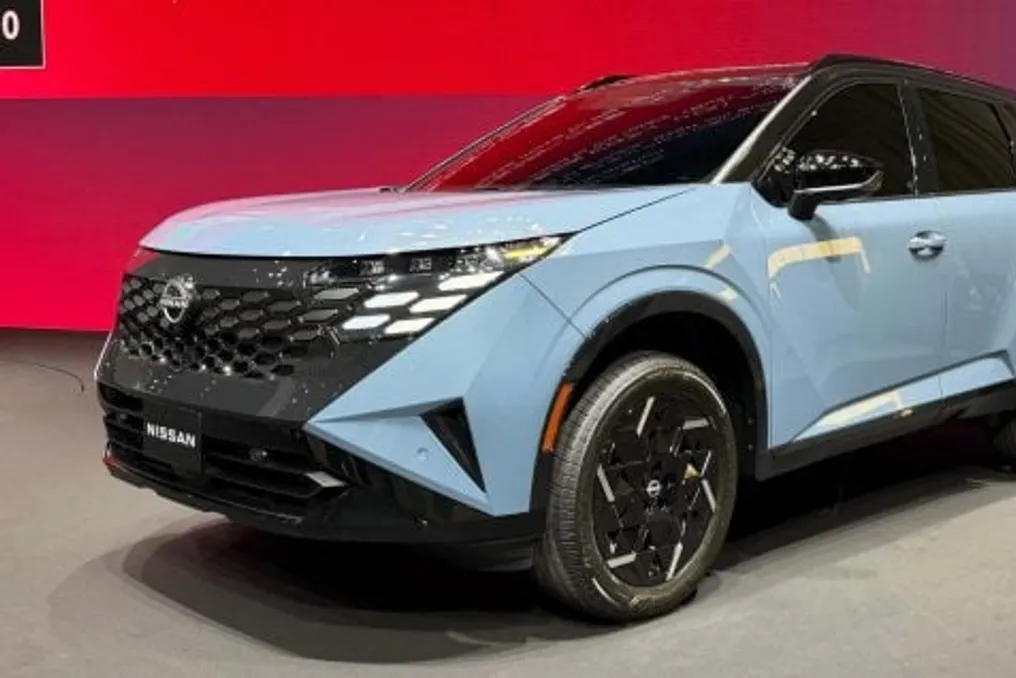
Nissan admits possibility of manufacturing cars in CKD and SKD in Brazil
Read more
autopapo.com.br

Nissan admits possibility of manufacturing cars in CKD and SKD in Brazil

After leaving the presidency of Renault in Brazil in 2025, Ricardo Gondo took over the same position at Nissan two months ago. In a meeting with journalists, he revealed that there are internal discussions regarding the feasibility of producing vehicles in the country using imported kits, either in completely knocked down (CKD) or semi-knocked down (SKD) format.

Despite this discussion, Gondo clarified that the Kait and Kicks models will maintain their production at the factory located in Resende, Rio de Janeiro. The executive highlighted the current scenario of the Brazilian automotive sector, mentioning that light vehicle production grew by 9.7% until September of this year, with a projection for the end of the year of 7.6% growth. However, he stressed that if CKD/SKD production is excluded, this expansion would drop to only 2%.

Although he did not provide specific examples, Gondo pointed out that currently, Chinese brands are the ones most focused on this type of production, which results in a minimal participation in the national auto parts market.

Expected changes starting in 2027

The market landscape may change starting in 2027, based on expectations derived from commitments made by BYD and GWM to local production. Furthermore, Geely has already established agreements with Renault. It is important to note, however, that entities such as Sindipeças and tire manufacturers are still awaiting the start of orders at a satisfactory pace.

Gondo also confirmed the launch of the X-Trail e-Power in Brazil during the first quarter of 2027. This vehicle is an imported mid-size SUV, classified as a range-extended electric vehicle. It will feature 4x4 traction and two motors that together generate 216 hp and 33.7 kgfm. The system includes a 1.5 turbo combustion engine, whose function is only to power a generator to recharge the 1.85 kWh battery.

This electric configuration allows the driver to use only gasoline for refueling, eliminating the need for external chargers and providing greater peace of mind on long trips. Although he did not define exact deadlines, Gondo confirmed studies indicating a rapidly expanding Brazilian market in hybrid and electric categories, with a growth rate higher than what Nissan had predicted. He emphasized that this scenario demands quick decision-making, given that other manufacturers are also advancing in this same direction.

Popular