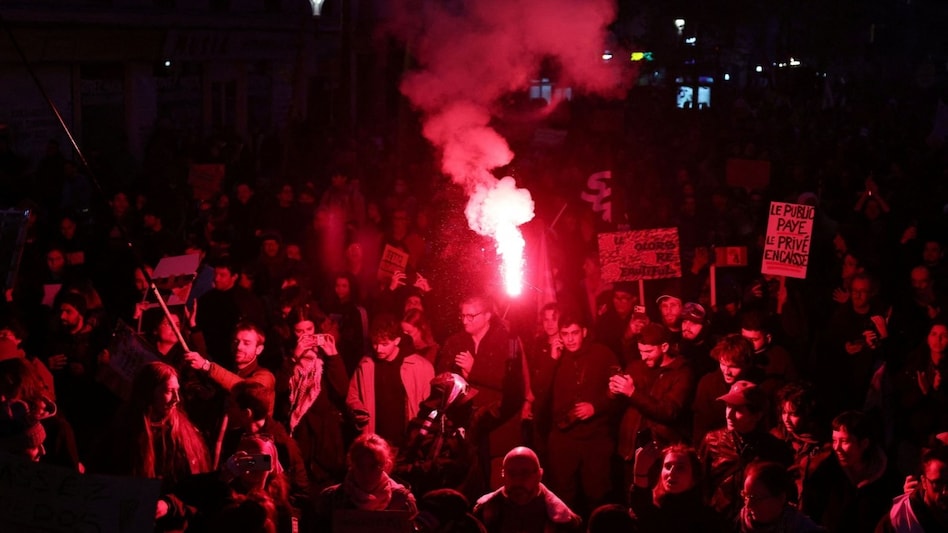
Public outcry has erupted in France due to the rising cost of living, low wages, and insufficient funding for education. On Thursday, more than six hundred thousand people took to the streets across the country. Mass demonstrations took place in cities such as Paris, Lyon, and Marseille, involving students, workers, and pensioners. Although most protests were peaceful, clashes occurred in some localities.
This movement began back in September as a protest by workers against staff shortages in one of the secondary schools. Initially, students demanded an increase in the education budget. Gradually, employees joined the demonstrations, demanding higher wages and pensions amid rising inflation. According to media reports, French trade unions note that prices for fuel, food, rent, gas, and electricity are increasing, while household incomes are not rising proportionally.
As a result of the protests, about a third of secondary schools in France either closed or operated with disruptions. In some educational institutions, students blocked roads, and teachers went on strike. Public transport was also affected in several areas. The famous Eiffel Tower in Paris was closed to visitors on Thursday.
During the demonstrations in Paris, students displayed placards expressing concern over inequality and the future. Employees called for improved working conditions and higher pensions. A private hospital employee raised concerns about staff shortages and the scarcity of necessary goods.
In response to the protests in France, strict security measures were implemented. Seventy thousand police officers were deployed nationwide. Armored vehicles, drones, and helicopters were utilized to support law enforcement. Nevertheless, the protests were not entirely peaceful everywhere. Media reports indicated that in Rennes, some masked individuals attempted to block roads. Officials also reported the use of stun grenades by the police. Tensions and clashes were also reported in Lyon, Nantes, Pau, Orléans, and Toulouse.
French trade unions warn that the country is heading towards a recession, and plans for company downsizing are intensifying. Unions argue that the government is failing to address the daily problems of citizens. Because of this, the movement has ceased to be limited only to students, attracting various segments of society.
These protests are taking place ahead of the presidential elections in France next May. Emmanuel Macron will not be able to run for a third term, making the growing discontent in the country a serious challenge for the current administration.