Video shows Jupiter appearing to melt behind the Moon; specialists explain the optical phenomenon
Read more
Olhar Digital
olhardigital.com.br

Video shows Jupiter appearing to melt behind the Moon; specialists explain the optical phenomenon

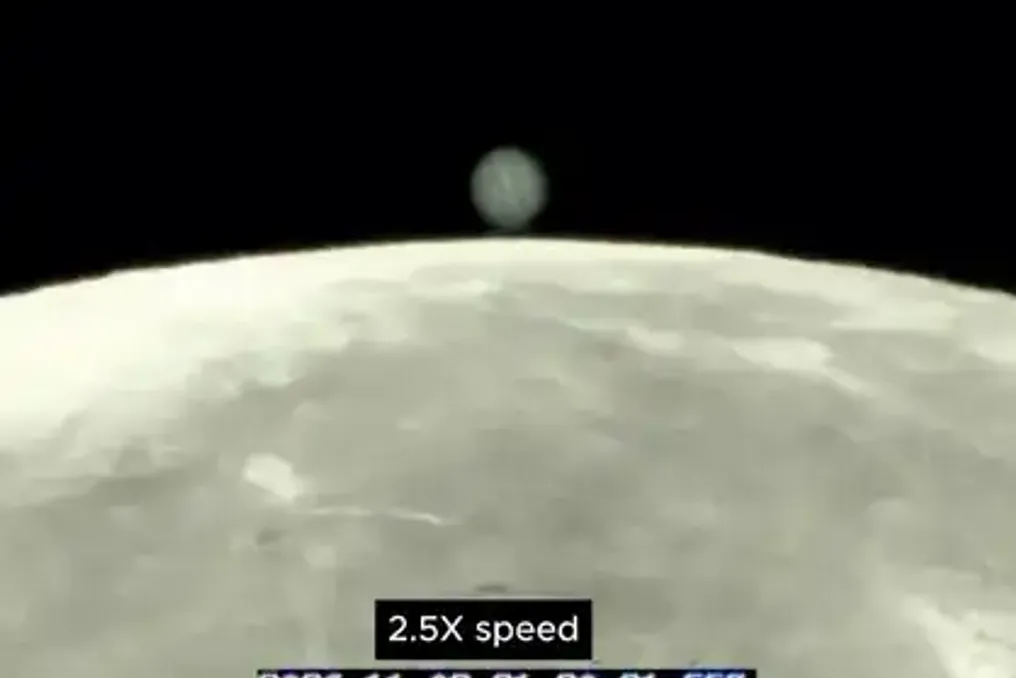
A captured video shows Jupiter appearing to melt as it disappears behind the Moon, an event classified as a lunar occultation. This phenomenon can only be seen in certain areas of the Earth.

In Kuala Lumpur, Malaysia, early Tuesday morning (3), astrophotographer Shahrin Ahmad documented this remarkable effect. In the images, the planet appears to liquefy as it is obscured by the lunar limb.

Ahmad shared his capture with the platform Spaceweather.com after an intense fog covering Southeast Asia dissipated. In the video, as the Moon moves over the planet, its outline seems to stretch, creating a luminous structure resembling a drop sliding down the lunar surface.

It is important to note that despite the unusual appearance, Jupiter suffered no physical alteration. The effect is purely optical and is related to the limitations of the instruments used to observe celestial bodies.

This recording made by Ahmad is a manifestation of the so-called black drop effect, which is better known for occurring during planetary transits, when a planet passes between the Earth and the Sun.

Marcelo Zurita, president of the Paraíba Astronomy Association (APA) and member of the Brazilian Astronomical Society (SAB), explained that no optical equipment can produce images with perfectly sharp focus. Differences in focal point between frequencies such as infrared and ultraviolet can generate very weak secondary images that are usually unnoticed.

He detailed that 'this creates a kind of 'ghost' that we practically don't see in the image, which is very weak, very faint. But since this effect occurs on both bodies, in this case the Moon and Jupiter, when the 'ghosts' of each approach and overlap, this ends up creating a slightly clearer bubble that widens the objects close to each other.'

The effect gained notoriety during the transits of Venus in the 18th century. At that time, observers attributed the deformation to the planet's dense atmosphere. However, these observations also had a crucial scientific purpose: calculating the distance between the Earth and the Sun.

Zurita emphasized that the idea originated from astronomer Edmund Halley, who suggested using parallax for this measurement. This motivated global expeditions to track Venus's passage. However, the distortion caused by the black drop effect complicated the determination of the exact moments of Venus's entry and exit from the solar disk.

'Halley proposed observing the transit of Venus as a way to measure the distance between the Earth and the Sun by parallax. And then expeditions were organized in different parts of the world to observe this phenomenon, and when it happened, it was not possible to determine the exact moments of Venus's entry and exit from the solar disk due to this effect known as the black drop,' the specialist clarified.

The theory that Venus's atmosphere caused the deformation was weakened in 1999 when NASA's TRACE probe observed the same effect during Mercury's transit across the Sun. Since Mercury has almost no atmosphere, it was proven that this characteristic was not essential for the occurrence of the phenomenon.

A lunar occultation occurs when the Moon passes in front of another celestial body, temporarily covering it for those observing from Earth. Due to the dependence on the apparent position of the celestial bodies relative to the observation location, the event cannot be followed across the entire planet.

The visibility range for this week's Jupiter lunar occultation covered island nations such as Maldives, Sri Lanka, Seychelles, and Mauritius, as well as Réunion Island, a French territory in the Indian Ocean. In parts of South and Southeast Asia and Oceania, the passage occurred during the day, which complicated observation due to the brightness of the sky.

In Brazil, the celestial bodies did not overlap, so there was no occultation. However, the Moon and Jupiter appeared very close, in a configuration called astronomical conjunction.
Similar stories

Mercury enters inferior solar conjunction, making it difficult to observe in the sky
Read more
olhardigital.com.br

Mercury enters inferior solar conjunction, making it difficult to observe in the sky

On Wednesday (4th), at 11:20 AM Brasília time, Mercury began a phase termed by astronomers as 'inferior solar conjunction.' During this event, the planet passed between the Earth and the Sun, approaching approximately 0.674 astronomical units (AU), which corresponds to about 100.8 million kilometers.

According to information from the astronomical observation guide In-The-Sky.org, this conjunction occurs once every synodic cycle of the planet, which is the time required for Mercury to return to the same position relative to the Sun when viewed from Earth; this cycle lasts 116 days.

At the moment of the inferior solar conjunction, Mercury was located only 0°22' (zero degrees and twenty-two arcminutes) from the Sun. This extreme proximity causes the bright light of the main star to obscure the planet, which had already made its observation challenging in previous days. This phase represents Mercury's 'disappearance' in the night sky and its subsequent movement to become a morning object in the coming weeks.

The unit 'arcminutes' is used in astronomy to measure very small angles in the firmament. Considering that a full arc has 360°, 60 arcminutes equal one degree, meaning the apparent distance between Mercury and the Sun will be slightly more than one-third of that value.

Simultaneously with reaching inferior conjunction with the Sun, Mercury also reaches perihelion, which is the point closest to Earth, reaching a distance of 0.67 AU from us. This implies that the smallest planet in the Solar System will be only 100.2 million kilometers from Earth.

Regarding when it can be seen again, Marcelo Zurita, president of the Paraíba Astronomy Association (APA), member of the Brazilian Astronomical Society (SAB), technical director of the Brazilian Meteor Observation Network (BRAMON), and columnist for Olhar Digital, informed that Mercury will become visible again on the eastern horizon, shortly before dawn, around November 20th, when it will be further away from the star in the sky.

Additionally, an article published in the scientific journal Icarus mentions the possibility that fragments of Mercury have been found on Earth. Meteorites analyzed by British scientists exhibit characteristics suggesting a probable origin on this planet closest to the Sun. If this hypothesis is confirmed, it would constitute the first record of Mercurian rocks on terrestrial soil, providing a valuable opportunity for study.

Lunar Craters as Evidence of the Solar System's History
Read more
olhardigital.com.br

Lunar Craters as Evidence of the Solar System's History

The Moon has always fascinated and inspired humanity. Since ancient times, it has illuminated our nights, inspiring poets and lovers. Since we were able to view it more closely, its cratered surface has awakened our curiosity. Some of these are small depressions, while others form gigantic structures with central mountains and rings stretching for hundreds of kilometers. However, these markings are not just details of a distant landscape; they record collisions that have occurred over billions of years, helping us reconstruct the history of the Moon and the Solar System itself.

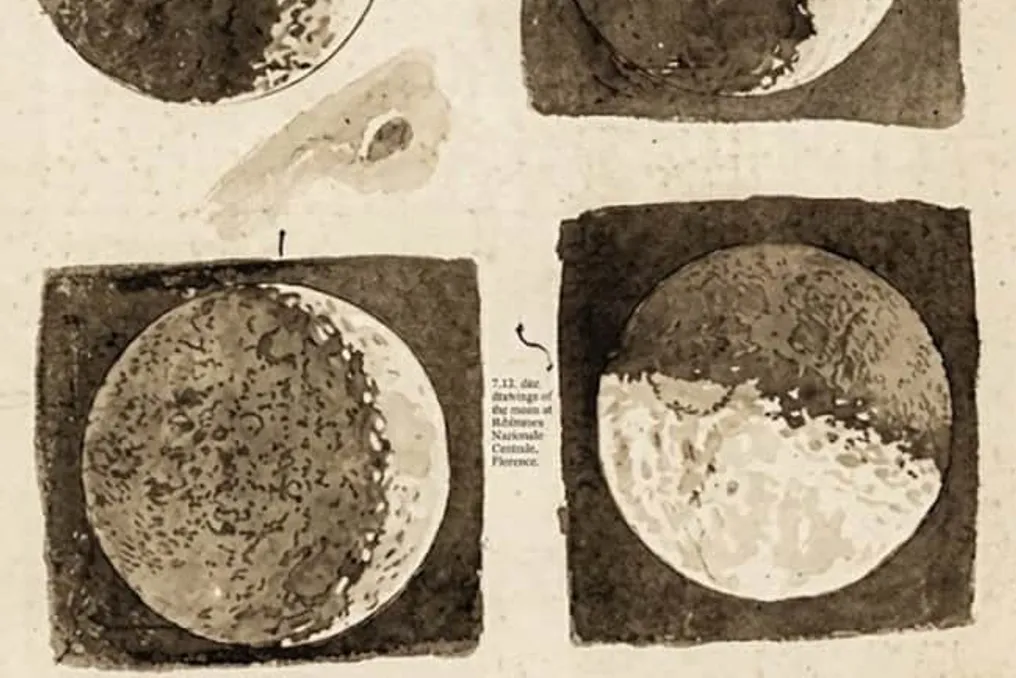
The study of these structures has changed our understanding of the Universe. For centuries, Aristotelian philosophy maintained that celestial bodies were perfect and unchanging. This concept began to weaken in the early 17th century when Galileo Galilei pointed his telescope at the Moon and discovered mountains, valleys, and shadows that demonstrated its uneven surface. Although humanity had observed the light and dark spots on the Moon since Antiquity, telescopic observations showed that the Moon is a world with a much more complex and interesting geology.

With the advent of space probes, and later the manned missions of the Apollo program, we began to study these structures in detail. Orbital images, surface measurements, and samples brought back by astronauts have confirmed that most craters were formed not by volcanoes, as some researchers once believed. They were carved by cosmic impacts, some of which were very powerful.

The process begins when an asteroid, a fragment of cosmic rock, collides with the Moon's surface at high speed. The impact releases a tremendous amount of energy in a very short time, compressing and excavating the ground, while fragments of rock are thrown outwards. A cavity forms, surrounded by ejected material. Depending on the size of the object, the impact speed, and the characteristics of the terrain, the crater can have various shapes.

The smallest are usually simple, bowl-like. They are formed by smaller impacts and come in a wide range of sizes. Barringer in Arizona is a typical example of this type of crater here on Earth. On the Moon, they cover its entire surface.

Larger ones are called complex craters. They reach tens of kilometers and were formed under the influence of larger objects that penetrated deeper into the ground. Their walls may collapse into terraces, the floor may become relatively flat, and the central area may rise due to rebound, forming one or more peaks. These include the craters Theophilus, Mareus, Aristarchus, and many others easily seen through a telescope.

With even larger impacts, enormous basins occur, some of which have several concentric rings. The South Pole-Aitken Basin, on the far side of the Moon, has a diameter of about 2,500 kilometers and is one of the largest and oldest known impact structures in the Solar System.

Some craters also stand out with bright rays appearing to emanate from their center. This is the case with Tycho, a relatively young crater with a diameter of approximately 85 kilometers. These rays consist of material ejected during the impact, which scattered across the surface. Over time, exposure to the space environment, including solar wind and micrometeorite bombardment, alters the properties of the material and reduces this contrast. Therefore, bright rays help identify geologically younger craters.

However, lunar craters also appear in curious sequences, such as rows of aligned depressions that can stretch over long distances. These structures, known as crater chains, can have different origins. In some cases, they may be the result of the fragmentation of a celestial body shortly before impact. In such a case, its pieces land on the surface sequentially, as happened in 1994 when fragments of Comet Shoemaker-Levy 9 struck Jupiter.

Another possible source is secondary impacts. When an asteroid hits the Moon, the material ejected during the collision can travel great distances before falling again, forming new craters. If these fragments land on the ground along an elongated line, they can form chains. But not every crater chain has the same explanation. Some linear structures may be related to cracks and geological, including volcanic processes.

And why is all this important? Because the lunar surface functions as an archive of impact history in the Solar System. The Moon lacks a dense atmosphere, rain, or rivers capable of rapidly destroying its traces of cosmic impacts, and it does not possess plate tectonics like Earth. Many of these markings have been preserved for billions of years, although subsequent impacts, volcanic activity, and other processes also alter the landscape.

By comparing the number and degree of preservation of craters in different regions, scientists can estimate the relative age of surfaces and reconstruct the history of the Moon. The most accepted hypothesis is that the Moon itself formed about 4.5 billion years ago as a result of a giant collision between the early Earth and another body roughly the size of Mars.

However, some evidence suggests that between 4.1 and 3.8 billion years ago, our satellite may have experienced a particularly intense period of impacts, known as the 'Late Heavy Bombardment,' possibly caused by changes in the orbits of giant planets. According to some models, the gravitational reorganization of Jupiter, Saturn, Uranus, and Neptune could have destabilized populations of small bodies, directing some of them toward the inner regions of the Solar System. But this story is not yet fully resolved.

The age of many ancient craters is difficult to determine, and scientists continue to debate whether the peak number of impacts was truly concentrated or if the bombardment gradually decreased from the initial stages of planetary formation. Understanding this difference is crucial for reconstructing the history of the Moon, Earth, and the conditions for the emergence of life here.

Our planet has undergone erosion, volcanism, and crustal movements that have erased many of its oldest traces. The Moon, however, preserves records of epochs that are much harder to study on Earth. This does not mean that all lunar craters are old or that the record is complete, but it provides fundamental clues about the evolution of not only the Moon and Earth.

Craters are present on the vast majority of rocky bodies in the Solar System, from the smallest to the largest. But the Moon has a special advantage: it is relatively close to us and allows us to study its structures using telescopes, probes, and even samples brought back to Earth. Every crater, every chain, and every basin represents a clue about the events that shaped these worlds. It is a true book of our cosmic history, located just one telescope away from us.

Hunter's Moon visible in several countries, with sightings in Moscow and Rome
Read more
g1.globo.com

Hunter's Moon visible in several countries, with sightings in Moscow and Rome

The Hunter's Moon illuminated the skies of various nations last weekend, generating numerous images of the event globally.

The peak moment of the full moon occurred at 1:12 AM on Monday, the 26th, according to data provided by NASA, the United States space agency, using the Brasília time zone. The phenomenon could also be observed in Brazil, provided local weather conditions permitted.

Despite its specific name, the Hunter's Moon does not represent a distinct astronomical phenomenon from a common full moon. Its nomenclature derives from ancient traditions of the Northern Hemisphere, where October coincides with the beginning of autumn.

In this season, after the harvest, fields become more open, and moonlight aided hunters in locating animals and storing provisions for winter. Additionally, the Hunter's Moon is notable for appearing at similar times on several consecutive nights during the Northern Hemisphere's autumn, which extends the period of natural illumination after sunset.

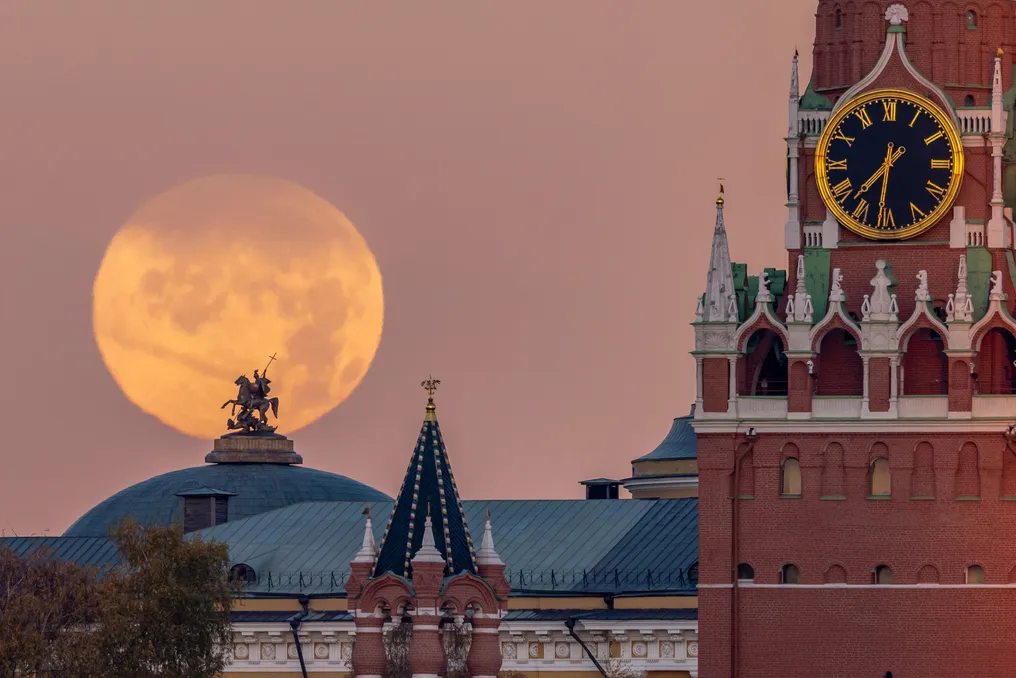
Various photos recorded the Hunter's Moon in different locations. In Moscow, Russia, it was seen setting behind the Kremlin and St. Basil's Cathedral, as well as behind the Spasskaya Tower, on Monday (26). Another record shows the moon, near the full phase known as the Hunter's Moon, appearing over the wing of Air Force One during a flight of Donald Trump back to Washington on Sunday (25).

In Rome, Italy, images were captured of the full moon rising behind a statue atop a column in Piazza Venezia, both on Monday (26) and on other occasions, as well as appearing between two columns in the same location. A moment was also recorded when the full moon appeared while the reflection of the sunset was visible on a glass panel in Piazza Venezia, on the same date.

Popular