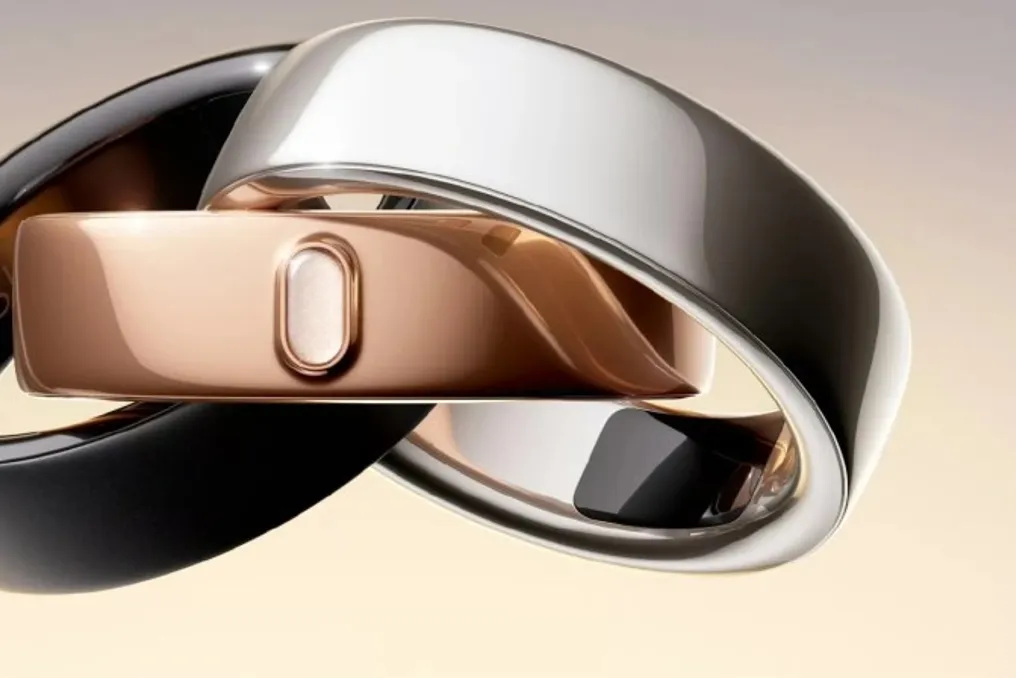
Startup Aina from Bengaluru introduces AI ring to predict user actions
Read more
Business Standard
business-standard.com

Startup Aina from Bengaluru introduces AI ring to predict user actions

Aina, a startup based in Bengaluru, has unveiled an artificial intelligence-enabled ring capable of anticipating user needs, managing applications, and controlling devices. Pre-orders for the gadget are available starting from $399.

Aina, a consumer electronics company that has secured venture funding, was founded by Apurva Shankar, a former hardware vice president at Ultrahuman. The company presented a display ring designed to guess daily activities and control agents, phone apps, Mac computers, and other connected devices. This launch followed 15 months of closed beta testing.

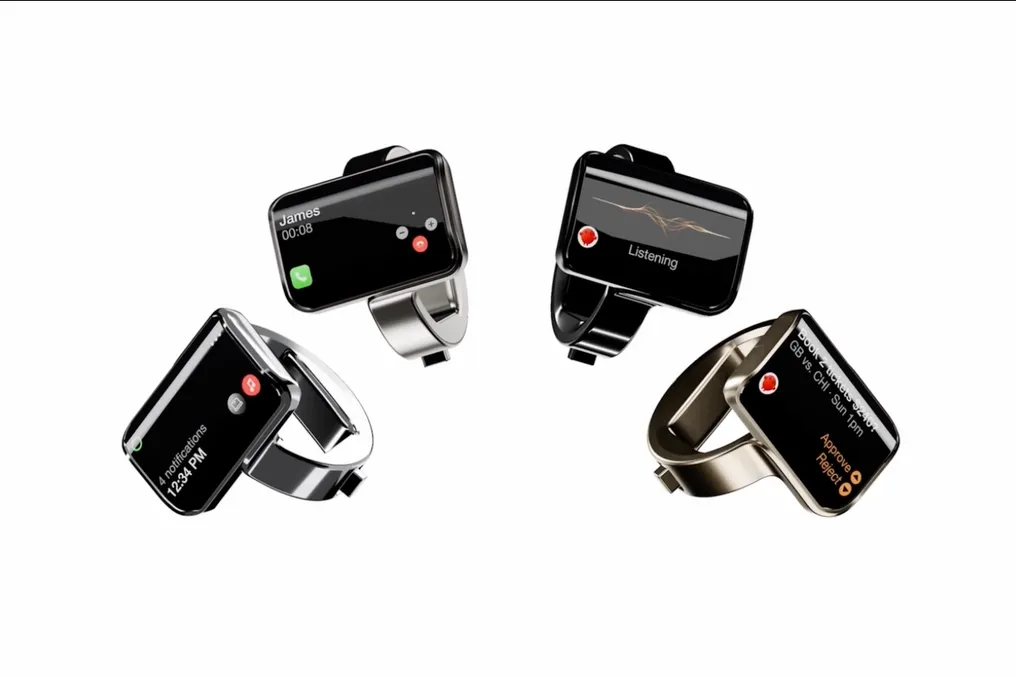
The ring operates on a proprietary context-sensitive operating system. It independently learns user usage patterns, gathering context from their phones, computers, and agents, after which it predicts the three most likely next actions. Users can approve or reject the suggested option simply by swiping up or down with their finger.

Pre-orders open on November 5th, with a special price of $399 for the earliest buyers for a limited quantity. Shipping is planned to begin in January 2027.

The company describes Aina as a new AI interface in the form of a ring that understands user desires. Additionally, users can press and hold the central button to interact with their agents.

Vision for Future Interaction

Shankar stated that they began developing Aina with the conviction that artificial intelligence would evolve from following instructions to anticipating human needs. He noted that this transition has already begun with proactive agents, and agents like Muse, Instinct, and Dots will soon perform hundreds of daily tasks.

He added that today people give commands via text or voice, but in the future, agents will learn to recognize patterns, consider context, and become proactive in almost all interactions, awaiting only user approval. Since one has to choose between options daily, using a phone for every such binary moment is inefficient. Therefore, hardware interfaces different from the phone are being developed for this future, focusing on quick approvals and voice control, and Aina is created precisely for this purpose.

Shankar emphasized that every major shift in computing has occurred through the collaboration of software and hardware. He cited examples: the mouse and graphical user interface led to personal computing, while the touchscreen and App Store led to mobile. Now, with Aina and AI agents, a new era is dawning—personalized computing accessible right at your fingertips.

Ways to Use Aina

Aina Voice

Users can integrate their existing agents through the Aina app and then press and hold the central button to communicate with them. A quick note-taking function is also provided. When an agent requires the user's attention, a notification appears on the screen. A simple swipe up is enough for quick approval. Users can also hold the button to respond with voice. Aina is equipped with a built-in speaker for conversations with AI agents and making phone calls. The user can initiate a call with a voice command and bring their hand to their ear to talk and listen.

Aina Cues:

Aina gathers context from the user's phone, Mac, and agents. It analyzes application usage patterns, location, and calendar details to determine what the user might need next. For example, if the user is heading to work at nine o'clock, Aina saves a shortcut, or 'Cue', for booking an Uber ride, ready just before it is needed.

The Aina Remote feature allows the ring to adapt to the user's current actions and display a live shortcut to control that activity. If music is playing, the ring turns into a music remote control. During a meeting, it becomes a controller for the microphone, camera, and a note-taking tool.

From HCI Lab to Consumer Product

Aina was founded by Shankar in May 2025 as a Human-Computer Interaction lab, where physical interfaces were tested in various scenarios of everyday computing. At the CES exhibition in 2026, the team demonstrated three experimental AI interface concepts. In April, the company introduced Dune—a context-aware three-button keyboard for Mac that adapts its controls to the application being used. Dune was sent to hundreds of early users.

The company tested Aina with a controlled group of private pilot users starting in October, using the feedback received to refine the hardware and user experience before the public announcement.

Aina's availability will be global. At launch, the device supports iOS and Mac. Further information on supported integrations will be announced after sales begin.

Similar stories

Startup Aina unveils smart ring with AI agents capable of anticipating user needs
Read more
yourstory.com

Startup Aina unveils smart ring with AI agents capable of anticipating user needs

Startup Aina, based in Bangalore and San Francisco, has introduced a new generation of artificial intelligence that, according to the company, will focus less on questions asked to machines and more on the ability of systems to foresee human needs. An intelligent ring model featuring a color display, voice commands, and gesture control was presented at a private event in Bangalore. The ring is priced at $499 (equivalent to 47,000 rupees) and is available for pre-order at a special early bird price starting from $399 (37,700 rupees). Shipments are planned to begin in January 2027.

Unlike traditional smart rings, which are primarily designed for health and fitness monitoring, Aina aims to make its device a daily interface between users and AI agents. The core idea is that while AI agents are becoming smarter, their use still requires unlocking phones, navigating apps, and approving individual actions. Aina intends to eliminate this friction by proposing the concept: what if the AI doesn't wait for a request?

To simplify interaction, Aina has developed three key features: Cues, Voice, and Remote. The Cues feature uses contextual information, including connected applications and daily routines, to predict the user's next desired action. For instance, if a person regularly orders a taxi at the same time in the morning, the ring might suggest booking a ride without a direct prompt. At the presentation, Aina demonstrated ride-ordering interaction, showing how daily operations can be completed with minimal gestures.

The ring can be controlled using a five-position joystick, allowing users to approve or reject suggestions with their thumb without taking out their smartphone. The company claims that its context-aware intelligence can learn user habits and predict corresponding actions within the next fifteen minutes using data from iPhone, Mac, and associated services. Integrations with Uber, Apple Music, Spotify, calls, calendar meetings, smart home control, and email actions were demonstrated.

The second interaction method, Voice, allows users to dictate notes, set reminders, send messages, and issue commands. Aina also showcased use cases with WhatsApp and Telegram, as well as dictation on Mac via Wispr Flow. The third function, Remote, turns the ring into a controller for connected devices. According to the company, users can manage music, phone calls, smart home appliances, and meeting settings without touching another device.

According to the specifications presented at the Bangalore launch, the ring weighs less than 13 grams, features a titanium body, a full-color display, haptic feedback, and directional sound. The company states a potential battery life of up to 18 hours and plans to release the device in four colors: Eclipse Black, Amber Gold, Mercury Silver, and Slate Titanium, in seven sizes. Aina also highlighted the presence of a five-position control mechanism called Shifter, which works in conjunction with the gesture-based interface.

The startup announced that the ring will be accompanied by an open developer platform, enabling third-party developers to create new integrations and interactions. Support for AI agent platforms such as Muse, Grokbot, and Instinct was also demonstrated. Currently, the company supports iOS and Mac, with further integration announcements expected. Whether the open platform will lead to a significant developer ecosystem remains to be seen once the device reaches consumers.

Aina was founded by Apurva Shankar, who previously served as Vice President of Hardware at Ultrahuman, based in Bangalore. Shankar founded Aina in May 2025 as a human-computer interaction lab focused on how people can interact with intelligent software outside of traditional screens and keyboards. The startup secured $5.5 million in seed funding in July 2026, as previously reported by YourStory. The round was led by Redstart Labs and 360 ONE Asset, with participation from MIXI Global Investments, Antler, Blume Founders Fund, and angel investors, including CRED founder Kunal Shah and Razorpay co-founders Harshil Mathura and Shashank Kumar. These funds were allocated for the commercialization of its AI-oriented hardware interface and the expansion of engineering and product teams.

Aina spent about 15 months developing the technology and began testing the ring with a limited group of users in October 2026. Aina's launch comes amid technological companies' experiments with new ways to integrate AI into daily life. Although smartphones remain the dominant interface for digital services, the rise of AI agents is prompting startups to rethink how instructions are given, actions are approved, and information is received. Aina's approach is to make this interface more compact and contextual while maintaining user control over whether suggested actions are executed.

However, at a price of $499, the ring is a premium purchase, especially considering that smartphones and smartwatches already perform many of the stated functions. Its utility will depend on the accuracy of the AI predictions, the reliability of third-party service integration, and how intuitive finger control becomes for daily use. Battery life, voice recognition, and application support will also play a crucial role when the product moves beyond controlled demonstrations. For now, Aina's claims remain unproven at scale, with commercial shipments scheduled for January 2027.

CERT-In gains access to powerful AI model Mythos to secure government portals
Read more
www.aajtak.in

CERT-In gains access to powerful AI model Mythos to secure government portals

The Indian cybersecurity agency, Computer Emergency Response Team - India (CERT-In), has gained secure access to the Claude Mythos model, which will help strengthen cybersecurity. This information became known through media reports.

Mythos is a powerful artificial intelligence model from Anthropic, developed to support tasks in the field of cybersecurity. The company introduced Mythos in April of this year. According to reports, CERT-In is already using Mythos to detect vulnerabilities and weaknesses in systems.

This step came shortly after CERT-In reported that some AI agents had unauthorized access to several selected Indian organizations, although specific organizations were not named at the time.

According to available data, CERT-In plans to test Claude Mythos very cautiously. This process will be carried out gradually and is a lengthy procedure.

According to a report by Money Control, CERT-In is currently testing Mythos in an isolated, controlled environment, without connecting any external digital devices to it.

CERT-In is conducting tests not only with Mythos but also with other AI models. These alternative models possess approximately 80-85% of the functionality similar to Mythos. This allows the government structure to use multiple models during the testing process, avoiding dependence on any single system.

Claude Mythos was first launched in April of this year. Initially, access to it was provided only to a limited circle of organizations. The Glasswing project was initially launched, restricting access only to selected institutions. Claude Mythos is designed to identify shortcomings in cybersecurity.

Former Xiaomi executive unveils smart ring and AI-based sleep system
Read more
technode.com

Former Xiaomi executive unveils smart ring and AI-based sleep system

The sleep technology startup ISHO, founded by former Xiaomi executive Wang Teng, unveiled its first products on October 29. Among them are the ISHO Ring smart ring and the iFlow bed temperature control system.

These devices start at a price of 1,799 yuan for the ring and 9,999 yuan for the iFlow system. The ring is designed to monitor physiological indicators to track sleep and provide daily recommendations for energy management.

The device has a claimed battery life of six to ten days and can store seven days of data offline. An additional Pro package costing 2,199 yuan includes a charging case with an ecological sensing function.

The iFlow system combines monitoring of heart rate and breathing during the night with active temperature regulation, including the ability to create separate temperature zones for two people sleeping together. Both products are available for pre-order. Ring delivery is scheduled for November 11, and the standard iFlow system will arrive in December.

Popular