NASA has released new guidelines to accelerate the return of astronauts to the lunar surface, altering the initial schedule. The agency plans to execute a test mission in Earth orbit in 2027, concentrating the next crewed landing attempt on the Artemis 4 mission, scheduled for 2028.
These updates were communicated on October 23 by NASA Administrator Jared Isaacman, along with other agency leaders. The overall goal of this strategic adjustment is to reduce technical risks, expedite the development of necessary equipment, and pave the way for a continuous human presence on the natural satellite.
The main modification concerns the Artemis 3 mission. Unlike previous planning, which anticipated a lunar landing, this mission will focus on testing crucial components for future activities on the Moon's surface.
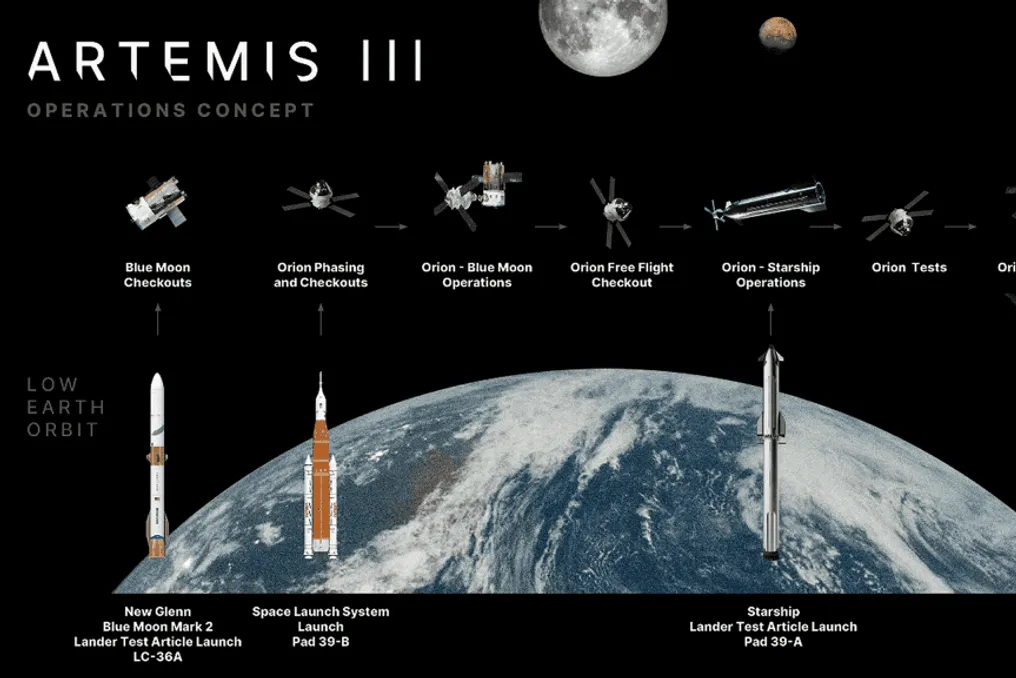
Four astronauts will board the Orion capsule, which will be launched by the SLS (Space Launch System) rocket. This journey is expected to last 14 days and will take place in low Earth orbit. During this period, NASA will verify the rendezvous, approach, and docking procedures between Orion and prototypes of lunar modules created by SpaceX and Blue Origin.
The crewed landing is now set for Artemis 4 in 2028. This mission will also utilize the Orion capsule and the SLS rocket, with the launch scheduled from the Kennedy Space Center in Florida, USA.
To reach the lunar surface, NASA is evaluating two transport options provided by private companies. SpaceX proposes refueling the Starship in Earth orbit, at which point the spacecraft will meet Orion to head toward the Moon. On the other hand, Blue Origin plans to use orbital transfer stages in Earth orbit to propel its Blue Moon Mark 2 module to the Moon; this vehicle will rendezvous with Orion in a lunar orbit closer to the satellite before beginning the descent.
Both companies are committed to making their systems available for the 2028 crewed landing. Furthermore, NASA is studying two possible configurations for the upper stage of the SLS rocket on Artemis 4: maintaining the existing cryogenic propulsion stage or adopting an extended version of the Centaur V, manufactured by United Launch Alliance, which has greater propellant carrying capacity. This analysis aims to keep options open and prevent the program from depending on only one configuration.
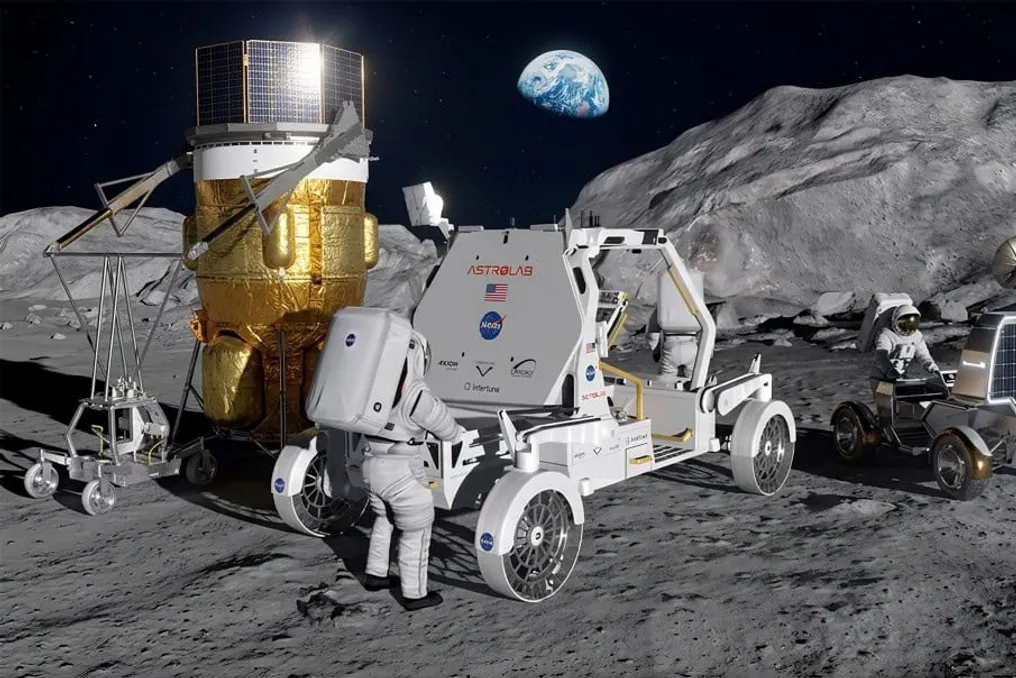
Another reported advancement relates to the equipment astronauts will use on the lunar surface. The agency has partnered with Axiom Space to develop a second type of space suit, lighter, called the Sortie suit. This new equipment will weigh about half as much as the main suit developed by Axiom and will be used during the first lunar walks. It is important to note that it will not replace the primary Axiom model, which will remain reserved for more extensive and challenging tasks in future missions.
With the progress of the Artemis program, NASA aims to conduct progressively more complex expeditions in the lunar south pole region, expanding scientific knowledge about the satellite and establishing a lasting human presence beyond Earth. The agency also views these operations as part of the technological and operational preparation for future crewed missions to Mars.