Fragmented Latin American Climate Alliances Head to COP31 Summit in Antalya
Read more
China Dialogue
chinadialogue.net

Fragmented Latin American Climate Alliances Head to COP31 Summit in Antalya

Latin America arrives at this year's UN climate summit with less political support for the agenda promoted a year ago in Brazil.

Although many Latin American countries showed greater cohesion at COP30 in November 2025, held in the Amazonian city of Belém, than in previous years, these alliances advocated for increased ambition in areas such as energy transition, combating deforestation, and climate finance.

However, since then, some leaders who played a key role in promoting this agenda have left their posts, undermining the prospects of a unified regional voice.

In Colombia, a president was elected who promised to increase oil production and develop hydraulic fracturing, which is a sharp departure from the previous administration's initiative to phase out fossil fuels. The new government of Chile revoked over 40 environmental decrees in its first months and cut funding for its Ministry of Environment and International Agreements, including the Escazú agreement. The Bolivian government, under President Rodrigo Paz, dissolved the country's Ministry of Environment in August.

Brazil is a notable exception. The fourth term of President Luiz Inácio Lula da Silva, who took office instead of the Bolsonaro administration, restored the government that oversaw COP30, albeit with fewer regional allies than a year ago. Nevertheless, even Lula faced criticism for supporting fossil fuel exploration in the Amazon basin.

Andrés Gómez, Director for Latin America at the Fossil Fuel Treaty Initiative, told Dialogue Earth: 'We have a completely different political situation compared to a year ago. Ultra-right governments are interested in the idea of exploiting everything on their territories.'

COP31 opens in Antalya this Monday, November 9, under the chairmanship of Turkey, with Australia leading the negotiations. The summit will resume the unfinished work of Belém: two action plans—one on phasing out fossil fuels, the other on halting deforestation—as well as a call for increased climate finance.

Ana Toni, former COP30 Executive Director, expressed optimism, telling Dialogue Earth: 'I am quite confident that the momentum created at COP30 will continue at COP31.'

Turkey presented the summit as a 'COP of implementation,' focusing on supporting countries in meeting their climate plans. The vast majority of Latin American countries submitted updated Nationally Determined Contributions (NDCs) under the Paris Agreement in the last two years. However, Argentina, Guatemala, and Haiti have not done so.

According to the 2015 Paris Agreement, countries are obliged to develop a plan for their efforts to reduce national emissions and adapt to the effects of climate change. These obligations are called NDCs. NDCs are submitted every five years, and subsequent versions must be more ambitious than previous ones (the so-called 'ratchet mechanism'). Collectively, these national targets must constitute a coordinated global effort to mitigate the severity and impact of climate change.

As the host of COP, Turkey can choose the central theme of the agenda it wishes to promote, and it has chosen electrification. COP31 Chair, Murat Kurum, proposed a voluntary global goal—to increase the share of final energy demand met by electricity from slightly over 20% (as of June 2026) to 35% by 2035.

On energy issues, Latin America is close to the world average for electrification: electricity accounts for about 20% of its final energy consumption. However, its grid is much cleaner than most countries', as 65% of electricity came from clean sources in 2025.

Extraction has become politicized in several countries. Debates over hydraulic fracturing became an important topic in Colombian elections, where the successful candidate Abelardo de la Espiñe captured fossil fuels as a path to prosperity.

Alejandra López, Director of Climate Diplomacy at the regional analytical center Transforma, believes that electrification can help take climate action out of the political arena in the region. She noted: 'Electrification, mobility, energy security, job creation, public transport—these are agendas that are neither political left nor right, and they don't sound ecological.'

Brazil, as the chair of COP30, sought to include specific commitments on deforestation and phasing out fossil fuels in the summit's final document last year. However, disagreements between governments led to these points not passing negotiations. The country announced that it would prepare two voluntary action plans and present them in Turkey. One concerned phasing out fossil fuels, the other deforestation and sustainable forestry. These documents are not binding but can serve as a basis for national governments to follow.

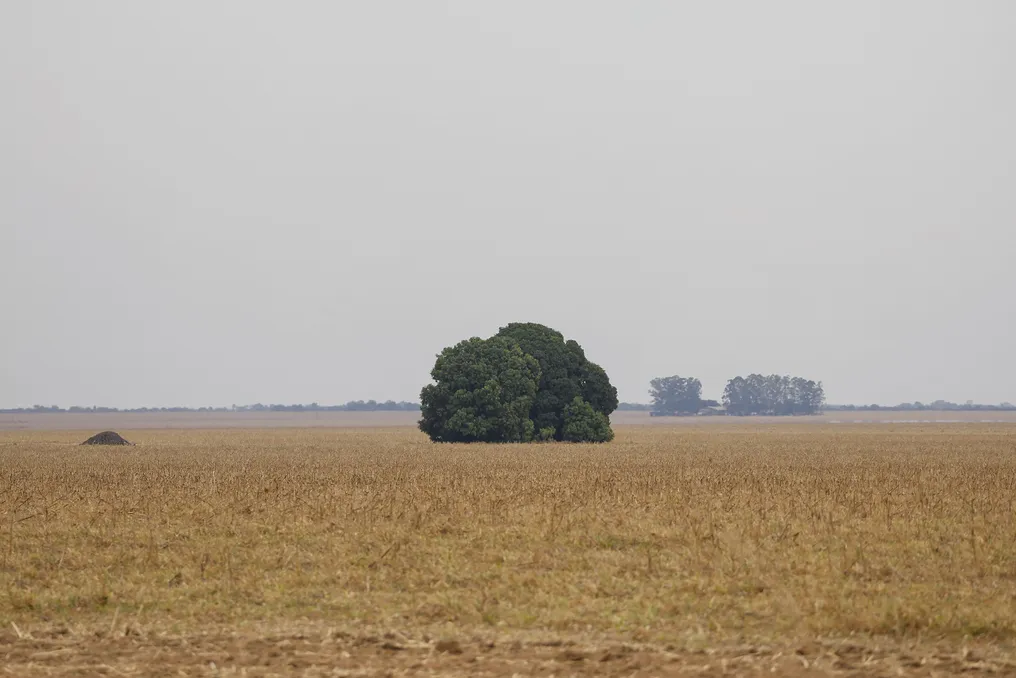
South America lost more forests than any other region in the world between 2015 and 2025, averaging 4.1 million hectares per year. This was caused by activities such as agriculture, livestock farming, and infrastructure development. Nevertheless, there have been successes, including deforestation in Brazil currently being at its lowest level since 1998.

Nevertheless, the region is also increasing fossil fuel extraction: last year, oil production grew by 20%, mainly due to Guyana and Brazil. Countries across the region, including Argentina and Brazil, are also actively seeking opportunities to expand oil and gas production.

Referring to the current instability in the Strait of Hormuz, Toni argued that phasing out fossil fuels is not just a climate issue: 'It is an economic problem, it is a political problem, it is a sovereignty problem.'

The final package of COP30 provided for the mobilization of about $1.3 trillion in climate finance for developing countries annually by 2035. Countries agreed to triple adaptation financing by this year compared to the 2025 level. Based on the Glasgow target of about $40 billion annually, this amounts to approximately $120 billion.

However, critics note that the COP30 promise lacks a clear baseline and does not specify who is responsible for increasing funding. Tarie Gbadegesin, CEO of Climate Investment Funds, told Dialogue Earth: 'The world urgently needs adaptation finance to prevent and prepare vulnerable communities for disasters and slow-onset climate change impacts.' She added: 'Developing countries currently receive adaptation finance that is 12–14 times less than what they need.'

Last year, Brazil also launched the Amazon Fund. This fund is intended to pay countries for forest conservation, and its collection target is $10 billion by 2026. Almost $8 billion has been received so far. This is still far from the $125 billion capital expected by the fund's sponsors, but additional commitments may be announced this year.

For the region, the question of who pays and under what conditions is also important. Latin America and the Caribbean received 17% of international climate finance between 2016 and 2020. Most of these funds came as loans, not grants, which increased the already heavy debt burden. In some countries, debt servicing now exceeds spending on sectors such as health and education.

At climate COPs, Latin American countries negotiate individually and in various blocs, unlike other regions such as Africa, which votes and lobbies together. Most nations belong to several such groupings based on common interests and positions. All countries in the region have long been part of the G77 and China—a coalition of developing countries acting within the UN system. Meanwhile, the bloc including Chile, Colombia, and Panama forms the Independent Association of Latin America and the Caribbean (AILAC). There is also Grupo Sur, a bloc mainly comprising Southern Triangle countries, as well as the Bolivarian Alternative to the American System, which gained prominence in the late 2000s.

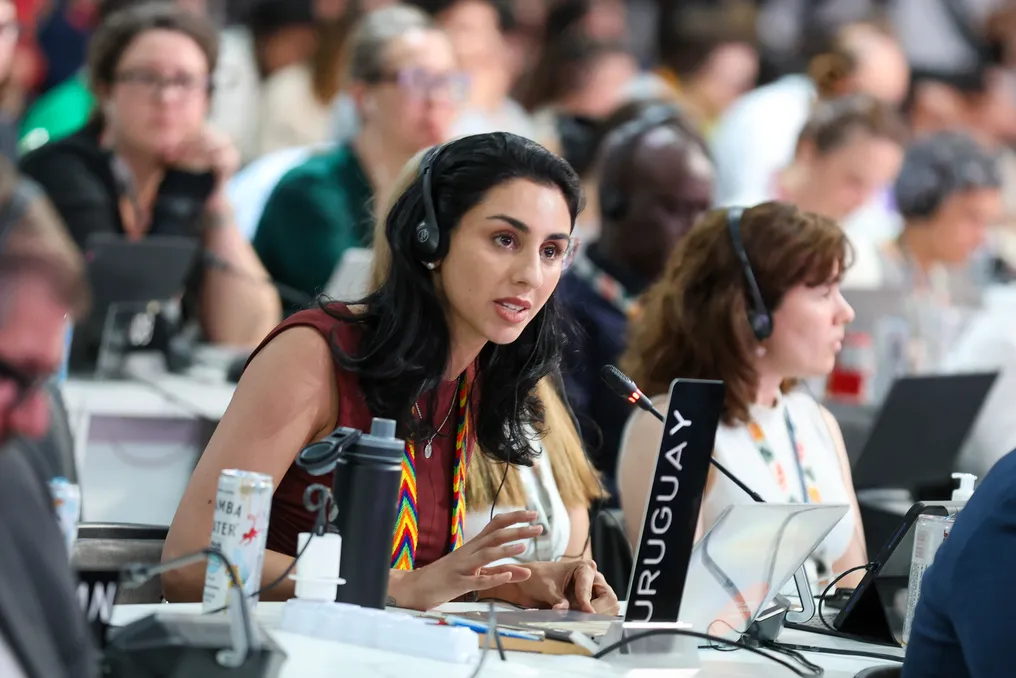
María Fernanda Souza, Uruguay's Director of Climate Change, emphasized: 'The possibility of Latin America and the Caribbean negotiating together has a strength that surpasses any possibility we could have by negotiating separately.'

The result of these various groupings is that Latin America is divided in negotiation matters. Experts argue that regional cohesion, like that demonstrated by Africa, allowed its countries to achieve more effective results.

María Fernanda Souza, Uruguay's Director of Climate Change and Vice Chair of the G77, told Dialogue Earth that the inability to negotiate as a bloc 'has had and continues to have costs' for Latin America. She continued: 'I cannot point out why we cannot be more united.' She added: 'The possibility of Latin America and the Caribbean negotiating together has a strength that surpasses any possibility we could have by negotiating separately.'

Fernanda Souza notes that the interests of southern states, heavily dependent on livestock and agriculture, differ from the interests of Caribbean island states, which suffer from climate change and desperately need money for adaptation.

However, López believes there are separate issues where Latin American countries should set aside political differences and unite. She named climate finance as such an issue for COP31: 'Since there are no major disputes, they can agree more easily.'

Toni believes the division existed long before recent political shifts in the region: 'Even when different types of governments were in power, we never truly spoke with one voice.' She rejected the idea that the region is too diverse to coordinate, pointing to Africa, which votes together and also includes many small island states. 'I think it is always possible, and I think it is desirable,' she said.

López fears that Latin America's low-profile participation at COP31 will carry this weakness over to COP32, which will be held in Ethiopia: 'At the moment you single out Africa as a special region—a particularly vulnerable region—[there are those who are excluded from the universe of 'we matter, we are vulnerable']. That is Latin America.'
Similar stories

Latin American Architecture: An Overview of Housing, Heritage, and Design Themes in October
Read more
archdaily.com.br

Latin American Architecture: An Overview of Housing, Heritage, and Design Themes in October

Throughout October, architecture in Latin America served as a platform for dialogue, bringing together discussions on living, cultural identity, new practices, and the relationship between the built environment and its broader context. Recent events, ranging from discussions on new architectural practices and material research at Design Week Mexico to novel approaches to housing, landscape, and public space in Chile and Mexico, highlight how architecture responds to specific local conditions.

Across the region, initiatives focused on climate change adaptation and heritage restoration are also drawing attention in the Dominican Republic and Colombia, emphasizing shifts in the responsibilities of cultural institutions and the built environment.

Architecture as a Platform for Exchange: Biennials, Design, and New Practices in Latin America

The XX International Architecture Biennale in Buenos Aires incorporated architecture into a wider dialogue about living, exploring how social, cultural, ecological, and political conditions shape lifestyles. Held under the curatorial concept HABITAR, the event featured international lectures, exhibitions, and public events across six main venues and partner institutions, with participation from professionals such as Smiljan Radić, Solano Benítez, Andrés Jaque, and Marina Otero Verzier.

Through discussions on memory, materiality, urban development, and the connection between architecture and its context, the Biennale presented living as a framework for understanding the role of architecture in shaping contemporary societies. Its exhibitions and public program continued throughout October as part of Buenos Aires Design and Architecture Month, expanding the exchange beyond the International Forum to encompass the city's cultural institutions.

Design Week Mexico 2026 in Mexico City explored the link between identity, craftsmanship, and contemporary design, inviting Chile as Guest of Honor and ensuring ongoing collaboration between Mexican artisans and French designers through an intercultural residency program. The event also provided the backdrop for ArchDaily's Next Practices Live in Mexico, held at the Design House during the opening of Design Week Mexico.

Moderated by Christele Harrouk, Editor-in-Chief of ArchDaily, the discussion gathered winners of the Next Practices Awards 2026—MANUFACTURA, RAMA Estudio, and SOCA—alongside previously recognized Mexican practices ASPJ and Palma, to discuss how new firms are expanding the scope of architecture through the exploration of materials, ecological knowledge, cultural engagement, and responses to specific social and environmental conditions.

Projects Worth Noting

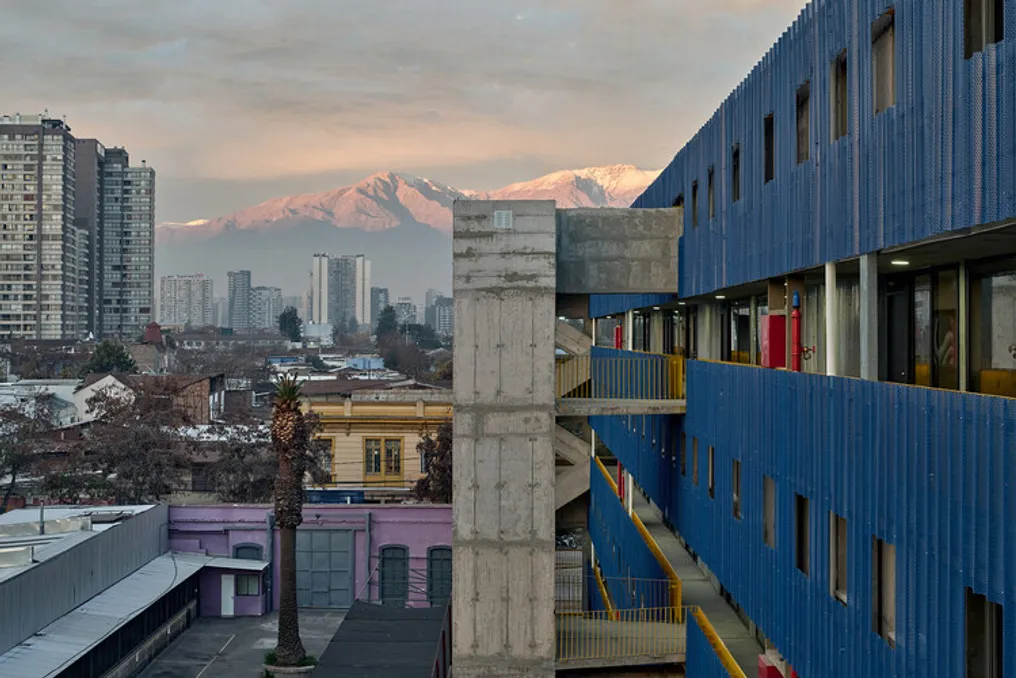
Habitação Social Santa Rosa, located along Avenida Santa Rosa in downtown Santiago, was designed by FAR frohn&rojas and represents an alternative approach to social housing by integrating residential units into the city's existing transport and social infrastructure. Completed in 2026, the 2,337 square meter project occupies an exceptionally narrow plot of less than nine meters wide, which dictated the development of a seven-story thin-shell concrete building. Most apartments are duplexes accessed via common galleries where lounge areas open onto circulation zones, and bedrooms are situated on upper floors. A blue perforated metal mesh provides shading while maintaining the expression of exposed concrete construction, and common balconies create open spaces for interaction. The project, developed under Chile's DS-49 social housing program, also includes a strategy to support long-term maintenance of common areas using advertising revenue generated by its north-facing facade.

Rancho del Abuelo, a project by Mendiola Arregui, is located near Guadalajara, Mexico, and is a 994 square meter equestrian complex completed in 2026 that integrates facilities for horse care, leisure, and socializing into the existing landscape. The project is organized as a series of independent pavilions placed in response to the site's existing conditions, unified by a common architectural system connecting various programs. Flat concrete slabs supported by columns form a sequential structure, while independent walls define individual spaces and shape circulation, framing views of the landscape and surrounding trees. The distance between roofs and walls allows natural light and ventilation to penetrate the complex, creating a sequence of paths, patios, and shaded areas.

Instalação Urban Mantle, designed by Felipe Burgos Villalanos, is situated on the banks of the Loncomilla River in San Javier de Loncomilla, Chile, and is a 16 square meter public intervention aimed at restoring the city's connection to its riverfront and historical landscape. Designed as a contemplative seating area, the project addresses the region's former role in colonial maritime trade and its gradual detachment from the urban fabric. The curved concrete surface accommodates various resting spots, transforming an informal riverside meeting point into a space for relaxation, meditation, and landscape contemplation. Inspired by the work of Enrique Miralles and Anne Holthrop, the project combines organic form with a material approach that values the construction process and its imperfections.

In Focus

The historic center of Santo Domingo in the Dominican Republic became the first World Heritage site in Latin America and the Caribbean to pilot the UNESCO Climate Action Toolkit. The seminar, held from October 5 to 9, brought together experts in heritage conservation, urban planning, and disaster risk management to assess how hurricanes, intense rainfall, and flooding might affect the historic center. The toolkit, developed by UNESCO in partnership with ICCROM, ICOMOS, and IUCN, links climate projections and local knowledge with heritage management and planning strategies. The pilot project will contribute to developing a climate action plan for the historic zone, underscoring the importance of integrating climate resilience into the preservation of living urban heritage.

Following the earthquake on August 10th, which affected cultural heritage in seven departments of Colombia, various institutions initiated efforts in October to support restoration work. On October 6th, the National Museum of Colombia, ICOM Colombia, and Universidad Externado de Colombia established a collection center in Bogotá to gather restoration materials intended for affected museums. This initiative followed reports of damage in 35 museums and museum institutions spread across 10 departments. Concurrently, the District Institute of Cultural Heritage (IDPC) continued its volunteer program, conducting architectural surveys, photographic documentation, and preliminary damage assessments in the affected municipalities. These efforts are part of a broader recovery process led by cultural institutions and government bodies to assess damage, protect collections, and preserve the country's architectural heritage.

COP31 in Antalya will provide Uzbekistan with opportunities to solve climate problems
Read more
uzdaily.uz

COP31 in Antalya will provide Uzbekistan with opportunities to solve climate problems

The thirty-first Conference of the Parties to the United Nations Framework Convention on Climate Change (COP31) is scheduled to take place in Antalya, Turkey, from November 9 to 20, 2026. The event will gather international participants to discuss global climate challenges and possible ways to overcome them.

The conference is expected to attract representatives from governments, international organizations, the scientific community, business, and civil society. The main focus will be on measures to combat climate change and strengthen international cooperation.

Key areas of the conference work

Key priorities will include the implementation of the Paris Agreement, reduction of greenhouse gas emissions, adaptation to climate change, climate finance, and international partnership. One of the main events will be the Summit of World Leaders on Climate Action, which will take place on November 11–12.

Heads of state and government plan to discuss national climate challenges, progress in fulfilling international obligations, and opportunities to accelerate climate transformations. The COP31 program will cover a wide range of topics, including energy, sustainable agriculture, food security, biodiversity conservation, urban development, and the implementation of eco-friendly technologies.

Thematic days will be organized on climate finance and 'green' investments, transport, circular economy, youth and education, scientific research, industrial innovation, water ecosystems, and sustainable tourism.

Opportunities for Central Asia

For Uzbekistan and other Central Asian countries, this conference presents a chance to address pressing environmental issues, particularly water scarcity, desertification, land degradation, and the need to adapt to climate change. Discussions at COP31 may open up additional prospects for expanding international cooperation and attracting investment in environmental protection projects.

Potential areas of interaction include the implementation of water-saving technologies, ecosystem restoration, development of renewable energy, and measures to increase agricultural sustainability. The scientific community, youth, and business should also play a significant role in developing and applying practical climate solutions.

A central issue at the conference will be translating international climate commitments into measurable results. Achieving climate goals will require access to financing, technological development, and stronger partnerships between states. For Uzbekistan, COP31 will be a platform to demonstrate national environmental initiatives, strengthen international relations, and study additional mechanisms for supporting projects aimed at solving climate problems. The success of the conference will depend not only on the agreements reached but also on the effectiveness of their implementation into practical actions.

COP31 discusses issues of financing climate measures and adaptation for developing countries
Read more
chinadialogue.net

COP31 discusses issues of financing climate measures and adaptation for developing countries

At the COP31 summit, opening in Antalya, Turkey, on November 9, prospects for developing countries appear highly uncertain. Wealthy nations are reducing their contributions to climate finance; for example, the UK recently cut its contribution to the Green Climate Fund by 50%. The situation with the conflict in the Persian Gulf has intensified many governments' focus on ensuring energy security.

For Maria Fernanda Sua, who negotiates Uruguay's climate policy, the stakes at this year's annual UN climate summit are particularly high. In addition to leading Uruguay's climate policy, she serves as the alternate chair of the Group of 77 and China—the largest bloc of developing nations in the UN. Uruguay is chairing this group for the first time since its establishment in 1964, and Sua is working on developing the country's climate position.

In an interview with Dialogue Earth, Maria Fernanda Sua discussed the importance of moving beyond grand statements about financial commitments and the necessity of solving issues of access to climate funding. She also shared her views on how geopolitical tension affects the energy transition and what Uruguay's experience in renewable energy development can teach other states.

Sua emphasized that adaptation is central to her country. They aim to achieve real progress in how countries plan and measure their adaptation. Uruguay is extremely vulnerable as an agro-exporting nation with a coastal zone dependent on agriculture and tourism.

The second priority is a just transition. At COP30, countries agreed to develop a mechanism to help them manage the transition to a cleaner economy fairly. The goal is for this mechanism to provide real support, including technical assistance, knowledge sharing, and other international aid. However, countries still disagree on exactly how this mechanism should function.

The United States' withdrawal from the climate regime left its mark, and there is hope that the next administration will return. Meanwhile, Global North economies are facing difficulties, and in some cases, they show less political will for international climate finance. This will likely exacerbate the situation and make the first days of COP particularly challenging.

During preparatory meetings for COP31 in Europe, there was a strong drive towards decarbonization for the sake of energy security, driven by the situation in the Persian Gulf and the Strait of Hormuz. The Spanish minister aptly noted that the sun continues to shine and the wind blows, regardless of events in Hormuz.

This is a positive point, but the transition requires critical minerals, many of which are located in the Global South. The question arises: how to accelerate the process without deepening neo-colonial dependence? This issue is raised within the UNFCCC through the concept of a just transition and relates to the very model of development.

Some countries have withdrawn or restructured their climate financing. The UK has reduced the amount it plans to contribute to the Green Climate Fund upon its next replenishment, and it is not yet known what others will do. Developed countries argue that war and the energy crisis force them to redirect aid funds to national security. However, climate finance is not development aid; it is already signed commitments. The latest replenishment of the Environment Fund was also significantly below expectations.

According to Sua, about 70% of Uruguay's climate policy programs depend on concessional projects funded by the Green Climate Fund, with some projects awaiting approval for six or seven years. The fund's technical team considers them impeccable, but they do not pass to the council. The explanation lies in politics: there is pressure to convert grants into loans or private sector schemes. This may work to mitigate consequences, such as in a transport decarbonization project with a large loan component, but it is not applicable to public works like coastal adaptation.

Uruguay's climate policy is somewhat protected. Unconditional commitments are being met, and there is no risk here. Difficulties arise in conditional parts and in those elements of adaptation plans that require international financing. This is typical for any country. Already approved projects represent effectively reserved funds. The problem lies in the future.

There is also a deeper inequality: developed countries take out loans at much lower interest rates, while countries affected by extreme weather events pay much more. As Sua said: 'We suffer the consequences more, and we pay more to finance the response.'

Uruguay placed climate policy at the center of its economic policy, which allowed it to secure better financing terms for meeting climate obligations. Uruguay issued a sovereign bond loan linked to climate indicators, including the preservation of all local forests, and is now working on a second one linked to adaptation indicators. This demonstrates that Global South countries can develop institutional solutions that promote biodiversity and meet national commitments, while also opening access to resources. They have confidence that the international community and the financial system will support them.

The decision-making process is extremely heterogeneous, given the differences in economies, political systems, and negotiation cultures. Many participants are not diplomats but come from ecology or energy sectors. Thematic coordinators work with highly specialized negotiators on each issue, and the G77 presidency intervenes when consensus is clearly absent.

A significant part of the work is done via messengers, as participants communicate all day to understand what is most sensitive for each country. The biggest disagreements concern fossil fuels, but agreements have been reached so far.

This is positive, provided it helps countries move away from fossil fuel dependence. However, initial positions differ regarding fiscal space, reliance on food production, and the ability to plan an exit from old systems. For middle-income economies like Uruguay, this is not dependent on individual decisions. At the meeting in Santa Marta, representatives from the Maldives stated that they want to move forward but without expanding the power grid, which requires international financing, otherwise more clean generation will be useless.

These discussions are necessary, but they are conducted among convinced parties. There needs to be involvement from finance ministries and the private sector, as this concerns the development model, not just energy policy. It is a global, voluntary goal without national targets—part of the action agenda. Sua considers this a valuable tool for connecting countries needing implementation with those who can support them, and for exchanging successful examples, such as Uruguay, whose capacity is about 98% renewable energy.

However, the 'second' energy transition is much more intensive in terms of technology and finance: grids, industrial conversion, green fuels. The COP31 presidency also announced nine other priority topics, including methane, electrification, and early warning systems.

Uruguay's priority is promoting multilateral frameworks and avoiding unilateral trade measures that restrict countries' development by imposing conditions they cannot meet. Such measures are not ideal in broad negotiations and pose a particular problem in its role as G77 coordinator, as many member countries lack sufficient capacity to comply with these requirements.

In Uruguay's case, production has an environmental advantage: deforestation is virtually non-existent. The country has signed the Global Methane Pledge and set emission intensity targets per kilogram of meat. Sua fully shares COP31's focus on methane from fossil fuels and landfills, where cheap prevention technologies exist. Livestock methane is a separate issue that must respect the language of food security outlined in the Paris Agreement preamble.

The country is threatened by El Niño, especially the coastal population in northern Uruguay and the region. Adaptation measures developed years ago should have received funding by now. Without it, funds must be diverted from other priorities, and when natural disasters occur, the burden falls mainly on local authorities. They have to quickly implement innovations in resettlement and population evacuation.

Developed countries continue to claim the maintenance of global financing goals, but doubts are heard as to whether they can mobilize funds at the previous level. In fact, the prospects look very difficult.

}} , 1.

Popular