Honda announced a financial injection of R$ 3.3 billion designated for the Brazilian market. This investment aims to increase productive capacity and boost vehicle manufacturing, focusing on the city of Manaus, in the state of Amazonas.
The news was presented last Wednesday (4) during a press conference held to celebrate the brand's 50 years of presence in the country. According to Japanese representatives, the plan includes the construction of two new production facilities, each equipped with its own assembly line.
With this expansion, Honda aims to achieve an installed capacity of 2.3 million motorcycles by 2029. This volume exceeds the total of 1.9 million currently produced by all brands in the national market.
Investment Details and Employment Impact
The R$ 3.3 billion will be applied between 2026 and 2030, adding to a previous investment of R$ 1.6 billion made last year. In addition to increasing capacity, the expansion of operations in Manaus is expected to generate 2,000 new jobs to support production growth. Currently, the factory has 9,000 direct employees.
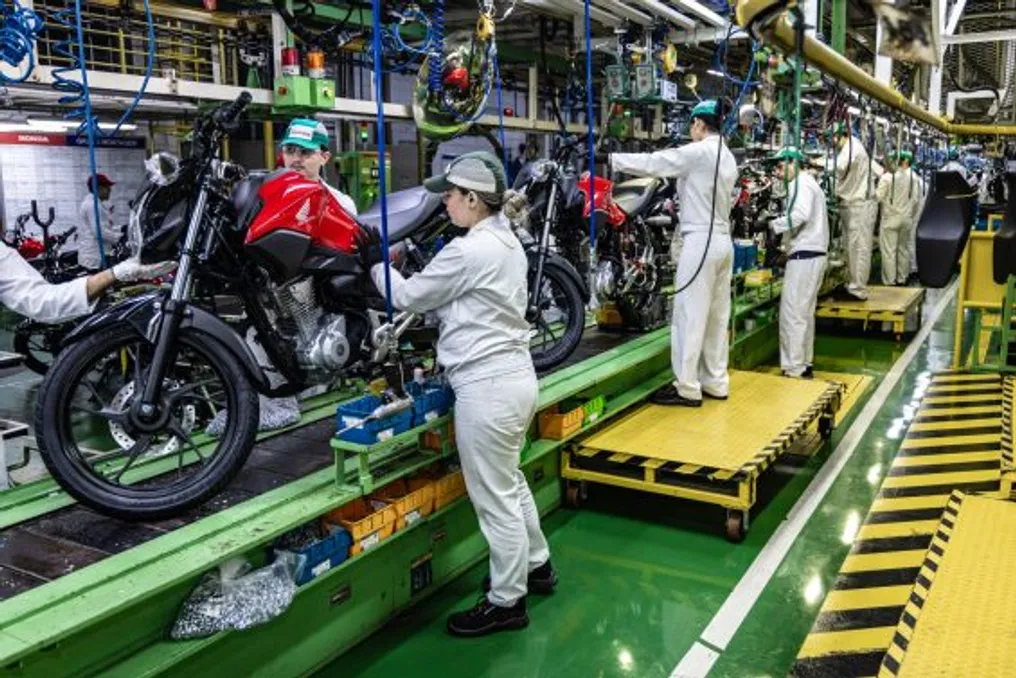
The Manaus complex already has four assembly lines spread across two production units. The new investment cycle foresees the construction of two more units within this same complex, each with its dedicated assembly line and other associated manufacturing processes.
Market Strategy and Competition
In response to questions about whether the strategy is related to a gradual loss of market share, Marcos Bento, Honda's sales director in Brazil, assured that the company's objective is to maintain leadership. He emphasized that any increase in market share, returning to higher levels, is always positive.
Currently, Honda holds 64.05% of the national motorcycle market, although this percentage has decreased due to the growth in the number of competitors, despite having once approached 80%. Despite this scenario, the manufacturer expressed no concern, as its sales are on the rise. Beto stated that Honda positively receives the arrival of new competitors, provided that competition occurs under the sector's competitive norms.
Operations and Technology
During the event, executives also addressed other aspects of the Brazilian operation. Regarding the introduction of electrified models, the Japanese company mentioned that it constantly monitors the needs of each consumer and country but did not confirm any specific launch. In the context of the 'energy race,' Honda emphasizes that its focus in Brazil is the FlexOne technology, which allows for the use of both ethanol and gasoline.
The factory, established in the Free Trade Zone since 1976 and responsible for all Honda motorcycle production in Brazil, has assembled over 33 million units over five decades. Daily, 7,200 motorcycles are produced, covering 20 models with engine displacements ranging from 110 cm³ to 1,100 cm³.
Beyond the domestic market, the unit exports to 19 nations, including the United States, Australia, and Mexico. Honda describes this operation as the most vertically integrated globally for the group, as it manufactures most components internally, such as chassis, wheels, seats, and engines. The company also maintains more than 1,200 points of sale and more than 120 direct suppliers in the country.