Eurasian Development Bank increases non-state financing volume in Eurasia by 50%
Read more
UzDaily
uzdaily.uz

Eurasian Development Bank increases non-state financing volume in Eurasia by 50%

The volume of non-state financing provided by international financial institutions (IFIs) in the Eurasian region reached 6.8 billion US dollars for the period from January to September 2026, representing a 50% increase compared to the same period last year.

According to an analytical report by the Eurasian Development Bank (EDB) for the third quarter of 2026, total financing in the third quarter amounted to 1.1 billion US dollars, marking a 36% year-on-year decrease. However, this quarterly decline did not affect the overall positive trend of financing growth since the beginning of the year.

Kazakhstan has become one of the key platforms for developing new cooperation mechanisms and attracting international financial institutions. In the third quarter, the financing volume in this country increased by more than 200 million US dollars compared to last year. The first non-state operation of the OPEC Fund was approved in Kazakhstan, and operations and financing of Turkish investment fund projects also began.

Key sources of non-state financing in the region include the EDB, the European Bank for Reconstruction and Development (EBRD), and the World Bank Group. The EDB focused its activities primarily on infrastructure projects, while financing from the EBRD was mainly directed towards the financial sector. The World Bank actively utilized guarantee instruments through the Multilateral Investment Guarantee Agency (MIGA).

The role of guarantees in attracting capital has significantly increased: in the first nine months of 2026, guarantees accounted for 22% of IFI non-state financing in Eurasia, compared to 4% in the same period of 2025. The main entities providing such guarantees are MIGA, the EDB, and the EBRD.

Another area of activity is the financing of modern warehousing and logistics facilities. Specifically, the EDB provided loans for the construction of the Griffin Logopark Almaty logistics complex. The International Finance Corporation, part of the World Bank Group, is also active in this segment.

International development banks are also increasing their participation in investment platforms. In Mongolia, the GIRAF fund was launched to support the agricultural sector by pooling resources from international development banks, state, and commercial banks. In Kazakhstan, the World Bank financed the ALEM program, which includes a venture fund mechanism to support technology startups.

The EDB functions as a multilateral development bank operating across the entire Eurasian region. According to the bank, as of the end of June 2026, its cumulative investment portfolio comprised 348 projects with a total value of 22.1 billion US dollars. The bank's main areas of activity include transport infrastructure, digital systems, green energy, agriculture, industry, and mechanical engineering.

Similar stories

Uzbekistan's external debt grew by 24.7% to reach $88 billion in 2025
Read more
uzdaily.uz

Uzbekistan's external debt grew by 24.7% to reach $88 billion in 2025

According to the World Bank's International Debt Report 2026, Uzbekistan's external debt as of the end of 2025 amounted to $88.03 billion, representing an increase of 24.7% during the year.

Over the last decade, the country's debt to foreign creditors has increased by approximately 6.5 times, rising from $13.57 billion in 2015. The growth of Uzbekistan's external debt has outpaced that of neighboring countries and developing economies overall.

In Europe and Central Asia, total external debt increased by 15.3% in 2025, while the growth among low- and middle-income countries was 5.5%.

Of the total amount of $48.46 billion, state debt and publicly guaranteed obligations account for a portion. An additional $32.84 billion consists of external loans from private companies without state guarantees. Short-term debt reached $6.73 billion.

The largest share of Uzbekistan's state and publicly guaranteed debt is owed to international financial institutions, amounting to $22.82 billion. This sum includes $8.36 billion owed to the Asian Development Bank and $5.01 billion to the International Development Association, which is part of the World Bank Group. Debt to other multilateral creditors totals $9.45 billion.

Estimated debt to governments of foreign states reached $10.53 billion. The largest bilateral creditors are China with $3.85 billion and Japan with $2.99 billion; the remaining countries total about $3.7 billion.

Obligations to private creditors total $15.11 billion, accounting for approximately 31% of Uzbekistan's state and publicly guaranteed debt.

The international bond market has become one of the main sources of financing. In 2025, Uzbekistan issued bonds worth $3.9 billion, exceeding the issuance volume of any other country eligible for concessional financing from the International Development Association.

According to the report, the government issued bonds worth $1.6 billion, including securities denominated in the national currency. Another $2.4 billion was attracted by other state structures. However, these two figures total $4 billion, which exceeds the total issuance stated in the report of $3.9 billion by $100 million.

The World Bank also noted the high cost of Uzbekistan's borrowing in the market. The yield on bonds denominated in soums with a maturity of 2028 reached 15.5%. The report authors attribute this rate partly to inflation risks. Dollar-denominated bonds were issued at a yield of 7.38%.

Borrowing costs vary significantly depending on the source of financing. In 2025, official creditors—foreign governments and international organizations—provided Uzbekistan with loans at an average interest rate of 3.4%, with a repayment period of 21 years and a five-year grace period. Private creditors offered financing at an average rate of 8.6% over 10 years, with the grace period covering the entire loan term.

The burden of the country's debt relative to economic output has also increased. External debt reached 60% of gross national income and 227% of export revenue, with both indicators exceeding the previous year's level.

Simultaneously, debt service costs decreased relative to economic indicators. In 2025, payments on principal and interest amounted to 29% of export revenue and 8% of gross national income. Compared to 2024, these ratios decreased by 18.6% and 17.7%, respectively.

In the Europe and Central Asia region, external debt service costs in 2025 amounted to 25% of export revenue and 8% of gross national income. According to the World Bank, this was the highest debt service ratio to income among regions including low- and middle-income countries.

Eurasian Development Bank creates direct investment fund for Central Asia and the Caucasus
Read more
uzdaily.uz

Eurasian Development Bank creates direct investment fund for Central Asia and the Caucasus

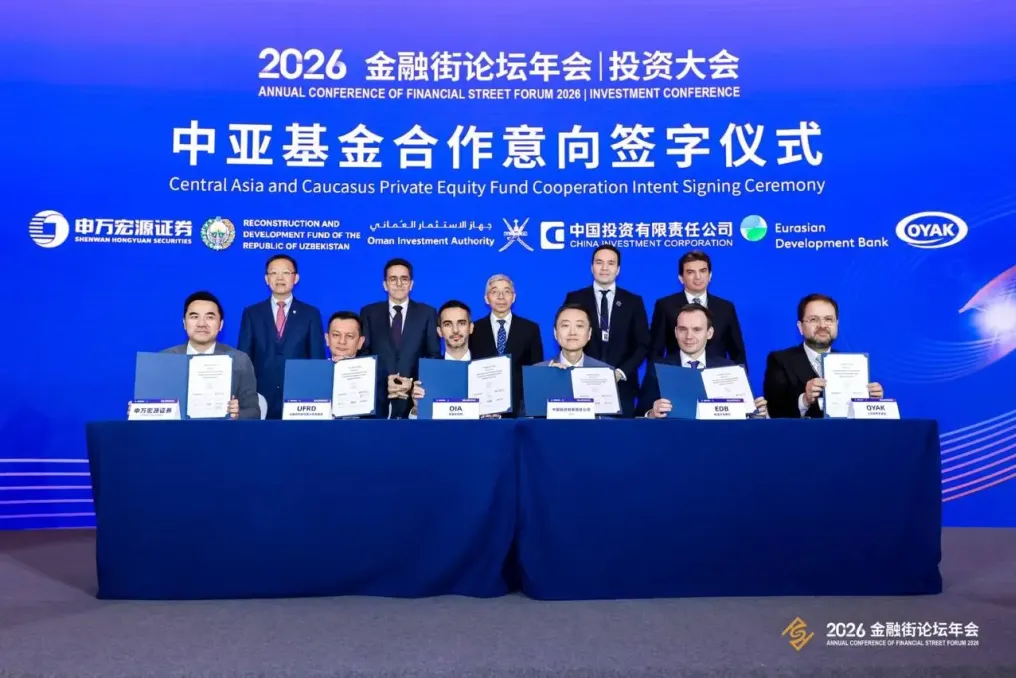
The Eurasian Development Bank (EDB), in collaboration with international financial institutions and investors, is preparing to establish the Central Asia and Caucasus Private Equity Fund (CACPEF). This initiative aims to attract long-term capital for promising companies in the region and support industrial development.

Participants include organizations such as China Investment Corporation (CIC), Oman Investment Authority (OIA), the Uzbek Fund for Reconstruction and Development (UFRD), the Turkish fund OYAK, EDB itself, and Shenwan Hongyuan Securities Co., Ltd. Sovereign wealth funds from Central Asian countries, regional development banks, pension funds, and other financial institutions are also invited.

CACPEF plans to invest in promising companies in Central Asia and the Caucasus. The fund participants intend to combine long-term capital with the industry expertise and business connections of investors in China, the Middle East, and the region itself.

According to the initiative's participants, deepening trade and economic cooperation between China and Central Asian countries opens up new investment opportunities. The fund is expected to help regional companies gain access to international capital, technologies, industry expertise, and new markets.

EDB stated that its participation aligns with the bank's Strategy for the period 2027–2031, which includes attracting international capital into member states, including through specialized investment funds. Daniyar Imanaliyev, Deputy Chairman of the EDB Board, noted that companies in Central Asia and the Caucasus require long-term capital to expand their businesses and enter new markets. He added that cooperation with partners from China, Oman, Uzbekistan, and Turkey will allow for the combination of international investment opportunities with regional knowledge, and EDB's involvement in preparing the fund is a way to attract additional resources to the economies of member states and support the growth of regional companies.

The initiative to create the fund is part of the bank's efforts to expand cooperation with partners in China and the Middle East. On October 6, 2026, EDB and the Ministry of Finance of Oman signed an agreement defining the terms of the bank's presence in the Sultanate, marking the first step in Oman's accession process to EDB.

The bank also has a presence in the Abu Dhabi Global Market (ADGM), which is an international financial center. In October 2026, EDB issued its debut dim sum bonds in Hong Kong. According to the bank, its total investment portfolio as of the end of June 2026 included 348 projects totaling $22.1 billion. Most of these investments are directed towards projects benefiting regional integration, such as transport infrastructure, digital systems, green energy, agriculture, industry, and mechanical engineering.

EDB operates as a multilateral development bank across Eurasia. As part of its Strategy for 2022–2026, the bank is implementing three megaprojects: the Central Asia Water and Energy Infrastructure Complex, the Eurasian Transport Network, and the Eurasian Commodity Distribution Network.

Popular