Tour guide Asliddin Safarov shared the history of the secrets held by the three madrasahs of the Registan ensemble in Samarkand, including the images of lions in Sher-Dor, education at the Ulugh Beg madrasah, and the origin of the name Tilla-Kori.
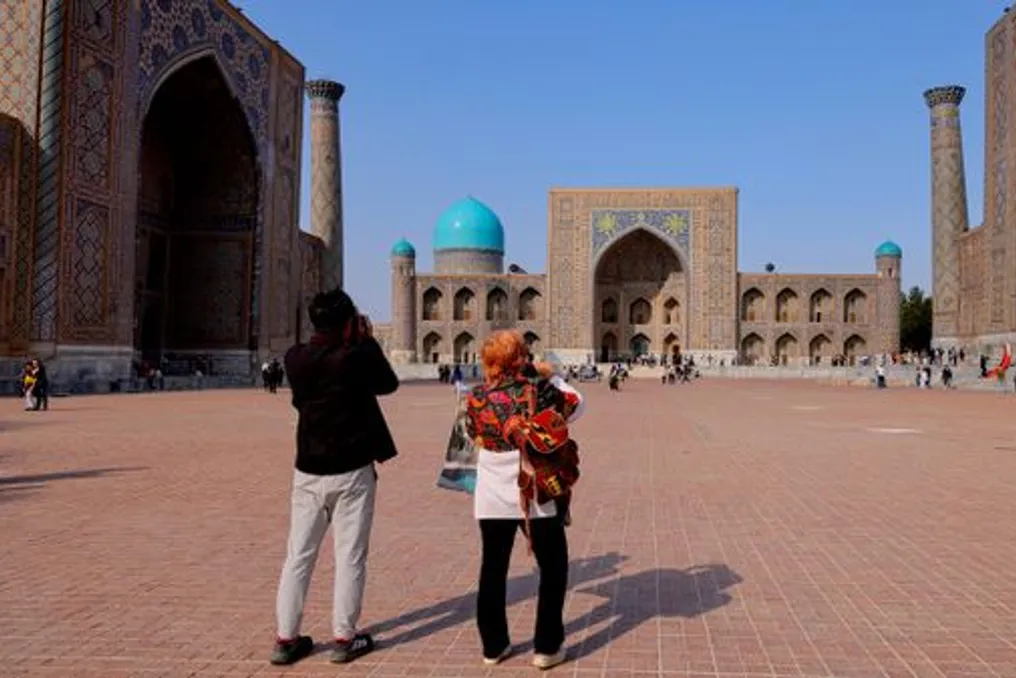
During a walk through Registan, visitors see turquoise domes, koshi-kor portals, and the richly decorated facades of Tilla-Kori. By day, the square comes alive with tourists, and in the evening, the lighting highlights the architectural appearance of the madrasahs. Behind this familiar picture lies the history of the formation, trade, and spiritual life of Samarkand. Asliddin Safarov told Sputnik Uzbekistan correspondent about the history of these three madrasahs.
The three madrasahs were built in different eras. The first, the Ulugh Beg madrasah, was constructed between 1417 and 1420. Approximately two centuries later, by decree of the Samarkand ruler Yalangtush Bahodir, Sher-Dor and Tilla-Kori were built, which formed the current architectural appearance of the square.
Speaking about the Ulugh Beg madrasah, Safarov emphasizes its status as the 'madrasah-i oliya'—the highest educational institution of its time. Scholars taught behind the majestic portal, and students received knowledge. The rooms served for living and preparing for classes. According to him, the education was free, students were provided with scholarships, and graduates received certificates. These details help present Registan as an educational center with its own rules and routine.
The Sher-Dor madrasah was built between 1619 and 1636. Its most recognizable detail is the image of lions chasing deer on the portal and the solar motif. The tour guide offers one interpretation of this composition, linking it to the pursuit of knowledge. He explains that the solar symbol is associated with the world necessary for the development of science and enlightenment, and the decorations remind of the building's function as a place where people come to learn.
The Tilla-Kori ensemble, built on the site of an old caravanserai between 1646 and 1660, completed the composition. Behind its long facade is an inner courtyard, and the richly decorated facades of the mosque give a special brilliance to the interior. Safarov notes that this building served as a jami mosque in its time, and thanks to the decoration with tilla, it became known among the local population as Tilla-Kori.
The guide also points out the construction features: the rooms along the main facade have two floors, while on the other three sides of the courtyard, there is one. This solution contributed to uniting the structures on the square into a single architectural composition. Safarov also draws attention to the diplomas obtained at the madrasah, noting that the idea of the value of knowledge unites the history of these three monuments.