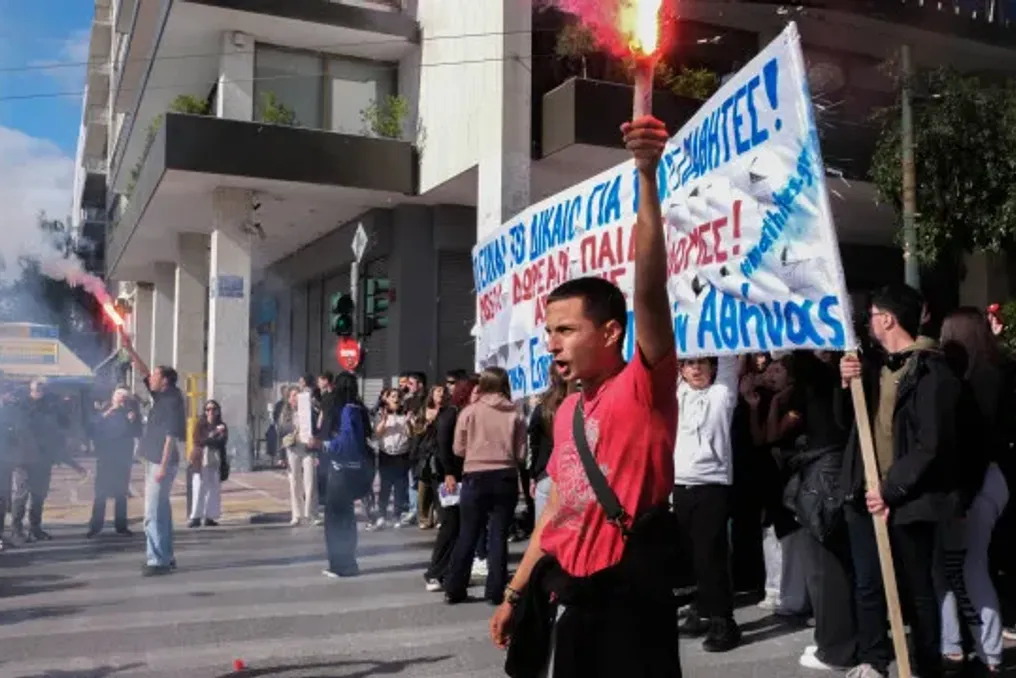
Demonstrations in Greece demand improvements to public education conditions
Read more
Noticias ao Minuto
noticiasaominuto.com

Demonstrations in Greece demand improvements to public education conditions

Thousands of students and teachers are protesting in Greece today, demanding increased funding for public education, improved conditions in schools and universities, and support for students affected by the rising cost of living.

In the Greek capital, demonstrators gathered near the University of Athens and peacefully marched to Syntagma Square in front of the Parliament, carrying a sign that read 'From Greece to France we fight for free public education.' They criticize the lack of proper facilities, staff shortages, and the poor condition of school buildings.

Filanti Joni, an engineering student and elected student representative, told AFP that 'the problems are the same' in Greece and France, expressing regret over the allocation of state funds to NATO armament and war.

The Federation of Secondary School Teachers (OLME) announced a four-hour strike to allow educators to participate in demonstrations that also took place in Thessaloniki. In its statement, the organization expressed support for students and pupils defending the right to free public education, as well as decent educational and living conditions.

This mobilization occurs against the backdrop of rising living costs in a country with low wages and coincides with a strike in France called by unions demanding higher wages. In recent weeks, high school student protests in France have spread to other European countries.

The first mobilization in Greece, held on October 21, gathered over 10,000 people in Athens and Thessaloniki, among other cities. According to Eurostat data, in 2023, Greece allocated 3.3% of its GDP to education, which is one of the lowest figures in the European Union and below the EU average of 4.7%.

The social crisis in France has drawn attention from Greece, which experienced a decade of financial crisis marked by violent protests. The Greek newspaper Kathimerini compares the current social crisis in France to the reality Greece experienced about 16 years ago, noting that the lack of a political response through voting pushes citizens toward street protests due to a feeling of abandonment by the state.

Meanwhile, unions and housing rights associations from seven European countries, including Greece, have organized coordinated demonstrations against the rising cost of living for the end of November.
Similar stories

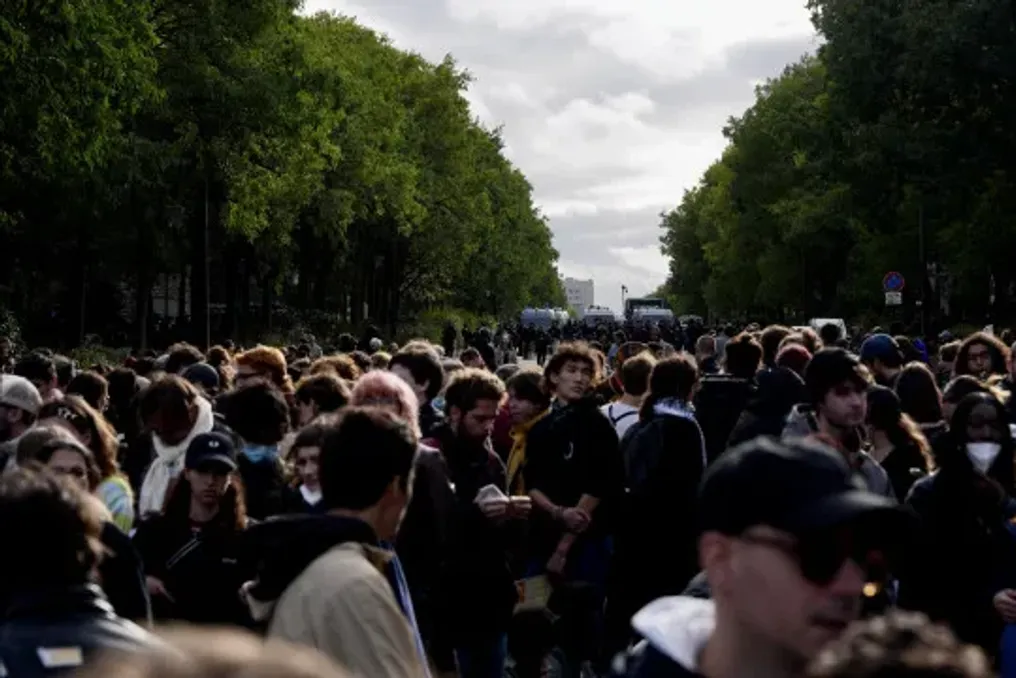
French students maintain protests after meeting with Emmanuel Macron due to dissatisfaction with educational reforms
Read more
noticiasaominuto.com

French students maintain protests after meeting with Emmanuel Macron due to dissatisfaction with educational reforms

Representatives of secondary school students in France decided to continue the mobilization and protests in the country, even after being received by President Emmanuel Macron. The continuation of demonstrations will occur until concrete actions aimed at the education sector are implemented.

On Monday, French Prime Minister Sébastien Lecornu received various entities, including secondary school student organizations, teachers, and unions, awaiting the announcement of specific measures for the sector.

Although the students expressed satisfaction with the attention given by Emmanuel Macron, they consider the reform proposed by the Head of State insufficient. Students specifically demand the complete cancellation of the Parcoursup system, a higher education access process that, according to them, overburdens the teaching staff.

Nathanael Combary, president of the Renouveau Lycéen association, stated that 'constant mobilization' represents 'the only way to achieve concrete progress.' This view was shared by Ryad Rani, head of the Secondary School Student Union, who expressed dissatisfaction with Macron's counterproposal, alleging that it was incomplete.

Rani stated in interviews to the French press, on the eve of new protests called by both students and 'yellow vests,' that 'we are talking about the revocation of Parcoursup, and he responds with a total reform. Big promises, empty words.' The country remains on high alert for Saturday, especially after the French Government guaranteed that last week's disturbances would not be repeated.

Last weekend, demonstrations against the rising cost of living and the educational situation resulted in acts of violence in several French cities, including vandalism in public buildings and looting in commercial establishments.

Macron requested the 'prohibition of demonstrations organized by 'illegitimate' individuals,' a term rejected by left-wing parties as it has no legal provision in France. In parallel, seven left-wing political parties (including France Insurgent, Greens, Socialists, and Communists) filed an appeal with the Council of State to challenge Macron's statements made on Thursday regarding the restriction of non-unionized demonstrations.

The French Government also announced the implementation of 'reinforced cooperation' with digital platforms, aiming to prevent them from serving as channels for organizing or disseminating unrest, a measure already active given the risk of new violent actions this weekend.

In a statement, Sébastien Lecornu's office detailed that this mechanism has been operational since Thursday and emphasized that 'special surveillance' has been requested of the platforms. Since its activation, more than one hundred notifications have been registered, half of which resulted in account suspensions.

This collaboration implies that the French State will use a unified communication channel with the platforms, through a specialized team from the Ministry of the Interior linked to its portal, responsible for receiving information about illegal content or conduct on the internet.

Sébastien Lecornu, who met with parties on Thursday and unions on Wednesday, has been the target of widespread criticism from all groups for the Government's failure to meet demands and present concrete solutions to calm the protesters.

Authorities decreed on Thursday the extension of curfew in specific areas of Paris, such as Place de la République and the historic district of Les Halles, every night from 11:00 PM to 6:00 AM local time (equivalent to 10:00 PM to 5:00 AM in Lisbon), until Monday morning.

The police also imposed, once again, a ban on 'any undeclared gathering' during the night, particularly near the Élysée Palace (Presidential Residence), the National Assembly (Parliament), the Champs-Élysées avenue, or railway stations.

In the French capital, the Louvre, Orsay, Picasso, and Grand Palais museums will be closed on Saturday due to planned protests.

Austrian students protest university funding cuts due to limited state budget
Read more
noticiasaominuto.com

Austrian students protest university funding cuts due to limited state budget

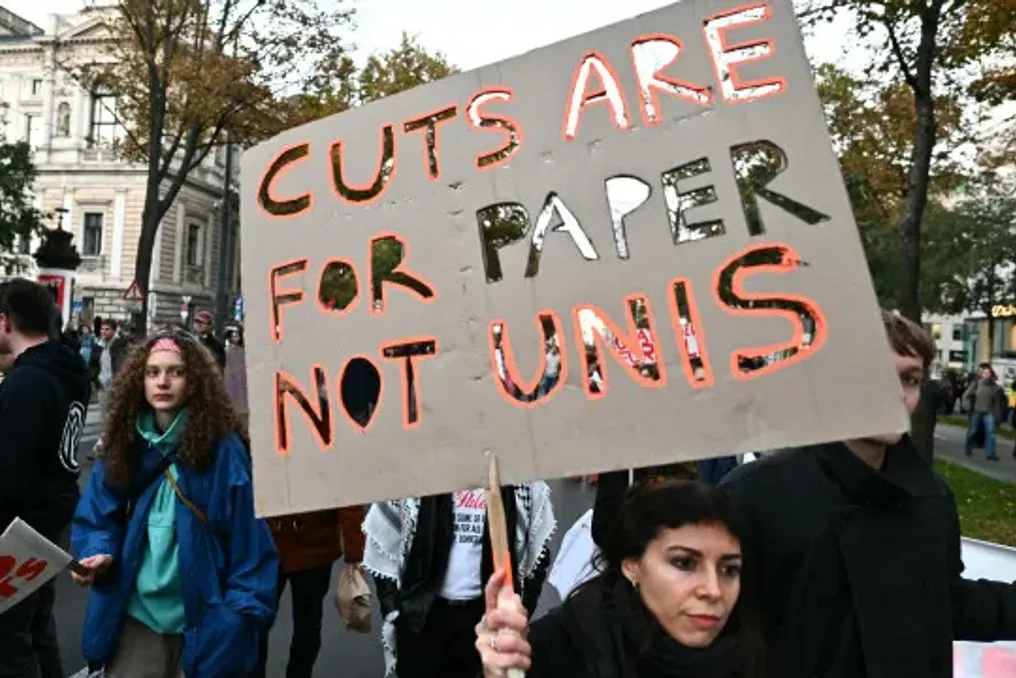
Tens of thousands of students took to the streets of Vienna today to protest planned job and service reductions in Austrian universities for the coming years. These cuts are attributed to the limited state budget allocated to this sector.

Placards held by around 30,000 university students bore slogans such as 'No Cuts,' 'Our Education is Our Future,' and 'Art is the Nervous System of Society.' The march proceeded along the central avenues of the Austrian capital amidst the sound of drums and a strong police presence.

The protest was organized by the Austrian Students' Union (ÖH) under the slogan 'Red Alert: Save the Universities.' The action condemns a budget deficit of 2 billion euros over the three-year period 2028–2030.

The Austrian government, which is a coalition of conservatives, social democrats, and liberals, approved a budget of 16 billion euros to finance the country's 23 public universities serving a population of nine million during this period.

The Conference of Austrian Universities (uniko) indicated that this amount of funds is virtually identical to the current allocation and does not account for overall inflation or salary increases until 2030.

Rectors warned that the lack of resources will force them to cut one in ten positions, and they also predict serious reductions in teaching, research, and medical care in university hospitals.

The ÖH emphasized in its appeal that '2 billion euros are missing, which will have devastating consequences for education, student support, and working conditions,' adding that 'the federal government has until October 31st to improve the budget.'

Union representatives stated: 'We are applying pressure and demonstrating together that our future is non-negotiable.' The executive branch, seeking to reduce the state deficit, advocates for funding cuts, arguing that academic institutions have sufficient reserves to increase efficiency without compromising the quality of education.

Due to the excessive deficit procedure initiated by the European Union (EU), Austria is attempting to reduce the state deficit from 4.2% of GDP recorded in 2025 to 3% in the coming years. This is being achieved through a budgetary adjustment plan that includes unpopular measures to cut spending in almost all sectors except defense and security.

Popular