New Selective Tax on Cars Will Have Higher Rates Than IPI, But Will Not Raise the Final Price of Vehicles
Read more
AutoPapo
autopapo.com.br

New Selective Tax on Cars Will Have Higher Rates Than IPI, But Will Not Raise the Final Price of Vehicles

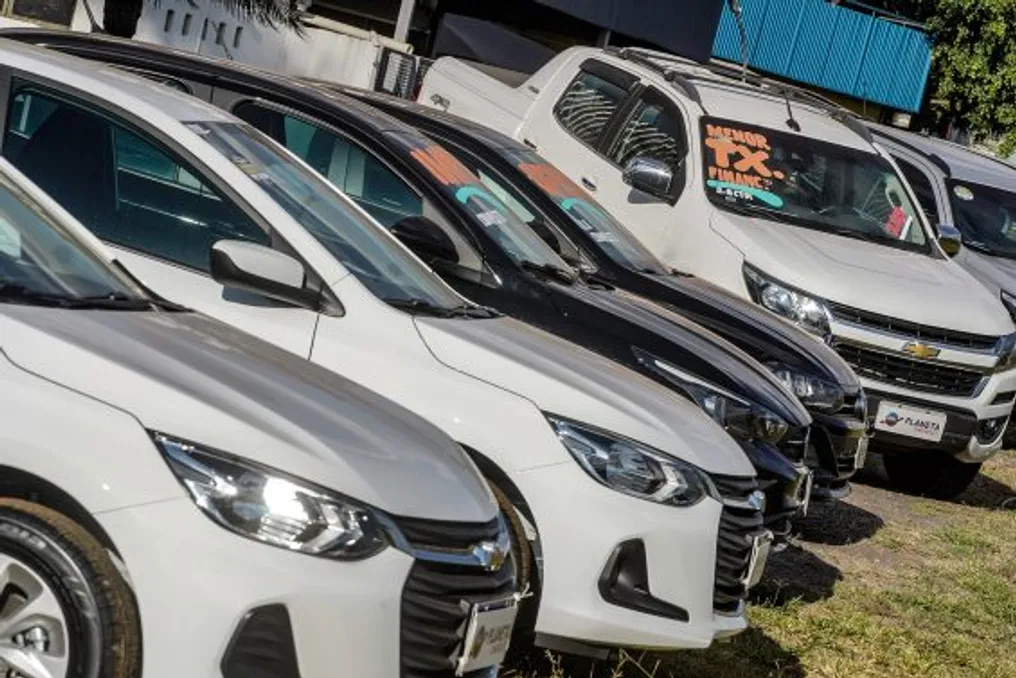
The federal government released Provisional Measure 1,399 this Wednesday (4th), which establishes the value of the Selective Tax, known as the 'sin tax,' to be applied to automobiles starting February 2, 2027.

This new tax will replace the IPI for vehicles and has higher rates. Despite this, it is expected that the cost of cars will remain close to the current level.

The adopted rates follow the structure of the Green IPI, in effect since November of the previous year: 6.3% for passenger cars and 3.9% for pickup trucks and light commercial vehicles, with possible adjustments based on factors such as fuel type, power, efficiency, safety, and recycling capacity.

The reason for maintaining the price lies in the calculation base. While the IPI was calculated on the total value of the vehicle, including ICMS, PIS, and Cofins, the Selective Tax is charged on a lower value, excluding these taxes.

To balance this difference, the MP applies a multiplier of 1.21 to the current rates, a value that represents, on average nationally, how much the calculation base with taxes exceeds the base without them. In simplified examples, the amount paid remains similar.

In practice, the financial balance varies by model, and there may be small differences in the final value.

Electric models will not be exempt, maintaining the two percentage point discount that already existed under the IPI. Pickup trucks will also not suffer drastic increases, as they use a specific table where diesel adds 2.5 points, in contrast to the 12 points applied to passenger cars. This means a model like the Toro costs significantly less than the Commander, even using the same engine.

The applicable discounts depend on three criteria evaluated individually for each model. Energy efficiency can generate a deduction of up to 2 points if energy consumption is lower than a limit determined by the vehicle's own weight. Safety grants 1 point and requires standard equipment such as stability control, automatic emergency braking, lane departure warning, and pedestrian protection.

Finally, recyclability allows a discount of up to 2 points, conditioned on the manufacturer's policy of sending an old vehicle to dismantling for every five or ten units produced of the respective model. Summing these criteria, about 6 points are subtracted from the Selective Tax, ensuring that the rate never falls below zero. In the case of the Compass, for example, the rate would go from 9.44% to 3.39%, but since these discounts were already valid, the price comparison does not change.

The Mobi remains eligible for the Sustainable Car program, and the MP ensures the maintenance of the zero rate for these models. The same benefits extend to buyers with disabilities, people with autism, and taxi drivers.

In January, the CBS, a federal tax introduced by the tax reform, will take the place of PIS and Cofins, which currently influence the price of automobiles. The Federal Court of Accounts (TCU) estimated the reference rate for the CBS at 11.3%, and the Senate has until December 15th to define this percentage. The projected revenue from the Selective Tax will be considered to reduce the CBS, although the direct impact on the price of each car is not yet clear.

The rates defined in the MP are not final. The government has until May 31, 2027, to present a bill to Congress containing the percentages for 2028. Before that, the Chamber and the Senate must approve the MP, which may be subject to amendments. According to the Constitution, an MP that creates or increases taxes will only be valid in the subsequent year if converted into law by the end of the year it was promulgated.

Additionally, the government proposed a constitutional amendment aimed at keeping the IPI active in January 2027, given that the new tax will only come into force in February.

Similar stories

Government introduces zero export duty on petrol and increases duties on diesel fuel and ATF
Read more
www.aajtak.in

Government introduces zero export duty on petrol and increases duties on diesel fuel and ATF

The Indian government has made a significant decision ahead of the Diwali festival. According to a notification from the Ministry of Finance published on the last day of October, the export duty on petrol was reduced to zero (Petrol Export Duty Zero). Simultaneously, taxes on the export of diesel fuel and aviation turbine fuel (ATF) were increased.

These changes were introduced by the Ministry of Finance via a notification issued on Saturday, October 31. It stated that the Windfall Gain Tax on the export of diesel fuel and aviation turbine fuel would be increased for two weeks. At the same time, a decision was made to cancel the levy on batches of petrol sent for export.

According to the government, these recent adjustments were made against the backdrop of constant fluctuations in the global energy market and geopolitical tensions in the Middle East.

As part of this decision, the export duty on petrol, which previously stood at 2.50 rupees per liter, was reduced to zero. The government clarified that these revised rates come into effect on October 31 and will remain valid for the next two weeks.

Furthermore, according to the official notification, the Special Additional Excise Duty (SAED) on the export of ATF was slightly increased from the previous 10.50 rupees per liter to 11 rupees per liter. The duty on the export of diesel fuel also significantly increased. The amount, including SAED and road and infrastructure levies, was raised from 8.50 rupees per liter to 11.50 rupees per liter, representing a direct tax increase of 3 rupees per liter.

According to PTI, the Ministry of Finance emphasized that despite the change in windfall gain taxes, the existing duty rates for domestic consumption of petrol and diesel fuel have not been altered. These new changes pertain exclusively to the export of petroleum products.

It is worth noting that the windfall gain tax is used by the government to levy tax on additional profits in situations where companies may earn more than usual due to exceptional market conditions. In the case of fuel, rising international prices allow refineries to earn higher profits from selling petrol and diesel fuel abroad. In such moments, the government seeks to capture some of this extra benefit through export taxes.

India first introduced the windfall gain tax on petroleum product exports in July 2022. It was repealed about two years later in December 2024. Then, in March 2026, it was reintroduced by the government amid turmoil in the international energy market and rising crude oil prices. Since then, the rates have been adjusted according to market conditions.

The government reviews these taxes every two weeks, taking into account changes in international fuel prices, as well as the profits generated by local refineries and exporters from overseas sales. By imposing export duties, the government aims to make foreign sales less attractive and encourage refineries to maintain high availability of products in the domestic market.

Investigation uncovers possible fraud regarding electric vehicle registration on the border of Brasília
Read more
autopapo.com.br

Investigation uncovers possible fraud regarding electric vehicle registration on the border of Brasília

There is a notable disparity between the number of electric and hybrid cars per inhabitant in Brasília and in the Goiás cities located in the Federal District's surrounding area. While Brasília shows the highest national rate, neighboring cities in the surrounding area demonstrate a very low registration of these vehicles.

This statistical difference prompted suspicion that is currently being investigated by the Goiás Tax Authority: there are indications that vehicles circulating in the surrounding area are registered in Brasília, taking advantage of the IPVA exemption offered in the federal capital.

A survey conducted by AutoPapo compared ABVE registration data, covering the period from January 2022 to September 2026, with population estimates provided by IBGE. The eight main Goiás cities in the surrounding area, including Águas Lindas de Goiás and Formosa, have a total population of 1.2 million inhabitants but registered only 57 electrified cars (fully electric and hybrid), representing less than 5 vehicles per 100 thousand residents.

In contrast, the Federal District registers a rate of 2,539 per 100 thousand inhabitants, a value more than 500 times higher. In Santo Antônio do Descoberto, with 76 thousand residents, no vehicles were registered, while Cidade Ocidental, with 104 thousand, registered one.

Although lower income in the surrounding area contributes to this difference, other factors were analyzed, using Greater Goiânia as an experimental control group. Cities such as Aparecida de Goiânia, Senador Canedo, and Trindade, which share the same state and IPVA rules but do not border the DF, show significantly higher rates: Aparecida with 291 per 100 thousand, Senador Canedo with 344, and Trindade with 250.

By summing up the Goiás municipalities with over 50 thousand inhabitants outside the surrounding area (excluding Goiânia), the rate reaches 425 per 100 thousand, almost one hundred times higher than that of municipalities near Brasília. Such low numbers in Brazilian cities with over 100 thousand inhabitants are rare, comparable only to remote areas in the Amazon, such as Parintins (AM).

The main incentive for citizens of Goiás to register their cars in Brasília, possibly irregularly, lies in the 2019 legislation of the Federal District, which fully exempts IPVA for electric and hybrid cars until the end of 2027. This is the only federation unit that offers such an exemption without income restriction, unlike Goiás.

Due to this situation, the Goiás Secretariat of Economy and the Civil Police initiated Operation Chiron in August 2024. The operation aims to combat owners residing in Goiás who register their vehicles outside the state, using false, relatives', or incorrect addresses.

In its first phase, the police identified about 500 owners, with 99% of the cases related to the DF. In April 2025, the state had already recovered over R$ 3 million, and in September, the number of notified owners rose to about 700, with an estimated loss of R$ 10 million.

A new phase of the investigation, announced in October 2025, focused on 172 vehicles acquired outside Goiás, mostly in the DF. In addition to collecting IPVA, offenders may be fined 100% of the amount due, pay the ICMS difference, and face charges for tax order crimes, punishable by up to two years of detention.

Authorities have not disclosed the residence cities of the investigated individuals. Meanwhile, the exemption in the DF remains valid, and there is a bill under consideration in the Legislative Chamber seeking to extend this benefit until 2030.

Popular