Study shows polluted air reduces life expectancy: 8.2 years lost in Delhi, 4.1 years in Kolkata
Read more
Aaj Tak
www.aajtak.in

Study shows polluted air reduces life expectancy: 8.2 years lost in Delhi, 4.1 years in Kolkata

A new study conducted by the data analysis division of India Today Group presented alarming data on how toxic the air is in the country and how this affects the population's life expectancy. According to the Life Index 2025 Air Quality Index, if the air quality in India in 2023 had met WHO limits, the average life expectancy of residents in Delhi would have been 8.2 years higher.

Similarly, in Kolkata, this potential increase would have been 4.1 years, while the situation in other cities is as follows: 3.2 years in Hyderabad, 3.1 years in Mumbai, 2.2 years in Chennai, and 2.1 years in Bangalore.

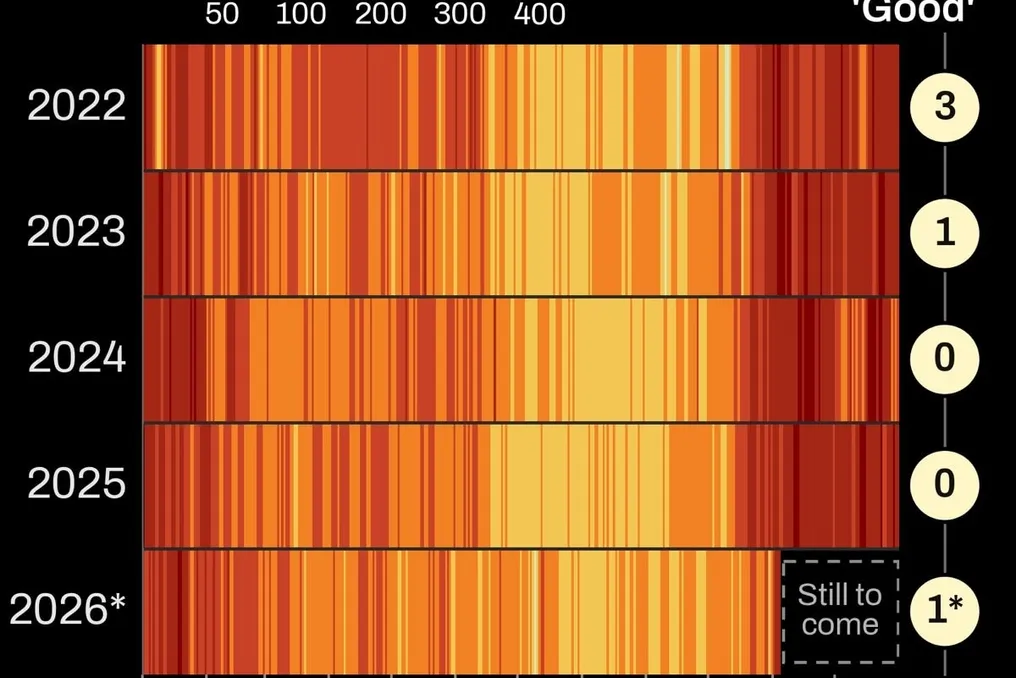
Data from the Central Pollution Control Board (CPCB) shows significant differences in the number of days with 'good' air quality in the six mentioned cities between 2022 and 2026. For example, in Delhi, there was not a single day considered 'good' air quality in 2024 and 2025. Data for 2026 is current as of November 4th.

According to the WHO, the annual average concentration of fine particulate matter PM2.5 in the air should not exceed 5 micrograms per cubic meter. However, in most regions of India, pollution levels significantly exceed this limit.

On the map, darker areas indicate that residents of these places could live longer with clean air. The darkest spots are marked in the Gangetic plains of North India and the Delhi vicinity, indicating the greatest impact. The lightest areas on the map belong to large parts of Jammu and Kashmir and Ladakh; grey color denotes the absence of available data.

The situation in the capital is the most critical. In 2022, the air was 'good' for only 3 days, in 2023—only 1 day, and in 2024 and 2025—zero days. As of now in 2026, only one day with good air quality has been recorded. In winter, the air annually reaches 'very poor' and 'hazardous' categories, whereas some relief is observed in July and August.

The picture is different in Kolkata: the number of days with 'good' air quality was 94 days in 2022, 93 days in 2023, 93 days in 2024, and 97 days in 2025. As of now in 2026, the air has been good for 83 days. Although the air remains clean during the monsoon season, pollution levels rise in winter. Nevertheless, according to life expectancy loss indicators, Kolkata ranks second after Delhi.

The number of 'good' days in Mumbai varies greatly from year to year: 21 days in 2022, only 5 days in 2023, 82 days in 2024, and 55 days in 2025. As of now in 2026, the air has been good for 87 days. A one-day bulletin was not published in 2023.

Fluctuations are also observed in Hyderabad: 48 days in 2022, 5 days in 2023, 29 days in 2024, and no days with good air quality in 2025. However, as of now in 2026, 50 days with good air quality have been recorded.

In Bangalore, there were 36 days in 2022, 69 days in 2023, 65 days in 2024, and 41 days in 2025 with good air quality. Currently in 2026, there have only been 14 such days, indicating a weakening of the situation compared to previous years.

In Chennai, the number of days with good air quality was 70 days in 2022, 32 days in 2023, 52 days in 2024, and 36 days in 2025. As of now in 2026, the air has been good for 38 days. A one-day report was missing in 2023.

It is important to note that according to CPCB, air is considered 'good' if the Air Quality Index (AQI) is in the range of 0 to 50. The range from 51 to 100 corresponds to 'satisfactory', 101 to 200 to 'moderate', 201 to 300 to 'poor', 301 to 400 to 'very poor', and 401 to 500 to 'hazardous'.
Similar stories

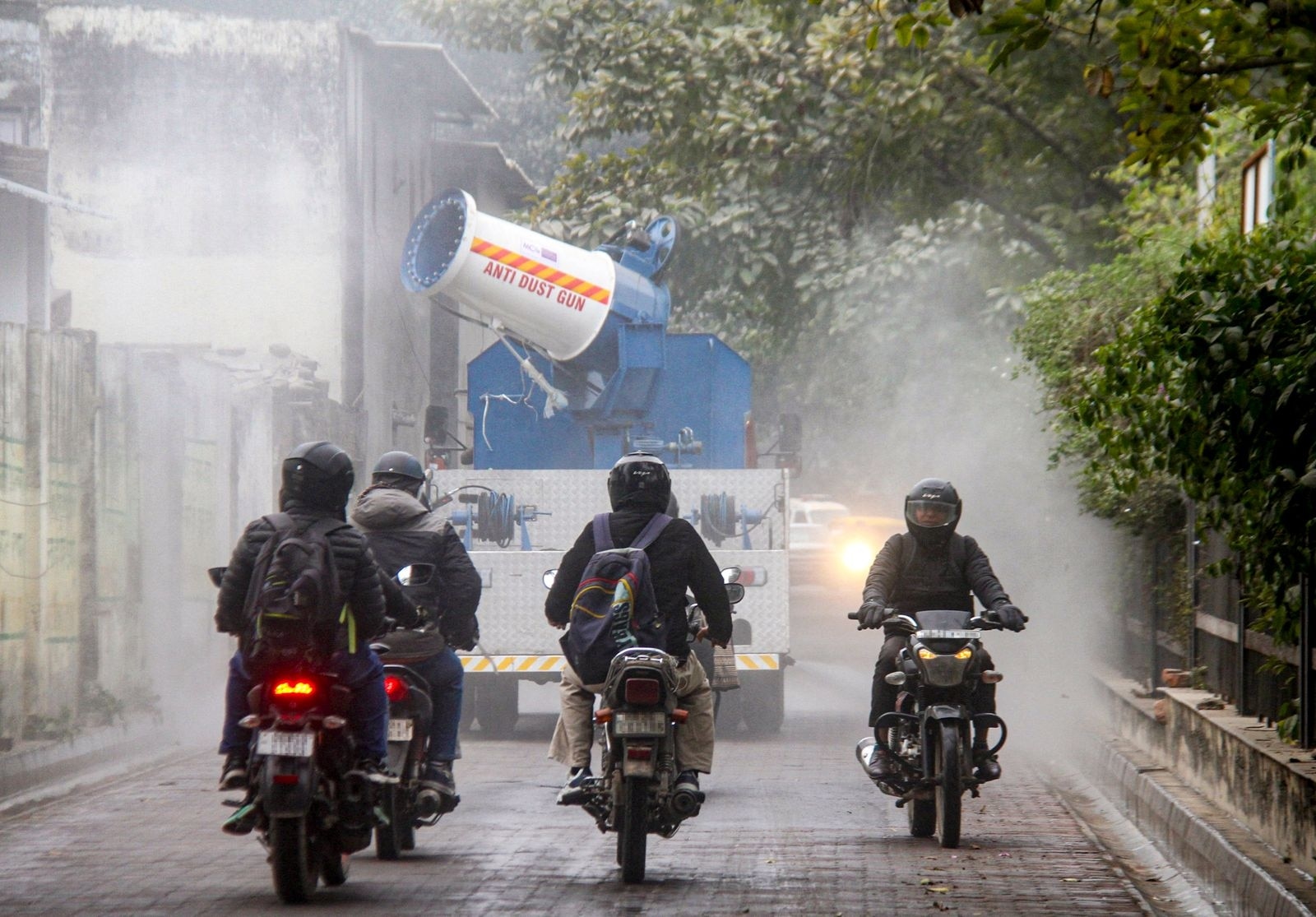
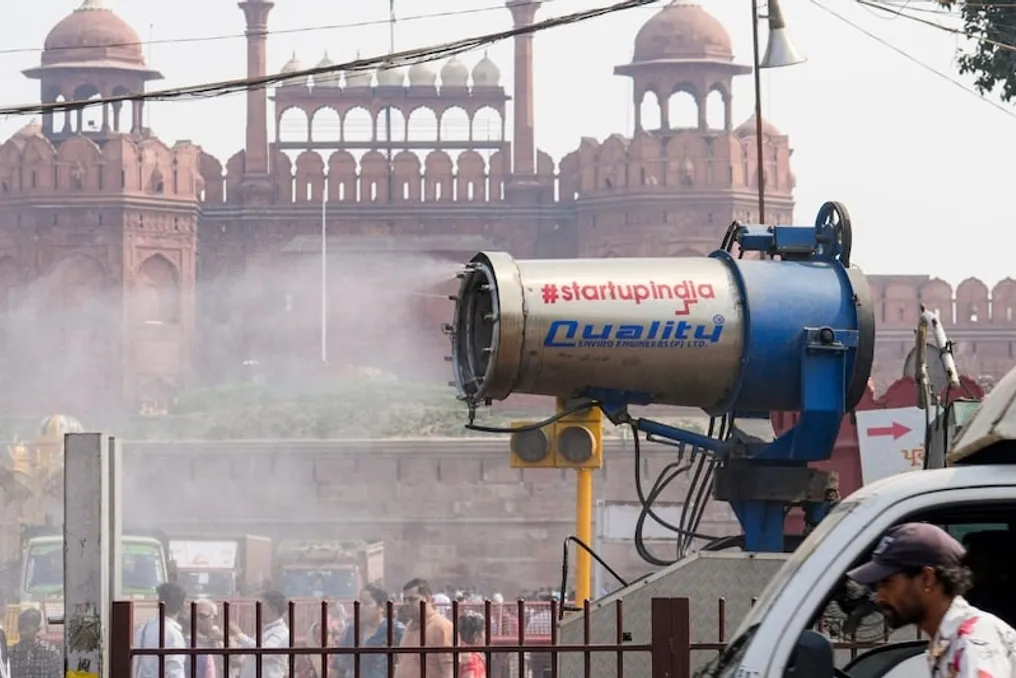
Air Pollution Record Set in Delhi: AQI Reaches 350, Breathing Becomes Difficult
Read more
www.aajtak.in

Air Pollution Record Set in Delhi: AQI Reaches 350, Breathing Becomes Difficult

The air in the capital has once again become toxic ahead of the Diwali festival. On Tuesday, the Air Quality Index (AQI) in Delhi was recorded at 350, which is the worst air quality in the city in the last 287 days. Previously, on January 20, the AQI was 378.

The situation deteriorated to the point where air was classified as being in the 'Severe' category at 10 out of 57 monitoring stations. Furthermore, 35 stations showed extremely poor air quality, and another 12 stations showed poor quality.

The highest pollution was recorded in Jahangirpuri, where the AQI reached 462, which falls under the Severe category. The Central Pollution Control Board (CPCB) defines the categories as follows: 0 to 50 — Good, 51 to 100 — Satisfactory, 101 to 200 — Moderate, 201 to 300 — Poor, 301 to 400 — Very Poor, and 401 to 500 — Severe.

Forecast for the coming days

According to the Delhi Air Quality Early Warning System, the air may remain in the Very Poor category from November 4 to 6. The forecast for the next six days also indicates that the pollution level will fluctuate between Very Poor and Severe.

After registering an AQI of 324 on Monday, Phase II of the Graded Response Action Plan (GRAP-2) was implemented in Delhi. This season, for the first time, the air in Delhi reached a Very Poor level.

Sources of Pollution

Burning stubble and vehicle emissions contribute significantly to the air pollution in Delhi. According to the Decision Support System (DSS), the contribution of stubble burning was 15.3%, and transport emissions were 15.8%.

In addition, factories in Delhi and surrounding areas contributed 3%, domestic sources contributed 3.9%, and construction activities contributed 2.2%. Waste burning accounted for 1.4% of the pollution, power generation for 1.2%, and road dust for 1.2%. Other sources contributed 1%.

In the surrounding NCR areas, the contributions were: Ghaziabad — 8.8%, Gurugram — 4.1%, Sonipat — 2.6%, Rohtak — 2.5%, and Mewat — 2%.

Stubble Burning in Six States

On November 2, satellite data recorded 219 instances of stubble burning across six states. The highest number of cases (98) was noted in Punjab. Rajasthan recorded 67 cases, Madhya Pradesh recorded 48, Uttar Pradesh recorded 4, and Haryana recorded 2 cases. No stubble burning cases were registered in Delhi or Uttarakhand.

Between September 15 and November 2, a total of 3535 field burn incidents were recorded in these states. The largest numbers included 1612 in Punjab, 738 in Rajasthan, 614 in Madhya Pradesh, 349 in Uttar Pradesh, 176 in Uttarakhand, 44 in Haryana, and 2 in Delhi.

The stubble burning season runs from September 15 to November 30. In Delhi, the first stubble burning cases this season were registered on September 19, and the second case on October 24. PM2.5 proved to be the most effective pollutant in Delhi's air. These very fine particles are 2.5 micrometers or smaller. They can penetrate deep into the lungs along with inhaled air and enter the bloodstream, posing a serious threat to health.

Average Air Quality Index (AQI) in Delhi reached 166 in October, the best figure in eight years
Read more
www.aajtak.in

Average Air Quality Index (AQI) in Delhi reached 166 in October, the best figure in eight years

According to the Ministry of Environment, the average Air Quality Index (AQI) in Delhi in October 2026 was 166, which is the lowest figure in the last eight years. This indicates a significant improvement in air quality in the city.

Compared to last year, when the indicator was 223, there is a positive trend. Furthermore, the average AQI for the period from January to October decreased, and the number of days with poor air quality has reduced. At the same time, the level of PM2.5 has decreased, but the level of PM10 has increased.

The average AQI in October 2026 (166) is lower than in 2024 (234), 2023 (219), 2022 (210), 2021 (173), 2019 (234), and 2018 (269). In October 2020, the average AQI was 265, making the current October the cleanest compared to these data.

Regarding the period from January 1 to October 31, the average AQI in Delhi was 167, while in the same period in 2025 it was 170. This figure is lower than in 2024 (184), 2023 (172), 2022 (187), 2021 (179), 2019 (192), and 2018 (201). The best period was 2020, when the average was 156.

In the period from January to October 2026, there were 220 days when the daily average AQI remained below 200, which is classified as good or moderate. This exceeds the figures for 2025 (200), 2024 (201), and 2023 (206). In 2020, this number was 224.

Days with poor or very poor air quality (average AQI above 200) this year amounted to 84 days, compared to 104 days in 2025, 104 days in 2024, and 98 days in 2023.

Pollutant levels have also changed: the average PM2.5 level from January 1 to October 29 was 69 micrograms per cubic meter, which is lower than 72 micrograms in 2025. However, the average PM10 level reached 171 micrograms per cubic meter, which is higher than 166 micrograms last year.

AQI is a measure of air quality; the lower this indicator, the cleaner the air is considered. The Commission for Air Quality Management (CAQM) stated that it is working with stakeholders on measures to prevent, control, and reduce pollution in Delhi-NCR. The Commission emphasized that efforts to improve air quality will be intensified.

Popular