Uzbekistan drops to 19th place in global electric vehicle development rating
Read more
UzDaily
uzdaily.uz

Uzbekistan drops to 19th place in global electric vehicle development rating

According to an international assessment prepared by the consulting company Kept, Uzbekistan ranked 19th in the global electric vehicle development rating. Despite expanding the production of electric and hybrid vehicles, the country lost five positions compared to the study conducted in 2024.

This 2026 rating covered 30 countries. Experts evaluated parameters such as the size of the electric vehicle fleet, the availability of charging infrastructure, and state support measures, using data as of July 2026.

According to Kept, between 50,000 and 100,000 electric vehicles are in operation in Uzbekistan, placing the country in the same group as Russia and Malaysia. The electric vehicle fleet in Kazakhstan is estimated at 30,000–50,000 units.

One of the main obstacles to the development of the electric vehicle market in Uzbekistan remains the underdeveloped charging infrastructure; on this indicator, the country received two out of possible 20 points, while Kazakhstan received none.

Nevertheless, Uzbekistan maintains a leading position in Central Asia in the production of electric and hybrid cars. According to the study, Chinese companies BYD and Leapmotor plan to achieve a combined annual production capacity of up to 70,000 vehicles. Furthermore, BYD intends to increase its production in Uzbekistan to 200,000 units per year by 2030.

Kept experts identified several factors slowing down the industry: the lack of local battery production, insufficient development of electric public transport manufacturing, and a limited range of government incentives for the market.

China topped the rating with 78 points, followed by South Korea with 69 points, and Germany with 67 points. India (66 points) and the United States (65 points) are also among the top five leaders.

Kazakhstan ranked 18th with 40 points, surpassing Uzbekistan by one rank. It was previously reported that in 2025, Uzbekistan accounted for almost half of electric vehicle sales in the Eurasian region, making it the largest EV market in the region.
Similar stories

Central Bank of Uzbekistan forecasts key rate reduction below 10% by 2029
Read more
uzdaily.uz

Central Bank of Uzbekistan forecasts key rate reduction below 10% by 2029

The Central Bank of Uzbekistan sees the possibility of gradually lowering its key interest rate below the 10% mark between 2027 and 2029, provided that inflation sustainably slows down to the target level of 5%.

This prospect was stated by Deputy Chairman of the Central Bank Nodirbek Achilov during a press conference dedicated to the decision on the key rate and the main directions of the regulator's monetary policy for the next three years.

Achilov noted that if the conclusion is reached regarding the reduction of inflation to the target level and the continued fall in inflation expectations, there may be a chance to reduce the rate to a single-digit level within the framework of monetary policy.

The regulator does not have a pre-approved schedule for rate reductions. According to the deputy chairman, decisions on easing monetary policy will depend on actual inflation trends, inflation expectations among the population and businesses, as well as an assessment of economic risks.

The Central Bank's baseline scenario assumes that inflation will approach the target figure of 5% in the second half of 2027 and remain at this level in 2028–2029. It is projected that core inflation, which was 5.5% in September, will slow down to 4–5% in 2027 and then reach about 4%.

As prices stabilize, the regulator plans to gradually transition from tight monetary conditions to neutral ones. Preliminary calculations by the Central Bank indicate a real interest rate range of 4–5%.

Achilov emphasized that real interest rates must remain positive, as this supports the attractiveness of savings in the national currency and curbs excessive growth in consumer demand.

At the November 4 meeting, the Central Bank Council considered two options: keeping the rate at 14% or reducing it to 13.5%. Arguments in favor of lowering the rate were supported by the decrease in inflation expectations and the stabilization of core inflation.

In September, inflation expectations for the next 12 months fell to 8.7% among households and 9.2% among enterprises. The deputy chairman also drew attention to the positive dynamics of the sum and other macroeconomic factors.

Nevertheless, Achilov stated that the possibility of lowering the rate requires further discussion, noting that the option of maintaining the rate at 14% received more votes from Council members.

The Central Bank explains its decision to maintain tight monetary conditions due to strong domestic demand and external inflationary risks. Annual inflation accelerated to 6.4% in September compared to 6.2% in August, caused by rising prices for some foodstuffs, fuel, and services. Service sector inflation reached 7%.

The regulator also takes into account potential fluctuations in global food and energy prices, as well as secondary effects from increased regulated prices.

Within the main directions of monetary policy for 2027–2029, the Central Bank intends to revise its interest rate corridor. Currently, this corridor is plus or minus two percentage points around the key rate, covering a range from 12% to 16%.

Since the regulator is moving towards lower rates, the existing corridor may prove too wide. Therefore, the Central Bank is considering gradually narrowing it. It expects that improvements in operational structure will help transmit changes in the key rate to money and financial markets faster.

The key rate has remained unchanged at 14% since March 2025, when the Central Bank raised it from 13.5%.

Iran drops to sixth place at Asian Para Games in Nagoya
Read more
www.tehrantimes.com

Iran drops to sixth place at Asian Para Games in Nagoya

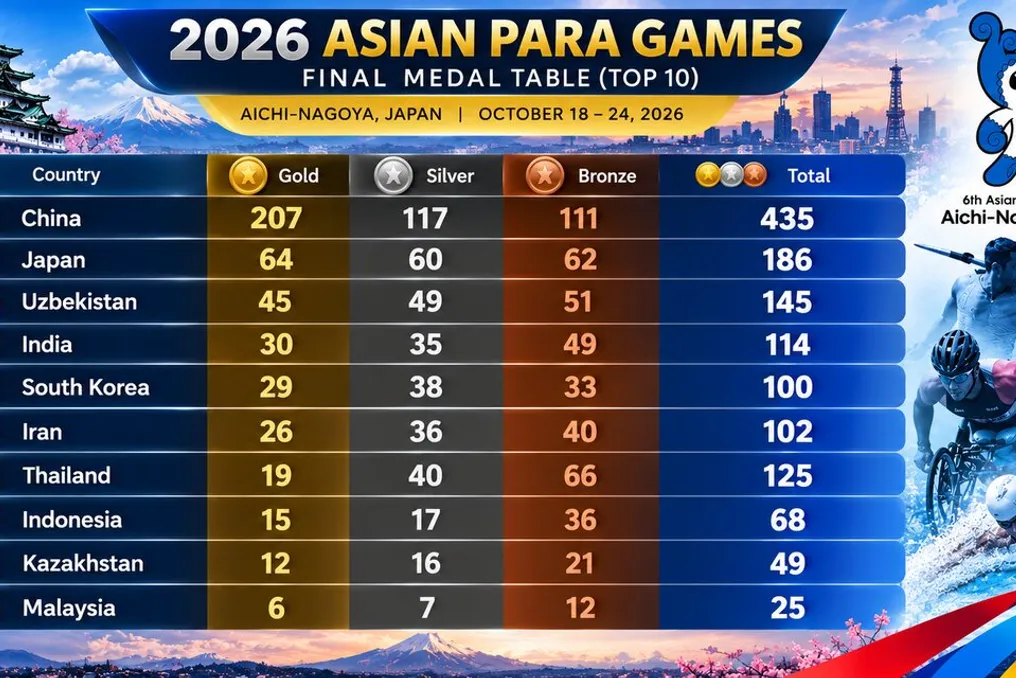
Iran concluded its campaign at the 2026 Asian Para Games in Nagoya, finishing in sixth place. This represents a drop of four positions compared to the silver medal finish the country achieved at the previous tournament in Hangzhou, China, in 2023.

The Iranian delegation won 102 medals, including 26 gold, 36 silver, and 40 bronze. This is significantly fewer than the 131 medals secured in Hangzhou, where they won 44 gold, 46 silver, and 41 bronze.

Despite the overall decline in ranking, several Iranian athletes demonstrated outstanding results, confirming the country's continued strength in para-athletics and swimming.

Among the most successful participants was Sina Zeigaminejad, who became one of Iran's leading gold medalists in para-sailing. He won three gold medals, highlighting his exceptional consistency and establishing him as a key figure in Iran's medal-winning campaign.

Another notable athlete is Elham Salehi, who earned two gold medals in para-athletics. Her achievements provided significant support for the Iranian delegation and highlighted the important contribution of female athletes to the country's success.

Alireza Zare also delivered an impressive performance, winning two gold medals in para-athletics. His accomplishments included a record-breaking run in the men's T35 200-meter event, where he finished with a time of 24.83 seconds, securing the title.

Although these individual victories offered encouraging signs, Iran's overall results reflected a noticeable dip compared to Hangzhou. The delegation won 18 fewer gold medals and 29 fewer medals overall, despite participating with a smaller team.

Meanwhile, China reaffirmed its dominance in Asian para-sports, confidently taking first place in the medal table with an impressive 435 medals, including 207 gold, 117 silver, and 111 bronze.

Host Japan secured second place, winning 64 gold, 60 silver, and 62 bronze medals. Uzbekistan finished third, collecting 45 gold, 49 silver, and 51 bronze medals.

India placed fourth with 30 gold medals, followed by South Korea with 29 gold, leaving Iran in sixth place with 26 gold medals.

China's impressive performance demonstrated its significant depth across many disciplines and reinforced its status as the leading power in continental para-sports.

For Iran, the games in Nagoya presented a mixed picture: a combination of individual brilliance and collective disappointment. While champions like Zeigaminejad, Salehi, and Zare delivered unforgettable performances, the drop of four places in the rankings underscored the need for more meticulous preparation, investment in new talent, and improvement in competitive depth.

The challenge facing Iranian para-sports now is to leverage these individual achievements and reclaim a spot among Asia's leading delegations in future international competitions.

Uzbekistan drops to 82nd place in Henley Passport Index
Read more
uzdaily.uz

Uzbekistan drops to 82nd place in Henley Passport Index

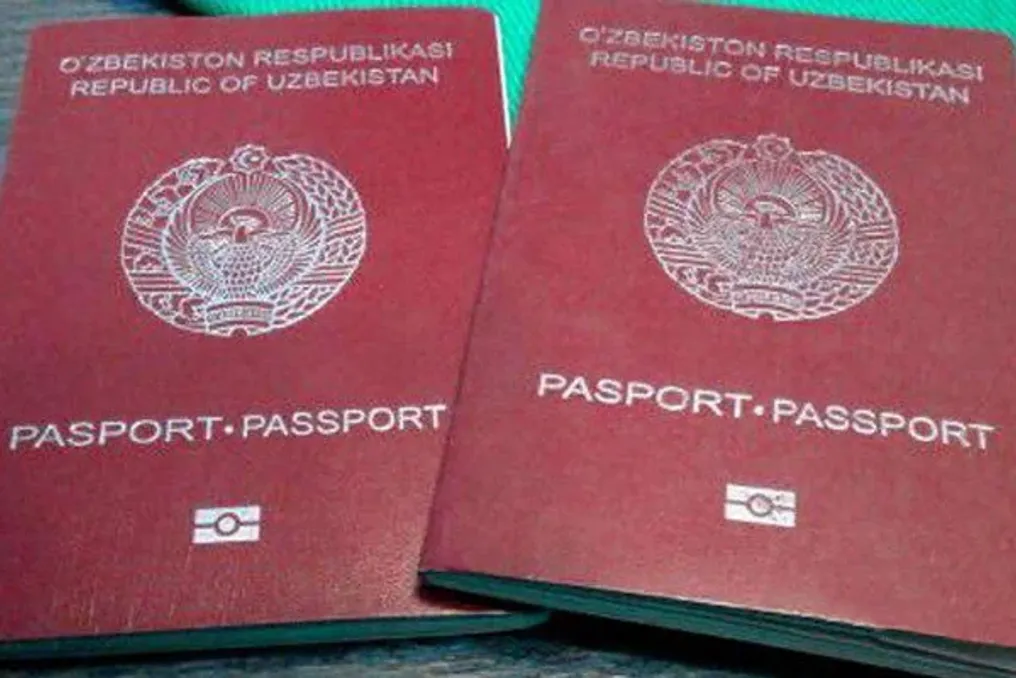
According to the latest ranking prepared by Henley & Partners, Uzbekistan has dropped to 82nd place out of 106 countries in the Henley Passport Index. Previously, in April 2026, the country held 73rd place.

Citizens of Uzbekistan can visit 57 countries and territories without needing a prior visa or with a visa on arrival. Currently, Uzbekistan shares 82nd place with Burkina Faso and Togo.

Singapore is the leader of the ranking, whose passport allows its holders to travel to 193 destinations without a prior visa. At the bottom of the list is Afghanistan, which has access to 22 destinations under the same conditions.

The Henley Passport Index ranks documents based on the number of places their holders can visit without obtaining a visa before departure.

Popular