Ethiopia becomes Africa's fifth-largest economy after data revision
Read more
Ventureburn
ventureburn.com

Ethiopia becomes Africa's fifth-largest economy after data revision

Thanks to a comprehensive review of statistical data, Ethiopia has significantly advanced in the global ranking, becoming one of the continent's largest economies. The approximate value of the economy was $210.7 billion for the financial year ending in July, and this occurred without the construction of new production facilities.

This significant leap resulted from one key step—data revision. Now, the East African country is only surpassed by Nigeria, South Africa, Egypt, and Algeria, and it has overtaken Morocco, Angola, and Kenya.

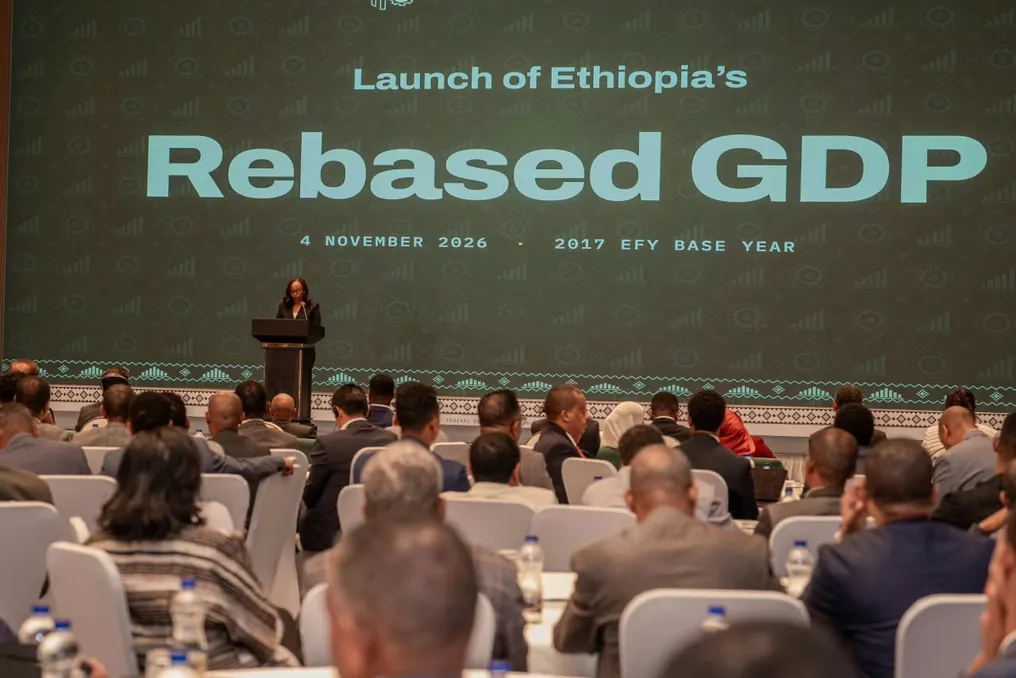
Finance Minister Fitsum Assefa presented the new figures on the social network X. The main change was the shift in the base measurement year. Previously, Ethiopia used 2015/16 as the basis, but now the 2024/25 period is being applied. This transition is critically important because a ten-year gap is long in a rapidly developing economy.

Fitsum noted that the old base year no longer reflected real changes in the economy, as new sectors had emerged and previous weighting coefficients were outdated. Consequently, statistics conducted a re-survey using fresh land records and new household surveys. Furthermore, state-owned enterprises and non-profit organizations were included for the first time.

In 2024/25, the economic volume reached $201.4 billion, which is 59% higher than previous estimates. Some sectors showed sharp growth: manufacturing increased by 161%, mining by 245%, and transport and warehousing by 287%.

Currently, the service sector accounts for almost 36% of GDP, with Ethiopian Airlines playing a significant role. Agriculture makes up 32%, followed by industry at about 30%. This is a substantial change for a country long considered predominantly agrarian.

GDP per capita has also risen, climbing from approximately $915 to $1,517. The government is optimistic and forecasts growth of 10.2% in the current fiscal year. Steps are also being taken to open the telecommunications and banking sectors to attract foreign investors, which is seen as an important point for investors and business founders, as a larger and more accurately measured market is easier to present, assess, and enter.

However, there are challenges. Ethiopia has external debt of about 8.73 trillion Birr. Compared to the old GDP, this represented 45.3%, whereas under the new data, this figure decreased to 27.4%.

Economist Alexander Winter from Oxford Economics emphasized that the debt itself, the costs of servicing it, and the need for foreign currency remain unchanged. Ethiopia continues the restructuring process within the G20 Common Framework. While the reduction in the debt ratio may help in these negotiations, it will not solve the financial problems.

The tax situation is also ambiguous: revenues fell from approximately 9.1% of GDP to 5.5%. A large part of the new economic activity is informal, which complicates taxation.

The new statistical data does not affect the wage level. As StockMarket.et summarized, this means 'a big economy, same empty pockets.' Daily life sees inflation of 15.3% in July following a fuel price shock. The Birr weakened to around 162 per dollar in October. A new graduate entering civil service receives 11,500 Birr, equivalent to about $71 per month, while rent in some areas of Addis Ababa can exceed this amount.

Meanwhile, the proportion of people living on less than $3 a day has reportedly increased from 33% in 2016 to approximately 43% in 2025. The country also requires about 1.8 million new jobs annually. Ultimately, the country might view this as a partial victory: improved data facilitates more informed decision-making by providing investors with a clearer market map, but the real test lies ahead—growth must translate into increased citizen income, not just improvements in tables.
Similar stories

How Aliko Dangote turned selling sweets in school into building an industrial empire in Africa
Read more
iol.co.za

How Aliko Dangote turned selling sweets in school into building an industrial empire in Africa

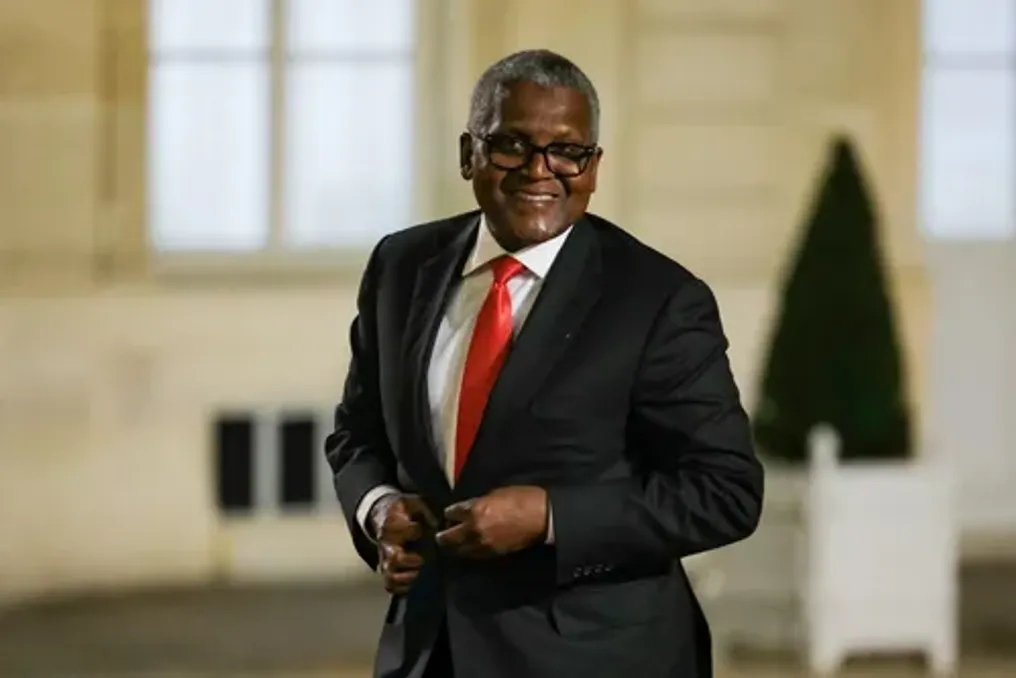
Nigerian billionaire Aliko Dangote, who went from selling sweets to his classmates to becoming the wealthiest person on the continent, is now on the verge of what could be the largest initial public offering (IPO) in African history.

Dangote's business empire spans across Africa. He initially planned to raise $1.6 billion through the IPO to transform his flagship mega-refinery into the world's largest. The closing of this offering is scheduled for Tuesday.

The magnate extended the application deadline for what he called the 'people's IPO' to allow more Africans to participate, although interest in the offering has already exceeded the target amount 'more than three or four times'.

The initial plan involved involving 10 million investors in the offering, which was designed for low-income individuals in Africa. Shares were sold at $0.40 per share, and the minimum investment of 10 shares cost $4.

Part of the funds raised will be directed towards doubling the capacity of his refinery in Lagos, which produces 700,000 barrels per day and already surpasses any similar facilities in Europe.

Origins of Success

Dangote, a great-grandson of the wealthiest businessman of colonial Nigeria, Alhassan Dantata, demonstrated early business acumen as a child—buying sweets before selling them to his schoolmates when he was only eight years old.

Currently, at the age of 69, his net worth surpasses that of everyone on the continent, valued at $35.7 billion according to the Bloomberg Billionaires Index, while Forbes estimates his wealth at $51.3 billion.

His vision for Africa and deep understanding of local markets over decades have given him a competitive edge over foreign multinational corporations in sectors such as manufacturing and fossil fuels.

When asked when Africa would stop needing fuel imports, he stated to AFP in Kenya last month: 'Most African countries will be self-sufficient by 2030.'

Perseverance and Foresight

By launching his $16 billion, 700,000 barrels-per-day refinery in Kenya, Dangote stated: 'This is Africa uniting to build Africa.'

He added: 'We are laying the foundation for a new chapter in Africa's industrial journey toward a brighter future.' After graduating from Al-Azhar University in Egypt, Dangote began trading cement, rice, and sugar. Later, he moved into producing these goods, building mega-factories and expanding operations into at least 14 African countries.

By 2030, he aims to make the Dangote Group Africa's first $100 billion company. Time magazine included Dangote in its list of the 100 most influential people in the world in 2026.

Nigerian business leader and philanthropist Tony Elumelu was quoted in Time Magazine saying: 'He is tireless, resilient, and visionary. He is one of the greatest African entrepreneurs of our time.'

Factories, Not Private Jets

By offering ordinary Nigerians and Africans the chance to own a stake in the continent's largest industrial project, Dangote emphasized that the IPO was not just about fundraising: 'It is about our own Africans becoming part of this refinery.'

Nigerian economist Bimark Rewane called what Dangote did the 'democratization of the economy' on a continent marked by sharp inequality between rich and poor.

Despite often staying out of the spotlight and preferring understated attire, Dangote sometimes drives himself without the long convoys of security that accompany many Nigerian elites.

Locals have seen him walk from his office to the mosque for Friday prayers in Lagos. Although he bought his first private jet at age 22, Dangote says he is comfortable traveling on commercial flights. He noted that he recently took 30 minutes to find parking for his jet in the capital Abuja and expressed a wish that 'the place was full of factories, not private jets.'

Dangote has lived in the same house for almost four decades and does not plan to move, having also sold his overseas country homes. Among his hobbies, he lists business, working regularly 18 hours a day.

Philanthropy and Football

The magnate, who stated he has donated a third of his fortune to the Dangote Foundation, is also actively involved in social aid. His foundation has spent millions of dollars on education, healthcare, and disaster relief, assisting victims of the recent Ebola outbreak in West Africa and building a COVID isolation center during the pandemic.

In 2012, he collaborated with the Bill & Melinda Gates Foundation to eradicate polio in Nigeria. He wants his legacy to be that he 'initiated... the industrialization of Africa,' as he told Nikolai Tangent, head of Norway's sovereign fund, in a podcast earlier this year.

Like many Nigerians, Dangote is a passionate football fan and considered buying a stake in Arsenal, which would have made him the first African owner of an English Premier League club. However, given competing demands on his time, he decided that 'it is better to remain a fan and continue funding his own business.'

Jio Platforms becomes the country's fourth largest company with a market capitalization of 10.30 lakh crore rupees
Read more
www.aajtak.in

Jio Platforms becomes the country's fourth largest company with a market capitalization of 10.30 lakh crore rupees

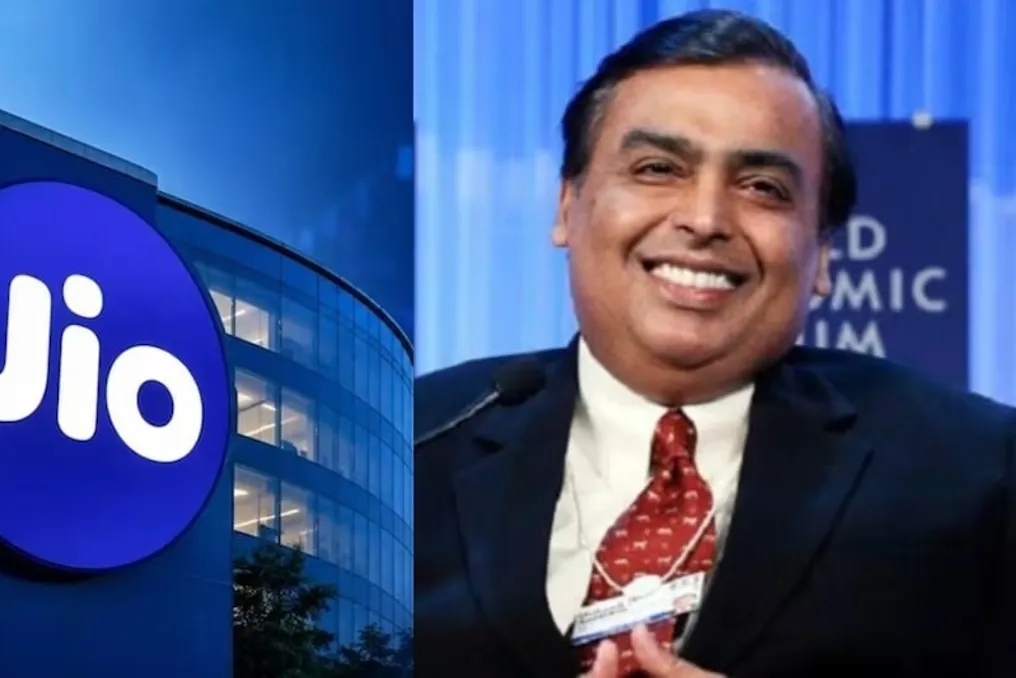
October 28, 2026, will be an important day for the Indian stock market as Jio Platforms Limited, a major digital and telecommunications player in the country, prepares to go public. Investors from around the world are eagerly awaiting this listing.

The company's IPO has attracted significant attention due to its high valuation of 10.3 lakh crore rupees. The IPO saw the issuance of 270 million new shares at a price of 1,119 rupees per share. Based on the initial IPO valuation, Jio Platforms became the fourth largest company in the country, following Reliance Industries (16.2 lakh crore rupees), Bharti Airtel (12.2 lakh crore rupees), and HDFC Bank (10.6 lakh crore rupees).

The main interest is focused on the stock prices on the listing day, which falls on Wednesday. According to market analysts and trends in the 'grey market', if Jio's shares debut with a 20% premium, meaning at approximately 1,340 rupees per share, the total market value of the company will exceed 12.3 lakh crore rupees. With such growth, Jio Platforms would take the second position among India's most valuable companies, right after its parent company Reliance Industries.

This massive listing by Jio will strengthen the status of the entire Reliance group. The combined market capitalization of Jio and Reliance Industries (RIL) will exceed 27 lakh crore rupees. By reaching this mark, the Reliance group will surpass other major business houses in the country. As of October 27, 2026, the combined market capitalization of all 32 public companies of the Tata Group was about 25.7 lakh crore rupees, and the capitalization of 11 companies of the Adani Group was approximately 16.6 lakh crore rupees. If Jio's listing occurs with a higher than expected premium level, the Reliance group will approach the 'magic' mark of 30 lakh crore rupees.

This IPO is not just a story of one company going public, but also a testament that Indian companies have reached a global level in terms of valuation. This historic event is being closely watched by retail investors, large funds, and market giants across the country.

Nigerian Startups Regain Leadership in Africa, Attracting $635 Million in Funding in 2026
Read more
ventureburn.com

Nigerian Startups Regain Leadership in Africa, Attracting $635 Million in Funding in 2026

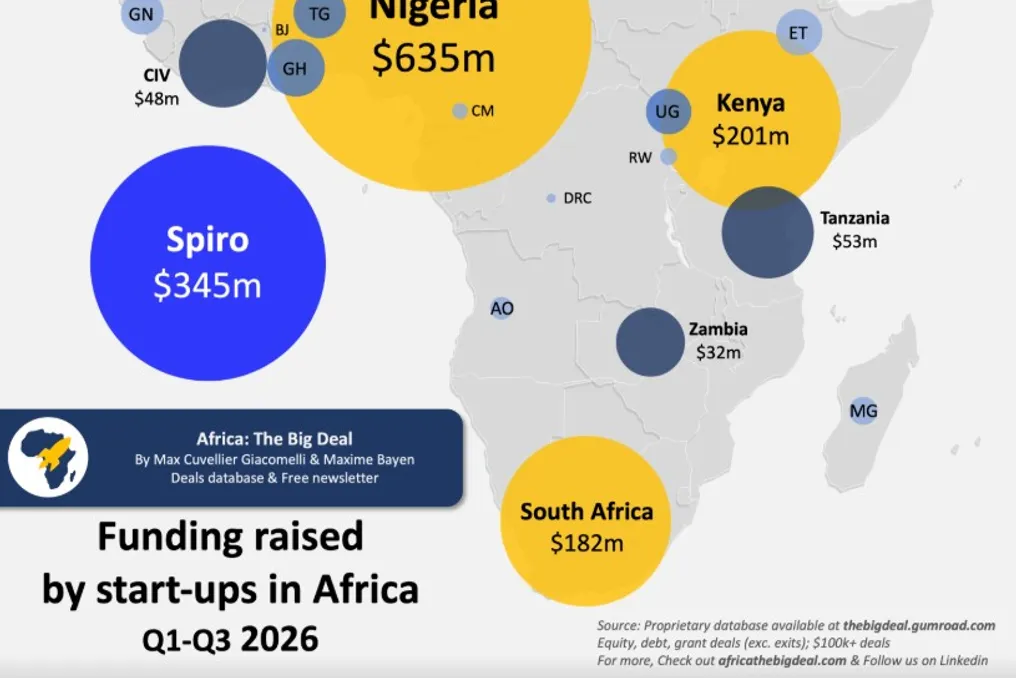
Despite Nigeria remaining the most populous country in Africa, Kenya and Egypt attracted venture capital over the last three years. However, the situation has drastically changed: by the end of the third quarter, Nigerian startups once again took the top spot in Africa, raising an impressive $635 million.

This achievement goes far beyond a minor success, as it demonstrates a return of venture capital to the country. The funding secured in the first three quarters more than doubled the $247 million attracted during the same period last year.

According to Africa: The Big Deal, Nigerian startups raised $635 million in the first three months, taking the leading position. This sudden influx of funds is not random; investors are directing large investments exclusively into proven companies with serious growth momentum.

Four specific companies accounted for 69% of the total national volume, representing an increase of $440 million. Mobile finance giant Moove led this list, securing an impressive $250 million. Fintech giant Flutterwave followed, attracting $100 million despite ongoing market adjustments.

Among the leaders were e-commerce veteran Jumia, which raised $50 million, and the crypto infrastructure platform Yellow Card, which received $40 million. This proves that late-stage growth capital is still actively being utilized in Africa.

This capital inflow demands close attention from everyone involved in creating, investing, or simply observing the African tech ecosystem. This is not just a statistical anomaly but a signal of a massive geographical and sectoral shift across the continent. The era of easy money has ended, giving way to calculated bets on large companies.

One of the most unexpected turns in the 2026 funding narrative is what venture capitalists are actually acquiring. For almost seven years, fintech was the undisputed leader of African venture capital. But now the situation has changed: logistics and transport enterprises have aggressively taken this position.

Across the continent, mobility startups attracted a colossal $780 million in just nine months, accounting for 36% of all venture funding, while fintech dropped to 35%. This shift fundamentally changes the approach to launching startups. Thanks to large rounds from companies like Moove and the electric mobility player Spiro, there is an active drive to solve complex problems related to infrastructure and physical mobility.

Nigeria's financial resurgence looks even more significant when viewed in the broader picture. While Lagos celebrates its successes, other major tech hubs are experiencing a severe shortage of venture capital. Kenya faced a sharp 73% year-on-year decline, raising only $201 million. South Africa also showed weak results, losing 58% of the previous volume and receiving a modest $182 million. Only Egypt managed to hold its ground, attracting a respectable $445 million.

Accounting for 37% of all funding by country on the continent, Nigeria has effectively re-centered the African tech dialogue. The message to the world is crystal clear: the Giant of Africa has awakened and is fiercely writing the next chapter of the continent's digital revolution.

Popular