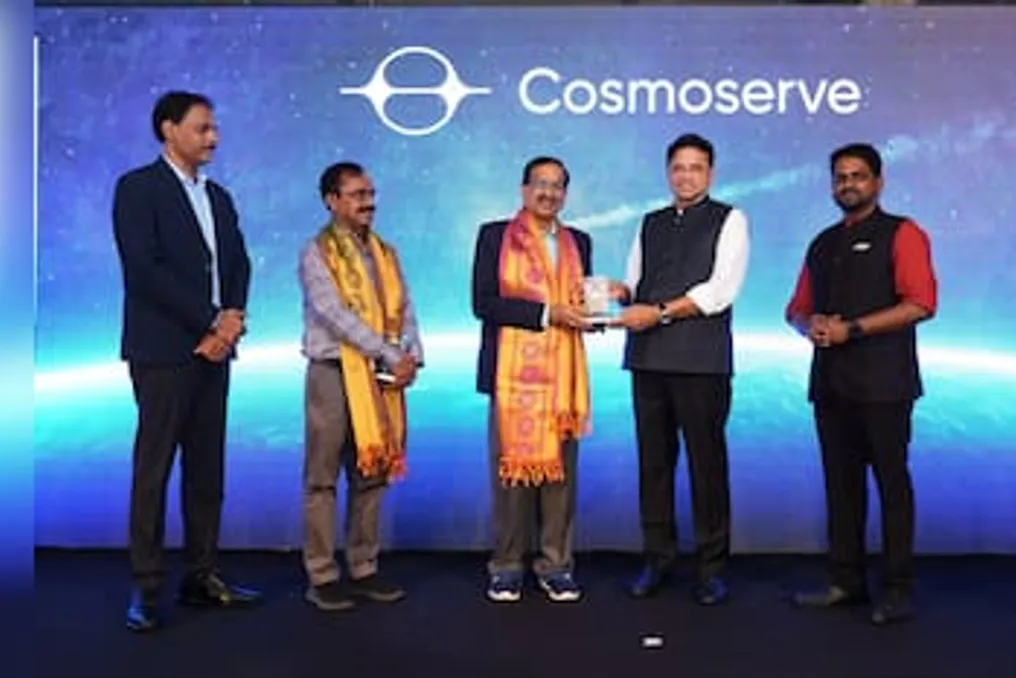
Cosmoserve Space, an Indian startup specializing in Active Debris Removal (ADR) technologies, has introduced Base 1 in Hyderabad. This facility is the first private and the sixth globally equipped with space vision effects and microgravity simulation. In addition to clearing space debris, the base will support satellite servicing, including in-orbit repair and refueling.
The company also announced securing $6 million in seed funding, bringing its total funding to over $9 million. Investors participating in the round include Aranya Holdings, Naandi Ventures, AUM Ventures, and Shakti VC from India, as well as the Japanese firm Rebright Partners. In July 2026, Cosmoserve is scheduled to launch its first payload, Mission Embrace, aboard the Vikram-1 rocket from Skyroot Aerospace. The next technology demonstration mission is planned for mid-2027, followed by the first commercial mission in early 2028.
This development aligns with Telangana government's broader plan to transform Hyderabad into one of the world's most accessible space centers. The state is also developing an exclusive Space City as part of the upcoming Bharat Future City.
Significance of Hyderabad for Space Innovation
D. Sridhar Babu, Minister for IT, Electronics and Communications of Telangana, noted that facilities like Cosmoserve's Base 1 demonstrate why Hyderabad leads in the country's space innovation sector. He emphasized that the region hosts over 30 space technology companies, including India's first space unicorn and several other high-growth potential firms.
Chiranjeevi Phanindra, Founder and CEO of Cosmoserve Space, stated that the base provides a full spectrum of space servicing capabilities in one location. He added that they achieved the Vikram 1 goal in just 11 months after starting work with a small team, at a cost of approximately 1 crore rupees, which is among the lowest globally. The flight hardware was developed in less than four months, beating the schedule by six months.
Infrastructure and Market Prospects
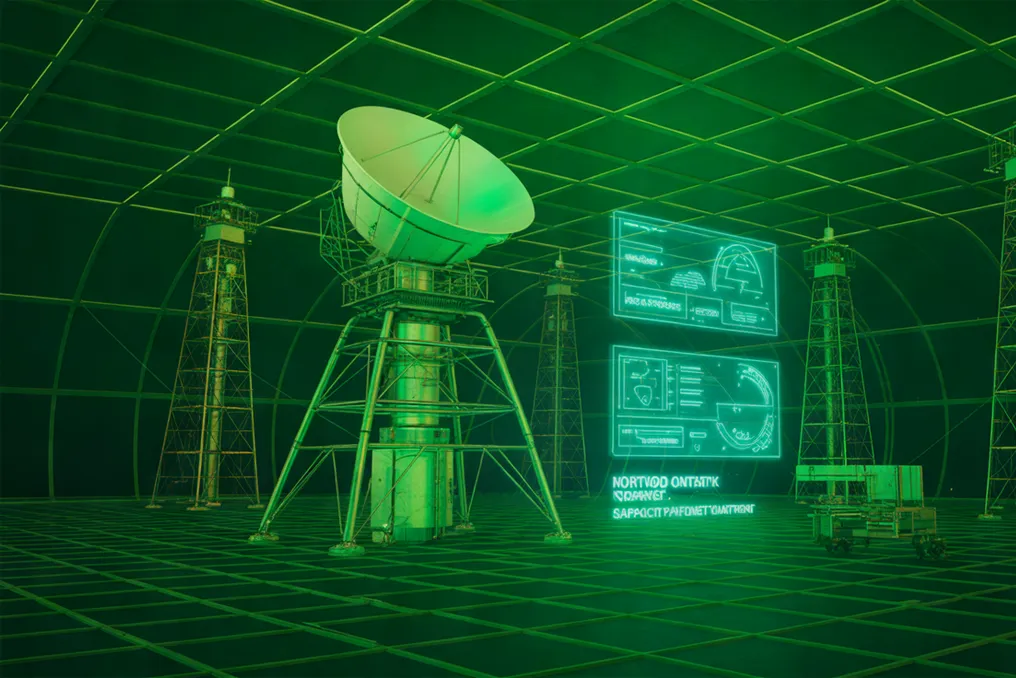
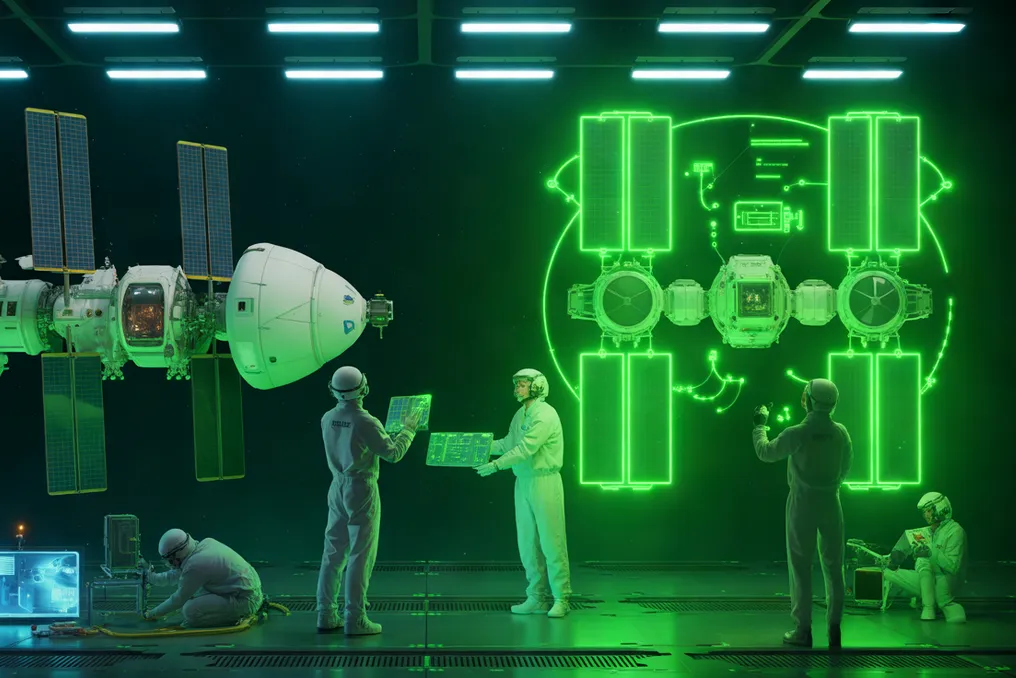
Base 1 comprises four key installations: an Orbital Rendezvous and Capture Laboratory for simulating spacecraft capture operations; a Space Robotics Innovation Lab for developing robotic capture systems; an ISO 8 cleanroom for satellite integration; and a Mission Simulation and Control Center for monitoring future flights. Phanindra specified that commercial operations will commence by mid-2028, opening access to a global market projected to reach $14.5 billion by 2030.
The funding will be directed towards supporting Base 1, technology demonstrations, and two upcoming missions. Space debris remains one of the most serious issues in the global space industry. Of approximately 28,000 satellites in orbit, nearly 10,000 are non-operational or dead. Earth's orbit is estimated to contain 68,000 debris objects smaller than 10 cm, 1.5 million fragments sized 1–2 cm, and almost 230 million fine particles ranging from 1 mm to 1 cm. Even tiny fragments pose a significant threat to operational satellites, spacecraft, and missions such as the International Space Station (ISS), given their high velocity. Around 660 collisions and explosions have been recorded in space, leading to the formation of nearly 58,000 trackable debris fragments.
As orbital congestion increases, so does the demand for space debris removal and satellite servicing. Considering the forecast of 1.3 million new satellite launches over the next decade, active debris removal and in-orbit servicing are becoming critical for ensuring the long-term sustainability of the global space economy.
Cosmoserve's Technological Edge
Phanindra stated that Cosmoserve currently procures about 60 percent of its mission components locally. The company also aims to develop more critical technologies in-house through Base 1 and strengthen domestic manufacturing capabilities. Base 1 enables the company to create the potential to maintain orbital viability for Gaganyaan, the Bharathi Antariksh station, and all subsequent satellites.
Cosmoserve has developed a patented Dual Spacecraft Architecture that moves beyond the traditional one-to-one recovery model, where a dedicated craft services a single satellite. Instead, it employs a more economical two-to-many approach. In this model, a larger Orbital Service Station acts as a logistics hub in space, transporting fuel, equipment, and spare parts, while a smaller Autonomous Servicing Vehicle travels to multiple satellites for capture, docking, diagnostics, repair, or de-orbiting. This architecture allows two spacecraft to service up to 100 satellites, potentially reducing servicing costs from around $10 million to less than $1 million per satellite. By developing these capabilities in Hyderabad, Cosmoserve aims to make orbital servicing more affordable through local production and engineering.
Future milestones for Cosmoserve include testing robotic capture systems in microgravity flight conditions, relaunching Mission Embrace, and conducting a full-scale space debris capture demonstration in 2027.