Scientists detect signals at ultra-small scale, known as zeptoverse, using the LHC
Read more
Olhar Digital
olhardigital.com.br

Scientists detect signals at ultra-small scale, known as zeptoverse, using the LHC

Researchers, led by members of the University of Cambridge, have identified signals at the smallest scale of nature ever investigated, a domain called the zeptoverse, which has dimensions approximately one hundred billion times smaller than those of an atom. This discovery was achieved through experiments conducted at the Large Hadron Collider (LHC), located on the border between Switzerland and France.

The study focused on analyzing the interactions of the beauty quark to investigate potential influences of dark matter, a substance that constitutes about 25% of the total energy of the Universe. The results obtained may contribute significantly to the development of a more comprehensive theory about the functioning of the cosmos.

The term zeptoverse refers to the zeptometer, a unit of measurement equivalent to one trillionth of a billionth of a meter, or 0.000000000000000000001 meters. During the experiment, scientists examined the fragments generated by high-energy collisions at the LHC, operated by the European Organization for Nuclear Research (CERN).

Among the particles examined was the beauty quark, also known as bottom. This quark persists for about 1.5 trillionths of a second before decaying into other particles. Despite its short duration, scientists managed to map its interaction with other particles on a scale of one sextillionth of a meter.

This finding is particularly relevant to research on dark matter. Since this matter does not interact with light, its existence is inferred from the gravitational effects it exerts on ordinary matter, affecting the formation and evolution of clusters and galaxies. Some scientific hypotheses suggest that, at such minuscule scales, particles may be more susceptible to the influence of dark matter, which could modify how quarks interact and decay.

Harry Cliff, a physicist from the University of Cambridge and responsible for data analysis, told BBC News that researchers are about to explore this new territory, stating: 'We are knocking on the doors of this zeptoverse.' In parallel, twenty-eight nations agreed to contribute 150 million pounds (approximately R$ 1.1 billion) to modernize the LHCb detector, which will enable the recording of ten times more particle decays.

However, the United Kingdom opted not to fund its share of the project, and cuts in other areas of particle physics and astronomy have also caused concern among scientists. Tim Gershon, coordinator of the LHCb international collaboration, assesses that this decision may restrict British participation in future investigations, causing the country to miss out on opportunities for discoveries and training new specialists. The public agency UKRI informed the BBC that the United Kingdom maintains its involvement in CERN and remains its second-largest funder, contributing annually with about 175 million pounds (R$ 1.3 billion).

Similar stories

LHC detects possible decay of extremely rare particle
Read more
super.abril.com.br

LHC detects possible decay of extremely rare particle

Everything we can perceive and touch, from animals to stars, is fundamentally constituted by two subatomic constituents: quarks, responsible for the atomic nucleus, and electrons, which form the clouds of negative electrical charge around the nucleus. In addition to these, there are other particles, such as photons, which are the basic unit of light, essential for technologies like lamps and Wi-Fi. Neutrinos, on the other hand, have a practically undetectable presence, constantly passing through the human body without causing any effect.

Currently, these particles are considered the smallest existing entities, the primary elements of reality, being impossible to subdivide according to current knowledge. However, the organization of these building blocks of the Universe presents singular characteristics.

The quarks that compose atoms are classified into two categories, called up and down. Although the terms 'up' and 'down' are informal nicknames, they have no meaning in the quantum context. There are six types of quarks in total: up and down, plus charm and top (heavier than up) and strange and bottom (heavier than down).

The top quark stands out for having a mass 85 thousand times greater than the up quark, making it the most massive particle within the Standard Model. Despite this extensive family of quarks, the vast majority existing is composed of the up and down types, which form the matter around us.

These quarks are observed under extreme conditions, such as in tests conducted at the Large Hadron Collider (LHC), the world's largest particle accelerator. This equipment consists of a 27 km underground ring located on the border between France and Switzerland. When a collision between particles results in an unusual entity, such as a bottom quark, it persists for a billionth of a second before undergoing a process called 'decay', generating other particles.

Quarks never occur in isolation; they appear in groups, either in triads (like in protons and neutrons that structure atoms) or in pairs. One of these pairs is the B0 meson, formed by a bottom quark and a down quark (where one of the components may be antimatter). Normally, when this meson decays, it decomposes into common particles with no notable relevance. However, occasionally, it transforms into a pair of muons, particles that are essentially heavier electrons, with approximately 200 times more mass, an event that occurs rarely, once every 10 billion occurrences.

Physicists have been trying to record this unusual phenomenon since 1984. The first confirmation was presented last Tuesday (3) at CERN, the European laboratory operating the LHC. If confirmed, this detection will represent the rarest particle decay ever recorded.

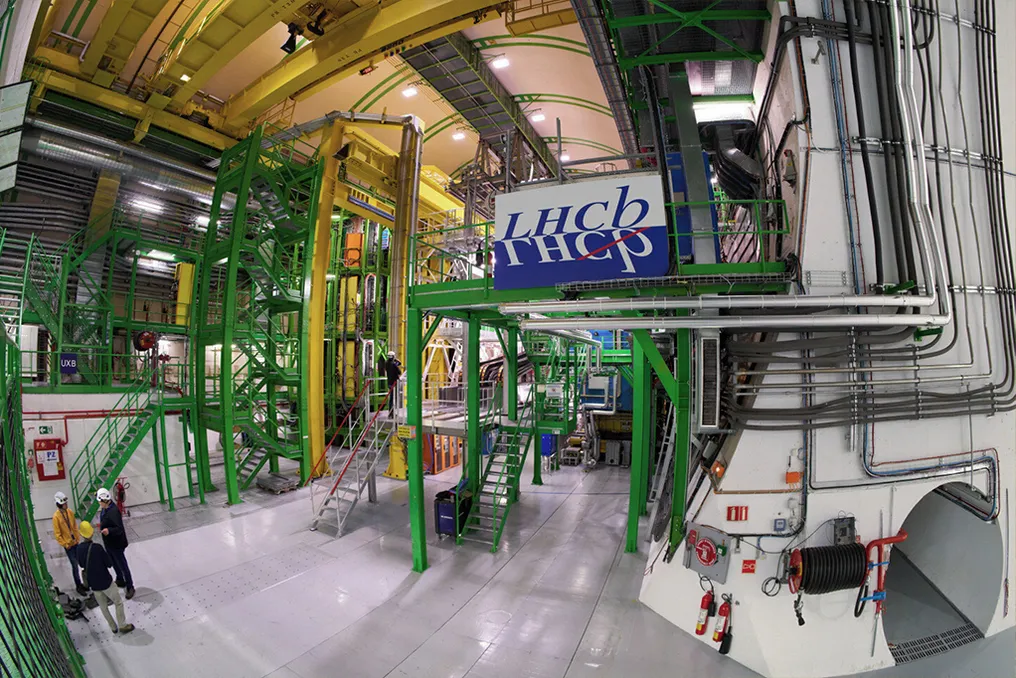
The result comes from LHCb, one of the four major detectors of the collider, whose name includes 'b' for *beauty*, another nickname given to the bottom quark. To locate this specific signal, a team of about 20 researchers, led by Harry Cliff from the University of Cambridge, analyzed data collected between 2011 and 2018, supplementing it with a new set of data from 2024 and 2025. This new batch of data was obtained after an upgrade that allowed the detector to capture information up to five times faster, aided by machine learning algorithms to filter noise from billions of collisions.

It is important to note that the finding has a statistical significance of 3.2 sigma. This means that the probability of the signal being merely a chance, a variation in the data that simulates the phenomenon, is approximately 1 in 1,500. Although this seems low, in particle physics, a discovery is only consolidated starting from 5 sigma, which corresponds to about 1 in 3.5 million. For this reason, researchers use the term 'evidence' instead of 'discovery', and the work still awaits review by other scientists.

Despite the rarity of the event, the Standard Model, the theory that describes all known particles, predicts the frequency of this decay with accuracy. Any deviation from what is predicted by the detectors would indicate a flaw in the Model, pointing to new scientific mysteries. This is compared to a little-used road: if an unexpectedly high volume of traffic is recorded, it suggests the existence of unmapped access points.

These unknown particles could reside in a scale called the 'zeptoverse', a domain of distances on the order of a zeptometer, which is one billionth of a trillionth of a meter. While the LHC can investigate distances of about 100 zeptometers, rare decays like this enable even deeper investigation, like listening into an inaccessible room. At these levels, answers to fundamental physics enigmas, such as the nature of dark matter and the imbalance between matter and antimatter in the Universe, might be hidden.

Currently, the Standard Model has no problems, as the decay follows the established equations. However, this confirmation is also valuable because it helps eliminate possibilities where new physics could be present. LHCb will continue collecting data until the early 2030s, and a future upgrade may increase the collection rate tenfold. Subsequently, expectations will fall on the successor to the LHC, which is not expected to become operational for several decades. Perhaps it is in this zeptoverse that the answer to why the Universe produced such limited-use quarks lies, something physicists still do not know, but which may be about to be revealed.

Transparency in public procurement contributes to saving budget funds
Read more
uza.uz

Transparency in public procurement contributes to saving budget funds

Transparency in the field of public procurement helps reduce budget expenditures. Currently, the human factor in public procurement is decreasing, and 75 percent of offers in 'Elektron doʻkon' are checked directly using artificial intelligence.

Architecture and Artificial Intelligence: The transition from language models to spatial understanding
Read more
archdaily.com.br

Architecture and Artificial Intelligence: The transition from language models to spatial understanding

Artificial Intelligence (AI) has rapidly evolved from an academic discipline into a consumer product. The constant appearance of new models and the vast amount of information make critical consumption difficult, requiring architecture to adopt a method-based and critical analysis approach.

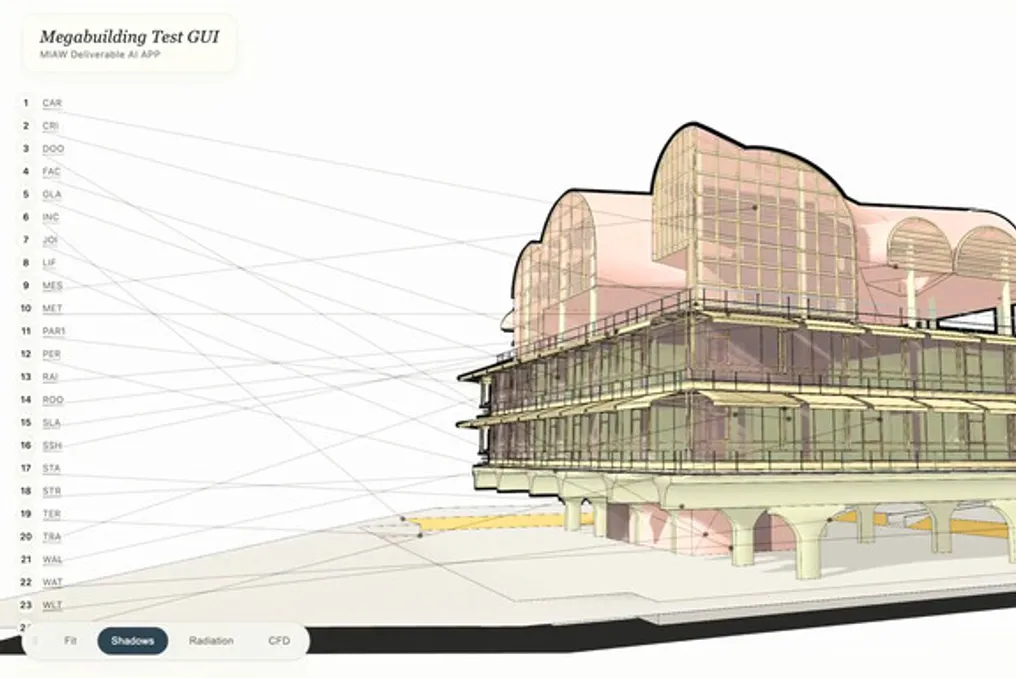
Currently, AI is developing spatial intelligence, which is the ability to understand the behavior of physical space. This allows architecture professionals to evaluate projects in relation to their environment even during the conception phase. When used wisely, AI can connect architects to the complexity of nature, elevating the quality of construction practice, as we simulate the world to learn how to inhabit it.

The tool as a designer of humanity

Historically, humanity has undergone major transformations in its lifestyle every few centuries. The Industrial Revolution reduced this frequency to just a few generations. AI has drastically accelerated this cycle of change at an unprecedented pace.

Citing Jean-François Lyotard, it is true that technology was not created by humans, but rather the other way around. In a scenario where tools shape humans faster than ever, the question arises of how to direct our own evolution to achieve a symbiosis between natural and artificial intelligences, and what competencies are necessary for AI to shape us positively.

AI offers a new chance to expand individual possibilities, from the first books that enabled mass education, through unlimited access to information via the internet, to the navigation and creation capabilities provided by AI.

From language to world models

Large Language Models (LLMs) learn about the world through textual descriptions. They operate by predicting text sequences based on statistical patterns, imitating human speech and reasoning using large volumes of data and simple probabilities.

In contrast, world models are systems designed to understand the functioning of an environment—including its physical rules, spatial dynamics, causal states, and functional structures—allowing for the prediction of new behaviors. Fei-Fei Li describes current LLMs as 'word artisans in the dark,' eloquently speaking about a three-dimensional world without ever having physically interacted with it, arguing that spatial intelligence is the next great advance in the field.

For architecture, this distinction is crucial. A text-based model cannot predict how physical and social reality will react to a project, whereas a spatial model allows for simulating scenarios, testing the proposal against factors such as gravity, wind, solar incidence, wear, and human use. Dynamics like thermal diffusion, moisture absorption, pollutant dispersion, and human flow provide feedback that guides project development, rather than simply imposing a form upon them.

Although simulation can inform decisions, it should not assume final responsibility. It is essential that there are professionals with clear criteria and discernment, using AI as a responsible analytical tool, and not merely as a productivity booster. The architect becomes less a creator of forms and more a designer of knowledge systems, being evaluated by the ability to anticipate developments in a complex and often uncertain reality; the human element remains in the process.

Mindhub for Artificial Intelligence Intelligent Worlds

Spatial intelligence demands hybrid professional profiles, capable of integrating design with computational engineering and materials science. The Mindhub for Intelligent Artificial Worlds (MIAWS), located at ETSAM, Polytechnic University of Madrid, functions as a digital center focused on the entire AEC sector, structured around this technological transformation. This hub unites original research with a global network of institutions and experts.

Its Foundations program is offered online in ten modules, guiding participants from AI-assisted modeling and simulation to data visualization and integration. The purpose is to allow participants to keep up with technological advancements while maintaining critical discernment, inviting interested parties to learn about the program and participate in this change.

Popular