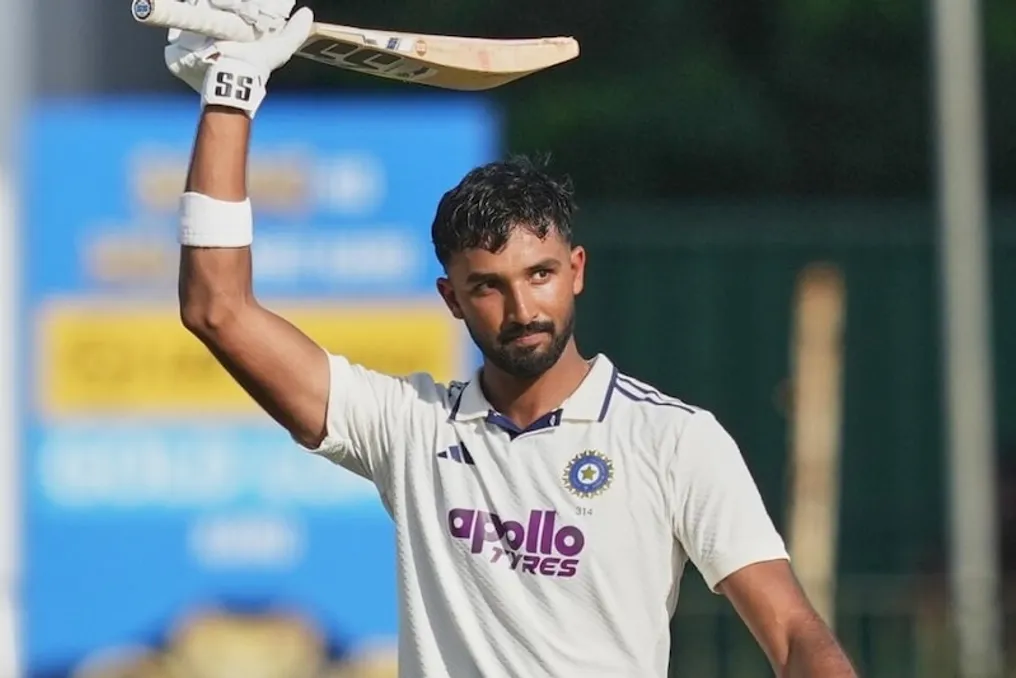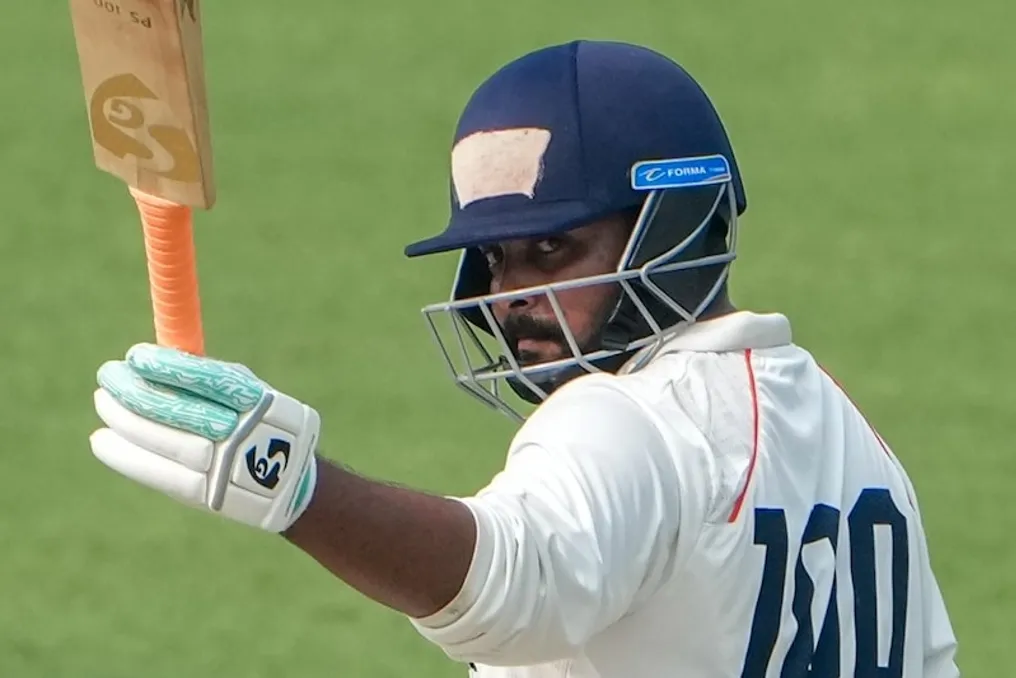
Prithvi Shaw expresses desire to return to the Indian squad after five years away
Read more
Aaj Tak
www.aajtak.in

Prithvi Shaw expresses desire to return to the Indian squad after five years away

Five years have passed since Prithvi Shaw was dropped from the Indian team, yet his hope of returning to international cricket remains alive. The batsman, who previously attracted attention with his explosive play, has not given up. Nevertheless, to return, he needs to demonstrate his strength in domestic cricket. Prithvi emphasized that instead of worrying about the future, he is focused on the present, confident that one good innings can change his standing.

The 26-year-old Prithvi Shaw shared his thoughts on returning to the Indian team after Maharashtra defeated Bengal by 10 wickets in the Ranji Trophy match. He admitted that the idea of returning to the Indian team is always in his mind, but he tries not to think too far ahead.

Prithvi noted: 'In some corner of my mind, this thought is always present. But based on the experience I have gained, I shouldn't think too much about the future. For example, right now, when I am giving you this interview, I will go to my room and think about what to do next. I don't think about it further. You just need to win matches, train well, and eat properly.'

To fulfill his dream of returning to the Indian squad, Prithvi Shaw must consistently score runs in domestic cricket. His performance in this season's Ranji Trophy has not met expectations: only two half-centuries in seven matches. In the opening match against Maharashtra in Delhi, he scored 70 runs. Subsequently, his scores were 7, 21, 0, 17, 12, and 53*.

However, Prithvi is not overly concerned about his game. He believes things are starting well, and he just needs one big innings. He stated: 'In some innings, the game goes poorly, and in others—well. After being dropped, I don't feel much stress because sometimes I get out to a good ball, and at other times I lose a wicket trying to hit my shot. I believe there are no problems with the start of these innings. My game is good, and nothing bad is happening. It's just a matter of one innings.'

Last season, Prithvi Shaw left Mumbai and joined the Maharashtra team. His experience in the new team has so far been positive. He mentioned that Mumbai and Pune are not very far apart, and many of his old acquaintances are on the Maharashtra team. Prithvi said: 'This is a very good period. The distance between Mumbai and Pune is small. It's about one and a half to two hours difference. I know many players here. I played with players like Rituraj Gaikwad and Ankit Bavne before. I have good relations with many players. So I never felt like I came too far. I am quite calm here and enjoying this experience.'

The presence of experienced Indian fast bowler Mohammad Shami in the match against Bengal also posed a challenge for Prithvi Shaw. On a pitch favorable to fast bowlers, Shami troubled batsmen with his speed and experience. Prithvi acknowledged that facing Shami under such conditions is difficult. He noted: 'Brother Shami still bowls the same way as before. There has been no change in his bowling style. He bowls fast. The thought remains in my head that brother Shami has played so much cricket for India, and our batsmen know that he is one of the best bowlers in the world. Facing him in such conditions and on such a pitch is extremely difficult.'

Prithvi added that when playing against Shami, his experience and potential must be taken into account. On such a pitch, he was Bengal's most important bowler.

In the match against Bengal, the bowlers of Maharashtra played a decisive role. According to Prithvi, the pitch was very favorable for fast bowlers, and the match was even in the first half. However, after three dismissed Bengal players lost 25 runs in the second half, Maharashtra gained confidence in winning. Prithvi also mentioned that his bowlers contributed significantly in the first half. Maharashtra secured an important victory, beating Bengal by 10 wickets.
Similar stories

Team management's decision to exclude Vaibha called into question Gautam Gambhir's aggressive strategy
Read more
www.aajtak.in

Team management's decision to exclude Vaibha called into question Gautam Gambhir's aggressive strategy

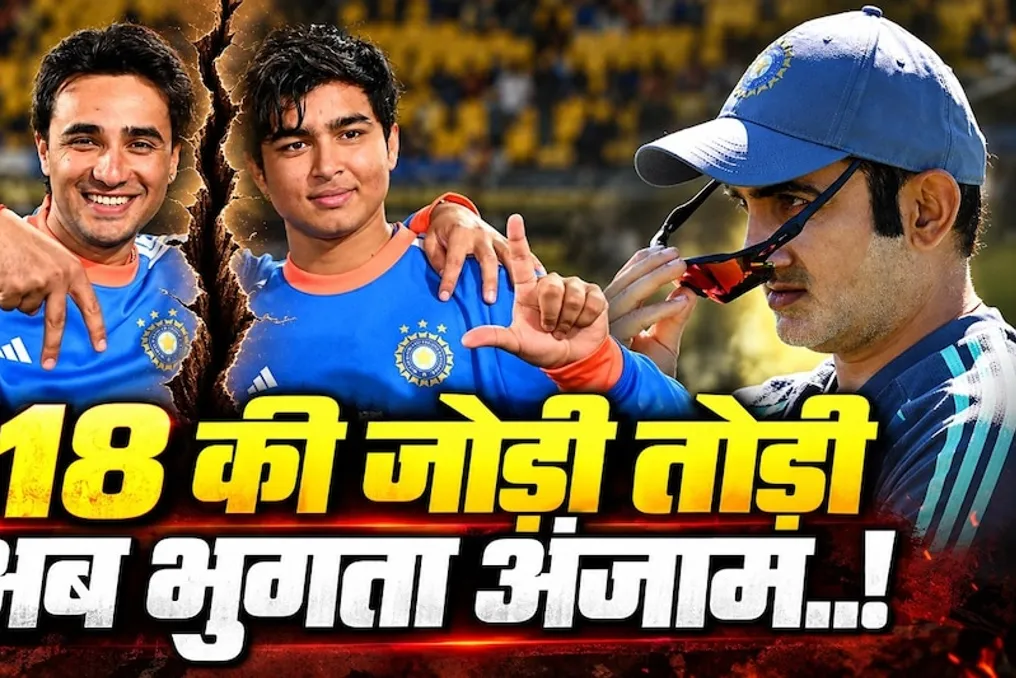
The Indian team under the leadership of Gautam Gambhir is supposed to play aggressively, dominate opponents, and leave no chance for the rival. However, the team management's decision in the fourth T20 match in Auckland called this philosophy into question. Former player Vaibha Suryawanshi, who created history with Abhishek Sharma by scoring 118 runs in the powerplay in the previous match, was excluded from the starting lineup.

Captain Shreyas Iyer stated the need to remain 'ruthless,' but facing a mountain of 260 runs, the Indian team's game turned chaotic: two wickets fell in the very first over, undermining hopes of victory. The question arises: what kind of aggressive strategy excludes the most explosive player?

When the fielding team New Zealand set a target of 260 runs, the Indian batsmen found themselves in a difficult position. The hosts secured a convincing victory by 87 runs, and India could not get close to the target score. The team, which hoped for a 4-0 win, was forced to accept a bitter defeat.

Gautam Gambhir prefers aggressive cricket, and his team is not afraid to pursue big goals. Batsmen are given the freedom to play openly, and players are expected to take wickets from bowlers. Nevertheless, there is a fine line between aggression and blind experimentation, which the team management may have forgotten to observe in Auckland.

India already had an undisputed advantage of 3-0 in the series. The fourth match provided an opportunity to solidify the success and take the lead at 4-0. However, Gambhir and his colleagues made a decision that caused the most surprise.

In the previous match, Abhishek Sharma and Vaibha Suryawanshi demonstrated excellent performance against the New Zealand bowlers, scoring 118 runs in 6 overs during the powerplay. This was the highest score in the powerplay for any team in T20 international matches. This figure was not just a record; it testified to the strength of the batsman combination that took the opponent out of the game in the first overs. Vaibha and Abhishek understood each other's game and attacked the bowlers.

However, in the next match, this pair was separated: Vaibha was excluded, and Ishan Kishan came in his place. The question is not about Ishan's ability, as he is also capable of winning a match. The question is why Vaibha had to be excluded? Does the record of the previous match hold so little value for the team management? Should a player have to prove their worth in every match, yet historical performance is insufficient to maintain a spot in the team?

Gambhir should ask himself: what was the basis for breaking up the batting pair that set the record?

During the toss, captain Shreyas Iyer stated: 'We don't want to leave any chances. We have already won the series, but I think our half of the job is done. It is important to remain ruthless.' The captain's words sounded impressive, but ruthless play is not achieved through statements alone; it requires clarity in decisions. If the team's goal is not to give the opponent any chances, then why was the opening pair that destroyed the opponent in the previous match broken up?

Iyer is the captain, and the responsibility for team selection decisions lies jointly with the coach and the captain. Therefore, the captain cannot avoid questions about this change. Did he support the decision to exclude Vaibha? Did he not feel that the pair that scored 118 runs should have been retained?

The captain's task is not only to choose between bowling or batting after the toss. He is also responsible for the team's on-field strategy and for trusting the players. When you talk about ruthless play, you must show the same clarity regarding your successful players.

New Zealand, batting first, scored 259 runs in 20 overs, losing 7 wickets. Glenn Phillips scored 107 runs off 49 balls, and Michael Bresshaw complicated matters for the Indian bowlers, scoring 65 runs off 25 balls.

India faced a target of 260 runs. It was a serious challenge, but not insurmountable. Based on how the Indian batsmen behaved when chasing big targets in previous matches, it was expected that the team would start aggressively again. However, Sanju Samson was dismissed after scoring 4 runs in the second ball. Ishan Kishan also returned to the dressing room without scoring a single run on the fifth ball. Abhishek Sharma (27) was dismissed in the fifth over.

The team that habitually scored 118 runs in the powerplay lost three major wickets already in the fifth over. Here arises the biggest question regarding Gambhir's strategy: if the team relied on aggressive play, why was the batsman who best executed this strategy excluded?

India's defeat was not only caused by the decision to exclude Vaibha. The Indian bowlers also failed to cope...

_
Ishan Kishan's return questions India's squad composition after bright victory over New Zealand
Read more
www.aajtak.in

Ishan Kishan's return questions India's squad composition after bright victory over New Zealand

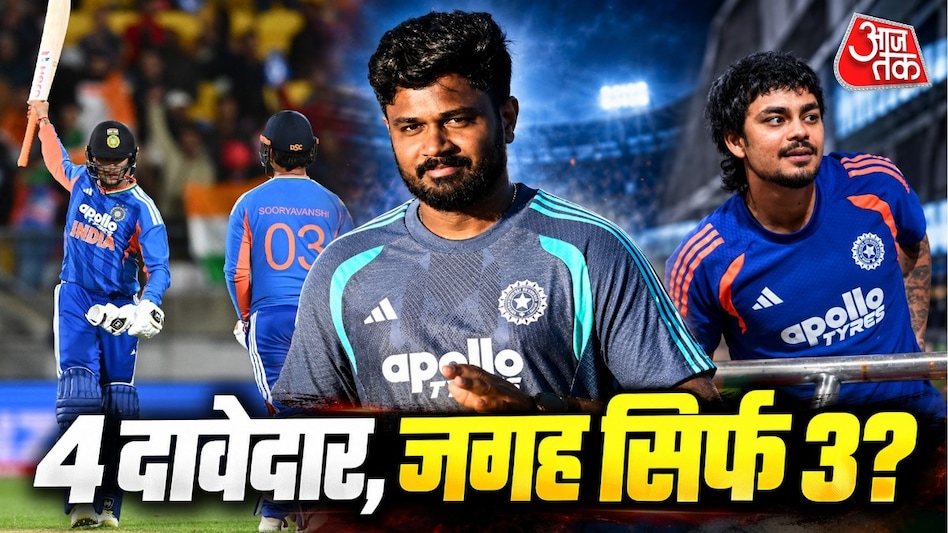
The Indian team faces a complex dilemma: how to integrate players in excellent form while accounting for the possible return of Ishan Kishan. The questions concern not only the on-field lineup but also the order of play and rotation policy.

In the third T20 match against New Zealand, the Indian team demonstrated powerful play, giving the opponents no chance. Abhishek Sharma scored 113 runs off 38 balls, and Vaibhav Suryavanshi showed his strength in the squad, allowing India to reach a target of 199 runs in just 13.2 overs.

Thanks to this impressive victory, India gained an undisputed 3-0 lead in the five-match series. However, amidst this success, a difficult question has arisen: if Ishan Kishan recovers and returns to the team, whose place will be taken?

As soon as the wait for Ishan Kishan's return ends, the Indian team may face a selection problem. On one hand, there is Abhishek, capable of changing the course of the match with his explosive playing style. On the other hand, there is Vaibhav, who was fielded at the start in the third T20. Sanju Samson is also a key player who scores runs.

Deciding to drop Abhishek will be difficult given his recent performance. Dropping Vaibhav would call into question the plan to consistently give opportunities to the young batter at his preferred position. Excluding Sanju is also not easy, especially if he is strengthening his position by scoring runs.

The question of Ishan's return is also important. When the player becomes available after recovery, the team management must decide on his inclusion and the role of the other players. The real task is not just choosing one name, but creating a combination that maximizes the strengths of all players.

In the third T20, while Ishan was absent, Vaibhav Suryavanshi got a chance to bat at the top. This sparked a new discussion about the order of play. Vaibhav's main strength is attacking bowlers at the beginning of the innings. Previously, there were doubts about experimenting with his placement at the third position.

However, if the team plans to continue using Vaibhav at the start, it will have to reconsider the batting order of the remaining batsmen. In the third T20 against New Zealand, Sanju Samson batted at the third position. Now, if they maintain the plan with Vaibhav at the start, Sanju may be forced to adapt to a different role.

The situation is complicated by the question: should Sanju give up his preferred position for Vaibhav? Will the team management change the batting order to keep the Abhishek and Vaibhav duo? And will it become harder for Sanju to secure a spot in the squad after Ishan's return?

There is currently no definitive answer to these questions. Nevertheless, it is clear that one player's return may require a review of many aspects of the batting order.

The most important question in this situation relates to the Indian team's rotation policy. India has scheduled 16 T20 international matches from August to December: 3 against Afghanistan, 5 against West Indies, 5 against New Zealand, and 3 against Sri Lanka.

There could be a scenario where the team management predetermines how many matches each player will get, who will rest, and what each player's role will be. If players were informed in advance that they could take a break after four or five matches, the decision to exclude a player would not be based solely on their performance.

This could bring two advantages to the team. Firstly, it would reduce the pressure on key players who play constantly. Secondly, players' roles would remain clear during experiments with alternative squads.

Nevertheless, rotation does not mean that players must be excluded, even with good performance. Management must make decisions based on physical condition, form, opponent, and strategy. But having a preliminary plan could significantly simplify explaining any changes.

There are about two years until the T20 World Cup. This gives the Indian team time to test various batting order options, evaluate players in their roles, and make changes if necessary.

Therefore, the current selection crisis cannot be seen merely as losing a spot for one player. It is also an opportunity for the team management to develop a future strategy. Does India want to promote the Abhishek and Vaibhav duo at the top? What position will benefit Sanju the most? What will his role be after Ishan's return?

In IND A vs NZ A match: Devad Pattikkal did not reach double figures, Sai Sudarshan showed strong play
Read more
www.aajtak.in

In IND A vs NZ A match: Devad Pattikkal did not reach double figures, Sai Sudarshan showed strong play

During the three-match unofficial test series between India A and New Zealand A, the first match took place at the Bert Sachliff Oval stadium in Lincoln. On the third day of this four-day confrontation, on October 26, Devad Pattikkal demonstrated an impressive batting performance, scoring 199 runs in the second innings for the India A team.

India A's second innings started slowly: Kel Rahul managed only 4 runs, and Yashasvi Jaiswal scored 5. After the fall of the second wicket, with the team score at 10 runs, Devad Pattikkal and Sai Sudarshan managed to stabilize the innings, adding 215 runs to the total score. Sudarshan scored 91 runs, batting 184 balls, including 12 fours.

Captain Dhruv Jurel also failed to perform well in the second innings, scoring only 2 runs. This was followed by a strong partnership between Pattikkal and Yash Rathore for the fifth wicket.

In the first match, having lost the toss and batting first, India A managed to score only 113 runs in the first innings. Besides Yash Rathore, who remained on the field with 44 runs, and Devad Pattikkal with 32 runs, other batsmen could not stay long at the crease. For New Zealand A, Simon Keen took the most wickets with 5, and Jack Gibson secured three wickets. Fraser Shit and Christian Clark each took one wicket.

In response, New Zealand A scored 317 runs in their first innings, giving them a lead of 204 runs in the first innings. Captain Rhys Marius scored 76 runs off 137 balls, hitting 12 fours, while Dan Foxcroft contributed 51 runs. Opener Curtis Hefi scored 44, Christian Clark scored 42, and wicketkeeper Mitchell Hay scored 24 runs.

For India A, Anshul Kamboj and Akib Nabi took three wickets, and Akash Dip claimed two wickets. Washington Sundar and Mukesh Choudhary each took one wicket.

The New Zealand A squad included: Rhys Marius (captain), Curtis Hefi, Tim Robinson, Matthew Boyle, Dan Foxcroft, Mitchell Hay (wicketkeeper), Simon Keen, Christian Clark, Fraser Shit, Zaden Lennox, and Jack Gibson. The India A squad included: Yashasvi Jaiswal, Kel Rahul, Devad Pattikkal, Sai Sudarshan, Dhruv Jurel (captain/wicketkeeper), Yash Rathore, Washington Sundar, Anshul Kamboj, Akib Nabi, Akash Dip, and Mukesh Choudhary.

Popular