Russia confirms maintenance of agreement with Trump on diesel supply
Read more
Noticias ao Minuto
noticiasaominuto.com

Russia confirms maintenance of agreement with Trump on diesel supply

Russia stated that Russian oil will continue to find buyers, even after the defeat of the US President's party in the midterm elections. This diesel supply agreement was signed between the leaders of Russia and the United States.

Dmitry Peskov, spokesperson for Russian head of state Vladimir Putin, informed during a press conference that all Russian diesel will have buyers, referring to the pact established between the leaders of the two countries.

Peskov also addressed speculation about two Russian oil tankers heading to the United States that changed course after the Republican Party's defeat in last Tuesday's midterm elections. This defeat allowed Democrats to regain control of both chambers of the US Congress, representing a significant setback for President Donald Trump.

On this matter, the spokesperson confirmed that some shipments have already been made, detailing that they are commercial transactions whose specifics cannot be disclosed.

Peskov avoided commenting on any possibility of modification to the agreement, which has been criticized by both Democrats and Republicans in the United States, in addition to being contested by Ukraine and the European Union.

According to the British newspaper Financial Times, the oil tankers Talisman and Leruo, which were transporting Russian diesel, diverted their route. One of these ships is currently heading towards the coast of Brazil, while the other changed direction and is near the coast of Algeria.

Regarding a third vessel, the Agioi Fanendes, the journey towards the United States continues, although the owner admitted that the destination port is still uncertain.

The news indicated that the number of Russian oil tankers that departed for the United States was between seven and thirteen units. The United States should receive between 300,000 and one million tons of Russian diesel monthly by the end of the year.

The agreement, valid until April 2027, originally provided for the supply of up to three million tons of Russian diesel monthly for the following year. Donald Trump expected this agreement with Russia to result in a reduction in fuel prices, aiming to combat inflation, one of the biggest concerns of American voters.
Similar stories

Iranian Foreign Minister Araghchi calls for cooperation with Russia to stabilize the global gas market
Read more
www.tehrantimes.com

Iranian Foreign Minister Araghchi calls for cooperation with Russia to stabilize the global gas market

Iran's Foreign Minister Abbas Araghchi called for deepening interaction between Iran and Russia. The goal of such cooperation is to diversify energy supply routes, strengthen the stability of the global gas market, and create new opportunities for investment and foreign currency earnings.

Araghchi warned that geopolitical tensions and military threats are disrupting international energy supplies. In his op-ed published in the Russian newspaper Vedomosti on Monday, he noted that energy security has become one of the most acute global problems alongside food security, linking this situation to 'coercive and arrogant actions by the United States in the region.'

He referred to estimates from the International Energy Agency, which indicate that over 112 billion cubic meters of liquefied natural gas passed through the Strait of Hormuz in 2025, accounting for nearly a fifth of global trade in this fuel. Araghchi stated that the recent US military-Israeli aggression against Iran, along with ongoing military threats, has led to the closure of a strategic waterway and disruption of global gas supplies, especially to Asian markets.

He added that this disruption has caused a sharp rise in gas prices in Europe, and gas reserves before winter have significantly fallen compared to last year's figures. The Minister emphasized that Asian markets consume about 90% of the gas transported through the Strait of Hormuz, highlighting the importance of this waterway for global energy security and the economic interests of both producers and consumers.

Araghchi warned of possible far-reaching consequences of regional instability for international energy markets, calling for broader dialogue among gas-producing countries, diversification of supply routes, and strengthening the protection of critical energy infrastructure. He also stressed the need to develop practical mechanisms to mitigate the impact of geopolitical shocks on energy supplies and market stability.

The Iranian Foreign Minister highlighted the potential of expanded energy partnership between Tehran and Moscow, particularly in the fields of investment, technology, equipment, production, operational efficiency, and energy export. He noted that closer bilateral cooperation could help diversify transport routes for energy resources and generate additional income in foreign currency, thereby contributing to the stability of international gas markets.

The article also mentions the 'Global Gas Outlook 2055' report published by the Gas Exporting Countries Forum (GECF). This forecast predicts that by 2055, 86% of global gas production will come from reserves that currently do not produce gas. Araghchi pointed out that Iran, possessing the second-largest proven natural gas reserves after Russia, has significant potential to expand its role in the global gas sector.

According to the forecast cited in the article, the share of GECF member countries in global gas production is projected to rise from 38% in 2024 to 44% by 2055, representing 65% of the net growth in global production during this period. Araghchi acknowledged that realizing the potential of Iranian-Russian energy cooperation will require significant investments, advanced technologies and equipment, as well as solutions to problems arising from unilateral coercive measures and the complexity of long-term energy contracts.

He characterized GECF as an important multilateral platform for strengthening coordination among gas-producing countries and promoting cooperation in response to common challenges. According to him, political will and mutual trust will be necessary to turn this potential into practical results.

Araghchi also addressed the issue of maritime security in the Strait of Hormuz. He stated that Iran has proposed a seven-day plan to facilitate the resumption of the waterway's operation and normal maritime traffic, provided that necessary conditions are met and military threats are eliminated. He asserted that responsible dialogue and mutual commitments can help reduce tensions, strengthen sustainable maritime security, and restore stability in global energy markets. Araghchi concluded by writing that 'it ultimately depends on the choice made by the United States,' emphasizing that cooperation and dialogue are vital for building greater stability in global gas and energy markets.

First tanker with Russian diesel fuel heads to the USA under Trump-Putin agreement
Read more
noticiasaominuto.com

First tanker with Russian diesel fuel heads to the USA under Trump-Putin agreement

The first tanker carrying Russian diesel fuel since the invasion of Ukraine began is heading to the United States as part of a controversial agreement between Donald Trump and Vladimir Putin, the Kremlin confirmed today.

A representative of the Russian presidential administration, Dmitry Peskov, stated that the Ministry of Energy reported that the first tanker is already en route to recipients.

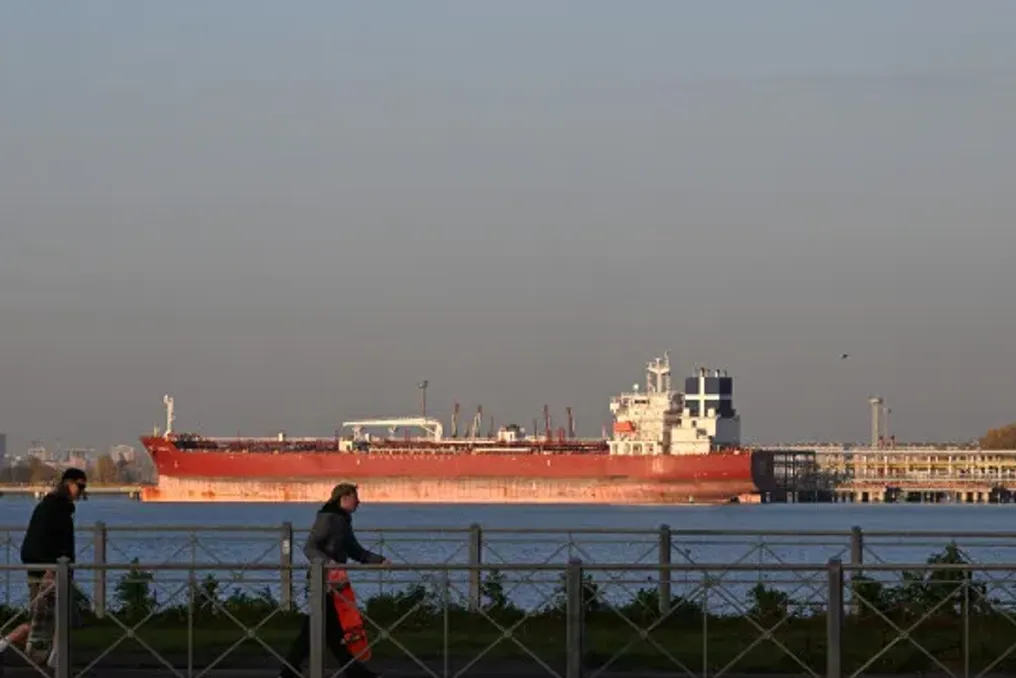
The vessel 'Agioi Fanendes', registered under the Maltese flag, loaded about 300 thousand barrels of diesel fuel at the Russian oil port of Primorsk in the Baltic Sea and is bound for New York.

According to maritime tracking data from the company Kpler, the tanker was near the coast of Helsinki, Finland, today, and is expected to arrive in the United States on November 7.

Information cited by Bloomberg states that the cargo amounts to approximately 43 thousand tons of fuel. This shipment is the first export of Russian processed products to the US since the full-scale invasion of Ukraine began in February 2022.

The operation resulted from an agreement reached between the US and Russian presidents following a phone call on October 9. This agreement provides for the temporary lifting of certain financial and trade restrictions imposed on Russia.

This understanding should allow for the resumption of Russian diesel fuel exports to the US and other international markets until at least April 2027.

Russia's Deputy Prime Minister responsible for energy, Alexander Novak, previously stated that Moscow could supply between three and 3.5 million tons of diesel fuel to global markets. According to Novak, the first batch will be followed by regular supplies, including to countries that previously imported Russian fuel.

The agreement aims to curb rising fuel prices, which have been exacerbated by the war that began in February in the Middle East between Israel, the US, and Iran, causing disruptions in global energy supply.

Donald Trump's US presidential administration seeks to lower diesel fuel prices before the midterm elections on November 3 amid growing dissatisfaction with the cost of living.

Diesel fuel is critical for the transport sector, agriculture, and goods distribution, so its price increase contributes to inflationary pressures.

However, the agreement with Moscow has faced harsh criticism from Ukrainian President Volodymyr Zelensky and several European allies of Washington. Zelensky called the deal 'weak' and 'shameful,' believing it would allow Russia to receive additional income to finance the war against Ukraine.

Trump defended the agreement, stating that he made the 'right decision for the American people,' and accused Europeans of 'hypocrisy' for continuing to import Russian hydrocarbons after the invasion began. The US President has also repeatedly criticized Ukrainian attacks on Russian oil refineries, arguing that they contribute to fuel shortages and rising international prices. These disagreements have led to a new deterioration in relations between Kyiv and Washington.

Popular