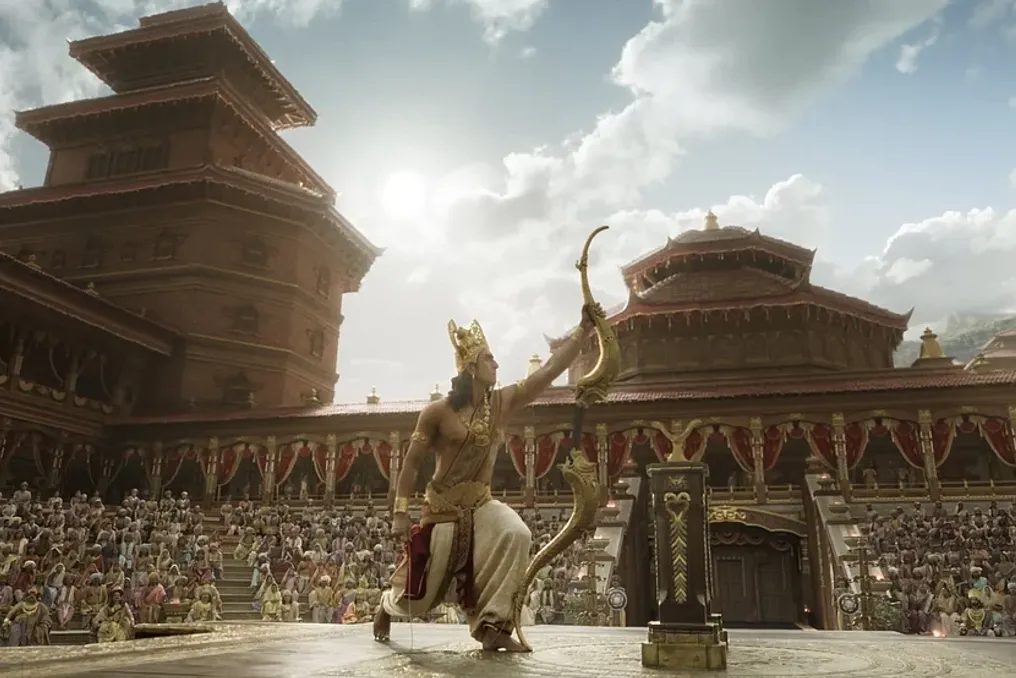
The film 'Ramayana: Part 1' shows a significant shift in narrative from the dark and imposing kingdom of Lanka to the sunlit splendor of Ayodhya. The shots become brighter, flowers bloom, and an almost palpable tranquility is felt. This beautiful transition best reflects the ambitious retelling of the Indian epic undertaken by director Nitesh Tiwari. He creates a world of cinematic beauty unseen before on the scale of the Indian audience.
However, as the story develops, another question arises: when embodying one of India's most revered spiritual stories using top-notch visual effects and filmmaking technology, is some of its emotional and spiritual authenticity lost?
The answer is not straightforward. Despite some shortcomings, 'Ramayana: Part 1' marks an important moment for Indian cinema, especially by making a story deeply rooted in the cultural consciousness of India accessible to a much wider international audience.
The film, produced by Namit Malhotra and directed by Nitesh Tiwari, begins with the origins of Dashanan, or Ravana, against the backdrop of the oppression of the Asuras. His youth, powerfully portrayed by Raghav Malhotra, shows Dashanan's journey from a devoted son to a fierce ruler motivated by the desire to reclaim his people's lost glory. His exceptional obedience ultimately brings him immense power, setting the stage for his rise as one of the most formidable figures in the three worlds.
The plot then moves to Lanka, where Yash's appearance as Ravana is far from subtle. Entering through a complex battle scene, he dominates the screen with the authority of a king convinced of his invincibility. But it is the subsequent Tandava scene that truly conveys the scope of Tiwari's vision. With its stunning imagery and thunderous musical score, it offers an early glimpse of the extraordinary visual spectacle awaiting the audience.
Much credit goes to the visual effects by DNEG and the background music by Hans Zimmer and A.R. Rahman, which together become the film's greatest strengths. The music deserves special praise for knowing when to assert itself and, more importantly, when to yield. Instead of constantly dictating how the audience should feel, the soundtrack allows the emotional weight of the narrative to unfold naturally. It enhances the grandeur without overwhelming moments of silence.
One of the most interesting creative decisions made by Tiwari as a storyteller is the refusal to present the narrative as a series of miracles. Despite its spiritual foundations, 'Ramayana' develops largely through recognizable human emotions. Love, ambition, jealousy, betrayal, and sacrifice are present—feelings that could define the dynamics of an ordinary family, even if it is a ruling prosperous kingdom.
Above all, it is a story about the choices we make and how their consequences ultimately shape our destiny. The film repeatedly returns to the idea that a person's fate is determined by their nirnaya, or the decisions that dictate their actions, or karma. And through this philosophical thread, Tiwari explores the concept that destiny is not something that simply happens to us, but something we actively create through the decisions we make.
Nowhere is this illustrated as powerfully as in Rama's exile. The weight of injustice presses down, and the film allows the audience to feel the full magnitude of what has happened.
The willingness of the citizens of Ayodhya to accompany their beloved prince into exile is a fine reflection of what makes a revered leader. His greatest achievement is not the kingdom he rules, but the devotion and love he earns from his people. These are some of the most touching moments in the film precisely because they do not depend on complex visual effects or grand cinematic spectacle to convey their meaning.
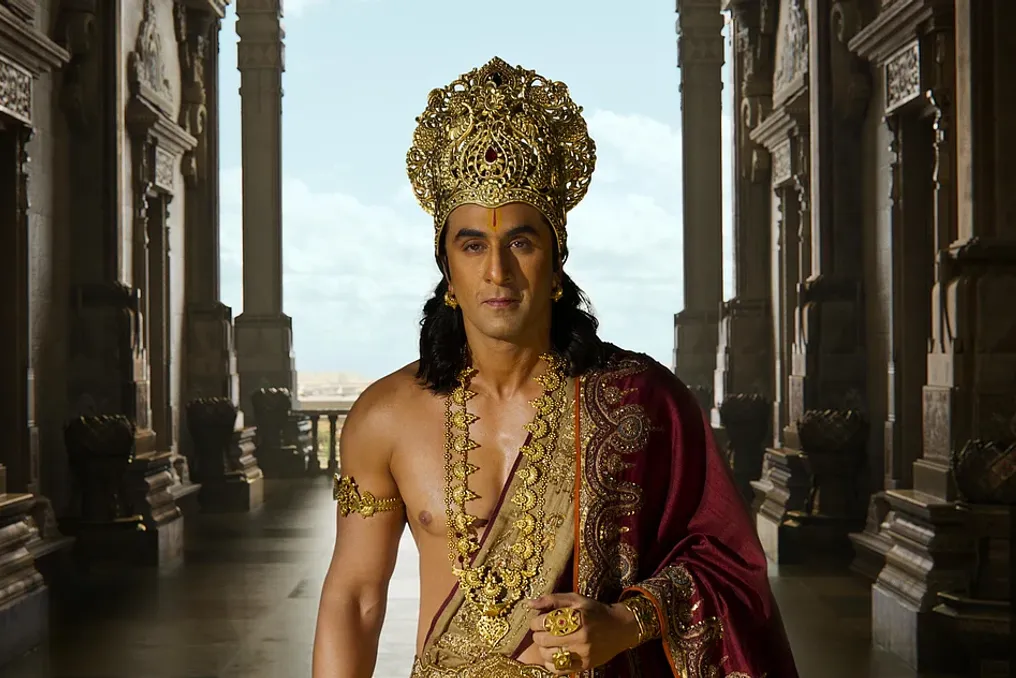
Ranbir Kapoor is sincere and restrained in his portrayal of Rama. He brings a certain softness to the character while playing Parashurama, the sixth avatar of Lord Vishnu. Nevertheless, it is difficult to completely shake off the strong impression of his Ranvijay from 'Animal', especially when watching him in a role so closely tied to divinity and righteousness. For generations of Indian viewers, the image of Lord Rama in the television adaptation Ramanand Sagar was defined by Arun Govil's performance. Interestingly, Govil himself appears in this film as King Dasharatha. Looking at him, one recalls how easily he conveyed divinity with just a glance. The quality that Kapoor does not quite manage to capture is the subtle difference between portraying a righteous man and portraying one whose goodness carries an almost divine presence. Kapoor handles the former more convincingly.
A similar challenge arises with Sita Pallavi as Sita. Although her performance is sincere, it does not fully embody the ethereal quality traditionally associated with this character. Both actors lend humanity to their roles, but sometimes miss that small yet significant glimmer of divinity that could make their performances truly memorable. Meanwhile, Yash creates an imposing Ravana, especially in the restrained moments when his intellect and arrogance surface.
However, some of the most memorable performances belong to the supporting cast. Lara Dutta as Kaikeyi and Shiba Chadha as Mantara are particularly impressive, bringing emotional conviction to characters whose decisions fundamentally change the course of history. Ravi Dubey also stands out as Lakshmana, injecting warmth and much-needed humor into an otherwise tense narrative without undermining its seriousness. Vivek Oberoi also impresses as Vidhyutjiwa, especially in the complex confrontation with Ravana, who challenges him to drink a drop of his blood in exchange for Lanka. And one can only hope to see more magic from Saurabh Sachdeva as Mareecha.
If there is one area where 'Ramayana' truly paves a new path, it is in the sheer scale and complexity of its visual effects. The film achieves a level of cinematic mastery rarely, if ever, seen in Indian cinema, with scenes that can confidently compete with some of the most ambitious productions emerging from Hollywood.
Earlier this year, Christopher Nolan's 'Odyssey' brought another ancient epic to the big screen, making comparison inevitable. Both stories are populated by worlds of gods, unusual creatures, and human suffering in the face of seemingly insurmountable forces. Interestingly, there is even a striking parallelism in their source materials. During Sita's swayamvara, Prince Rama lifts Shiva's divine bow, which breaks when he tries to string it. Similarly, in Homer's 'Odyssey', Odysseus effortlessly strings his legendary bow after all the suitors of Penelope have failed to do so, and this act becomes a defining moment in both epics.
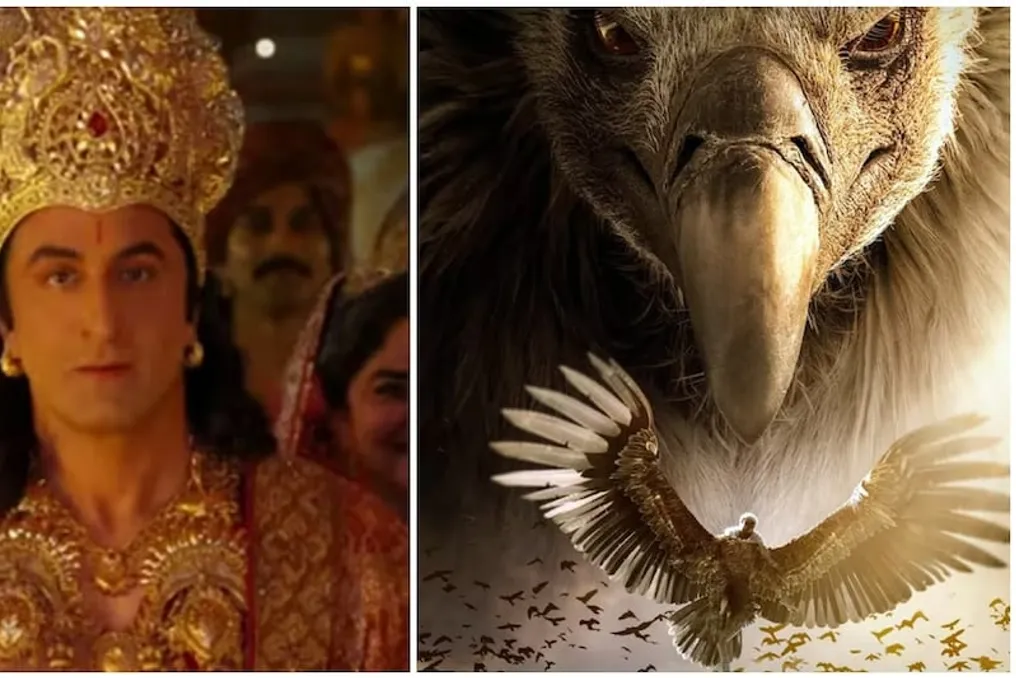
But beyond these narrative parallels, it is the impressive visual effects and confident command of scale that give 'Ramayana' weight, allowing it to stand alongside some of the most ambitious cinematic spectacles emerging globally, marking an important milestone for Indian cinema. For instance, the scenes with Pushpak Vimana deserve special mention, as does the gripping confrontation between Ravana and Jatayu. These are moments where the film's technical ambitions materialize into majestic cinema.
And given the disappointment caused by 'Adipurush', the last major attempt to retell the epic on the big screen, 'Ramayana' represents a remarkable leap forward in both visual execution and storytelling.
Nevertheless, despite all the praise its technical achievements deserve, the film is not immune to the excesses of computer graphics. The forest scenes, in particular, are where the technology begins to work against the narrative. There is something about the expanse of a real forest, its textures, natural light, and imperfections that can evoke an emotional response even before a character speaks. Here, digital landscapes sometimes lack this authenticity, hindering full immersion in the world inhabited by the characters.
The problem becomes more apparent during the prolonged battle with Surpanakha's troops. This scene feels drawn out, and the sheer volume of visual effects begins to distance the audience from the emotional stakes. Surpanakha, played by Rakul Preet Singh, is also one of the weaker characters in the film. Her humiliation and subsequent actions are crucial to the events leading to Sita's abduction, but the film does not fully establish the emotional significance of her experience, making the important turning point seem less impactful than it should be.
Language presents another interesting choice. While modern adaptations of ancient epics often simplify dialogue, 'Ramayana' retains a significant vocabulary influenced by Sanskrit. This lends the film cultural authenticity, although some passages may be difficult to understand. Fortunately, the overall plot remains accessible even to viewers unfamiliar with the mythology.
Ultimately, what makes 'Ramayana: Part 1' significant is not just that it tells a familiar story on an unprecedented scale, but that it makes this story accessible to an audience far beyond those who have inherited it from generation to generation.
For Indian viewers, 'Ramayana' is often part of childhood, passed down through family stories, television adaptations, religious traditions, and cultural memory. However, for someone encountering it for the first time, Tiwari's film offers an accessible introduction to a world of kings and kingdoms, rivalry, relationships, duty, and sacrifice. Extensive knowledge of Hindu mythology is not required to grasp the stakes or take interest in the journey.
By the time the film reaches its conclusion, Rama's journey becomes more than just a prince who has lost his kingdom and wife. It is a story of a man who begins to understand that his decisions and subsequent actions will determine who he becomes. In this sense, Part 1 ends at the right moment, as Rama's journey toward becoming Lord Rama is only just beginning. The concluding part restores the momentum lost during some of the lengthy forest scenes, leaving the audience anticipating what comes next. Those who stay until the credits also get to see Sunny Deol as Hanuman, setting the stage for the next chapter.
'Ramayana: Part 1' may not always capture the spiritual depth of the epic it seeks to recreate. But the magnitude of the achievement cannot be denied. Thanks to its grand visual effects, beautifully calibrated soundtrack, and ambitious approach to one of India's most cherished stories, the film sets a new benchmark for Indian cinematic artistry, generating anticipation among viewers for how the story will unfold in the second part.