Ras Al Khaimah tests autonomous vehicles in real conditions for potential implementation
Read more
Khaleej Times
www.khaleejtimes.com

Ras Al Khaimah tests autonomous vehicles in real conditions for potential implementation

Testing of autonomous vehicles will begin in the Mina residential complex, a coastal development in Ras Al Khaimah. These tests are being conducted as part of plans to evaluate the performance of autonomous vehicles in real-world conditions before their potential widespread use.

The Ras Al Khaimah Transport Authority (RAKTA) has entered into a partnership agreement with RAK Properties to conduct autonomous vehicle trials in Mina. This agreement was signed during the launch of the 'Ras Al Khaimah Autonomous Mobility Framework' and the 'Autonomous Vehicle Sandbox'.

The event launch took place in the presence of Sheikh Saud bin Sakr Al Qasimi, a member of the UAE Supreme Council and ruler of Ras Al Khaimah, along with government officials, representatives from autonomous mobility companies, and academic and research institutions.

According to the terms of the agreement, autonomous vehicles will be tested in residential communities and mixed-use complexes within Mina. The goal of these trials is to assess their functioning under everyday operating conditions.

The tests will allow authorities to understand how driverless cars operate in various urban environments, identify potential difficulties, and determine the necessary conditions for the practical application of this technology. Safety remains a priority, and all tests are conducted in accordance with approved technical and regulatory requirements, as well as the specifics of each location.

The agreement was signed by Ismail Hassan Al Blushi, CEO of RAKTA, and Sameh Mukhtadi, CEO of RAK Properties. Al Blushi emphasized that testing autonomous vehicles in real-world conditions is an important step toward understanding the readiness of this technology for practical deployment.

He explained that collaborating with developers will allow the authority to evaluate autonomous mobility solutions in diverse urban settings, rather than relying solely on controlled test tracks. Such partnerships will also help uncover future applications of the technology while ensuring compliance with safety standards and accounting for the characteristics of each working environment.

Al Blushi added that RAKTA will continue to work with partners to expand the capabilities for testing advanced mobility solutions and assessing their performance in real operating conditions.

Meanwhile, Mukhtadi noted that this initiative will give the developer the opportunity to observe and evaluate the operation of the latest autonomous transport technologies in the growing urban environment of Mina. He stated: 'By working together with our close partners at RAKTA under the Autonomous Vehicle Sandbox initiative, we gain a unique opportunity to observe, monitor, and stress-test the latest transport solutions as they are integrated into the expanding urban environment of Mina.'

Mukhtadi also reported that the Mina master plan is being developed taking into account the needs of residents and visitors, and new technologies are expected to play a role in increasing accessibility and convenience. He concluded: 'In today's rapidly changing world, this means integrating with the latest technologies and developing the best services and future applications that will support people's daily lives, making mobility more convenient and accessible than ever before.'

This initiative is part of Ras Al Khaimah's efforts to study advanced transport technologies and assess how autonomous mobility can be integrated into future urban development.

Similar stories

Honda adapts car ADAS system for motorcycles and unveils it on the Africa Twin 2027
Read more
autopapo.com.br

Honda adapts car ADAS system for motorcycles and unveils it on the Africa Twin 2027

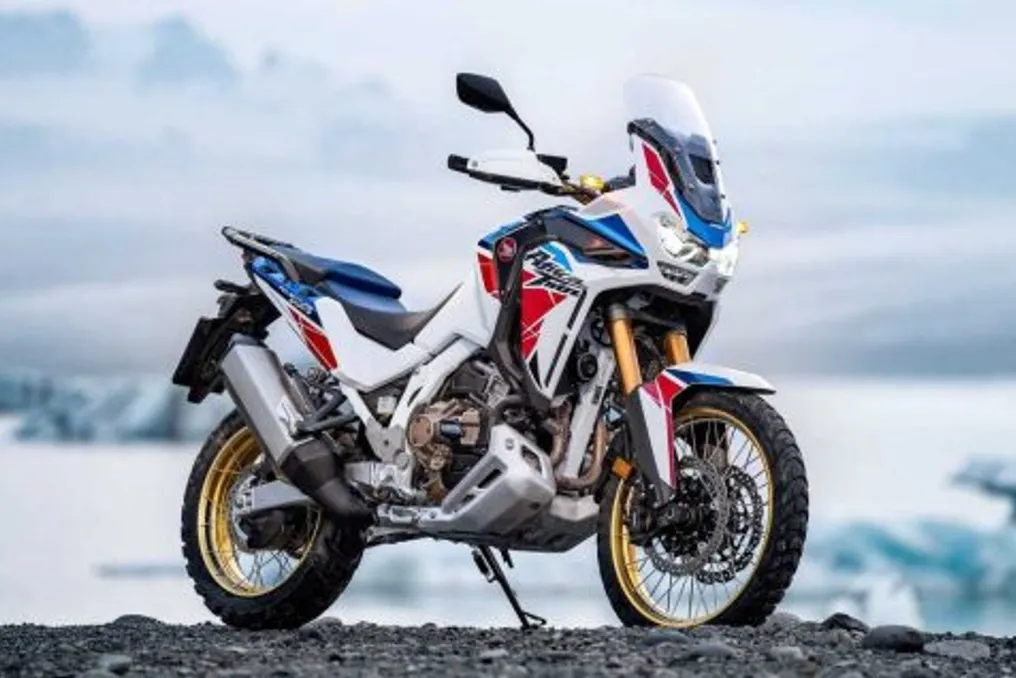
At the Milan Fair in Italy, Honda launched Honda Sensing Ride, a rider assistance system developed based on radars and adapted from the Honda Sensing technology used in the brand's vehicles.

This innovation will be introduced on the 2027 CRF1150L Africa Twin Adventure Sports model, with plans for gradual implementation in other models later.

The system uses millimeter-wave radars located at the front and rear to monitor surrounding traffic. By analyzing the rider's actions and the motorcycle's behavior, it can issue alerts or actively intervene to prevent accidents.

There are ten available functionalities, including Adaptive Cruise Control (ACC), emergency braking assistance, and front and rear collision warnings. Additionally, the blind spot alert illuminates the rearview mirrors when a vehicle enters an area invisible to the rider.

The rear collision warning operates in reverse, rapidly flashing the bike's turn signals to signal approaching vehicles from behind.

Among the presented features, Group Ride Assist stands out, designed specifically for motorcycles. This feature manages the distance between group members, even when they are arranged in a staggered formation, such as on winding track routes.

ACC, combined with the Stop & Go function, integrates with Honda's Dual Clutch Transmission (DCT). This allows the motorcycle to stop and resume movement autonomously in dense traffic, eliminating the need for manual clutch intervention by the rider. For this reason, the version equipped with this system is sold exclusively with the DCT, a gearbox that Honda introduced in its bikes in 2009.

The Africa Twin 2027 also received a 1.1-liter twin-cylinder engine, generating 119 hp and 12.1 kgfm. The addition of the radars results in only a 1 kg weight increase on the motorcycle.

This technology contributes to Honda's goal of halving the number of fatalities in accidents involving its cars and motorcycles by 2030, aiming to eliminate them completely by 2050.

The company emphasizes that the features have operational limitations. Factors such as road condition, weather conditions, and the motorcycle itself can affect their performance, making it essential for the rider to maintain full attention.

The Africa Twin Adventure Sports is manufactured in Manaus and has a selling price of R$ 116,513 in Brazil, although there is no official confirmation yet regarding the arrival of the Sensing Ride version in the Brazilian market.

Amapa is the only Brazilian state without road connection to the rest of the country
Read more
autopapo.com.br

Amapa is the only Brazilian state without road connection to the rest of the country

Residents of Macapá can reach the European Union by car, but not Belém. Amapa is the only Brazilian state that lacks road connectivity with the rest of the country. The sole land exit is through a bridge over the Oiapoque River, which leads to French Guiana, a overseas territory of France.

To connect with the rest of Brazil, water or air routes are necessary. Trucks are transported on barges along the Belém–Macapá and Santarém–Macapá routes, which function as a water extension of the road network. Even fuel is delivered by boat.

The problem of isolation has once again come into focus after Petrobras confirmed the presence of oil off the coast of the state, opening up unprecedented potential for wealth in the region. Between Amapa and the rest of the country lies the mouth of the Amazon—a labyrinth of channels, islands, and floodplains. There is no single bridge across the main river channel.

More than 70% of the territory in Amapá is a protected area. To illustrate the scale of the problem, a bridge between Macapá and Belém, located on a straight line 330 km apart, would have to cross the Amazon channels, traverse Marajó Island (almost the size of Rio state and also lacking roads to the mainland), and cross the Marajó Bay. Only the Amazon has a section about 2 km wide at its narrowest point, in Obidos (PA). The Rio Negro Bridge in Manaus is nearly 3.6 km long and cost over 1 billion reais.

Under the water, the channel reaches a depth of 100 meters, and the bottom consists of a field of sand dunes up to 12 meters high, which move with the current, according to the Coppe/UFRJ hypothesis. On the surface, the water level fluctuates by approximately 10 meters between dry and flood seasons.

The economic aspect is also important: since 88% of the GDP comes from services, the state has never generated cargo that could justify building such infrastructure. Electricity arrived before asphalt, thanks to the Tucuruí Line, which supplies energy from the Pará hydroelectric plant and crosses the river on 295-meter-high pylons.

On the map, BR-156 looks like an exit. In the southern section, it runs about 245 km from Macapá to Laranjal do Jari, on the border with Pará, and stops at the bank of the Jari River. On the other side is Monte Dourado (PA), which can only be reached by boat, from where a local road leads to Almeirim, back to the banks of the Amazon. Even this section is not fully paved: DNIT signed a contract in July for another 62 km of paving, scheduled for completion in 2030.

The northern perimeter road (BR-210) began opening in 1973 in Porto Grande (AP) to connect Macapá with the western border. Of the planned more than 2400 km, only about 810 km exists. A 406-meter bridge over the Jari River, between Laranjal do Jari and Monte Dourado (PA), began construction in the early 2000s but turned into abandoned supports.

Even if completed, it would lead to another northern side of the Amazon that is still separated from the national network by the river. Real connection would require crossing the Amazon itself.

Within the state, 355 out of 796 km of BR-156 remain unpaved. A Unifap study showed that transport companies lose up to 20% of goods during rains between Calsoene and Oiapoque. A native resident interviewed by Uece researchers explained the delay in construction by saying that the forest spirits had not yet given permission.

Even licensing a well faced distance issues. An oil-affected animal would take 22 to 31 hours to reach the Petrobras rehabilitation center in Belém, and Ibama required a base in Oiapoque.

What if oil arrives? Petrobras predicts that extraction will begin in seven years, and the offshore operation depends on the sea and air, not on roads. Pressure will decrease on the Port of Santana, which processed a record 3.8 million tons in 2025, as well as on airports and cities.

Oiapoque is already feeling the effects, manifested in unauthorized construction and rising rent. Mayor Inácio Masiel told the newspaper Folha: 'The benefits of oil have not yet arrived, but the consequences are already here.'

CNI estimates that the Equatorial region could increase Amapa's GDP by 61.2%. However, local experience dictates caution: according to Unifap, Calsoene received asphalt in 2007 but did not develop more than Oiapoque. Roads alone are insufficient, and oil without planning risks repeating the fate of Macapá.

Volvo launches attention monitoring system in trucks that performs automatic stopping in case of driver drowsiness
Read more
autopapo.com.br

Volvo launches attention monitoring system in trucks that performs automatic stopping in case of driver drowsiness

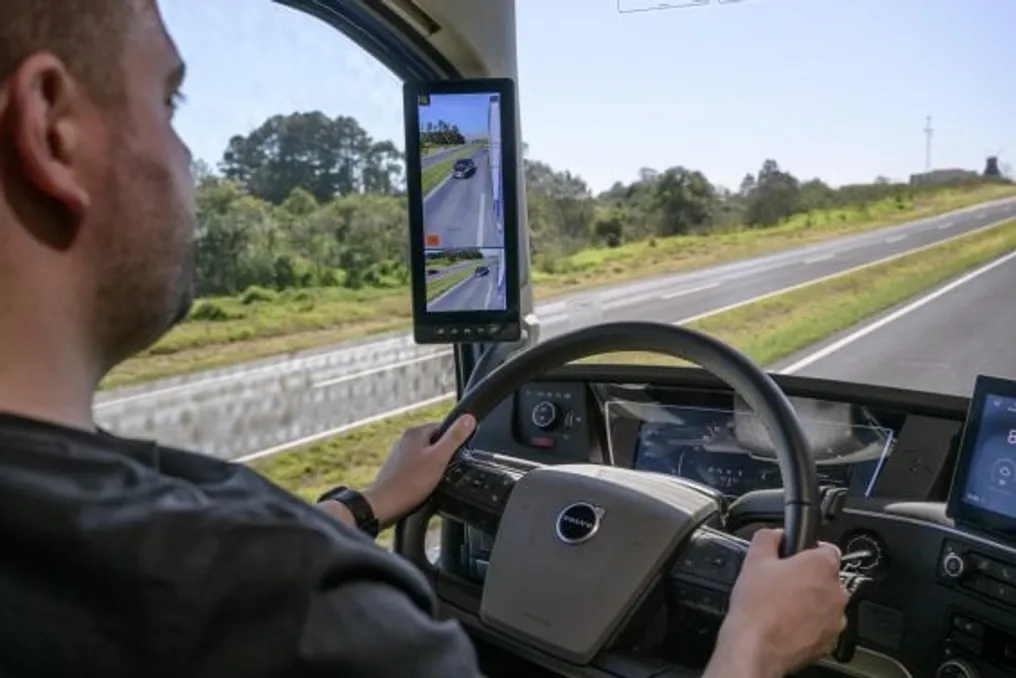
Volvo has developed a truck equipped with technology capable of identifying when the driver shows signs of drowsiness while driving, potentially triggering autonomous braking if the driver does not react. This feature, called Controlled Stop, will be presented by the Swedish manufacturer at Fenatran 2026.

Controlled Stop will be available as an option on the heavy models FH, FM, and FMX, sold starting from the event, which will take place at São Paulo Expo from November 9 to 13. Volvo states that this feature is exclusive to the brand.

In comparison, the Mercedes-Benz Actros has offered a similar emergency stop system in Europe since 2021, although this is activated by the absence of interaction with the steering wheel, and not specifically by the eyes.

The mechanism is activated when sensors detect that the driver keeps their eyes closed for more than five seconds or when they do not identify hands on the steering wheel. Initially, the system issues alerts. If there is no response within the subsequent five seconds, the truck initiates lane keeping with directional correction and subsequently activates the service brakes, gradually reducing speed until stopping in the same lane.

During this stopping maneuver, the hazard lights are turned on. When movement ceases, the doors are unlocked to facilitate the arrival of rescue teams. For context, at 80 km/h, a truck covers approximately 110 meters in five seconds; adding the time of closed eyes and waiting for a reaction, over 220 meters are covered before the procedure begins.

The driver retains the ability to interrupt the stop at any time, simply by pressing the accelerator, applying force to the steering wheel, or deactivating the Attention Detector. This detector represents the first level of warning. In its second version, a sensor was added to monitor whether the driver's eyes are closed, looking down, or looking sideways, intensifying warnings in frequency and volume as drowsiness persists.

This component is part of Safety Packages 5 and 6, with the latter including Volvo Dynamic Steering, a system that uses an electric motor to make steering more stable and light.

In the European Union, cameras designed to monitor driver attention have become mandatory in new trucks since July of this year. In Brazil, the issue of fatigue and sleep is recognized; the Brazilian Traffic Medicine Association (Abramet) points out that these factors are responsible for 60% of road accidents involving professional drivers in categories C, D, and E.

Furthermore, Volvo will introduce the Safety Score, a report accessible via the Volvo Connect application. This tool collects data on sudden braking, collision warnings, and activations of stability control and ABS brakes, allowing carriers to direct appropriate training.

Another improvement is in the automatic electronic parking brake, which now has new activation conditions. With the doors closed, it locks the vehicle ten seconds after stopping, even if the driver has not pressed the brake pedal or left the seat. If the doors are open and the driver is outside the seat, three seconds without using the pedals are sufficient for locking.

This innovation arrives in the brand's most popular model, the Volvo FH 540, which is the best-selling heavy truck in Brazil since 2019. According to the National Federation of Motor Vehicle Distributors (Fenabrave), 5,403 units of this model were registered in 2025.

Popular