As artificial intelligence transforms software development, testing, and deployment processes, developers must master new tools and adapt to changing working methods. Technologies shaping the software development sphere are rapidly evolving, including autonomous coding agents, multi-agent systems, AI-based infrastructure, and cybersecurity.
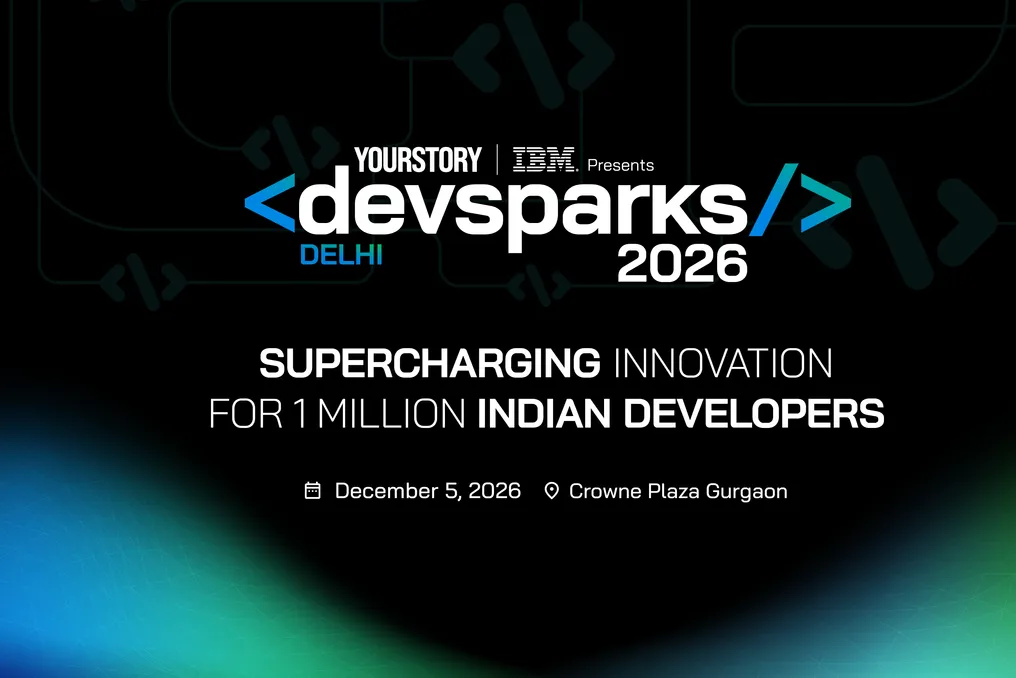
DevSparks 2026, YourStory's flagship developer summit, will take place for the first time in the Delhi NCR region on December 5th. The event will bring together developers, startups, large enterprises, and Global Capability Centers (GCCs) for a day dedicated to in-depth technical sessions, practical workshops, and discussions on the future of software development.
Following events held in Pune, Bangalore, Hyderabad, and Chennai, the Delhi event will be hosted at the Crowne Plaza hotel in Gurugram. Over 500 developers are expected to attend, with more than 15 technology leaders speaking, and over 10 deep-dive sessions planned.
In its four previous editions, DevSparks has gathered over 27,000 developers, 173 speakers, and 50 partners. DevSparks 2026 is a nationwide initiative aimed at equipping India's developer community with skills in coding agents, agentic AI, multi-agent system orchestrators, AI SDKs, and GenAI tools to boost productivity.
The natural next step for the summit was Delhi NCR due to its strong developer community, startup ecosystem, and growing presence of enterprises and GCCs in the region. According to the Tracxn Delhi NCR Tech Annual Funding Report 2025, tech companies in the region attracted $2.9 billion in 2025, with automotive technology leading at $1.4 billion. Tech firms from Delhi accounted for 51% of all funding attracted by tech companies in the region in 2025.
2025 also saw a significant number of IPOs: 19 companies went public, including Lenskart, Physics Wallah, and Pine Labs. Additionally, Delhivery acquired Ecom Express for $165 million, and Everstone Capital acquired Wingify for $200 million.
The Delhi government is taking steps to further strengthen this ecosystem. The Delhi Startup and Incubator Policy 2026, approved in July, provides for an allocation of ₹400 crore over five years to support incubation infrastructure, mentorship, and incentives for local entrepreneurs. In October, the Delhi Cabinet also approved the Go-Delhi Fund with an initial allocation of ₹50 crore. This initiative aims to provide startups and SMEs access to product design, prototyping, and testing opportunities.
The Delhi IT Policy for 2026–2031 proposes the creation of over 200 GCCs and the training of five to six lakh young people by 2031 in areas such as AI, cloud computing, cybersecurity, and data analytics. It also suggests the establishment of a Delhi State Data Center, expected to become operational by 2027, alongside other incentives like AI compute credits.
These government measures could create more opportunities for developers working in AI, cloud infrastructure, and cybersecurity while strengthening the region's technological base. Agentic AI is becoming a key focus area for developers and enterprises and will occupy a central place in the DevSparks Delhi program.
Sessions will focus on how to build autonomous agentic systems and develop multi-agent orchestration for coding, workflows, and business operations. Developers will also explore the practical application of multimodal AI, including systems that handle text, code, images, video, and speech in production environments.
Beyond agentic AI, the summit will examine the process of migrating AI-based applications from prototype stage to full production. Sessions will cover building applications using AI-centric frameworks, integrating AI into sectors such as fintech, healthcare, commerce, manufacturing, and agritech, as well as utilizing Edge AI and the Internet of Things (IoT).
The program will also look at how AI-driven testing can enhance developer productivity. Regarding infrastructure, discussions will cover optimized AI cloud systems, chips and accelerators, and models for multi-cloud, hybrid, and sovereign clouds for enterprises. Other areas include data pipelines, data governance, cybersecurity threats, and AI-based defense mechanisms.
Since GCCs are a vital part of Delhi's technological growth plans, DevSparks will also examine how enterprises and GCCs are preparing their workforces for new technologies. Sessions will analyze trends in upskilling, hiring, and workforce readiness as AI integrates deeper with other technologies. Discussions will focus on the skills needed for developers to remain relevant and the opportunities arising in India's leading tech enterprises and GCCs.
DevSparks Delhi will offer developers opportunities to learn through technical deep dives, workshops, masterclasses, and real-case study analyses. These sessions are designed to help participants apply AI to practical problems, explore technological advancements beyond AI, and identify new career paths. As AI is increasingly used in software development and enterprise technology, the summit will concentrate on the tools, skills, and technical knowledge required for developers to build and deploy applications. DevSparks Delhi 2026 will take place on December 5th at the Crowne Plaza, Gurugram.