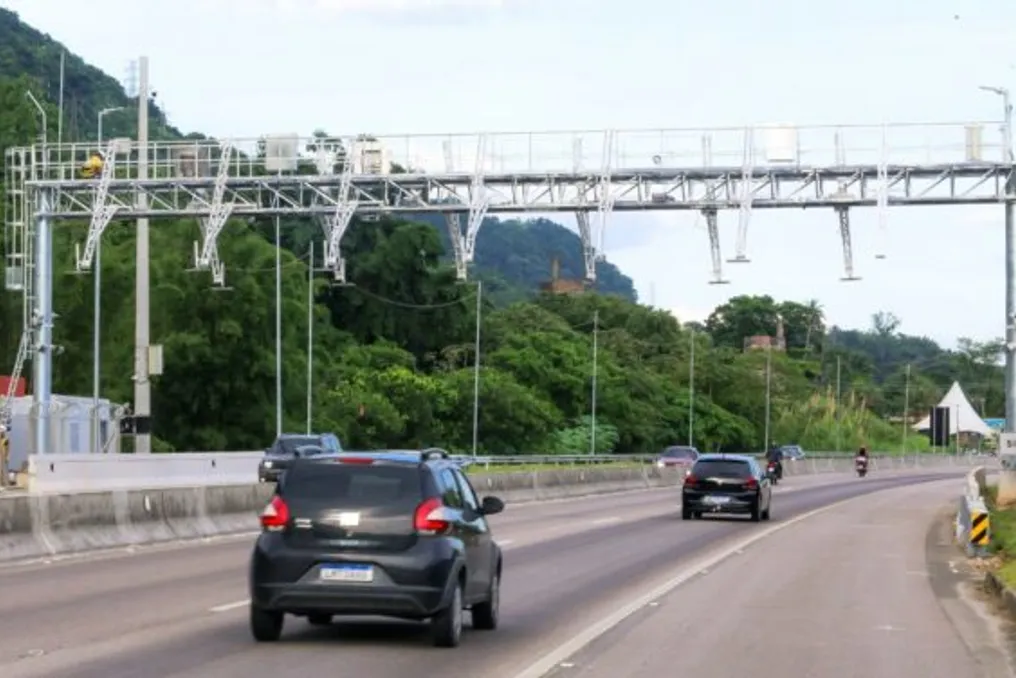
Free Flow toll system presents failures; see how to contest undue charges
Read more
AutoPapo
autopapo.com.br

Free Flow toll system presents failures; see how to contest undue charges

The Free Flow toll system offers advantages in highway traffic by reducing the time spent by drivers. Starting in October 2026, the Brazilian CNH application began displaying the system's tariffs, standardizing the consultation. Previously, it was necessary to consult the website or specific application of the road concessionaire traveled.

However, the Brazilian CNH application is not immune to failures and has already generated problems for the public. A reader of AutoPapo reported a duplicate charge at a Free Flow toll managed by the Nova 381 concessionaire. The vehicle tag operator identified the duplication and canceled the payment.

This occurrence resulted in an unpaid toll notice in the Brazilian CNH application, exposing the reader to the risk of receiving a fine for toll evasion. The user appealed using the governmental application itself, which directed them to a form on the road concessionaire's portal. The case resolution was only achieved after the report contacted the company.

It is important to note that the Brazilian CNH application only serves to consolidate information related to the Free Flow toll; to make payments or file disputes, it directs the user to the respective concessionaire's website. In routes crossing roads managed by two different companies, it will be necessary to access multiple websites to regularize debts.

The road concessionaires themselves provide applications so that drivers can pay Free Flow tolls. Nova 381 recommends that the most effective channels for disputes and general support are WhatsApp or the ombudsman's email, although its application is also considered agile.

In April 2026, the Ministry of Transport suspended fines for non-payment at Free Flow tolls for a period of 200 days, aiming to ensure system integration. This grace period applies to trips made until October 17 and ends on November 16. Trips made from October 18 onwards follow the new standard regularization period of 30 days. Toll evasion constitutes a serious infraction, subject to a fine of R$ 195.23 and five points on the National Driver's License (CNH).

As an alternative to avoiding the need to monitor the Brazilian CNH application or the concessionaires' websites, one can install a tag in the vehicle. Free Flow gantries read and the charge occurs automatically. Currently, there are tags provided by specialized companies, such as Sem Parar, Taggy, and ConectCar, in addition to those issued by banks, but even with these solutions, it is essential to monitor debts to prevent financial losses.

Similar stories

What to do if money is debited from a bank account without notification: RBI refund rules and norms
Read more
www.aajtak.in

What to do if money is debited from a bank account without notification: RBI refund rules and norms

In the era of digital banking, cases of online fraud and unauthorized withdrawal of funds from bank accounts have become more frequent. Recently, an incident occurred in Greater Noida where millions of rupees disappeared from the accounts and fixed deposits (FDs) of one branch of Punjab National Bank (PNB), increasing concerns about the safety of depositors' funds.

If your accumulated funds are withdrawn without your knowledge, the question arises regarding compensation from the bank. The Reserve Bank of India (RBI) has established rules regarding client liability and the procedure for refunding funds in cases of unauthorized electronic banking transactions. If money is debited from your account without permission, you can minimize the damage by taking several immediate steps.

If a debit occurs from your bank account that you did not make, you must immediately notify the bank. This can be done using the bank's official customer support numbers, mobile application, website, or by visiting a branch.

There are three primary actions that should be taken:

  • File a complaint with the bank: You must inform the bank about the unauthorized transaction and register a complaint. If necessary, request the blocking of online debit and card operations to prevent further debits.
  • Save the complaint number: Be sure to obtain a reference number for the complaint from the bank. Also, save SMS messages, emails, bank statements, and transaction screenshots, as these documents will be needed for further investigation and fund recovery.
  • Report to cyber police: If the fraud is related to online payments or digital transactions, immediately file a complaint at the helpline number 1930. Additionally, a complaint can be filed through the Ministry of Home Affairs cybercrime portal at cybercrime.gov.in.

According to RBI rules, the client's liability in case of unauthorized electronic transactions depends on how the fraud occurred and how quickly the client notified the bank.

If the fraud was due to the bank's fault

If the unauthorized transaction resulted from negligence, error, or a systemic flaw on the part of the bank, the client's liability is zero. In such cases, the client does not need to prove the speed of filing the complaint; the bank bears all the loss.

In case of third-party fraud within 3 days

If the funds were debited due to interference by a third party or system hacking, and not due to the fault of either the bank or the client, the client must inform the bank about the transaction within three working days of receiving the information. If this condition is met, the client's liability will also be zero, and the bank will bear the entire loss.

What is the liability when reporting fraud after 4–7 days?

If the client reports the fraud to the bank within four to seven working days, their liability will be limited. This limit is determined by the type of account. The client may incur losses equal to the lesser of two amounts: the amount of the fraudulent operation or the established maximum limit. For Basic Savings Bank Deposit Accounts (BSBDA), the maximum liability is ₹5000, and for other regular savings accounts, it is ₹10000. For some current and other specified accounts, this limit can reach ₹25000.

What happens if OTP or PIN is shared?

If the fraud occurred due to the client's own carelessness, by sharing an OTP, PIN, password, or other payment information with someone, the client may bear the entire loss until they contact the bank. However, any additional unauthorized losses incurred after the bank receives the complaint will become the bank's responsibility.

What happens if more than 7 days pass?

If the client informs the bank about the fraud after seven working days, their liability will be determined according to the policy approved by the bank's board of directors. Therefore, the safest approach is to report the fund withdrawal immediately.

The RBI has set timeframes for refunds in cases of zero or limited liability. The bank is obligated to make a provisional credit of the unauthorized amount within 10 working days of receiving the complaint. This must happen regardless of the waiting period for insurance claim settlements. The amount must correspond to the value on the day of the debit.

The bank is given a maximum period of 90 days to fully investigate the complaint and determine the client's liability. If the bank cannot resolve the complaint or determine the liability within this period, it must pay compensation to the client in accordance with RBI rules.

Furthermore, the bank must ensure that the client does not suffer losses in the form of interest on savings or debit cards. No additional interest charges should be applied to the client's credit card.

If you have filed a complaint with the bank but it refuses to resolve your issue, you can approach the RBI's Complaint Management System (CMS) at https://cms.rbi.org.in. A complaint regarding banking services can be filed through the integrated RBI Ombudsman scheme.

Oppo homologates 100W power bank for use in Brazil
Read more
tecnoblog.net

Oppo homologates 100W power bank for use in Brazil

Oppo demonstrated interest in the Brazilian market by obtaining certification for another accessory, specifically a powerful power bank.

This accessory, identified by model code PBSV05, has a typical capacity of 12,000 mAh. It supports fast charging up to 100W using Oppo/Realme/OnePlus SuperVOOC technology, in addition to offering 45W for USB-PD compatible devices from other brands (this capacity is also used to recharge the power bank itself).

The National Telecommunications Agency issued the certificate for this product on Wednesday, the 21st.

Although not a new release, the item had already been made available globally in 2024 and received a special Year of the Horse edition in China in January. Its design is characterized by a division between plastic (usually white) and a section that appears to be anodized aluminum, usually silver, although there are variations in other countries.

Internally, the device features three nominal 4,100 mAh cells, which enables the high charging speed. It has two USB ports: one USB-A and one USB-C, the latter being used both to charge devices via a USB-C cable and to recharge the power bank. The packaging will include a USB-A to USB-C cable.

The manufacturing of this model is the responsibility of Aohai Technology, located in Dongguan, China. This same model is also sold in certain nations under the OnePlus brand, featuring a black plastic part, but it is the same product.

Currently, there is no information available regarding the product's arrival date in Brazil or its price. As a comparative reference, the Samsung 10,000 mAh and 25 Watt power bank is being sold for R$ 141.55 upfront in the online store.

Popular