With the increasing use of AI agents in large companies, these automated tools have gained unrestricted access to the organization's client files and records. However, most companies still cannot accurately determine which specific data these agents are viewing. In light of this, Sentra has raised $150 million in a new funding round led by Capital One Ventures to ensure data protection before it reaches the agents.
The company, based in New York and Tel Aviv, reports that its total raised capital now exceeds $250 million. Furthermore, Capital One Ventures has secured a seat on the board of directors. Additionally, existing investors, including Bessemer Venture Partners, Zeev Ventures, Standard Investments, Munich Re Ventures, and Key1 Capital, have decided to increase their investments.
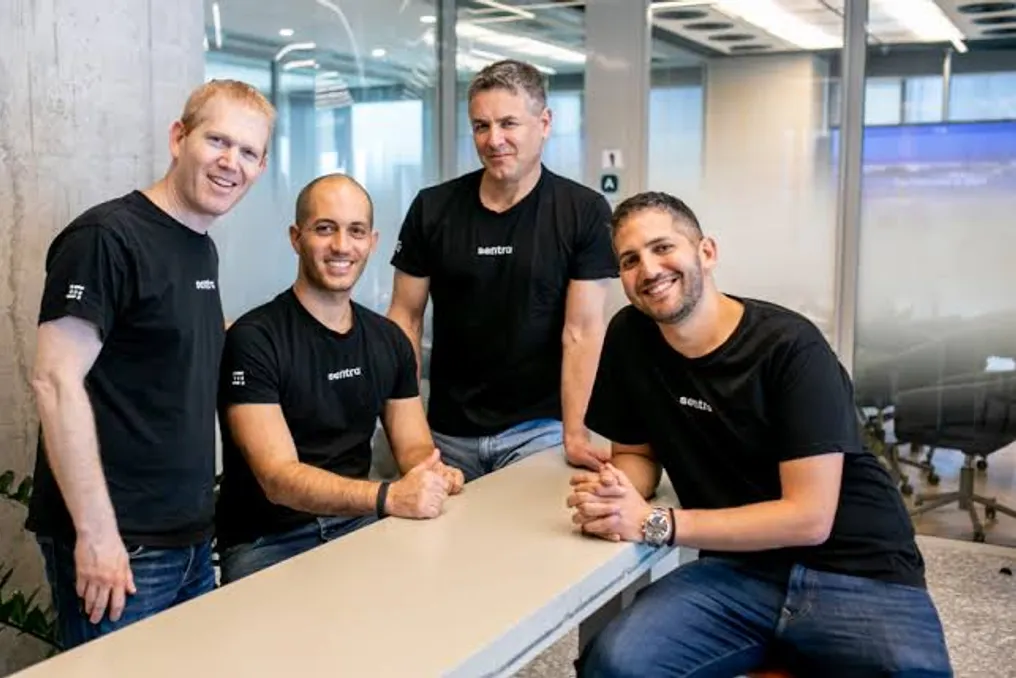
The Sentra team has deep roots in cybersecurity. The four founders launched Sentra in 2021, including CEO Yoav Regev and President Asaf Kochan, both of whom previously served as commanders in Unit 8200. They developed Sentra using four security tools: DSPM, DDR, data access management, and DLP.
Simply put, Sentra can detect sensitive data, determine who or what can access it, and revoke access for those who do not require it. Sentra's advantage is that it operates within the client's own environment; sensitive data is never sent to Sentra. The system works in three stages: before an incident, it classifies data and enforces the principle of least privilege; during an incident, it flags suspicious access and revokes permissions; after an incident, it provides an exact list of data the agent could have accessed.
CEO Yoav Regev emphasized that AI agents have become the most active consumers of corporate data. Nevertheless, many of these agents inherit access rights that most businesses and individuals do not properly verify. He noted that the problem of one employee with excessive access rights is serious, but an agent with the same level of access performing thousands of queries per hour poses a much greater threat.
Lyft is already collaborating with Sentra. Its Chief Information Security Officer, Haim Sanders, stated that his teams aim to rapidly implement AI, but they need to know what data the agents can access before activating them. This risk is precisely what Sentra's offering addresses.
Regev also reported that since the last round, the company has tripled in size, and local valuations place its worth near one billion dollars, demonstrating over 300% year-over-year growth. The company serves about 100 large corporate clients in the US and Europe, generating tens of millions of dollars in revenue. The company employs 130 people, half of whom are located in Tel Aviv.
The raised funds will be directed towards deepening visibility into agents and copilots, maintaining continuous least privilege control, and accelerating the localization of issues in case of agent misconduct. Additionally, Sentra plans to double its staff, open an office in London, and begin pursuing federal contracts in the US starting in late 2027.
This funding round comes amidst competitor activity: Cyera reached a $12 billion valuation after raising $600 million in June, Zenity received $125 million in August for agent activity monitoring, and Veeam agreed to acquire Securiti for $1.725 billion last year. Investors believe that AI data security is the next necessary expense. The involvement of a bank's venture arm in fundraising also signals the importance of this area, as banks hold some of the most sensitive data on the planet.
For founders and security executives, the conclusion is clear: when implementing agents, the data map is as important as the model itself. Sentra is betting $150 million on the fact that most companies have yet to create this map.