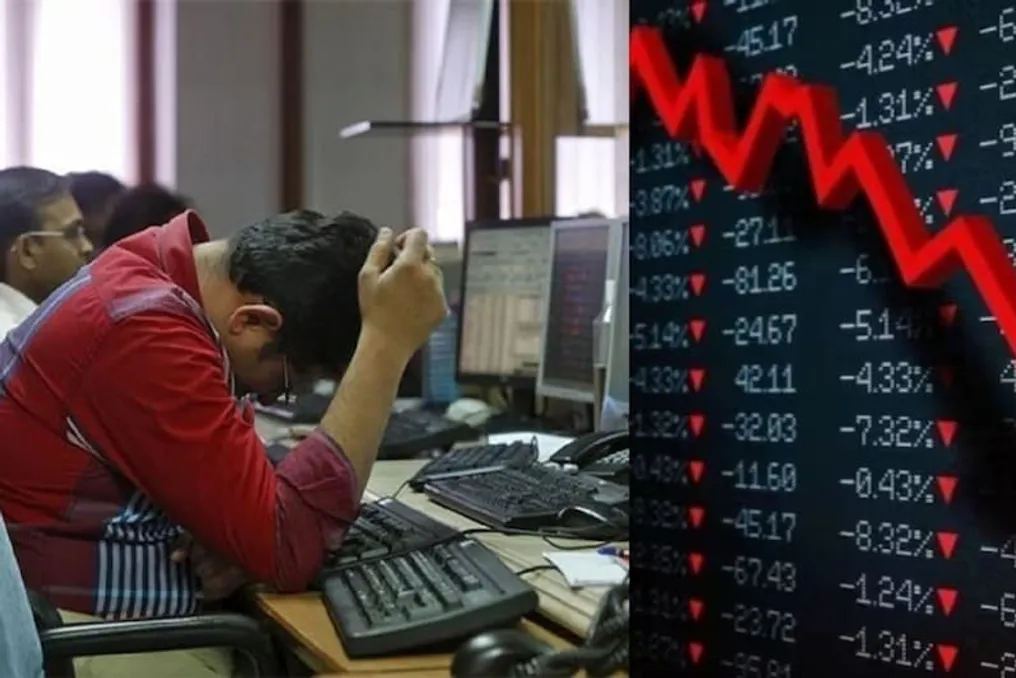
PI Industries Limited shares sharply dropped by 17% after publishing second quarter earnings report for fiscal year 2027
Read more
Aaj Tak
www.aajtak.in

PI Industries Limited shares sharply dropped by 17% after publishing second quarter earnings report for fiscal year 2027

Despite the overall confident trend in the Indian stock market on Thursday, a significant decline was noted in one of the popular stocks. Shares of PI Industries Limited plummeted by 16.28 percent during trading, reaching Rs 1,830.90, which was the lowest level in 52 weeks.

The reason for this sharp fall was the company's publication of the earnings report for the September quarter (Q2 FY27), which recorded a substantial drop in profit. Before the news broke, the shares were trading at Rs 1,812 per share, showing a decline of 17.15% and leading to a year-to-date (YTD) loss of 43.71 percent.

High activity was observed on the day of trading: 3.17 lakh shares were traded on the BSE, significantly exceeding the average volume over two weeks, which was 67,000 shares. The total turnover amounted to Rs 59.86 crore, and the company's market capitalization (m-cap) was valued at Rs 28,302.26 crore.

PI Industries reported that consolidated net profit in Q2 FY27 decreased by 70% compared to the same period last year, amounting to Rs 122.2 crore versus Rs 409.3 crore the previous year.

There was also a serious decrease in operating revenue: it fell by 9% in Q2 FY27, reaching Rs 1,701.8 crore compared to Rs 1,872.3 crore in the second quarter of FY26. Operating efficiency also weakened, as Earnings Before Interest, Taxes, Depreciation, and Amortization (EBITDA) shrank by 57% year-on-year, totaling Rs 236.2 crore against Rs 543.4 crore the previous year.

The EBITDA margin decreased from 29% last year to 14% in the current quarter. Furthermore, the company's gross margin reduced to 49% in Q2 FY27. Exports of agrochemicals (Agchem) showed a decline of approximately 18% year-on-year. As of September 2026, the promoters' stake in PI Industries was 46.09%.

The price trend of PI Industries Limited shares shows a steady decline: over the last month, the shares have fallen by 18.38%, over six months by 40%, and have lost more than 50% of their value over a year, meaning their price has approached half of its initial value.
Similar stories

Suzlon Energy shares fell to 52-week low after lowering profit targets
Read more
www.aajtak.in

Suzlon Energy shares fell to 52-week low after lowering profit targets

Shares of Suzlon Energy Limited showed a significant decline on Friday. During the morning trading session, the stock dropped by more than 9% as the renewable energy provider substantially revised its profit targets for the second quarter.

Sensex and Nifty Recover After Decline Thanks to Three Factors
Read more
www.aajtak.in

Sensex and Nifty Recover After Decline Thanks to Three Factors

The Indian stock market began trading on Friday with a sluggish pace. During the first hour of trading, both major indices—Sensex and Nifty—showed a decline. However, the market soon recovered, and thanks to increased buying, the Sensex rose by more than 500 points, while the Nifty showed a rise of over 150 points. The market was supported by purchases in IT stocks, good results from the Tata group's company Trent, and the strengthening of the rupee.

Initial Sluggishness, Then Market Acceleration

On Friday, October 30, Sensex and Nifty started trading in the green zone. After an initial rise, pressure emerged in the market, and both indices dropped into the red zone for a period. Nevertheless, the return of buyers at low levels allowed the market to recover. During day trading, the Sensex rose to 74,731.42, increasing by 580.38 points compared to the previous close. Nifty reached a high of 23,110.50, showing a rise of 173.75 points. Previously, on Thursday, the market also showed good growth: Sensex closed at 74,151.04, up by 905.01 points or 1.24 percent. Nifty demonstrated an increase of 237.90 points or 1.05 percent, ending trading at 22,936.75.

First Reason for Growth: Purchases in IT Stocks

The IT companies' stocks provided the biggest support to the market on Friday. The Nifty IT sector index rose by approximately 2.3 percent. Interestingly, many Asian markets saw a fall in shares of companies related to artificial intelligence (AI). Investors fear that growing corporate spending on AI may not yield the expected profits in the future. Despite this, Indian IT companies attracted buyers. Analysts suggest that instead of massive AI spending, many foreign firms might focus on cost reduction, automation, and outsourcing. In such a situation, Indian IT companies could receive new orders, which supported the stocks of this sector. Confidence in the sector was also strengthened by Cognizant's stable results in the September quarter. The company's revenue amounted to $5.66 billion, which is 4.8 percent higher year-on-year, and its order volume grew by 4 percent, reaching $28.7 billion.

Second Reason: Stock Rise After Good Results from Trent

Trent's stocks, a retail company of the Tata group, also showed strong demand. After publishing positive results for the second quarter (Q2), the company's shares rose by approximately 6 percent during trading. Trent's results boosted investor confidence and supported market growth. Furthermore, positive reports from some other companies and stable domestic demand strengthened market sentiment. Investors showed interest in individual company stocks.

Third Reason: Market Support from Strong Rupee

At the start of Friday's trading, the Indian rupee strengthened by 7 points against the US dollar, reaching 95.19. The rupee received support due to the weakening dollar and lower yields on American bonds. However, the rupee's rise was limited by rising crude oil prices. On Thursday, the rupee closed at 95.26 per dollar, showing a rise of 2 points. The strengthening of the rupee also brought some respite to the market. Nevertheless, high crude oil prices and ongoing geopolitical tensions in the Middle East remain concerns for investors.

What Will Be Important for the Market Next?

Strong results from individual companies and stable domestic demand are supporting market sentiment. However, high crude oil prices and ongoing tension in the Middle East pose serious risks to the market. Currently, Nifty has risen by approximately 1.6 percent in October, and Sensex by 2.5 percent. Thus, the recovery on Friday brought relief to the market, but further movement will largely depend on second-quarter company results, crude oil prices, and global signals.

Indian stock market experiences decline: capitalization drops by 3.43 lakh crore
Read more
www.aajtak.in

Indian stock market experiences decline: capitalization drops by 3.43 lakh crore

The Indian stock market is currently under significant pressure, with continuous declines observed in the Sensex and Nifty indices. Small and mid-cap stocks have been particularly affected, leading to substantial daily losses for investors.

On Thursday, the market capitalization of BSE fell from 461.78 lakh crore to 458.35 lakh crore, losing 3.43 lakh crore. On the same day, the Sensex dropped by 460.30 points or 0.62%, reaching 73,249.39, while the Nifty decreased by 123.70 points or 0.54%, settling at 22,687.65.

Furthermore, the BSE Smallcap Select index fell by 80.61 points or 0.94%, dropping to 8,533.71, and the BSE Midcap Select index slid by 126.26 points or 0.74%, reaching 16,979.59.

Among the 30 stocks in the BSE Sensex, 11 showed growth, while the remaining 19 experienced a decline. Reliance Industries shares lost the most, falling by 2.59% to 1176 rupees. They were followed by Eternal, HDFC Bank, and Powergrid shares, which dropped by more than 2%.

The primary reason cited for the turmoil in the stock market is the rise in crude oil prices. On Thursday, the price of crude oil rose by 3%, exceeding the $112 per barrel mark. The increase in oil prices has intensified inflation concerns, which has caused the sharp fall in the stock market.

Other factors also contribute to the decline in the stock market. (Note: Always consult your financial advisor before investing in any stocks.)

Popular