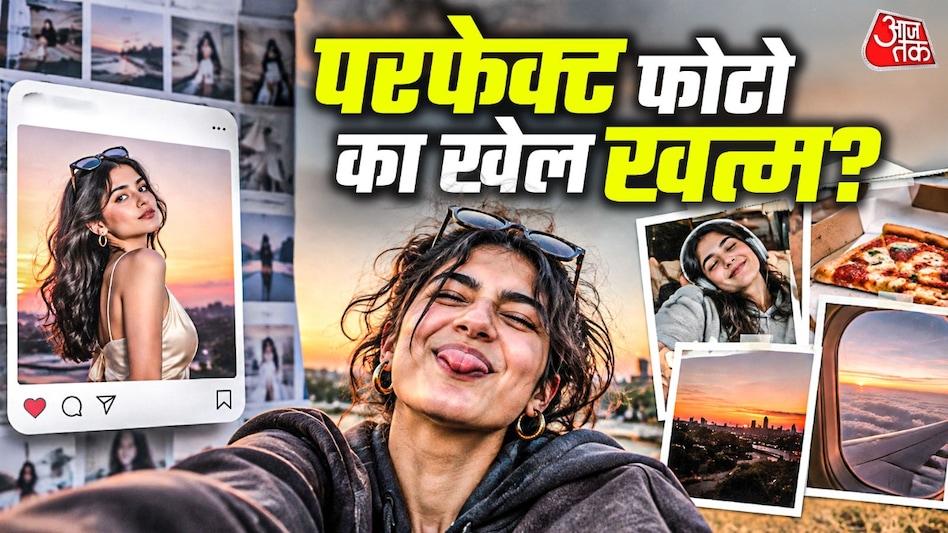
Gen Z prefers photo dumps over perfect shots on social media
Read more
Aaj Tak
www.aajtak.in

Gen Z prefers photo dumps over perfect shots on social media

Previously, there was a trend where users paid close attention to every detail before posting photos on Instagram: they carefully monitored the color of the shot, the quality of the background, and the uniformity of the style of all images. However, a change in mindset is now observed on social media, as the practice of posting photo dumps is gaining popularity among Generation Z.

A photo dump implies placing multiple diverse photos in a single post. These pictures can include both professionally taken shots and completely ordinary ones, taken without any preparation. Such posts often feature photos of food, friends, walks, the sky, selfies, and everyday life moments.

The essence of a photo dump is presenting several images together within one post. There is no need for all these photos to harmonize with each other. The goal of this approach is not to demonstrate a specific style, but rather to share various moments from personal life.

The main reason for the popularity of this phenomenon is the reduction of pressure on social media related to the need to look flawless. Previously, people tried to design their profiles in a special style, but now many young people strive to appear more natural and authentic, rather than artificial. A photo dump provides them with an opportunity to share memories without excessive thought.

Furthermore, the need for editing every picture, choosing ideal lighting or background, and selecting uniform photos is decreasing. Young people are beginning to give the same importance to small and ordinary moments of their lives as they do to significant events.

Although it cannot be said that the era of the perfect Instagram feed is completely over, since many still like to keep their profile beautiful and organized, the growing popularity of photo dumps demonstrates that for Gen Z, social media is becoming not just a platform for showing beautiful pictures, but also a place for sharing memories and showcasing real life.

This growing trend indicates that Gen Z is starting to value moments from their real life more, rather than superficiality on social media. For them, it is more important for a photograph to capture some memory, feeling, or special moment, rather than its beauty or perfection. Perhaps this is why people prefer messy but memorable shots over carefully retouched photographs.

Similar stories

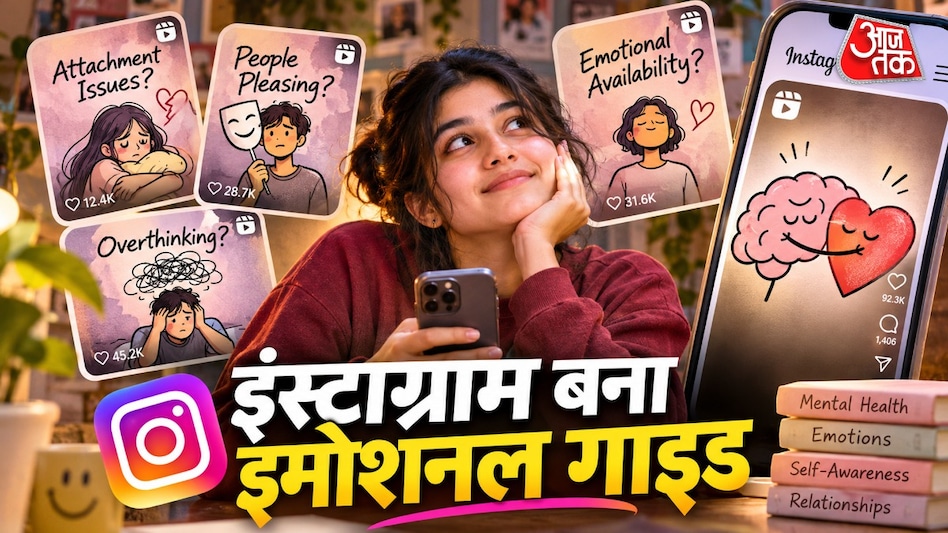
Generation Z uses social media and Reels for self-analysis and understanding their emotional state
Read more
www.aajtak.in

Generation Z uses social media and Reels for self-analysis and understanding their emotional state

For Generation Z, the process of understanding their own emotions is increasingly integrating into the sphere of social media. Previously, young people found answers to questions about their mood, preferences, and feelings by spending time alone or discussing them with close friends. However, many young people now turn to resources such as Instagram Reels, memes, and online posts to make sense of their experiences.

Sometimes watching a specific video evokes a feeling that it reflects a story from their own lives, and sometimes a post helps them understand the motives behind their behavior.

Recently, new terms related to relationships and feelings have been actively spreading on social media. These include concepts such as 'emotional availability,' 'people pleasing,' 'attachment issues,' 'overthinking,' and 'emotional baggage' or 'burnout.' Through these words, Generation Z attempts to interpret their behavior. They often feel that they are becoming too attached to someone or are prone to overanalyzing small details. In such situations, a video or post can offer a new perspective on their behavior.

On the Instagram platform, there are numerous videos describing states of inner sadness, the reason for preferring distance from people, or patterns of behavior in relationships. Generation Z finds reflections of themselves in these videos. Sometimes they send similar posts to friends to share what they are feeling. Thus, what is difficult to express in words becomes easier to explain through social media content.

Nevertheless, not all information obtained from social media is reliable. One cannot conclude a person's belonging to a certain emotional category based solely on a few seconds of a video. For example, feeling sad does not automatically mean a person suffers from depression. Similarly, the desire to keep distance from someone does not always indicate any specific attachment issue.

Although social media can provide new concepts and viewpoints, there is no quick way to understand one's feelings. It is extremely important to spend time alone, write down thoughts, and engage in dialogue with trusted people. If necessary, professional mental health help should be sought. Social media can help raise awareness of one's experiences, but the answer to every feeling will not be contained in some video. For self-knowledge, it is sometimes necessary to put the phone aside and listen to oneself.

Generation Z is changing Instagram culture: from perfect selfies to showcasing real life
Read more
www.aajtak.in

Generation Z is changing Instagram culture: from perfect selfies to showcasing real life

Previously, the trend of perfect selfies, meticulously edited photos, and displaying an impeccable life dominated Instagram. However, Generation Z is transforming this culture. Today, young people prefer to share not only beautiful pictures but also show their real lives, random moments, and personal style.

Shift from perfect photos to real moments

Among members of Generation Z, the pressure to make every photo perfect is decreasing. Now, unfiltered shots, pictures with messy rooms, photos with imperfect hairstyles, and everyday small details are being posted. The goal is no longer just to look good, but to demonstrate one's real life.

Rise in popularity of Finsta and private accounts

Many Gen Z users post curated pictures on their public profiles, while for friends, they create separate private accounts often called Finsta. Here, memes, random selfies, and personal updates are shared without hesitation.

New trends shaped through Reels

Videos related to dancing, comedy, the 'Get Ready With Me' (GRWM) format, and daily life have become an integral part of Instagram culture. Generation Z not only follows new trends through Reels but also starts them independently. According to a Meta and Ipsos report from June 2026, 89% of Gen Z in India view Reels daily.

Popularity of photo dumps and carousels

Instead of posting one perfect photo, the trend of sharing multiple pictures together is gaining popularity. Photo dumps include moments of fun with friends, travel pictures, food, and random events. Carousels allow sharing many photos or information within a single post. According to an Instagram study by Metricool in 2026, carousels retain nine times more than single photos.

Circle of friends matters more than follower count

For Generation Z, having a large number of followers is no longer the main criterion on Instagram. An important part of using the platform is exchanging stories among close friends and posting in private accounts. Young people prefer to share their thoughts, funny moments, and personal news with a select circle of friends instead of making all posts public.

Today, for Generation Z, Instagram is not just a platform for publishing beautiful photos or counting likes. Through it, they demonstrate their identity, initiate new trends, and interact with people in their own way. It is clear that what matters on Instagram now is not so much what you post, but how you want to present yourself.

Generation Z uses a second social media account for more personal communication
Read more
www.aajtak.in

Generation Z uses a second social media account for more personal communication

In the world of social media, Generation Z is no longer limited to a single Instagram account. Many members of this generation create an additional account accessible only to selected people. This second profile is often called a Finsta, which is a combination of the English words 'fake' and 'Instagram'. However, this does not always mean using a fake identity; often, it is simply another account belonging to the same person where they can be more open with their close friends.

Previously, Instagram users preferred to share beautiful photos, vacation spots, and special moments from their lives on their main feed. But the pressure associated with needing to make every post perfect can worry some members of Generation Z. In such cases, the second account becomes a space where they do not have to think too much about the aesthetics of each photo or the post itself.

The main account may have relatives, college acquaintances, colleagues, and other people they know subscribed to it. In this situation, it is uncomfortable to share all types of content with everyone. The second account allows them to send photos, funny memes, videos, and stories about daily life only to their close friends.

When posting content on the main account, people often think about how the photos look, how many likes they will get, and what others will think. In contrast, on the private account, they can share small moments of their life without excessive creative effort or changes. Here, the goal is not to attract a large number of followers, but to maintain a connection with their closest friends.

An important aspect of the second account is the ability to control one's online life. Generation Z can decide who sees their posts. It is not necessary to show their personal moments to every friend, relative, or colleague. Nevertheless, having a private account does not guarantee complete security, as viewers may pass on their photos or messages to other people.

For Generation Z, a second Instagram account is not just a way to use social media discreetly. For many, it is a method of separating different aspects of their life, a way to communicate freely with close friends, and a way to avoid the constant pressure of having to look flawless.

Popular