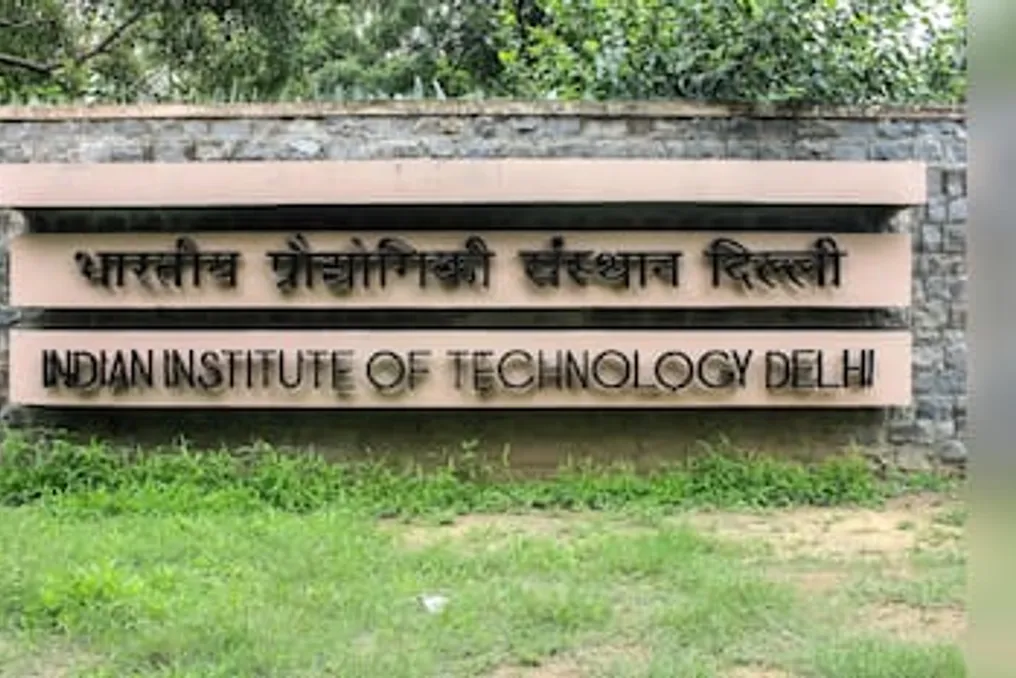
Average salary in IIT more than doubled over eight years, according to EAC-PM study
Read more
Business Standard
business-standard.com

Average salary in IIT more than doubled over eight years, according to EAC-PM study

According to the working paper of the Economic Advisory Council to the Prime Minister (EAC-PM), the average salaries of graduates from Indian Institutes of Technology (IITs) have more than doubled between the period 2015-16 and 2023-24, and the number of employed students has also increased.

The report, titled 'How India is transforming educational potential under the New Education Policy 2020,' analyzes employment outcomes and nominal salary trends in fixed groups comprising 17 IITs, 14 Indian Institutes of Management (IIMs), and 22 National Institutes of Technology (NITs). The study showed an improvement in employment and salary indicators across all three groups over the eight-year period, despite the expansion of IITs and NITs beginning to question the capacity of job markets to absorb graduates at the previous pace.

The working paper also points to a broader issue for India's higher education system: expanding access to degrees has not guaranteed a uniform distribution of program quality, employer confidence, or employment opportunities.

Average salary in IIT reached 19.08 lakh rupees

Within the scope of the study, the average salary in 17 IITs grew from 8.80 lakh rupees in 2015-16 to 19.08 lakh rupees in 2023-24, exceeding a doubling over this period. The number of students registered as employed in these institutions also rose from 4,737 to 8,411.

Similar data indicates that in IIMs, the average salary increased from 14.25 lakh to 25.59 lakh over the same period, and the number of employed students grew from 3,776 to 5,965. As for the 22 NITs, average salaries more than doubled—from 5.23 lakh in 2015-16 to 10.65 lakh in 2023-24. Meanwhile, the number of employed students in NITs increased from 9,246 to 13,419.

The report notes that these results reflect the sustained market value of the competencies, selection processes, and networks associated with these educational institutions.

Expansion puts pressure on job markets

Despite the long-term improvement in employment rates and salary levels, the document's authors express concerns about the job ecosystem's ability to keep pace with the expansion of these institutions. The study analyzed changes in enrollment in core programs between 2019 and 2025 within the same institutional panels.

Enrollment in IITs increased by 57.8 percent, reaching 50,595 students from 32,063. In NITs, the growth was 29.7 percent, rising from 57,405 to 74,457. IIMs demonstrated an increase of 38.9 percent, growing from 8,966 to 12,456 students.

The authors point out that the latest expansion has tested the capacity of IIT and NIT job markets to absorb graduates at the previous volume. This implies that improvements in employment and salary indicators over a long period should be viewed against the backdrop of a growing number of students entering these educational institutions.

Comparisons cover four-year undergraduate programs in IITs and NITs, as well as two-year master's programs in IIMs. Employment data pertains to graduating cohorts, while enrollment data compares student numbers in 2019 and 2025.

Higher education expands, but results remain uneven

The study compares these findings with the broader expansion of India's higher education system. The estimated total number of students in higher education has grown by 31.5 percent—from 34.2 million in 2014-15 to 45 million in 2023-24. The number of registered colleges increased from 38,498 to 48,246, and universities and university-level institutions grew from 529 to 1,289.

The authors emphasize that as higher education becomes more accessible, the importance of program quality and the transition from learning to work increases. They term this the problem of 'qualification congestion,' where students increasingly rely on degrees as the most recognized path to better jobs, while employers differentiate between graduates based on their institution, field of study, exam results, experience, and professional connections.

The report also highlights the limited coverage of vocational education. According to the Periodic Labour Force Survey (PLFS), formal vocational or technical training covered only 5 percent of people aged 15-29 in 2025. The authors conclude that India needs stronger alternatives to the traditional degree path, including recognized professional qualifications, structured apprenticeships, and pathways for transitioning between work and further study. They argue that the expansion of higher education must be accompanied by sufficient faculty, infrastructure, and reliable career paths to ensure a successful transition of a larger number of graduates into the labor market.
Similar stories

Icrier study shows growth in female employment in India, but under less favorable conditions
Read more
business-standard.com

Icrier study shows growth in female employment in India, but under less favorable conditions

According to a study conducted by the Indian Council for Research on International Economic Relations (Icrier), the number of women in the labor force in India has almost doubled between 2017–18 and 2025. However, this growth is concentrated in unprotected employment sectors, accompanied by a reduction in working hours and an expansion of the wage gap.

The study, titled 'Participation Paradox: Women's Work and Time Use in India from 2017–18 to 2025,' found that women have taken up more paid work, while their unpaid domestic responsibilities have not decreased. This has resulted in them having less time for rest and self-care.

The authors, including Tanu M Goyal, Shravani Prakash, Ketaki Gaikwad, and Arjuna Tandon, based on data from the Periodic Labour Force Survey (PLFS), reported that the number of working women increased from 104 million in 2017–18 to 201 million in 2025. Meanwhile, the ratio of female workers rose from 22 percent to 38 percent. It should be noted that the figures for 2025 are based on a revised PLFS with an increased sample size and calendar period, and the authors caution about the need for caution when comparing with 2017–18 data.

The increase in employment was concentrated in rural India and the agricultural sector. The female worker ratio in rural areas increased from 23.7 percent to 44.9 percent, while in urban areas it grew from 18.2 percent to 25.9 percent. The share of men in the primary sector of rural areas decreased from 54.1 percent to 47.2 percent, while the share of women in rural areas increased from 70.7 percent to 73.3 percent. The study noted: 'Structural transformation is visible for men, but it has largely bypassed women in the country.'

Regular wage employment could not keep pace with the growth rate. Among rural women, self-employed workers increased from 13.9 million to 56 million, raising their share in rural female employment from 18.6 percent to 37.2 percent. Meanwhile, regular wage employment increased from 7.9 million to 13.9 million, but its share decreased from 10.5 percent to 9.3 percent. The authors concluded that 'the additional women entering the workforce primarily came through self-employment and unpaid family labor, which are the most unstable and least paid categories.'

The authors suggest that such a sharp rise in rural India is harder to interpret as a reaction to improved opportunities; rather, it indicates that rural women are 'drawn in out of necessity, whether in agricultural activities or home-related enterprises.' The report also mentions an alternative view presented by the Economic Survey for 2023–24 and some researchers, according to which the growth was driven by opportunities.

Average weekly hours decreased for all groups between 2017–18 and 2025, but the working week for rural women decreased the most—by more than six hours. The study notes: 'The increase in participation along with the reduction in hours per worker implies an expansion of the workforce towards increasingly marginal, low-intensity activities.'

The wage gap also widened. The nominal monthly wage of rural men increased by approximately 65 percent over the specified period, while for rural women, this growth was 41 percent. In 2025, rural women earned about 45 percent of the monthly salary of rural men, compared to 53 percent previously. In nominal terms, the monthly gap in rural areas almost doubled, increasing from approximately 4200 rupees to over 8000 rupees.

Unpaid labor of women remained virtually unchanged. Time use surveys for 2019 and 2024 show that the difference in unpaid domestic labor remained generally constant—about 223 minutes per day among participants in 2024, and the difference in caregiving increased from 58 to 63 minutes. In 2024, working women also had less time for self-care than women overall: 18 minutes less in rural areas and 31 minutes less in urban areas, while working men had slightly more time than men overall.

Six out of ten women not in the labor force cited childcare and household obligations as the main reason, whereas men had almost no such reasons. The authors call for a shift from maximizing participation to ensuring structural transformation. They recommend implementing more childcare services, enforcing kindergarten rules, introducing paid paternity leave and shared parental leave, setting employment targets for women in production-related incentive schemes, as well as social protection for women working in the gig economy, and conducting regular time use surveys alongside PLFS.

Mumbai Municipality Announces Rs 33,000 Bonus Payment to Employees for Diwali
Read more
www.aajtak.in

Mumbai Municipality Announces Rs 33,000 Bonus Payment to Employees for Diwali

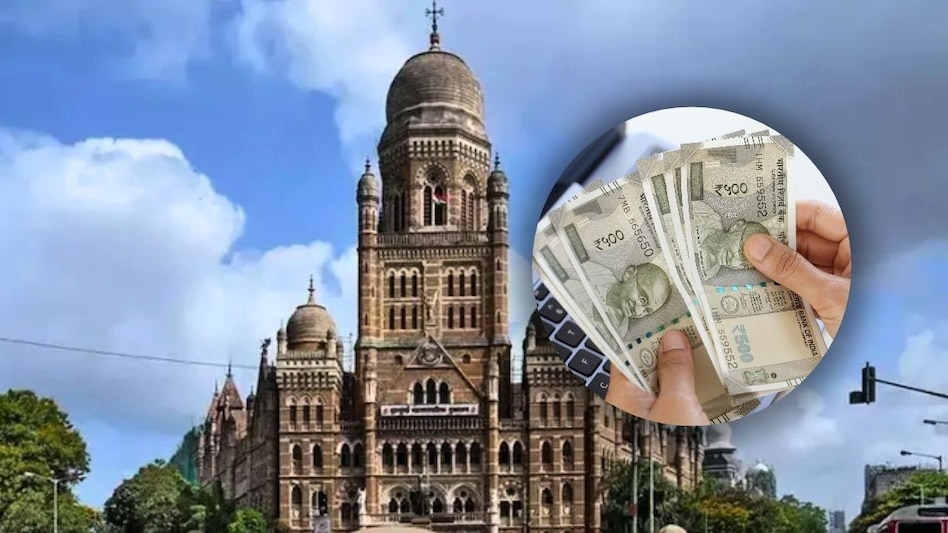
Good news was announced for thousands of employees of the Mumbai Municipal Corporation (BMC) ahead of the Diwali festival. Mayor Rita Tawde announced a bonus payment of Rs 33,000 for qualified officials and workers for 2026. Last year, employees received a bonus of Rs 31,000, which has increased by Rs 2,000 for the current year. This will provide financial support to employees and their families before the festival.

The Mayor instructed the administration to disburse the bonus amount along with regular salaries in November. This decision was made following a meeting held at the BMC headquarters. Representatives from various political parties, administrative officials, and delegates from workers' trade unions participated in this meeting. All parties discussed the issue of determining the bonus amount.

The decision by the Mumbai Municipality will benefit a total of 93,509 officials, employees, and qualified workers. Among them are employees working under the standard municipal pay scales. Additionally, teachers in aided schools and non-teaching staff will receive the bonus.

Furthermore, the municipality will provide funds for qualified volunteers in public health and kindergarten teachers for Bhau Beej. Thus, thanks to the bonus and the Bhau Beej amount, workers of different categories will receive financial assistance on the occasion of the festival.

According to Mayor Rita Tawde, factors such as lack of rainfall and drought in several districts of Maharashtra were also taken into account when determining the bonus amount. After discussing the demands of the trade unions and economic conditions, an agreement was reached to pay a bonus of Rs 33,000. Last year, the bonus was Rs 31,000, while this year it has been increased to Rs 33,000. Since instructions have been given to pay the bonus along with the regular salary in November, it is expected that qualified workers will receive this benefit before Diwali. The municipality's decision will provide additional financial aid to thousands of families in preparation for the festival.

Employment rate at IIT Dhanbad decreased for 2026 students, but average annual compensation remained high
Read more
www.aajtak.in

Employment rate at IIT Dhanbad decreased for 2026 students, but average annual compensation remained high

According to data published by the Career Development Centre of IIT (ISM) Dhanbad, the employment rate for 2026 students was lower compared to the previous year. In 2025, 87.61% of students found jobs, whereas in 2026, this figure stood at 73.64%, representing a decrease of 13.97 percentage points.

During this recruitment cycle, 1882 students from various programs were registered. However, only 1487 of them actively participated in the hiring process. As a result, companies offered jobs to 1095 students, while 392 students who participated did not receive a job offer. Among those who could not find employment, 157 are studying B.Tech.

It is noted that only two students managed to secure a government position. The highest number of job offers was made in Core Engineering, where about 486 students received offers. Out of the total 1095 employed students, 248 were female and 847 were male. The largest number of female students found employment in B.Tech (158), M.Tech (32), and MBA (26).

Some programs demonstrated higher employment rates. All students with a B.Tech Double Major and Dual Degree B.Tech-M.Tech found employment. The employment rate in the MBA program reached 93.44%. Additionally, 81.42% of B.Tech students and 80.26% of Integrated M.Tech students were able to get employed through campus placements. Rates were lower in other programs: M.Tech – 57.88%, M.Sc – 50%, and M.Sc Tech – 48.61%.

During campus recruitment, 276 students received offers with an annual compensation exceeding 20 lakh rupees. 424 students secured jobs with an annual salary ranging from 10 to 20 lakh rupees. The remaining 392 students received packages from 6 to 10 lakh rupees annually. The overall average annual CTC for the institute's students was 16.63 lakh rupees.

By program, the highest average annual CTC was recorded in the B.Tech-M.Tech Dual Degree program, where the average package was 31.07 lakh rupees. The average CTC for B.Tech Double Major was 26.78 lakh, and for Integrated M.Tech was 25.65 lakh. The average package for B.Tech students was 18.02 lakh rupees. In M.Sc Tech, this figure was 13.71 lakh, in MBA – 11.64 lakh, in M.Tech – 11.08 lakh, and in M.Sc – 9.16 lakh rupees.

By specialization, Mineral and Metallurgical Engineering showed the best employment result in B.Tech with 100% employment. Computer Science Engineering reached 89.86%, and Mechanical Mining Machinery achieved 88.57%. Mechanical Engineering showed a level of 85.71%. Other specializations include Electronics and Communication Engineering with 80.49%, Engineering Physics with 79.17%, and Environmental Engineering with 74.07%. Petroleum Engineering had a rate of 72.37%, Chemical Engineering – 68.57%, and Civil Engineering – 57.78%. Mining Engineering showed an employment rate of 81.61%.

Popular