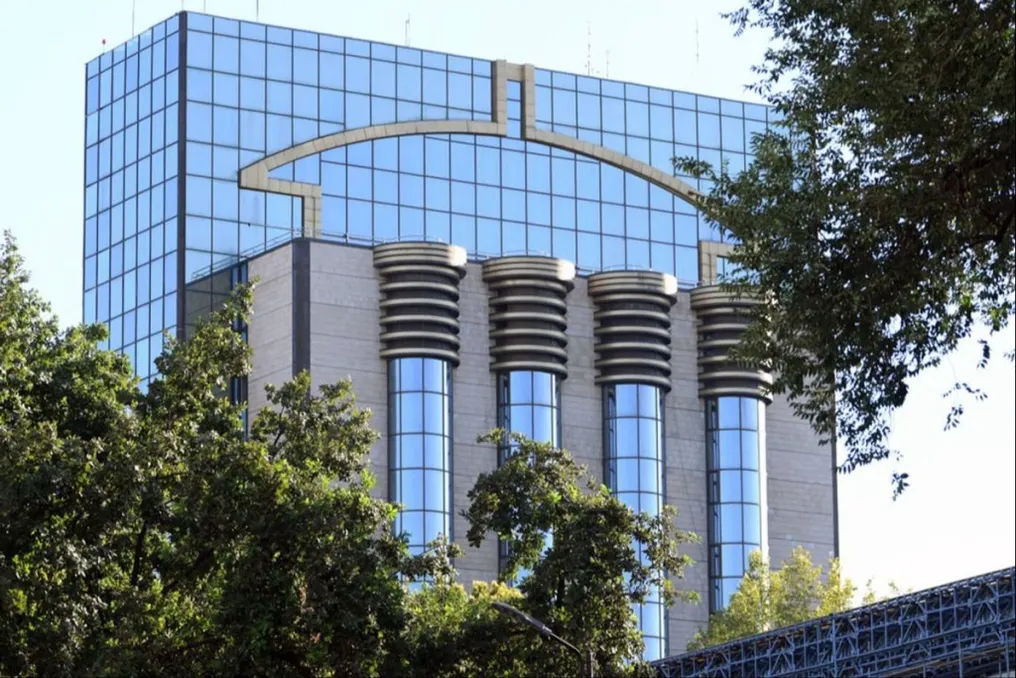
The Central Bank of Uzbekistan reported that high interest rates in the country's commercial banks are due to accumulated demand for borrowing before the start of economic liberalization, as well as a shortage of domestic savings.
Deputy Chairman of the Central Bank Nodirbek Achilov presented this assessment at a press conference on November 4. He noted that over the next three to four years, interest rates should approach a balanced level.
In response to a question from a journalist from the UzA agency about why banks continue to issue loans at annual rates of 20–34% while the Central Bank's key rate remains at 14%, Achilov stated that market loan rates are already showing a decline. Citing an example, he noted that compared to August 2025, average rates have fallen by approximately 2–3 percentage points.
The cost of borrowing depends on the lending conditions, term, and purpose of the loan; investment loans are generally cheaper than short-term consumer loans. The decrease in mortgage rates is particularly noticeable: if housing loans had an annual rate of 24–25% three or four years ago, current market offers are around 18%.
Microloans, unsecured short-term loans, and loans issued quickly through online services remain the most expensive, but the regulator also points to a gradual decrease in rates in this segment.
Achilov named accumulated demand as the first reason for high borrowing costs. He explained that a very large demand for loans accumulated in the economy before 2017. After the start of economic liberalization, this demand began entering the banking system because private individuals previously had very few opportunities to obtain loans, which was partially reflected in high interest rates.
Currently, the Central Bank believes that the credit market is gradually reaching saturation, and demand is becoming more balanced. The second reason cited was the low level of savings in previous years. Banks attract funds for lending through deposits from enterprises and households or by borrowing abroad. For a long time, the deposit base remained relatively small against the backdrop of rapidly growing demand for loans.
Achilov added that the growth of deposits in recent years should contribute to lowering the cost of borrowing. Deposit rates are also falling: the deputy chairman noted that today banks rarely offer deposits with a yield higher than 18% per year, and rates are generally within this range, with expectations of further decline.
The Central Bank forecasts a decrease in both the key rate and the cost of bank loans and deposits over the next three to four years. Achilov emphasized that the economy is in a transitional period, and liberalization has caused a sharp increase in the need for financial resources, adaptation to which requires time. He also indicated that inflation and inflation expectations are decisive factors in key rate decisions. If inflation does not decrease and inflation expectations do not fall, a reduction in the key rate will be impossible.
The Central Bank is cooperating with the International Monetary Fund and the European Bank for Reconstruction and Development to help reduce rates. The regulator also expects increased competition between banks, an expanded range of credit products, and the development of floating-rate financing instruments to support the reduction of borrowing costs. Nevertheless, Achilov warned that unsecured and quickly issued loans may remain relatively expensive even with an overall decline in market rates.
According to Central Bank data, the weighted average interest rate on loans in soums for individuals was 21.3% in August 2026, compared to 22.1% in January. For legal entities, the rate decreased from 23.4% to 22.3%. Deposit rates fell faster: the average yield on term deposits in soums decreased from 18.9% in January to 17.2% in August. For individuals, it dropped from 20.6% to 18.4%, and for legal entities—from 16.3% to 15.5%. Thus, in the first eight months of 2026, deposit rates for individuals decreased by 2.2 percentage points, while the decrease in individual loan rates was only 0.8 percentage points.
On November 4, the Central Bank Council maintained the key rate at 14% per annum, citing strong domestic demand and persistent inflation risks. The regulator also sees an opportunity for a gradual reduction of the rate to a single-digit level during the 2027–2029 period, provided there is a sustained slowdown in inflation to the target of 5% and a further decrease in inflation expectations.