According to data from the National Statistical Committee of Uzbekistan, the gross domestic product (GDP) of Uzbekistan reached 1,755.5 trillion soums at current prices for January-September 2026. This represents a real growth of 8.3% compared to the same period in 2025. Preliminary data was published on October 30, 2026.
Previously, figures for January-September 2022-2025 were adjusted to account for the results of population and agricultural censuses. For comparison, in the first nine months of 2025, GDP was 1,494.9 trillion soums with a growth of 8.0%, while in the same period of 2024, the economy grew by 6.1%, reaching 1,224.4 trillion soums.
The GDP deflator for January-September 2026 was 108.4% relative to the previous year. The highest growth rates were recorded in industry (112.1%) and other service activities (109.7%). Agriculture, forestry, and fishing were below the national average at 107.8%; trade and accommodation/food services were at 106.4%; construction was at 105.5%; and transport, storage, information, and communication were at 103.1%.
Gross value added across all sectors accounted for 95.9% of GDP and increased by 8.3%, contributing 7.9 percentage points to the overall GDP growth. Net taxes on products accounted for the remaining 4.1% of GDP, showing an 8.4% increase and contributing 0.4 percentage points to the growth increase.
Industry generated added value of 450.4 trillion soums, showing a growth of 8.1%. Trade and accommodation/food services provided 247.1 trillion soums, which is 15.1% more. Each of these sectors contributed 2.0 percentage points to GDP growth. Transport, storage, information, and communication brought in 135.4 trillion soums, increasing by 18.1% and adding 1.4 percentage points. Construction reached 140.2 trillion soums, increasing by 12.5%, and contributed 1.0 percentage point to the growth.
Other service activities added 448.5 trillion soums, increasing by 3.2% and providing 0.8 percentage points of GDP growth. Agriculture, forestry, and fishing generated 261.7 trillion soums, showing a growth of 4.6%, and contributed 0.7 percentage points. Compared to January-September 2025, the share of industry in the economy rose from 26.0% to 26.8%, while the share of construction increased from 8.2% to 8.3%. The share of services decreased from 49.6% to 49.4%, and the share of agriculture, forestry, and fishing decreased from 16.2% to 15.5%.
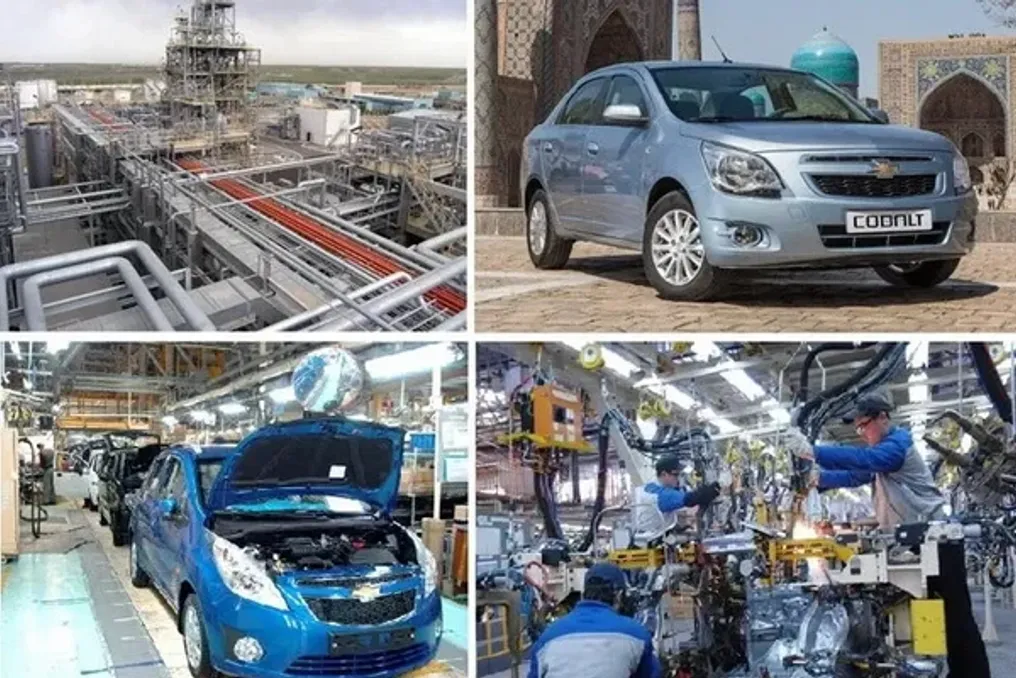
Industrial added value grew by 8.1% to 450.4 trillion soums. The main driver of growth was manufacturing, where added value increased by 8.6% to 373.1 trillion soums. Electricity, gas, steam, and air conditioning production grew by 10.1% to 29.8 trillion soums. Mineral extraction and quarrying increased by 3.1% to 44.4 trillion soums, while water supply, sewerage, waste collection, and disposal grew by 1.6% to 3.1 trillion soums.
The total volume of construction works increased by 12.5%, and added value in construction amounted to 140.2 trillion soums. Growth was observed in building and structures construction at 6.6%, civil engineering works at 29.0%, and specialized construction works at 33.1%. At the same time, the share of buildings and structures in the construction sector decreased from 75.3% to 71.3%. The share of civil construction increased from 16.2% to 18.1%, and the share of specialized construction works rose from 8.5% to 10.6%.
Added value in the service sector reached 831.0 trillion soums, which is 8.9% higher compared to last year. The fastest growth was demonstrated by communication and information services, which expanded by 21.6%, followed by trade with a growth of 17.3% and transport, storage, with an increase of 16.1%. Accommodation and food services grew by 11.2%, and other services by 3.2%.
Retail trade, excluding motor vehicle sales, accounted for the largest share of trade added value—48.3%, compared to 48.9% the previous year. Wholesale trade accounted for 40.1%, down from 40.3%, and wholesale and retail trade of motor vehicles and their repair accounted for 11.6% versus 10.8%.
Transport and storage accounted for 5.0% of GDP. Road transport held the largest share of added value in this sector—57.4%, compared to 55.0% the previous year. Auxiliary transport activities accounted for 18.1%, air transport for 8.7%, rail transport for 8.5%, and pipeline transport for 7.3%.
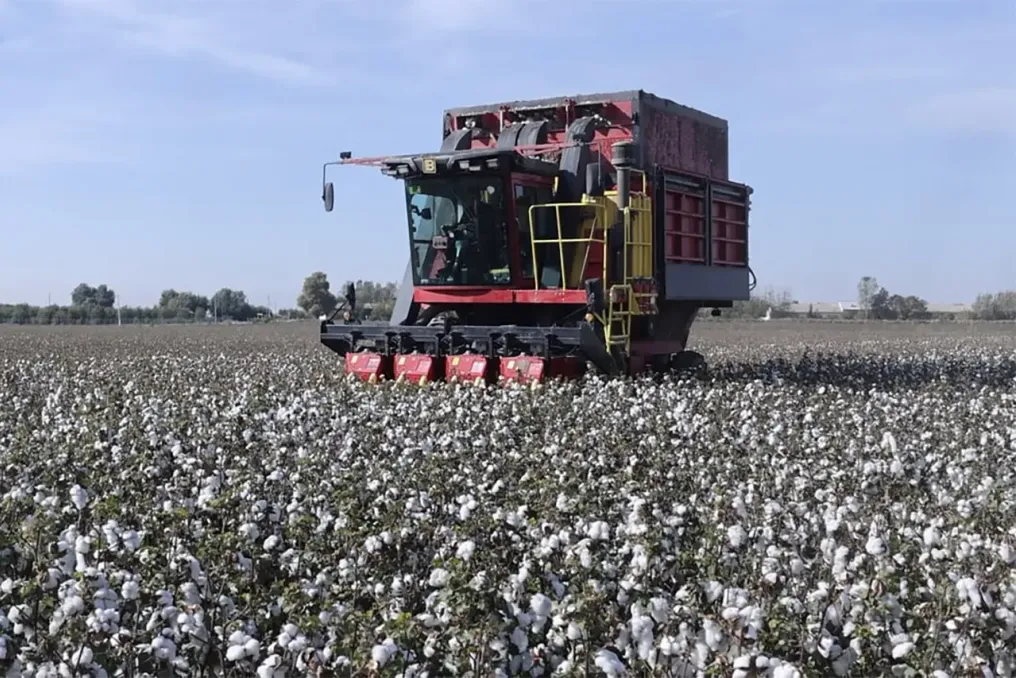
Agriculture, forestry, and fishing grew by 4.6%. Forestry increased by 5.0%, and crop and livestock production by 4.6%. GDP per capita reached 44.6923 million soums, which is 6.4% higher in real terms compared to the first nine months of 2025, when it was 38.7468 million soums.
The Information and Communications Technology (ICT) sector accounted for 2.7% of the economy, up from 2.5% in 2025 and 2.3% in 2024. The added value of this sector reached 45.5 trillion soums, up from 35.8 trillion soums the previous year and 23.7 trillion soums in 2024. Computer programming, consulting, and related services accounted for 54.0% of ICT added value. Communication services accounted for 29.2%, data hosting and processing, and web portals for 10.0%, software publishing for 4.2%, and computer and communication equipment repair for 2.6%.
Small businesses generated 904.8 trillion soums in added value, accounting for 53.8% of the total economy. Of this amount, services accounted for 46.7%, agriculture, forestry, and fishing for 27.0%, industry for 14.6%, and construction for 11.7%. Small businesses provided 93.2% of the added value in agriculture, forestry, and fishing, 75.4% in construction, 50.9% in services, and 29.4% in industry.
The share of the unobserved economy, including household and individual activities, as well as the shadow economy, was 21.8% of GDP, lower than the previous year's figure of 23.9%. By sector, the unobserved economy accounted for 57.6% of added value in agriculture, forestry, and fishing, 23.8% in services, 8.3% in construction, and 4.9% in industry.