Alibaba Cloud Adds Support for Kimi K3.1 Pro on Lingjun Zhenwu M890 SuperPoD Platform
Read more
Pandaily
pandaily.com

Alibaba Cloud Adds Support for Kimi K3.1 Pro on Lingjun Zhenwu M890 SuperPoD Platform

Alibaba Cloud announced that its Lingjun Zhenwu M890 SuperPoD system has completed the adaptation of the Kimi K3.1 Pro model from Moonshot AI in day-zero mode. A full check of the stack on vLLM and SGLang inference frameworks was also conducted. This was reported on November 5th by IT Home, citing the cloud provider.

The company also opened invite-only testing for a new SuperPoD region in Zhongwei, Ningxia, expanding the list of locations where large open-weight models can be hosted on the company's proprietary accelerators.

Model Characteristics and Joint Adaptation

The Kimi K3.1 Pro model is a sparse mixture-of-experts model with 2.8 trillion parameters and a context window of approximately one million tokens. It utilizes Kimi Delta Attention and Sparse Attention DSA hybrid attention, along with multi-token predictive capability. These features create significant demands on memory bandwidth and high-speed interconnects for scaling.

Alibaba Cloud, T-Head, and the Kimi team jointly adapted this model on T-Head's SAIL software stack. Work on FlashMLA, DeepGEMM MoE, MegaMoE, and MoonEP operators allowed customers to deploy inference either on bare-metal SuperPoD instances or via the REIN intelligent engine service. Furthermore, the model is available through Alibaba's Qwen AI platform API.

Framework Support and New Capabilities

Independent day-zero support reports from SGLang and vLLM projects describe the support for Zhenwu PPU for Kimi K3.1 Pro on M890 and 810E configurations. This release is noted as the first support for a major open model within the hardware backend in the Zhenwu development tree. Alibaba Cloud documentation publishes prefill-decode recipes for Zhenwu M890 SuperPoD instances, including settings for tensor and expert parallelism across multiple nodes.

The invitation to the SuperPoD in Zhongwei includes T-Head's Panmai 920 intelligent network card layered over previously existing high-performance configurations. Alibaba claims that this card uses PCIe 5.0 and 112G PAM4 Ethernet, achieving a peak throughput of 400 Gbps and 400 million packets per second. It supports multi-path RDMA and programmable congestion control, and integrates a PCIe switch on the card itself, allowing GPUs and SSDs to connect with less reliance on an external switch—a design that, according to the company, can reduce system costs by about 30%.

Day-zero SuperPoD instances for large models are available in data centers in Ulanbaatoi and Zhongwei. Alibaba Cloud notes that Lingjun Zhenwu M890 SuperPoD instances already serve over 100 major clients in the fields of large models, autonomous driving, and embodied AI. The company also reiterated that the next-generation Zhenwu V900 SuperPoD instance is expected to provide approximately three times the performance compared to the current generation. This announcement coincides with separate day-zero support for Kimi K3.1 Pro from Huawei Ascend, which was reported the same week, providing two domestic launch paths for the model on SuperPoD stacks.

Similar stories

Huawei Ascend Adds Support for Kimi K3.1 Pro on Atlas A3 and Ascend 950 SuperPoDs
Read more
pandaily.com

Huawei Ascend Adds Support for Kimi K3.1 Pro on Atlas A3 and Ascend 950 SuperPoDs

The Huawei Ascend computing systems team announced the completion of adaptation for inferencing the Kimi K3.1 Pro model, which has 2.8 trillion parameters. The full weights of this model were released by Moonshot AI on November 4, according to Huawei Computing's official account, as reported by IT Home and ifeng Tech.

Using vLLM Ascend and SGLang, developers can now deploy this model on Atlas 800 A3 servers, in the Atlas 900 A3 SuperPoD cluster, and in the Ascend 950 SuperPoD series since its release.

Kimi K3.1 Pro is the first model in Moonshot AI's K3.1 series. It is a mixture-of-experts model with native visual processing and a context window of about one million tokens, activating approximately 104 billion parameters at each inference step. The model retains the hybrid linear attention K3, based on Kimi Delta Attention (KDA) layers, and adds sparse attention layers DSA instead of some full attention layers to reduce the cost of modeling long context.

Most of the adaptation work was related specifically to this architecture. Huawei stated that its inference team relied on the previous adaptation of Kimi K3, pre-analyzing the new model and working in parallel on model integration, operator development, and service validation. Thanks to existing support for KDA and MoE, the team added a new sparse attention path and multimodal inference while preserving existing serving functions in the inference frameworks.

According to Huawei, the optimization covered core operators for historical information retrieval, sparse attention computations, preprocessing, and residual computations, which were combined with distributed caching and framework-level functions to support long-context inference and production serving. The company aimed for users and developers to be able to start testing applications and deployment on the first day of the model's release.

vLLM Ascend documentation indicates that Kimi K3.1 Pro is supported in experimental mode in version vLLM Ascend 0.30.0. Its reference configurations use prefix and decoding splitting across eight nodes with four prefix nodes and four decoding nodes, including a long-context configuration of one million tokens. Atlas 800I A3 servers operate with the quantized checkpoint W4A8, while 950DT products use the W4A8 MXFP variant; the guide notes that Atlas A2 and 950PR products are not yet supported.

The model size makes hardware support a practical issue. IT Home notes that weights in BF16 format take up about 5.6 TB and still require about 1.4 TB when quantized to INT4, ruling out the use of a single consumer GPU. Huawei positioned its A3 and 950 SuperPoD systems for this class of trillion-parameter MoE inference, and the release of Kimi K3.1 Pro was the last open model it supported on launch day.

Lenovo unveils AI host Kaitian with Zhaoxin KX-7000 processor and Houmo LQ50 NPU for local 35B model execution
Read more
pandaily.com

Lenovo unveils AI host Kaitian with Zhaoxin KX-7000 processor and Houmo LQ50 NPU for local 35B model execution

Lenovo has released the first AI host system in its Kaitian lineup, intended for China's IT innovation market (Xinchuang). This 1.6-liter desktop computer integrates a Zhaoxin processor with a Houmo AI NPU, enabling the local execution of models around 35 billion parameters.

The device is equipped with an eight-core Zhaoxin KX-7000 processor and the Houmo Liqing LQ50 NPU. In the standard configuration, the system provides 160 TOPS of computing power in INT8 format, which can reach 320 TOPS with the NPU option. The NPU features 24 GB of dedicated memory with a bandwidth of 153.6 GB/s. The host runs on Kylin OS and comes pre-installed with Lenovo's Tianxi AI Pro agent.

The company tested the device using open models, including the Qwen3.5 and Qwen3.6-35B-A3B series. When utilizing the 24 GB NPU and W4A8 quantization, the Qwen3.6-35B-A3B model generated text at a rate of approximately 28.99 tokens per second during local inference. The system supports input data up to 200,000 tokens for processing long documents and multi-turn tasks. The Houmo platform provides developers with tools for profiling, compiling, runtime management, and model quantization.

Lenovo positions this host as a perpetually active digital employee designed for round-the-clock operation. This allows agents to perform scheduled tasks such as local knowledge retrieval, document drafting, and information summarization, with output processing occurring directly on the device rather than through cloud tokens, thus keeping data local. During the event, Tianxi AI Pro testers instructed the device to check a mobile operator's application, and the device successfully executed a test call, measured the delay of a verification SMS code, and provided a report.

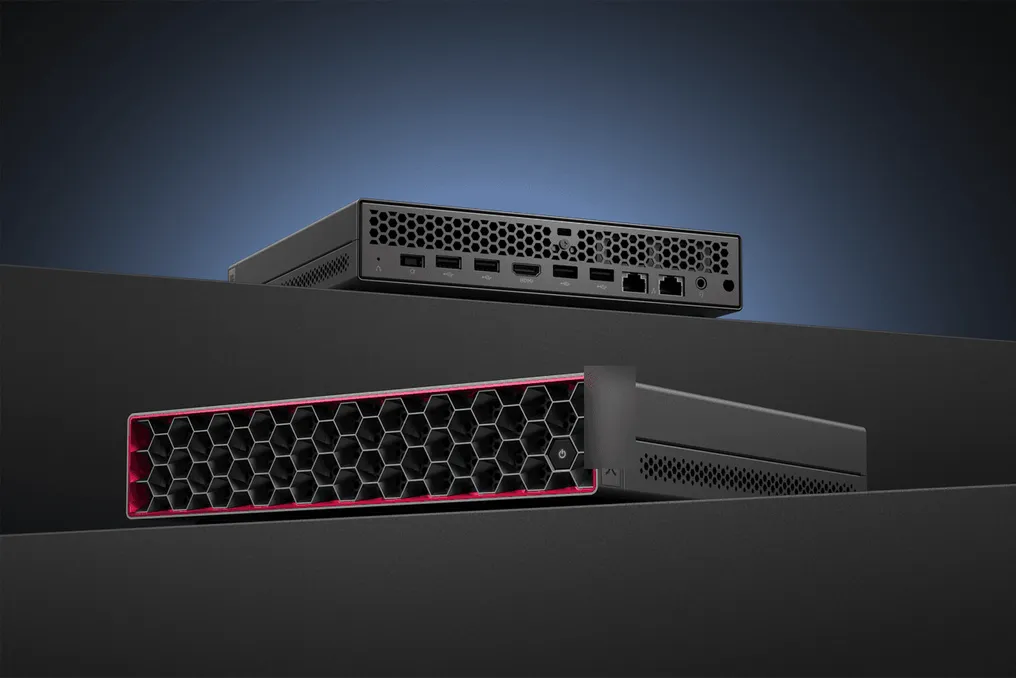
Regarding thermal dissipation, the processor and NPU have separate air channels behind the hexagonal front panel with high-pressure fans. Lenovo reports that at idle, the chassis temperature is about 33 degrees Celsius in a 25-degree room, and under full load, it reaches 41 degrees. In a 35-degree room, the temperature reaches approximately 46 degrees under full load. The noise level is 19.4 dB in standby mode and about 29.5 dB during full NPU inference. The device weighs about 1.5 kg and is equipped with two independent 2.5GbE ports.

It should be noted that the Kaitian host differs from the Lenovo AI Host P7, which was introduced in October with Houmo M50 and CIX P1 chips.

Moonshot AI unveils K3.1 agent solution for game development in Unity, Unreal, and Blender
Read more
pandaily.com

Moonshot AI unveils K3.1 agent solution for game development in Unity, Unreal, and Blender

Moonshot AI has released a comprehensive solution for creating games and creative works, based on the Kimi K3.1 model series, Kimi Code and Kimi Work products, as well as plugins for professional tools including Unity, Unreal Engine, and Blender.

According to the company's statement, this package is designed to help studios accelerate game concept testing, advance engineering and artistic production, and integrate player feedback gathered during launch and operation back into the next development phase.

In the description, the Kimi model is capable of analyzing design documents, screenshots, source code, and 3D assets, after which it plans the necessary work. The Kimi Code product handles implementing changes within an existing codebase, while Kimi Work takes on multi-stage production tasks spanning multiple files.

Thanks to plugins and tool calls, Kimi can directly interact with existing projects, returning editable files to the user along with a report of completed actions. In Unity and Unreal Engine environments, upon receiving necessary access rights and project files, the system first maps the code structure, scene hierarchy, and module dependencies, then makes changes via editor plugins, and finally verifies the result through playback steps, logs, and execution data. For engineers, reports on code differences and verification records are maintained.

For operations in Unity, the Kimi models utilize the Tuanjie Codely Agent, a gaming agent from Unity China integrated into the Tuanjie Engine. Kimi interprets the developer's intentions, writes code, and analyzes testing results and screen recordings, while the Codely agent performs operations within the engine using editor scripts and runtime. During one demonstration, Kimi showed that it could operate for 20 hours without human intervention, recreating an existing game and generating a native project ready for further development.

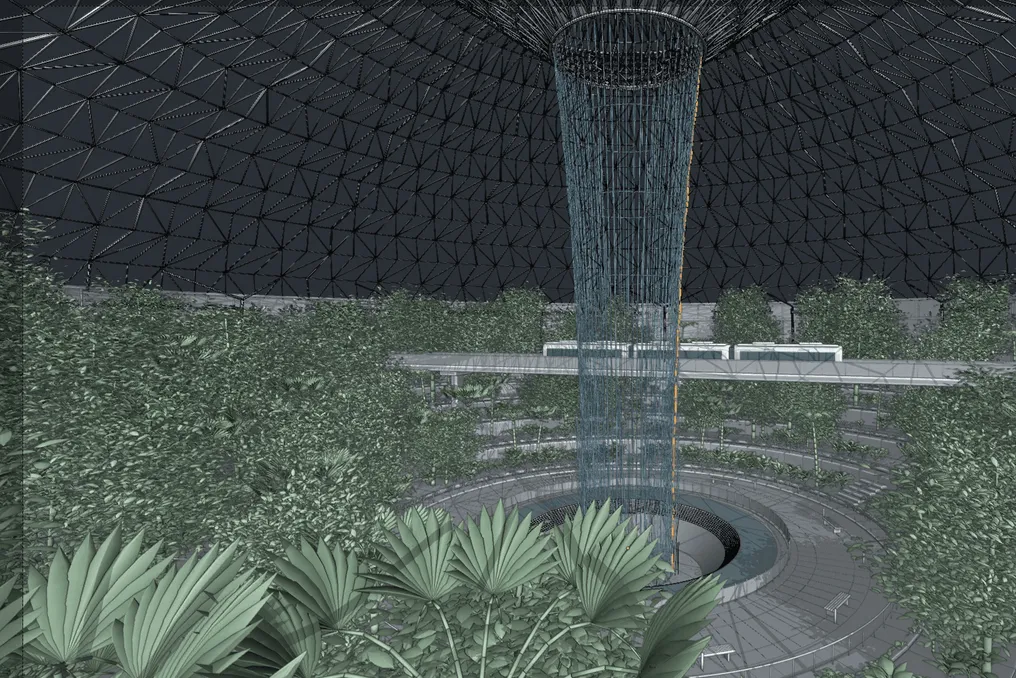
The launch page features several demo builds created using Kimi K3.1 Pro. An internal jungle valley was constructed in Blender, and a 17.5-second flythrough was rendered at 1920x1080 resolution and 60 frames per second, alongside a cathedral interior in the browser containing approximately 3.3 million triangles and 8368 animated components. In Unreal Engine 5.8, a celestial palace scene was created featuring a colonnade of 36 arches with a 1750-meter radius and a procedurally modeled dragon totaling 36 million triangles, rendered using Nanite and Lumen. Kimi also claims that designers without programming experience can create playable prototypes in Godot within one or two days.

In addition to production tasks, this solution includes batch creation of advertising creatives, integration of in-game assistants via the Kimi API, sorting community feedback with source attribution, preparing localization drafts with back-translation checks, and initial selection of user-generated content. Kimi advises teams to start with one clearly defined task and evaluate pilot projects based on criteria such as time saved, quality of the result, and volume of required human refinement.

Popular